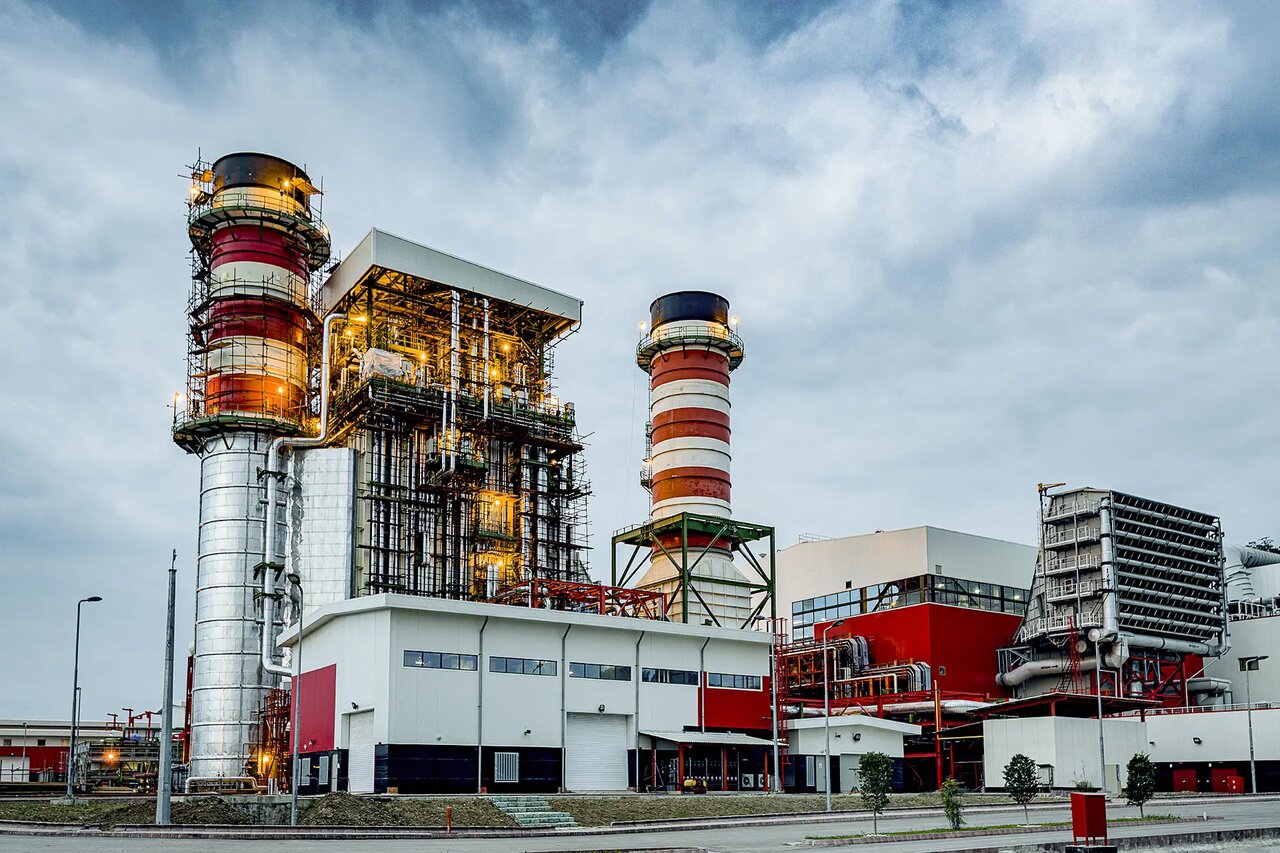
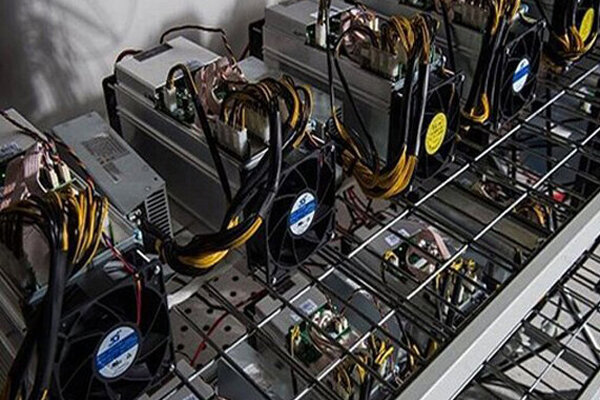
On Saturday, 10 Mordad 1405 (1 August 2026), two announcements came out of Iran's power sector. Each reads as good news on its own; placed side by side they tell a different story. Hamed Seyrafianpour, deputy for planning and management development at the Thermal Power Plant Holding Company, said in a radio interview that since August last year a total of 2,582 MW of new thermal generation capacity has come online, on investment of more than 1.4 billion euros. The same day, Ahmad Moradi, head of the power committee of parliament's energy commission and a member for Hormozgan province, said estimates indicate that illegal cryptocurrency miners consume roughly 2,000 MW of the country's power capacity, and that parliament has set a two-urgency bill in motion to deal with them. Mehr News Agency published both, citing the Ministry of Energy, on the same day.
The ratio between those two figures is about 77 percent; that is Sahmino's arithmetic, not an announced number. But a third figure in the same statement makes the comparison closer still: according to Seyrafianpour, a major part of the new capacity, some 2,000 MW, was allocated directly to supplying the power that the country's industries need. In other words, the share of new capacity that reached factories and the estimated volume leaving the grid illegally are roughly the same size.
Background
Capacity building has moved quickly this year. Energy Minister Abbas Aliabadi said on Sunday, 4 Mordad 1405 (26 July 2026) that 668 MW had been added to national generating capacity in a single week, against a normal average of about 100 MW per week. On an annual scale, 2,582 MW works out to an average of roughly 215 MW per month (Sahmino's calculation).
On the other side, the summer strain on the grid is well documented. From 22 Tir 1405 (13 July 2026), reports described power restrictions on industry and pressure on steel and cement producers. On Tuesday, 6 Mordad 1405 (28 July 2026), office hours for all executive bodies in Kordestan province were cut to 7am until 11am to reduce grid load, and on the evening of Thursday, 8 Mordad 1405 (30 July 2026), the Tehran Regional Electricity Company said grid overload had cut power to part of the Saleh Abad area in south-west Tehran. The new capacity entered service in the middle of that summer.
Capacity is not the same thing as consumption
The comparison is rhetorically strong, but the two quantities are not fully like for like, and that has to be said plainly. The 2,582 MW figure is installed nameplate capacity: the maximum these units can produce under ideal conditions. Power plants never sustain 100 percent of nameplate output; scheduled maintenance, efficiency losses at high temperatures and fuel constraints all subtract from real generation. The 2,000 MW attributed to miners, by contrast, is an estimate of consumption rather than a measurement. The member of parliament himself used the phrase "estimates indicate".
So the most precise way to put it is this: the number that was built and the number estimated to be leaving the grid are of the same order of magnitude. That caveat does not weaken the comparison; it makes it dependable.
The numbers
| Metric | Value | Source | Date |
|---|
| New thermal capacity (one year) | 2,582 MW | Thermal Power Plant Holding Company | 1 August 2026 |
| New generating units | 15 units, 2,028 MW | Thermal Power Plant Holding Company | 1 August 2026 |
| Refurbishment of steam plants | 490 MW | Thermal Power Plant Holding Company | 1 August 2026 |
| Uprating of three existing gas units | 64 MW | Thermal Power Plant Holding Company | 1 August 2026 |
| Investment | More than 1.4 billion euros | Thermal Power Plant Holding Company | 1 August 2026 |
| Share of new capacity to industry | About 2,000 MW | Thermal Power Plant Holding Company | 1 August 2026 |
| Estimated illegal mining consumption | About 2,000 MW | Parliament energy commission power committee | 1 August 2026 |
| Average thermal plant efficiency | 40 percent | Thermal Power Plant Holding Company | 1 August 2026 |
The three components, 2,028 plus 490 plus 64 MW, sum to exactly the announced 2,582 MW (Sahmino's calculation).
Two further figures in the same statement speak to the quality of the new capacity: six new combined-cycle steam units totalling 1,123 MW came online without consuming any additional fuel, and average thermal generation efficiency rose by one percent to 40 percent, which the company says is equivalent to annual savings of 1.75 billion cubic metres of natural gas. Iran's first geothermal generator, rated at 5.4 MW, was also commissioned in Meshgin Shahr. Over the same period, two new power unit construction projects totalling 483 MW were damaged in the final stages of equipment installation.
Drivers
Why subsidised power creates miners. The economics here are simple. Electricity is the main cost of crypto mining. When power reaches an industrial site at a subsidised tariff while the mined output is valued at a global price, the gap between the two produces a profit margin that has nothing to do with that site's productivity. The wider the spread between domestic energy tariffs and world prices, the stronger the incentive. The same logic recurs across Iran's other energy markets: we have covered administered fuel pricing before in Did gasoline just become three-tier?, and traced how cheap power ends up embedded in exported metal in Iran makes the world's cheapest rebar.
The policy response: from fines to licence revocation. Moradi said parliament has set a two-urgency bill in motion to close the route for abusing subsidised power, given the legal gaps in dealing with electricity theft by illegal mining rigs. Alongside it, the Ministry of Energy is running the "Mahtab" scheme across provinces, focused on identifying units in industrial estates that divert part of their power draw to activities outside their operating licence. Penalties have been tightened: a one-month disconnection for an offending subscriber at the first stage, and, on repetition, pursuit of permanent revocation of the industrial operating licence. Reward payments for reporting violations have also been increased.
This policy is not new, but it is hardening. On Thursday, 1 Mordad 1405 (23 July 2026), Jafar Ghaempanah, the president's executive deputy, announced power cuts of one week to one month for premises found with illegal miners, and on Monday, 5 Mordad 1405 (27 July 2026), the Lorestan power distribution company said it had seized 152 illegal mining rigs in the province since the start of the Iranian year.
How grid imbalance reaches the stock market
The transmission chain to the trading board is short and direct. Power restrictions in the hot months lower utilisation rates on production lines; less production means lower sales, and lower sales land straight in the financial statements of listed companies. The energy-intensive industries that take the biggest hit are precisely the ones that carry heavy weight in the main index: steel, cement, copper and petrochemicals.
A fresh example was recorded today: according to Donya-e-Eqtesad on 10 Mordad 1405 (1 August 2026), Mohammad Shariatmadari, in a joint meeting between managers of the Persian Gulf Petrochemical Industries group and the MAPNA industrial group, stressed drawing up an operational timetable and accelerating power supply projects for the holding's damaged companies. Securing power for these firms is an operational matter, not an abstract policy debate.
Today's market frame is useful here too: in today's midday market pulse, the TEDPIX stood at 5,047,494 units as of 10:54, 0.55 percent below the previous close, while the equal-weight index was 0.58 percent higher. That is to say the pressure is concentrated in the large weights, which is exactly where the energy-intensive industries sit. This is a simultaneous observation, not an attribution of cause.
Outlook
Two paths lie ahead for the grid, and both take time. Building new capacity takes capital and years: 1.4 billion euros for 2,582 MW works out to roughly 542,000 euros per MW (Sahmino's calculation). Closing off illegal consumption would, if the 2,000 MW estimate holds, free the same amount of capacity in numerical terms without building a single power plant, but it depends on field enforcement, technical detection and judicial follow-through, and its pace cannot be guaranteed in advance. Neither path substitutes for the other. These are analytical frames, not numerical forecasts.
Conclusion
Two numbers of the same size came out of one ministry today: about 2,000 MW of new capacity reached industry, and estimates say about 2,000 MW is drawn by illegal miners. The verdict is clear: building capacity is necessary but not sufficient, because until the leak in the grid is closed, every new megawatt gives part of itself back. Remember one thing from this report: in Iran's power imbalance, the number that was built is only half the equation, and the other half is a number that has not been measured, only estimated.
What to watch
- The fate of parliament's two-urgency bill and the penalties it ultimately carries.
- Ministry of Energy reporting on the "Mahtab" scheme and how much capacity is freed by cutting off illegal consumption.
- The pace of capacity additions through the remaining weeks of peak load, against the roughly 100 MW weekly average.
- Monthly sales filings from listed energy-intensive companies on Codal, as the real measure of the restrictions' effect.
- Current prices for the related markets on Sahmino prices and dated upcoming events on the Sahmino market calendar.
This is a news and analysis report and not a recommendation to buy or sell any asset. The capacity figures are official statements by responsible officials, and the illegal mining consumption figure is a stated estimate, not an independent measurement.

 Analysis
 Analysis
 Analysis
 Analysis