
Basrah crude falls almost 8 percent on Tuesday even as Brent rises, widening the discount on Iraqi grades
Aug 4, 2026
According to oil price data reviewed by Shafaq News, Iraq's Basrah crude grades posted notable losses in Tuesday's session on 4 August 2026, even as global oil prices moved higher the same day.
Basrah Heavy crude fell 4.45 dollars, or 7.92 percent from the previous session, to 51.76 dollars per barrel. Basrah Medium crude dropped by the same 4.45 dollars, or 7.61 percent, to 54.06 dollars per barrel.
Meanwhile Brent futures rose 1.12 dollars, or 1.3 percent, to 84.89 dollars a barrel by 03:55 GMT, while US West Texas Intermediate gained 77 cents, or 1 percent, to 81.11 dollars a barrel. The gains came amid continued uncertainty over talks aimed at ending the US Iran conflict and lingering concerns over the security of West Asian oil supplies. Basrah grades moving opposite to the global benchmarks means the discount on Iraqi crude has widened; Basrah grades compete directly with Iranian crude in the Asian market.
Media
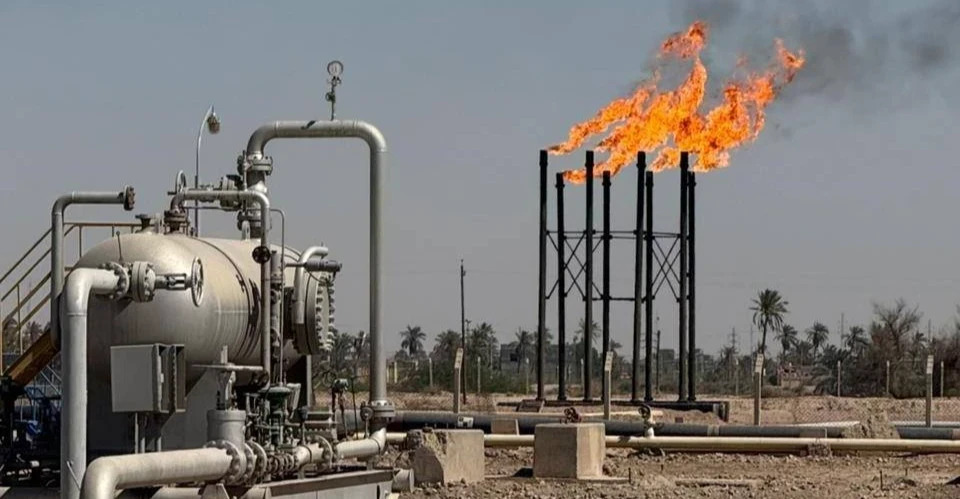
Basrah crude grades fall in trading on 4 August 2026
Source: Shafaq News
Source
Shafaq News
Related news
Iran Energy Exchange admits power from 32 renewable and distributed generation plants
The 237th supply committee of the Iran Energy Exchange met on the evening of Sunday, 11 Mordad 1405 (August 2, 2026) and ruled on the admission of energy carriers to the physical and secondary markets as well as the allocation of savings certificates. Under its decision, power from 32 renewable and distributed generation plants was admitted to the exchange's physical market. At the same session the committee approved the admission of electricity from two retail companies to the secondary market. It also agreed to allocate 4,088,684 natural gas savings certificates and 51,929,578 electricity savings certificates to applicants. Admitting renewable and distributed generation plants to the physical board widens the pool of power sellers on the energy exchange and opens a route for these units to sell electricity directly to industrial consumers. Savings certificates are an instrument that lets a consumer who cuts its own consumption offer the saving on the exchange.
بورس نیوز · Aug 4, 2026
Turkiye and Iraq sign one year deal to keep 750,000 bpd flowing through Kirkuk to Ceyhan pipeline
Turkish state firm BOTAS and Iraq's state oil companies SOMO and NOC signed a one year agreement on Saturday, 1 August 2026, to keep crude flowing through the Kirkuk to Ceyhan pipeline. Turkish Energy Minister Alparslan Bayraktar said the transit arrangement covers a daily capacity of 750,000 barrels, and that talks toward a longer term deal continue. The decades old bilateral arrangement between the two countries had lapsed on Monday the previous week. The pipeline's maximum capacity is about 1.5 million barrels per day, but Turkish data show it currently carries only around 170,000 bpd, largely from fields in Iraq's Kurdistan region. Iraq's prime minister called the deal an important strategic milestone and said the two governments would work toward a framework agreement covering oil, electricity and water resources. The route matters because Iran's effective closure of the Strait of Hormuz earlier this year forced Baghdad to look for alternative export routes. According to Al Jazeera, Iraqi oil exports collapsed by more than 80 percent in the weeks after the United States and Israel launched strikes on Iran in late February, with monthly oil revenues falling from around $6 billion to under $2 billion.
Al Jazeera · Aug 4, 2026
First block of South Pars Phase 11 to reach nameplate capacity of over 28 million cubic metres a day within two months
Keyvan Tariqati, head of the South Pars Phase 11 development project, told Shana on Monday, 3 August 2026 (12 Mordad 1405) that 11 wells in the phase have so far been brought into production, and that once drilling and commissioning of the wells now under way are complete, the first block of Phase 11 is expected to reach a nameplate capacity of more than 28 million cubic metres of raw gas per day, equivalent to 1 billion cubic feet, within the next two months, after which the project will move into a production stabilisation stage. Phase 11, the last development phase of South Pars, is being carried out by Pars Oil and Gas Company on behalf of the National Iranian Oil Company at a value of close to $4 billion. The project's final target is sustained output of 2 billion cubic feet of raw gas per day from the border section of the shared field, and its scope covers offshore facilities at two border locations plus the drilling of 27 wells. Tariqati said part of the drilling work coincided with the 12 day war and the more recent conflict, and that despite logistical constraints and heightened operational risk, two new wells were brought into production during that period. Preparations are also under way to begin drilling at the SPD11A location. He added that reaching nameplate capacity will make a significant contribution to domestic gas supply during the cold season, after which pressure boosting and production maintenance programmes will follow.
شانا (شبکه اطلاعرسانی نفت و انرژی) · Aug 4, 2026
Brent crude climbs back above $84 early on Tuesday, recovering part of Monday's 5 percent slide
Brent crude rose 1.07 percent to $84.67 a barrel early on Tuesday, 4 August 2026 (13 Mordad 1405), while West Texas Intermediate gained 0.91 percent to $81.07. Separate market data put Brent at $84.35 over the same early hours, up 0.69 percent. The move recovers part of Monday's decline on 3 August (12 Mordad), when Brent fell more than 5 percent and retreated to around $83.4. The main driver of that fall was trader focus on the resumption of US and Iran negotiations and the prospect of an agreement on fully reopening the Strait of Hormuz. The rebound coincided with fresh ambiguity in the two sides' accounts: Iran denied holding direct talks with Washington and said its discussions with Oman on increasing shipping through the Strait of Hormuz are continuing. At the same time, the UK Maritime Trade Operations centre reported that an unknown projectile struck a cargo vessel near Khasab, Oman. Oil prices are the main channel through which developments in the Strait of Hormuz reach Iran's foreign currency earnings and its domestic currency market.
Oilprice.com · Aug 4, 2026