
Iran's cabinet allows basic goods to be imported through customs offices in all provinces
Aug 1, 2026
Iran's cabinet has approved a measure allowing basic goods to be imported through customs offices in provinces across the country, in addition to those in border provinces. The decision was reported on Saturday 1 August 2026 (10 Mordad 1405).
Under the previous rule, adopted on 22 November 2025 (1 Azar 1404), basic goods including rice, vegetable oil, pulses, red meat, barley, maize and oilseed meal could be imported on a no currency transfer basis only through border provinces, and then only with an order registration or statistical registration and after obtaining the required permits, including health, quarantine and standards approvals.
Widening the entry points for basic goods to customs offices in every province can shorten the clearance route for these items. The no currency transfer mechanism is a form of import in which foreign currency is not supplied from official sources and the importer brings the currency from their own resources.
Media
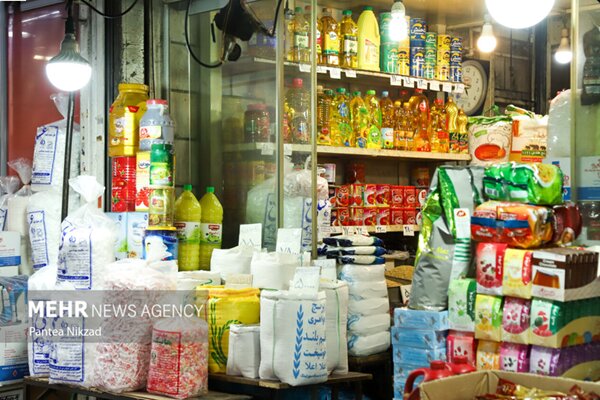
Import and customs clearance of basic goods, archive image
Archive photo · Source: Mehr News
Source
خبرگزاری مهر
Related news
Iran's oil minister orders faster rebuilding of damaged refineries and calls progress positive
Oil Minister Mohsen Paknejad said on Saturday 1 August 2026, at a meeting of the oil ministry's council of deputies, that the rebuilding of damaged refineries is proceeding in a way he described as positive and promising. He spoke after receiving reports from the chief executives of the National Iranian Oil Company and the National Iranian Gas Company, and said every part of the oil industry must take part in the process in a coordinated way. Reviewing the latest state of work at one of the damaged refineries, he issued instructions to speed up the rebuilding operation and asked for these meetings to continue in the coming weeks. The minister stressed that progress reports must keep being presented within a project management framework so that the work can be tracked precisely, decisions taken in time and any obstacles removed. Deputies of the oil ministry also presented a report on the steps taken so far.
شانا (شبکه اطلاعرسانی نفت و انرژی) · Aug 1, 2026
Iran starts a pilot of allocating the fuel subsidy through bank cards in Tehran
The deputy for economic policy at Iran's Ministry of Economic Affairs and Finance said on Saturday 1 August 2026 that a scheme allocating the fuel subsidy through bank cards has started on a pilot basis at a number of filling stations in Tehran. Morteza Zamanian said the scheme was implemented with the oil ministry, the communications ministry and the central bank, within the framework of parliament resolutions, and is aimed at identifying fuel subsidy users precisely and preventing smuggling and leakage of consumption. According to his explanation, the subsidy is calculated on the basis of the bank card of the person using the fuel, and at the moment of payment the system sets the final amount according to that person's own quota, which reduces the effect of using a station card or somebody else's card. Zamanian stressed that the scheme requires no change to station equipment, imposes no new cost on households, and has no connection to any increase in the petrol price or any change in quotas, adding that it only optimises the way the subsidy is allocated.
خبرگزاری مهر · Aug 1, 2026
Physical market turnover on Iran's commodity exchanges rose 95 percent to 1,563 trillion tomans in the first four months of 1405
A report by the research department of Iran's Securities and Exchange Organization, published on Saturday 1 August 2026 (10 Mordad 1405), shows that turnover on the physical markets of Iran's commodity exchanges rose 95 percent in the first four months of the current Iranian year, from 800 trillion tomans in the same period of 1404 to 1,563 trillion tomans. According to the report, physical market turnover on the Iran Mercantile Exchange was 355 trillion tomans in Tir (22 June to 22 July 2026), with industrial goods the largest group at 208 trillion tomans; the same group traded 260 trillion tomans in the preceding month of Khordad. Over the first four months of the year, physical market turnover on the mercantile exchange rose 85 percent to 1,289 trillion tomans. Physical market turnover on the Iran Energy Exchange, covering hydrocarbon products and electricity, was 106 trillion tomans in Tir and 274 trillion tomans over the first four months of the year, an increase of 164 percent on the same period last year. These are nominal figures, and part of the growth reflects the rise in the general price level over the same period.
پایگاه خبری بازار سرمایه ایران (سنا) · Aug 1, 2026
Explosion at a copper mine in Delijan kills two workers
An explosion at a copper mine in the village of Mohammadabad in Delijan, Markazi province, killed two workers on the evening of Saturday 1 August 2026. Behrouz Irannejad, head of pre hospital emergency and disaster services 115 at Arak University of Medical Sciences, said one worker died at the scene, while a second worker who still had vital signs when rescuers arrived was taken to Imam Sadegh hospital in Delijan and died there from the severity of his injuries. According to the report, published by the IRNA news agency, the 115 emergency service in Markazi province operates 34 urban emergency stations, 48 road stations, 2 women's stations, one air ambulance station and four ambulance buses.
اقتصاد آنلاین · Aug 1, 2026