
Oil falls more than 5% as US and Iran talks resume
Aug 4, 2026
Crude oil prices fell more than 5% in trading on Monday, Aug. 3, 2026 (12 Mordad 1405). According to Anadolu Agency, the drop followed US President Donald Trump's announcement that he had cancelled a planned military strike on Iran and that talks would resume the same day. International benchmark Brent slid to around $83.40 per barrel as of 0605 GMT on Aug. 3, while West Texas Intermediate fell 6% to $79.60.
Trump said key US allies in the region, including Saudi Arabia, had urged him to suspend the strikes and prioritise negotiations. He also repeated his call for the Strait of Hormuz to be reopened quickly. Brent had climbed about 25% during July 2026, after renewed US and Iran hostilities broke an interim agreement and widened supply disruption from the Strait of Hormuz to the Red Sea.
At the same time, major OPEC+ producers approved another modest increase in production quotas, completing the planned restoration of the output cuts introduced in 2023. Trading Economics data show Brent recovering to $84.35 per barrel on Tuesday, Aug. 4 (13 Mordad), up 0.69% on the day.
Media
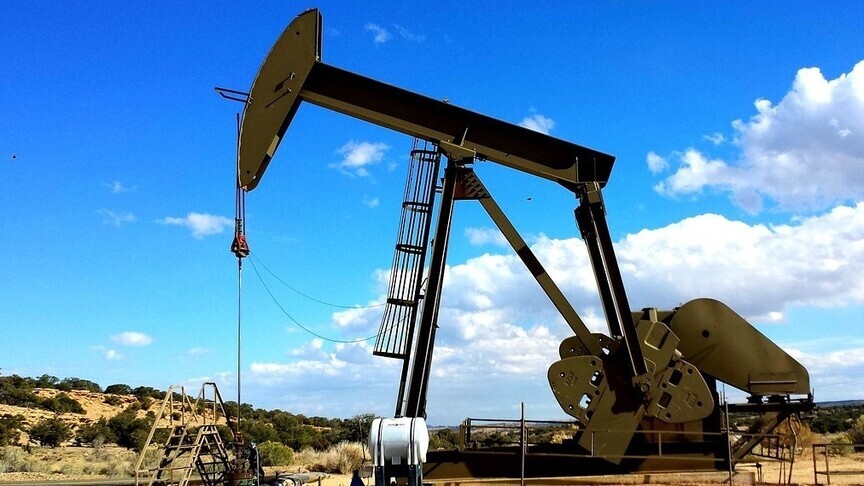
Oil prices fell more than 5% on Monday, Aug. 3, 2026, after the announcement that US and Iran talks would resume.
Source: Anadolu Agency
Source
Anadolu Agency
Related news
Brent crude climbs back above $84 early on Tuesday, recovering part of Monday's 5 percent slide
Brent crude rose 1.07 percent to $84.67 a barrel early on Tuesday, 4 August 2026 (13 Mordad 1405), while West Texas Intermediate gained 0.91 percent to $81.07. Separate market data put Brent at $84.35 over the same early hours, up 0.69 percent. The move recovers part of Monday's decline on 3 August (12 Mordad), when Brent fell more than 5 percent and retreated to around $83.4. The main driver of that fall was trader focus on the resumption of US and Iran negotiations and the prospect of an agreement on fully reopening the Strait of Hormuz. The rebound coincided with fresh ambiguity in the two sides' accounts: Iran denied holding direct talks with Washington and said its discussions with Oman on increasing shipping through the Strait of Hormuz are continuing. At the same time, the UK Maritime Trade Operations centre reported that an unknown projectile struck a cargo vessel near Khasab, Oman. Oil prices are the main channel through which developments in the Strait of Hormuz reach Iran's foreign currency earnings and its domestic currency market.
Oilprice.com · Aug 4, 2026
Qatar calls for Persian Gulf coordination to implement the US and Iran memorandum of understanding
Qatar's Foreign Ministry said Prime Minister and Foreign Minister Sheikh Mohammed bin Abdulrahman Al Thani called on Monday, 3 August 2026 (12 Mordad 1405), for greater coordination among Persian Gulf states to implement the US and Iran memorandum of understanding, in separate calls with his counterparts in the United Arab Emirates, Saudi Arabia, Kuwait, Oman and Bahrain. According to the ministry's statement, the talks focused on regional developments, particularly diplomatic efforts and joint coordination to reduce tensions and strengthen security and stability across the region, alongside bilateral cooperation. Al Thani stressed the need for all parties to remain committed to dialogue and diplomacy and to implement the provisions of the US and Iran memorandum of understanding, including ensuring freedom of navigation through the Strait of Hormuz. The United States and Iran agreed a ceasefire in April 2026 and subsequently signed a Pakistan mediated memorandum of understanding in June aimed at ending their military conflict and reaching a lasting peace agreement. That deal collapsed last month, with the two sides exchanging attacks for nearly two weeks. The Strait of Hormuz carries the bulk of Persian Gulf oil exports, and the state of shipping through it bears directly on the oil market and on Iran's currency market.
Anadolu Agency (به نقل از وزارت امور خارجه قطر) · Aug 4, 2026
A cargo vessel is hit by an unknown projectile in waters off Oman
The UK Maritime Trade Operations (UKMTO) centre said a cargo vessel reported being hit by an unknown projectile in waters off the coast of Oman early on Tuesday, 4 August 2026 (13 Mordad 1405). According to the centre, the vessel was sailing about 20 nautical miles northeast of Khasab, Oman, and broadcast that it had been struck on VHF Channel 16. UKMTO said authorities have launched an investigation into the incident and advised vessels transiting the area to exercise caution and report any suspicious activity. No group had claimed responsibility for the reported attack at the time of the report. The incident comes as tensions around the Strait of Hormuz have risen following recent military confrontations between the United States and Iran. Washington has called on Tehran to ensure freedom of navigation through the strategic waterway, while Iran insists that shipping in waters off its coast should be subject to its oversight. Khasab lies on the Musandam peninsula at the mouth of the Strait of Hormuz, a passage carrying roughly one fifth of global oil supply, where any security incident feeds into marine insurance costs and the risk premium in oil prices.
Anadolu Agency (به نقل از مرکز عملیات تجارت دریایی بریتانیا) · Aug 4, 2026
Iran to retire the fuel card for passenger cars by autumn, moving petrol quotas onto bank cards
Hadi Mahzarnia, head of Iran's National Centre for Monitoring and Improving the Business Environment and the official running the transfer of fuel quotas onto bank cards, said on Tuesday, 4 August 2026 (13 Mordad 1405), in an interview with Radio Eqtesad that the plan is being worked toward becoming operational for passenger cars by autumn this year. Extending the scheme to diesel vehicles is also on the agenda. He said the plan aims to increase transparency in fuel consumption, manage demand and reduce the petrol supply imbalance. Mahzarnia said precise knowledge of how vehicles and their owners consume fuel allows better planning and the use of non price policies to control consumption, so that the fuel imbalance can be managed with the least pressure on the public. He stressed that changing the refuelling process for millions of people must be phased so that people are not faced with a behavioural shock. Iran's petrol imbalance is one of the country's open economic files, and the way quotas are distributed bears on domestic consumption, the energy subsidy burden and the car market.
اکوایران (به نقل از باشگاه خبرنگاران جوان) · Aug 4, 2026