
Seven OPEC+ members approve a 188,000 barrel a day unwind of voluntary cuts for September
Aug 2, 2026
Seven members of the OPEC+ alliance, namely Saudi Arabia, Russia, Iraq, Kuwait, Kazakhstan, Algeria and Oman, met virtually on Sunday 2 August 2026 (11 Mordad 1405) and decided to unwind 188,000 barrels a day of the 1.65 million barrel a day voluntary supply cut announced in April 2023. The increase will be implemented in September 2026.
According to the OPEC Secretariat, the seven countries noted that the move gives participating producers an opportunity to accelerate their compensation plans, and reaffirmed their intention to fully compensate for production above quota since January 2024.
The group will hold monthly meetings to review market conditions, conformity and compensation, and will next convene on 6 September 2026 (15 Shahrivar 1405). Alongside the status of the Strait of Hormuz, the OPEC+ supply path is one of the main variables shaping crude prices for Iran's markets.
Media
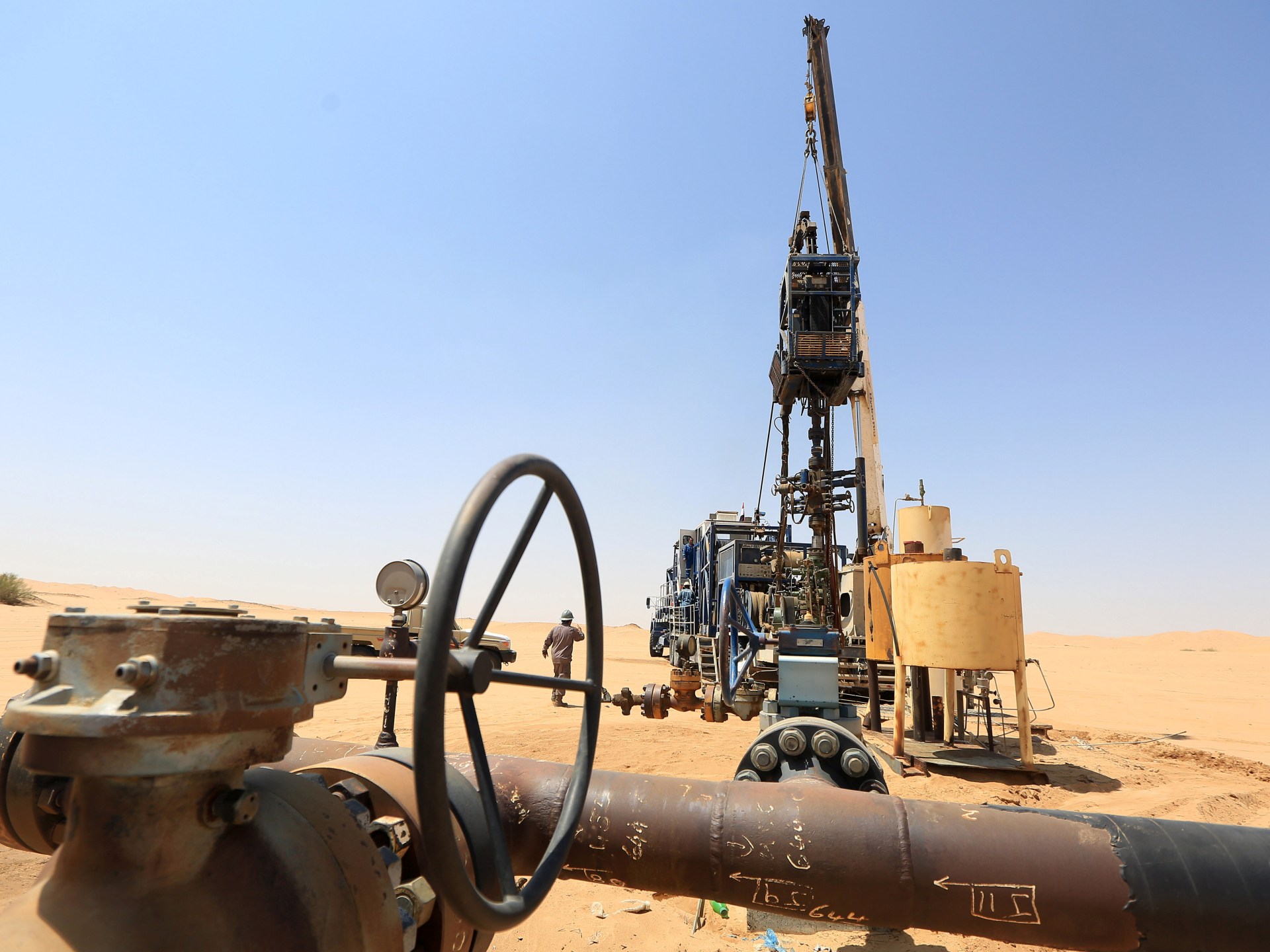
An oil well at the Safer field in Marib, Yemen; seven OPEC+ members approved a 188,000 barrel a day unwind on 2 August 2026.
Archive photo · Source: Ali Owidha/Reuters
Source
شانا
Related news
Europe needs more than 660 billion euros a year of investment to bring power costs down
The European Union is seeking to cut its high energy costs and rebuild its industrial competitiveness through large scale investment in domestic power generation and renewables. According to a report published on Sunday, 2 August 2026, the International Energy Agency has said European electricity prices are now about 50 percent higher than in China and twice the level in the United States. The EU plans to raise the share of renewables from about 26 percent today to at least 42.5 percent by 2030, and to lift electricity to 46 percent of final energy consumption by 2040. Delivering that plan requires annual investment of more than 660 billion euros through to 2040. The European Commission estimates the path could cut roughly 260 billion euros a year from fossil fuel import costs, against the roughly 450 billion euros a year the bloc has spent on fossil fuel imports since the 2022 crisis. The current pressure traces back to the jump in energy prices after Russia's invasion of Ukraine in 2022. At the peak of that crisis, gas prices passed 260 euros per megawatt hour in August 2022, and Europe replaced long term pipeline contracts with more expensive liquefied natural gas imports. The shift hit energy intensive industries including chemicals, fertiliser, aluminium, steel, cement and paper. The need for cheap power has been sharpened further by the spread of artificial intelligence: the United States holds more than 50 percent of global data centre capacity, China about 30 percent and Europe only 12 percent.
اقتصاد آنلاین · Aug 2, 2026
A heatwave forces Hungary's largest nuclear plant offline for the first time in 44 years
Hungary said on Sunday, 2 August 2026, that a heatwave has forced the shutdown of its largest nuclear power plant for the first time in 44 years. According to the report, scorching temperatures and drought have pushed the Danube river to record low water levels, disrupting the reactor cooling systems. Nuclear plants depend on a continuous intake of river water for cooling, and a sharp fall in water levels interrupts that cycle. The shutdown comes in weeks when unprecedented summer heat has been straining Europe's power grid. Lost nuclear output at the peak of the consumption season usually means substitution with fossil fuels and stronger demand for imported power and gas, a path that can feed through to energy prices across the continent.
Al Jazeera · Aug 2, 2026
Iran Mercantile Exchange traded 2.41 million tonnes of goods on Sunday
The Iran Mercantile Exchange hosted trading of 2,412,426 tonnes of goods on Sunday, 2 August 2026. According to the Kalakhabar report, the cement hall and the open auction hall led the day's trading. The cement hall traded 915,170 tonnes of product, while the open auction hall handled 727,500 tonnes of iron ore, 154,025 tonnes of vacuum bottom, 3,000 tonnes of chemical products and 3,550 tonnes of copper. The industrial hall traded 413,000 tonnes of iron ore, 114,250 tonnes of direct reduced iron, 6,630 tonnes of steel, 1,600 tonnes of zinc and 600 tonnes of copper. The export hall recorded 18,995 tonnes of bitumen, 11,650 tonnes of cement, 6,000 tonnes of sulphur and 140 tonnes of moisture insulation. The oil products hall sold 28,500 tonnes of lube cut and 997 tonnes of oil, and the petrochemical hall traded 3,570 tonnes of polymer, chemical and gas products. The simultaneous auction hall sold 3,050 tonnes of aluminium and the secondary hall 198 tonnes.
کالاخبر (بورس کالای ایران) · Aug 2, 2026
Rubio's plan to bypass the Strait of Hormuz runs into the capacity limits of alternative pipelines
US Secretary of State Marco Rubio, in a Fox News interview that aired on Saturday, 1 August 2026, floated the idea of a permanent geopolitical shift in how the world's energy moves, routing it outside the Strait of Hormuz. Before the start of the US and Israeli war on Iran, about one fifth of global seaborne oil trade passed through the strait. According to US Energy Information Administration (EIA) data, the 39 kilometre wide strait handles roughly 20 million barrels of oil a day, equal to about 20 percent of global petroleum liquids consumption. A fifth of the world's liquefied natural gas trade, primarily from Qatar, also passes through the same route. Experts told Al Jazeera that the capacity of alternative pipelines is limited. Saudi Arabia's East to West pipeline (Petroline) has returned to pumping about 7 million barrels a day after wartime damage was repaired, according to the Saudi energy ministry, and the Abu Dhabi Crude Oil Pipeline carries up to 1.8 million barrels a day to the port of Fujairah. The combined maximum capacity of the alternative lines is about 9 million barrels a day, and the EIA estimates only around 2.6 million barrels a day of unused capacity exists on the Saudi and Emirati pipelines. Experts also warned that shifting cargoes to the Red Sea transfers the vulnerability to the Bab al-Mandeb strait.
Al Jazeera · Aug 2, 2026