
Aramco's chief executive says the Persian Gulf crisis has kept 2.6 billion barrels of oil out of the global market
Aug 4, 2026
Amin H. Nasser, chief executive of Saudi Aramco, said on Tuesday, 13 Mordad 1405 (August 4, 2026), alongside the release of the company's second-quarter results, that the current Persian Gulf crisis has so far kept 2.6 billion barrels of oil from reaching consuming markets. He described the situation as the biggest supply shock in history, covering oil destined for industries such as agriculture, semiconductors, automotive, chemicals and manufacturing.
Speaking to analysts after the results, Nasser said the company's East-West pipeline and global inventories had absorbed part of the shock, lowering the net loss to around 1.8 billion barrels. Aramco has used its 1,200 kilometre pipeline to the Red Sea to bypass the Strait of Hormuz and has kept exports at a maximum capacity of 7 million barrels per day.
He warned that even if the Strait of Hormuz were to reopen today, replacing depleted inventories would take up to 18 months at an average rate of 2.1 million barrels per day. The figures indicate that the effect of the Hormuz disruption on the global supply balance would persist for months after the crisis ends, even under a scenario in which a deal is reached and the strait reopens.
Media
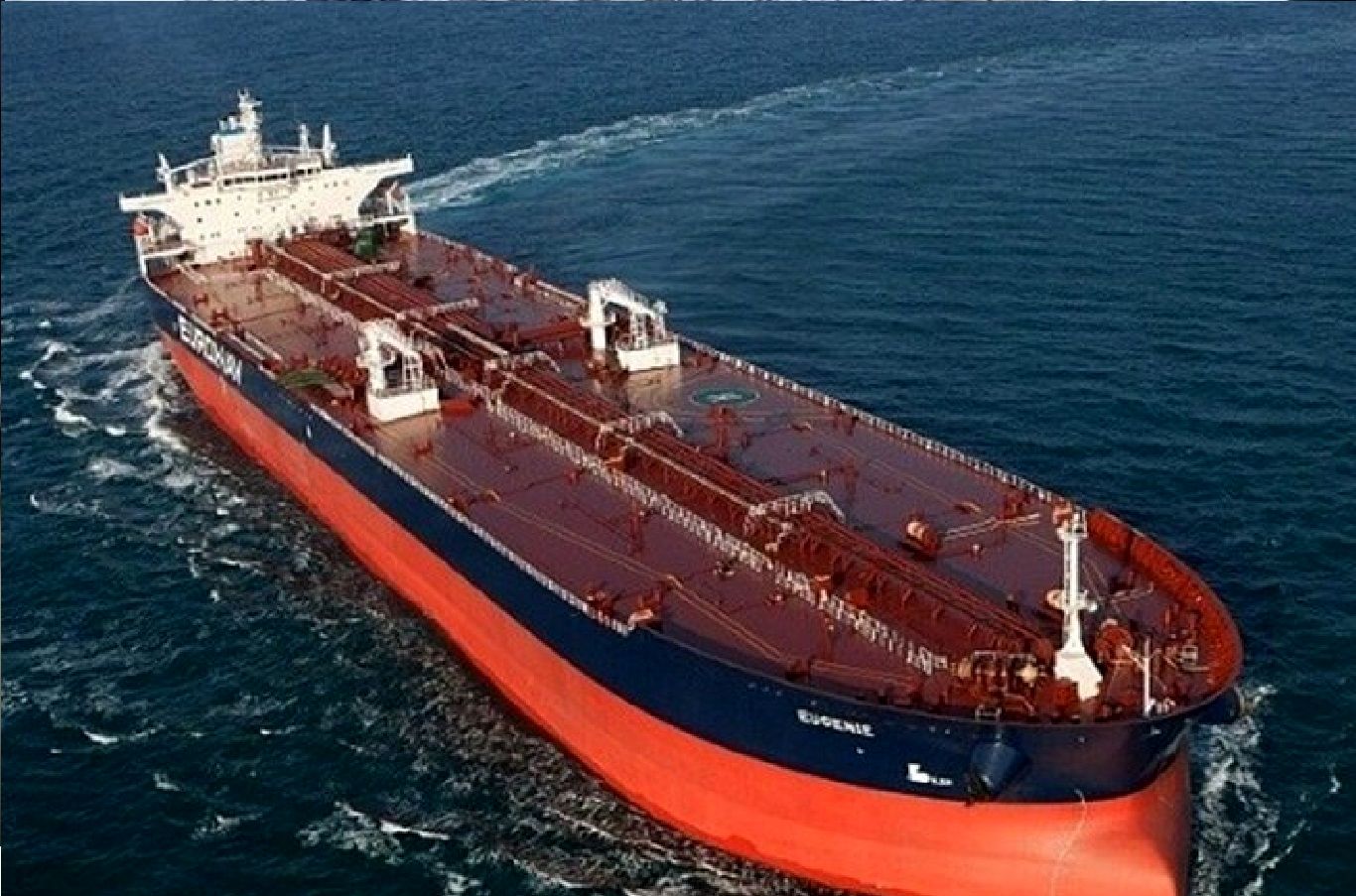
Saudi tankers rerouting around the Strait of Hormuz as Aramco puts the net supply loss at 1.8 billion barrels
Archive photo · Source: دنیای اقتصاد
Source
بورس نیوز
Related news
Bessent says a Hormuz reopening deal could come Tuesday or Wednesday as US crude falls below $78
US Treasury Secretary Scott Bessent said on Tuesday, 4 August 2026 (13 Mordad 1405), in an interview with CNBC's "Squawk Box" that the United States and Iran could reach a deal on Tuesday or Wednesday to reopen the Strait of Hormuz with freedom of movement for commercial ships. "We are in talks with the Iranians," he said, adding that a deal could move the conflict toward a more normalised position. Asked whether Iran would be allowed to charge a toll, Bessent said it would be "freedom of movement." After his remarks, US crude oil futures fell about 3% to trade below $78 per barrel. Bessent said he expects prices to fall further once hundreds of ships stuck in the Persian Gulf are able to exit, and noted the issue is not only energy but also fertiliser, refined products and various industrial gases. The United States and Iran signed a memorandum of understanding on 17 June to reopen the strait, and ship traffic briefly rebounded before the deal collapsed over disagreement on how the strait should open. President Donald Trump said over the weekend that he had called off a major attack on Iran to allow for negotiations.
CNBC · Aug 4, 2026
Yemen's Houthis claim a drone attack on Saudi Arabia's Najran Airport
Yemen's Houthi group claimed on Tuesday, 4 August 2026 (13 Mordad 1405), that it carried out a drone strike on a "sensitive target" at Najran Airport in southern Saudi Arabia. The group's military spokesman, Yahya Saree, said on the social network X that the attack accurately hit its intended target. He said the operation was a response to what he described as Saudi drone violations of Yemeni airspace over the provinces of Saada and Hajjah. Saree warned that any future violation of Yemen's airspace "will not pass without response and punishment." Saudi authorities had made no comment on the claim at the time of the report, and it has not been independently verified. Security developments in the south of the Arabian Peninsula and along the region's shipping routes are among the factors shaping the risk premium in the global oil market, a point Chevron's chief executive also raised on Sunday, 2 August, when he pointed to risks in the Red Sea.
Anadolu Agency · Aug 4, 2026
New York Times reports Iran and Oman are close to a deal to reopen the Strait of Hormuz
The New York Times reported on Monday, 3 August 2026 (12 Mordad 1405), citing Iranian and US officials, that Iran and Oman are close to an agreement to restore commercial maritime traffic through the Strait of Hormuz. Under the potential deal, the report said, vessels entering the Persian Gulf would travel through a shipping channel controlled by Iran and close to its coast, while outbound traffic would use a channel near Oman. Iranian officials told the New York Times that no tolls would be charged, but that the agreement includes a "service fee" covering environmental impacts, security for cargo ships and tankers, and staffing costs, with revenue shared equally between Iran and Oman. A US official called the Iranian account "not accurate," saying any "temporary" shipping routes through the strait would not require Iranian approval and would not involve tolls. According to the report, some senior Pentagon officials are skeptical of the proposed arrangement and are concerned it could amount to a concession to Iran. Some Iranian officials also questioned whether the agreement would work as intended and prevent another round of US attacks. The Strait of Hormuz is the main export route for Persian Gulf oil, and its closure in recent weeks has kept pressure on the global oil market.
Anadolu Agency · Aug 4, 2026
Iraq signed the Arab world's largest oil and gas deals in July 2026, covering nine fields with US companies
According to a report by the Washington-based energy research platform ATTAQA published on Tuesday, 13 Mordad 1405 (August 4, 2026), Iraq signed the Arab world's largest oil and gas deals in July 2026, topping regional energy investment. Baghdad ranked first after reaching agreements with US companies to advance nine oil fields across Kirkuk, Diyala, Basra and Dhi Qar. The projects involve ConocoPhillips, Chevron, Halliburton and HKN Energy, and support the Iraqi government's goal of raising crude output to 6 million barrels per day, increasing associated gas production and improving operational efficiency. The contracts were concluded during Prime Minister Ali Al-Zaidi's July visit to Washington, where Iraq also reached broader understandings with US companies covering infrastructure and technology. Oman also featured on the list with oil field and tanker projects, while Qatar secured contracts for Libya's Ghadames Basin and the Baleine offshore field in Côte d'Ivoire. Iraq's expanding production capacity matters for the Iranian market, since Iraq is both a direct competitor in regional oil exports and one of Iran's largest trading partners.
Shafaq News · Aug 4, 2026