Up to 53% offSee the plans
Back to articles

News

Iran Limits Used-Car Imports to Model Years 2021 to 2023; Since That Import Was Freed on 20 August, the Free-Market Dollar Has Risen 40,860 Tomans (Saturday, 19 September 2026)

Iran's Comprehensive Trade System said on 19 September 2026 that a used car cleared for import registration must be more than 3 and less than 5 years old, so only model years 2021, 2022 and 2023 qualify in 1405. Parliament freed these imports on 20 August with a 20,000-unit annual cap, stating the goal of helping balance prices. Over that window, S…

Sahmino editorial· 19 September· 10 min read· Cars

Iran's Comprehensive Trade System (سامانه جامع تجارت, the state portal through which all import orders are registered) announced on Saturday, 19 September 2026 (28 Shahrivar 1405) that the model-year conditions for registering used-car import orders under Article 11 of the Automotive Industry Reorganization Law have been amended: the vehicle must be more than 3 years and less than 5 years old. The practical effect of that single sentence is that in the Iranian year 1405 only model years 2021, 2022 and 2023 can be registered. The narrowing comes as the free-market dollar, in Sahmino's recorded series, has risen 40,860 tomans since the day these same imports were freed on 20 August 2026 (29 Mordad 1405).

Background

The story began a month ago. Farshad Ebrahimpour, a member of the presiding board of Iran's parliament, told Boursenews on Thursday, 20 August 2026 (29 Mordad 1405) that imports of used passenger cars between 3 and 5 years old, previously banned, had been freed, and that the ceiling for passenger-car imports this year was set at 20,000 units. He stated the policy's goal plainly: one of the aims of car imports is to create competition, increase the variety of cars available in the market and help balance prices.

The distance from that day to today is exactly 30 days. In those 30 days, the rate at which every imported car is actually bought has moved. Per Sahmino's recorded series, the free-market dollar was logged at 189,400 tomans on 20 August 2026 and at 230,260 tomans today, 19 September 2026, at 19:59 Tehran time. The difference between those two readings is 40,860 tomans, or 21.6 percent higher. Both ends of the span are read from one series and one source, and both carry their dates in the text.

For scale, two outside readings agree. TGJU's 19 September 2026 report puts the dollar's one-month gain at 21.48 percent, and Alanchand the same day logs the lowest rate of the past 30 days at 189,500 tomans, almost exactly the point our own series shows for 20 August.

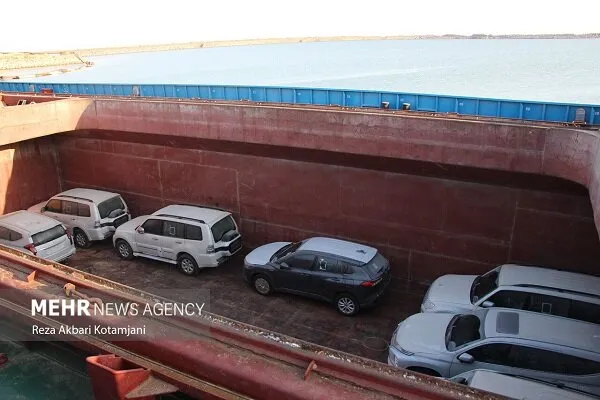
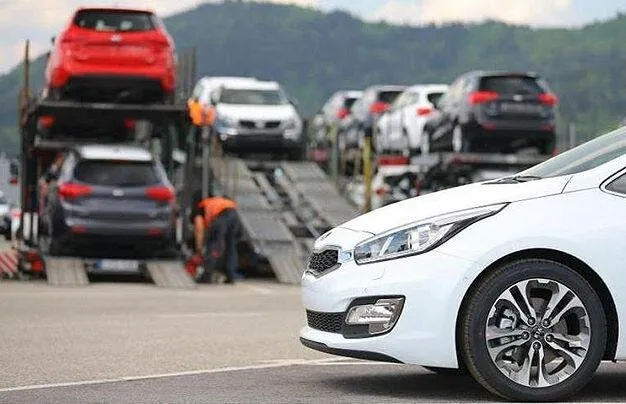
Car imports into Iran; the new model-year condition applies from 19 September 2026 (archive photo)

Car imports into Iran; the new model-year condition applies from 19 September 2026 (archive photo)

Archive photo · Source: Mehr News

The numbers

Every figure below is dated, with its source in the same line.

  • Free-market dollar, Sahmino's recorded series: 189,400 tomans on 20 August 2026; 230,260 tomans on 19 September 2026 at 19:59. Difference: 40,860 tomans, or 21.6 percent.
  • Independent confirmation of today's rate: Alanchand at 20:05 on 19 September, 231,000 tomans; TGJU the same evening, 2,301,000 rials (note: 1 toman equals 10 rials); and Mehr News at midday the same day, 228,270 tomans.
  • The new model-year condition: more than 3 and less than 5 years old, meaning only 2021, 2022 and 2023 in the year 1405 (Comprehensive Trade System, 19 September 2026, as reported by Mehr News and by Khabaronline citing IRNA).
  • Passenger-car import ceiling for 1405: 20,000 units (Boursenews, 20 August 2026).
  • TEDPIX, the Tehran Stock Exchange main index, over the same window: 5,952,488 points on 19 August 2026 and 7,448,843 points on 19 September 2026, 25.1 percent higher. Because 20 August fell on a Thursday, when the exchange is closed, the nearest prior observation, 19 August, is used as the anchor.
  • IKCO (نماد خودرو, Iran Khodro, the largest domestic carmaker) over the same window: closing price from 629 rials on 19 August 2026 to 718 rials on 19 September 2026, 14.2 percent higher. The same symbol closed 2.99 percent lower today, with a last trade at 715 rials (Sahmino's recorded series, 19 September 2026).
  • Today's price of two domestic cars in Sahmino's series (19 September 2026): the Tara automatic, model year 1405, at 3.4 billion tomans, and the Peugeot 207 automatic, model year 1405, at 2.92 billion tomans.

Drivers

One thing has to be said plainly, because it is easy to misread: that 21.6 percent is not the work of the parliamentary decision. A used-car import permit neither reduces Iran's supply of foreign currency nor creates demand for it on anything like this scale. What moved the dollar inside this window came from elsewhere, and Sahmino's own reporting recorded it at the time: in our coverage of 1 September 2026 the free-market dollar hit a record 209,300 tomans as the Iran and US confrontation escalated, and the following day the targeting of two tankers in the Strait of Hormuz and the promise of fresh banking sanctions were recorded. A correlation that follows a decision is not that decision's effect.

The path from the exchange rate to the car market does, however, have two branches. The first is direct: an imported car is bought with foreign currency, so every percentage point of dollar appreciation lands on its landed cost. Ebrahimpour raised exactly this point in his 20 August remarks, asking that importers be allowed to use currency from their own or others' deposits so that no fresh pressure falls on the country's foreign-currency resources. The second branch is indirect, running through the imported input content of domestically built cars.

Evidence from this same window shows the two branches have not behaved alike. EcoIran reported on 12 September 2026 that the free-market dollar had risen about 1.3 percent over three days while some imported cars rose 8 to 9.5 percent in the same stretch, with the domestic segment responding more slowly under weak demand. Earlier, on 5 September 2026, EcoIran reported that the car market had split in two: domestic models entered a correction while imports kept climbing. To this should be added a domestic driver: Iran Khodro announced on 3 September 2026 that consumer prices for its products would rise because of higher scrappage-certificate and registration costs (Boursenews, 3 September 2026).

Used-car import registration under Article 11 of the Automotive Industry Reorganization Law (archive photo)

Used-car import registration under Article 11 of the Automotive Industry Reorganization Law (archive photo)

Archive photo · Source: khabaronline.ir

Alongside this, the gap between factory and open-market prices remains in place. As our reporting on Iran Khodro's fifteenth priority sales round on 9 September 2026 showed, that gap ran to hundreds of millions of tomans for one of the most sought-after models. A policy meant to balance prices is entering a market whose price gap already exists. Our earlier coverage of this market is collected in Sahmino's article archive.

Outlook

This section is analysis, not reporting. Three points fall out of the figures above.

First, the size of the policy. Twenty thousand units in a year is a small ceiling against the scale of Iran's car market; expecting that volume alone to bring prices down is a large expectation of a small instrument. Second, the model-year window moves. The condition of more than 3 and less than 5 years is tied to the calendar, not to a fixed list, so when the year 1406 arrives the window shifts and cars that qualify today fall out of it. Third, and more important than either, the binding constraint on this policy is foreign currency, not the permit. As long as the rate a car is bought with moves 21.6 percent in a month, the price effect of a permit is swallowed before a single vehicle clears customs.

Bottom line

Today, 19 September 2026, used-car imports were narrowed to model years 2021 to 2023, and the narrowing was announced on the thirtieth day after those same imports were freed. Over those 30 days the free-market dollar rose 40,860 tomans, or 21.6 percent. That rise was not the decision's doing, but it is precisely what swallows the decision's effect. If one thing survives this report, it is this: the weight of an import permit has to be measured against the exchange rate the importing is done at, not against the text of the permit. Our reading is that the free-market dollar stays above 200,000 tomans through the end of Mehr 1405 (22 October 2026), as long as official-channel currency supply does not change appreciably; and if the free-market dollar closes below 200,000 tomans before the end of Mehr, that reading is wrong.

What to watch

  • The free-market dollar and whether it stays above 200,000 tomans; the latest rate updates on Sahmino's price pages.
  • Publication of the executive detail for Article 11, including tariffs, the after-sales service mechanism and how the 20,000-unit ceiling is allocated.
  • Import-registration deadlines tied to the calendar, tracked on Sahmino's economic calendar.
  • The factory-to-market price gap in carmakers' coming sales rounds, which shows whether import competition has reached the body of the market.
  • The split behaviour of the imported and domestic segments, which has not been alike in this window.
Also posted on:Instagram

Sources

  1. Mehr News Agency · Mehr News AgencyUnder the announced amendment, the age of the vehicle being registered must be more than 3 years and less than 5 years, so in 1405 only used cars from model years 2021, 2022 and 2023 may be registered and imported. (19 September 2026)Cited Sep 19, 2026
  2. Bourse NewsFarshad Ebrahimpour: the passenger-car import ceiling for the current year has been set at 20,000 units; imports of used cars 3 to 5 years old, previously banned, have been freed. (20 August 2026)Cited Sep 19, 2026
  3. Alan Chand · AlanchandThe US dollar today, Saturday 19 September 2026, is 231,000 tomans in the market. Lowest rate of the past 30 days: 189,500 tomans. (reading at 20:05)Cited Sep 19, 2026
  4. TGJUThe dollar is at 2,301,000 rials. Over a one-month window, the dollar price has risen 21.48 percent. (19 September 2026)Cited Sep 19, 2026

Related articles

General · Market update

Iran Market Pulse, Sunday, September 20, 2026 Reports a Session in Which the Tehran Stock Exchange Main Index Fell 1.44 Percent and Closed Below 7.45 Million Points for the First Time Since September 14

Tehran's bourse opened Saturday, 19 September 2026 higher and closed red: the Tehran Stock Exchange main index fell 108,890 points, or 1.44 percent, to 7,448,843. That is the largest one session drop across the 20 sessions our recorded series covers, and its first close below 7.45 million points since Monday, 14 September. Currency, gold and coin,…

25 min read · 20 September
General · Market update

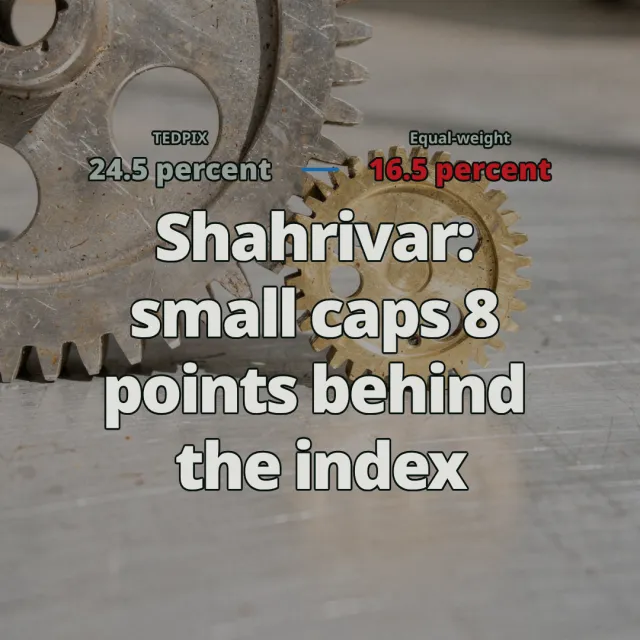
In Shahrivar, Tehran's Large Caps Pulled Ahead of the Small Ones: Headline Index 24.5 Percent, Equal-Weight Index 16.5 Percent, an 8 Point Gap in Iran Market Pulse for Saturday, September 19, 2026

From 1 to 25 Shahrivar 1405 (23 August to 16 September 2026) Tehran's headline index rose 24.5 percent while the equal-weight index, representing small and mid caps, rose 16.5 percent; the gap is 8 percentage points. On 25 Shahrivar the headline index gained 0.47 percent to a record 7,557,642 points while the equal-weight index fell 0.07 percent. R…

24 min read · 19 September

Gold · Analysis

The Fed Raised Rates 0.25 Points for the First Time Since 2023 and Gold Closed 85.65 Dollars Higher the Next Day; Tehran's 18 Karat Gram Fell 138,300 Tomans in the Same Window (Friday, 18 September 2026)

The US Federal Reserve raised its policy rate by 0.25 percentage points on Wednesday, 16 September 2026, its first increase since 2023. In Sahmino's own recorded series, spot gold, which closed that day at $4,257.83, closed Thursday 17 September at $4,343.48: $85.65 and 2.01 percent higher. Over the same window Tehran's 18 karat gram went from 23,5…

7 min read · 18 September

Stocks · News

Fenoghreh IPO: Zob Garan Rangin Falez, Tuesday, September 22, 2026

On Tuesday, September 22, 2026, Zob Garan Rangin Falez (ticker Fenoghreh), Iran's first listed silver-ingot producer, offers 450 million shares (9 percent) on Iran Fara Bourse's second market. The valuation prices each share at 11,827 rials, putting the company at about 59,133 billion rials; the per-code cap in the fixed-price stage is 600 shares,…

7 min read · 20 September