Up to 53% offSee the plans
Back to articles

Analysis

The Fed Raised Rates 0.25 Points for the First Time Since 2023 and Gold Closed 85.65 Dollars Higher the Next Day; Tehran's 18 Karat Gram Fell 138,300 Tomans in the Same Window (Friday, 18 September 2026)

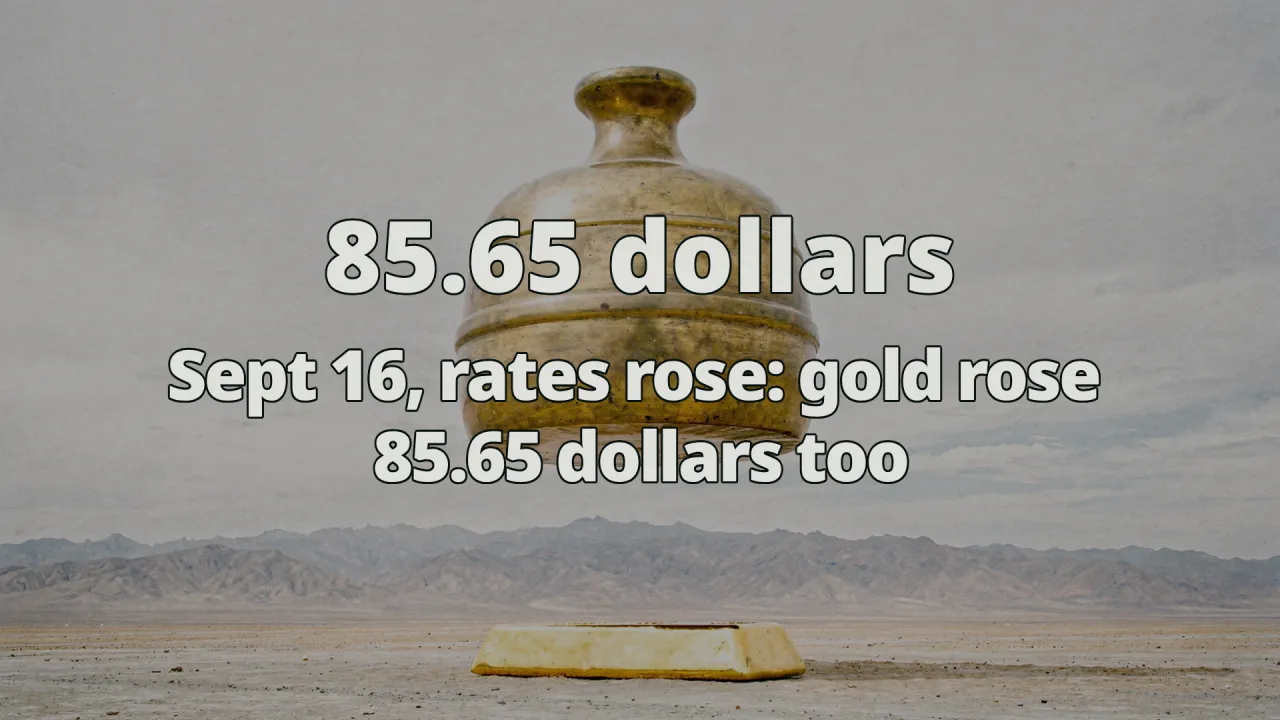
The US Federal Reserve raised its policy rate by 0.25 percentage points on Wednesday, 16 September 2026, its first increase since 2023. In Sahmino's own recorded series, spot gold, which closed that day at $4,257.83, closed Thursday 17 September at $4,343.48: $85.65 and 2.01 percent higher. Over the same window Tehran's 18 karat gram went from 23,5...

Sahmino editorial· 18 September· 7 min read· Gold

The US central bank raised its policy rate by 0.25 percentage points on Wednesday, 16 September 2026 (25 Shahrivar 1405), its first increase since 2023. The textbook rule says higher rates are bad news for gold, which pays no yield. In Sahmino's own recorded series, however, spot gold closed the decision day at $4,257.83 and closed the next day, Thursday 17 September, at $4,343.48: $85.65 and 2.01 percent higher.

Background

The decision came in a week of three major central bank meetings. The Bank of Japan raised its rate to 1.25 percent, a 31 year high (Al Jazeera, 18 September 2026), and the Bank of England held at 3.75 percent for a second consecutive meeting while warning of upside inflation risk (Bank of England, 17 September 2026).

The run into the decision had not been kind to gold. On Sahmino's recorded series, spot gold closed at $4,664.08 on 25 August 2026 and had fallen to $4,257.83 by 16 September. Trading Economics, in its 18 September 2026 report, notes that gold has fallen 3.10 percent over the past month and that the week ending that day was its first weekly gain in four weeks.

The numbers

Every figure below is dated, and its source is named in the same line.

  • US policy rate: raised 0.25 percentage points at the Wednesday 16 September 2026 meeting, the first increase since 2023 (Trading Economics, 18 September; Kitco, 17 September; TGJU, 17 September).
  • Spot gold, Sahmino's recorded series: $4,257.83 on 16 September 2026, $4,343.48 on 17 September. Difference: $85.65, or 2.01 percent.
  • Spot gold, live reading on 18 September 2026: $4,377.52 (Trading Economics), which is $119.69 and 2.81 percent above the decision day close.
  • Tehran 18 karat gold, Sahmino's recorded series: 23,501,300 tomans per gram on 16 September 2026, 23,363,000 tomans on 17 September. Difference: 138,300 tomans lower, or 0.59 percent.
  • Free-market dollar (dolar-e azad, the rate ordinary Iranians transact at), Sahmino's recorded series: 230,500 tomans on 16 September 2026, 227,900 tomans on 17 September, 1.13 percent lower. TGJU recorded the same 227,900 toman rate that day.
  • Brent crude: a third consecutive lower session to 18 September 2026, at $104.29 (Trading Economics).

Those last two figures are what invert the story for an Iranian reader: in the same window in which the ounce rose 2.01 percent, Tehran's 18 karat gram fell 0.59 percent, because the free-market dollar retreated by more than the ounce advanced.

What drove it

A price moving after a decision is not the same as that decision causing it. Several other things changed inside the same window, and market sources credit those rather than the rate increase itself.

Kitco, in its morning report of 18 September 2026, writes that lower crude oil prices, easing Treasury yields and a softer dollar helped precious metals extend their post-Fed rebound. CoinDesk, on 18 September 2026, reports the US 10 year Treasury yield back below 5 percent. Trading Economics likewise attributes support to falling oil prices easing concerns over prolonged inflationary pressure, while noting that gains were capped by a stronger dollar.

On the decision itself, Natixis economists Christopher Hodge and Selin Aker, in a note cited by Kitco on 17 September 2026, characterised the FOMC vote as "the path of least resistance" and said another increase could come before year end. Trading Economics, the same day, cites market pricing of a nearly 60 percent chance of a further increase next month.

The transmission into the Tehran market is straightforward: the local gram price is built from two inputs, the global ounce and the free-market dollar rate. When the ounce rises and the dollar falls by more, the gram gets cheaper. We saw the same mechanism running the other way in our report on the divergence between the global ounce and Tehran gold, where the ounce was almost flat and the Tehran gram rose.

Outlook

This section is analysis, not reporting. As long as the US 10 year yield stays below 5 percent and oil keeps falling, the pressure on gold from policy rates is smaller than the headline of the decision implies. Against that, if the second increase the market prices at roughly 60 percent does arrive, that yield rises again. The practical point for an Iranian reader is that the ounce is only one of the two inputs to the Tehran gram price, and in recent days the free-market dollar has been the more volatile one.

Bottom line

The Fed raised rates on 16 September 2026 for the first time since 2023 and spot gold closed $85.65 higher the next day, the opposite of what the rule of thumb promises. The reason was not the rate increase itself: inside the same window oil fell for three consecutive sessions and the US 10 year yield returned below 5 percent. If one thing survives from this report, it is this: do not read a central bank decision without reading what moved alongside it. Our reading is that spot gold stays above $4,300, as long as the US 10 year yield stays below 5 percent, with a horizon to the end of Mehr 1405 (22 October 2026); and if the ounce closes below $4,300 before the end of Mehr, that reading is broken.

What to watch

  • The US 10 year Treasury yield, and whether it stays below 5 percent.
  • The next Fed meeting and that roughly 60 percent probability of a second increase; announced dates are tracked on Sahmino's economic calendar.
  • The balance of the two inputs to the Tehran gram price, the ounce and the free-market dollar, whose latest rates update on Sahmino's prices page.
  • The Emami coin premium (hobab, the gap between market price and metal value), which usually reacts sooner than the gram when the ounce and the dollar move in opposite directions.
  • Brent crude, which was one of the two stated reasons for gold's rebound in this window.
Also posted on:Instagram

Sources

  1. Kitco NewsSpot gold and silver prices are higher in early U.S. trading Friday, as lower crude oil prices, easing Treasury yields and a softer dollar helped precious metals extend their post-Fed rebound.Cited Sep 18, 2026
  2. CoinDeskThe 10-year Treasury yield slipped back below 5%.Cited Sep 18, 2026

Related articles

General · Market update

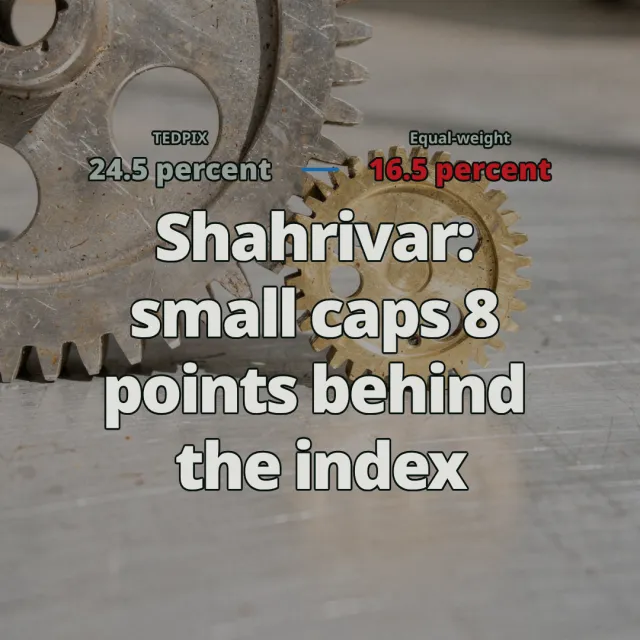
In Shahrivar, Tehran's Large Caps Pulled Ahead of the Small Ones: Headline Index 24.5 Percent, Equal-Weight Index 16.5 Percent, an 8 Point Gap in Iran Market Pulse for Saturday, September 19, 2026

From 1 to 25 Shahrivar 1405 (23 August to 16 September 2026) Tehran's headline index rose 24.5 percent while the equal-weight index, representing small and mid caps, rose 16.5 percent; the gap is 8 percentage points. On 25 Shahrivar the headline index gained 0.47 percent to a record 7,557,642 points while the equal-weight index fell 0.07 percent. R...

24 min read · 19 September
Cars · News

Iran Limits Used-Car Imports to Model Years 2021 to 2023; Since That Import Was Freed on 20 August, the Free-Market Dollar Has Risen 40,860 Tomans (Saturday, 19 September 2026)

Iran's Comprehensive Trade System said on 19 September 2026 that a used car cleared for import registration must be more than 3 and less than 5 years old, so only model years 2021, 2022 and 2023 qualify in 1405. Parliament freed these imports on 20 August with a 20,000-unit annual cap, stating the goal of helping balance prices. Over that window, S...

10 min read · 19 September

General · Market update

Iran Market Pulse, Sunday, September 20, 2026 Reports a Session in Which the Tehran Stock Exchange Main Index Fell 1.44 Percent and Closed Below 7.45 Million Points for the First Time Since September 14

Tehran's bourse opened Saturday, 19 September 2026 higher and closed red: the Tehran Stock Exchange main index fell 108,890 points, or 1.44 percent, to 7,448,843. That is the largest one session drop across the 20 sessions our recorded series covers, and its first close below 7.45 million points since Monday, 14 September. Currency, gold and coin,...

25 min read · 20 September

Stocks · Analysis

In Sahmino's Signal Scorecard, Settled Bearish Claims Reached Their Level 15.4% of the Time in a Rising, Low-Volatility Market Against 87.7% for Bullish Ones; the Bearish MACD Cross Was Lowest at 10 Hits Out of 189 (Wednesday, 16 September 2026)

Sahmino files the technical setups it detects across the whole Tehran board every night as "claims", each carrying the level that would prove it wrong. As of 16 September 2026 (25 Shahrivar 1405), in market weather we file as rising and low-volatility, 1,481 of 1,688 settled bullish claims reached their level (87.7%) against just 111 of 721 bearish...

8 min read · 16 September