
Up to 53% offSee the plans
Back to articles

Educational

Starting From Zero on the Tehran Stock Exchange: Five First Moves for a New Investor

If you wanted to enter the stock market from zero today, where would you start? This beginner's guide walks through five basic, evergreen investing steps: separating your risk capital and getting a trading code, understanding the business behind each ticker, starting with funds, keeping a long horizon, and managing your emotions. Principles that do...

Sahmino editorial· 24 July· 6 min read· Stocks

Related video

Watch onSahmino
Watch the full video

If you wanted to enter the Tehran Stock Exchange from zero today, your most important decisions happen not at the moment you buy your first share, but before it. Experience over recent years shows that much of a beginner's loss comes from having no plan, not from bad luck. In this beginner's guide we cover five basic steps: principles that do not depend on today's dollar rate or the direction of the index, and that hold up in any market.

Why most beginners lose money right away

In Iran, people tend to pour into the stock market exactly when it is hot and everyone is talking about gains. That is precisely where a beginner takes the most risk: they bring in money they need for living expenses, buy a ticker they do not understand because "everyone is buying it," then panic at the first drop and sell at the bottom. The result is a bitter experience that pushes many people away from the capital market for good. The good news is that all five common mistakes are preventable, as long as you have a simple framework before you buy.

Step one: invest only with risk capital

Before anything else, sort your money. The portion you need for the next few months, for rent, installments, or a rainy day, should not go into the market. Investing only makes sense with money that, if it is out of reach for a while or fluctuates temporarily, will not disrupt your life; this is called "risk capital." Borrowing to buy shares, or bringing your housing deposit into the market, is the most common mistake that multiplies psychological pressure and forces you to sell at the worst possible time. Keep an emergency fund separate and invest only the surplus.

Step two: finish the paperwork and the homework before you buy

Formal entry to the market has two prerequisites. The first is administrative: registering with the Sejam system, verifying your identity, obtaining a trading code, and choosing a brokerage. This path is free and a one-time step, explained move by move in our guide to Sejam and the trading code. The second, and more important, is mental: when you buy a share, you become a small partner in a business, not the holder of a lottery ticket. So before buying, ask what the company makes, where its profit comes from, and what its financial statements on the Codal system say. We introduce this mindset in our lesson on fundamental analysis.

Step three: do not start with a hot single stock; begin with funds and diversification

The temptation to buy the ticker everyone is talking about is strong, but putting all your money into one share pushes risk to its highest point. To start, investment funds are a simpler, lower-risk route: a fixed-income fund for low-volatility familiarity, and equity or exchange-traded funds (ETFs) for indirect exposure to a basket of shares. This way, instead of tying your money's fate to a single company, you spread it across dozens. Read about the different fund types in our guide to investment funds, and then, if you wish, move on to buying individual shares.

Step four: keep a long time horizon

The stock market is not a tool for getting rich overnight. Most real returns come over the long term, from the growth of businesses, not from daily trading. A beginner who follows the buy and sell queues every day usually pays more in fees and feels more fear. There is a simple historical lesson too: every time the market has been at the peak of euphoria and everyone has bought at once, the real risk has been higher than ever. The 1399 (2020) bubble is a clear example, which we revisit in this analysis. Do not bring money in sooner than you need to, and plan for a horizon of several years.

Step five: have a plan and manage your emotions

The biggest enemy of a new investor is not the market but their own emotions: greed at the top and fear at the bottom. Before buying, be clear with yourself about why you are buying, how long you will hold, and under what conditions you will review the decision. Do not trust the "guaranteed" signals of channels or "must buy" tips; there is no certain, risk-free profit in the market. Having a simple, written plan is exactly what holds back emotional decisions on volatile days.

Summary

If we compress the five steps into one sentence: first separate your risk capital, get a trading code and understand the business behind the share, start with funds and diversification, keep a long horizon, and stick to your plan. These five principles do not depend on today's market price and work in every period. The most important point: in the market, being ready to enter matters more than entering fast.

Your next step

This guide is a starting point, not the end of the road. Sahmino has a free, step-by-step beginner learning path that carries these same concepts forward simply; you can continue from the Sahmino learning section. Before your next purchase, review these five steps once for yourself.

Sources

  1. Sahmino AcademySejam and the Trading Code: A Step by Step Guide to Opening a Brokerage Account in IranCited Jul 24, 2026
  2. Sahmino AcademyWhat Is an Investment Fund? Fixed-Income, Equity, Balanced, Gold Funds and ETFs ExplainedCited Jul 24, 2026

Related articles

Stocks · Analysis

Vomahan Cut Its Price for 5% of Taban Farda by 35%: Where the Real Value of Iran's Biggest Pending IPO Sits (Thursday, July 23, 2026)

For weeks the 5% offering of Taban Farda Petrochemical Group has been called "the biggest IPO in Iran's market history." Yet on July 11, 2026, the value of Vomahan's 5% purchase was revised down from 425 to 275 trillion rials, meaning the two counterparties themselves cut the price by about 35%. This report separates three valuation anchors, tests...

19 min read · 24 July
Materials · Analysis

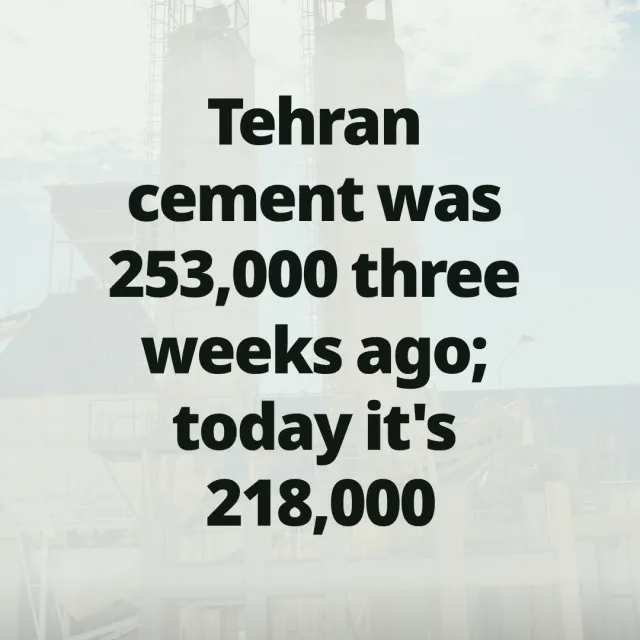
Tehran Cement Fell About 14% in Three Weeks While Saveh and Abyek Held; the Bagged Premium Now Spans 9% to 41% (Friday, July 24, 2026)

A 50 kg bag of Tehran cement has slipped from about 253,000 tomans on June 30 to 218,000 tomans on July 24, 2026, roughly 14% lower, while Saveh and Abyek barely moved. A stranger anomaly sits in the same data: the bagged-over-bulk premium ranges from 9% to 41% across producers. This report reads both against the industrial-power file, which was ju...

11 min read · 24 July

Iron & steel · Analysis

Iran Makes the World's Cheapest Rebar: It Exports an Energy Subsidy, While Its Steel Ticker Has Been Frozen for 146 Days (Friday, 24 July 2026)

Ex-works rebar in Iran runs about $365 a ton: cheaper than China, under half of Germany, a third of the US, not from productivity but from cheap gas and power melted into steel and partly shipped abroad. Iran supplies about a quarter of the world's direct-reduced iron and near 11% of the semi-finished steel trade, big enough that a Hormuz disruptio...

11 min read · 24 July

General · Market update

Iran Market Pulse: Saturday Morning, 25 July 2026; Global Gold Slid $100 from Its Record, but Domestic Gold Rose

The week opens on a divergence: as of Saturday morning, 3 Mordad 1405 (25 July 2026), spot gold traded near $4,050 an ounce, about $100 below this week's $4,150 record, yet Iran's domestic market rose on Friday against the global trend, with a gram of 18-karat gold reaching roughly 18.9 million toman and the Emami coin near 189 million toman. The f...

10 min read · 25 July