Lead
On Saturday, 20 Tir 1405 (11 July 2026), Iran's asset markets had a corrective day, but the real story lay elsewhere: domestic gold and coin fell harder than the dollar. A gram of 18-karat gold dropped 2.64% to 17,476,100 tomans and the Emami coin slid 3.11%, while the free-market dollar eased only 1.92%, returning to the 178,000-toman channel. More telling, this domestic decline came even as global spot gold held near $4,100. The driver, then, was not a crash in world gold, but a modestly firmer rial and the fading of last week's panic.
Today at a glance (close of Saturday, 20 Tir 1405)
| Indicator | Value | Change |
|---|
| Free-market dollar | 178,200 tomans | −1.92% |
| Exchange Center remittance dollar | 149,149 tomans | +0.11% |
| 18-karat gold (per gram) | 17,476,100 tomans | −2.64% |
| Emami coin | 176,010,000 tomans | −3.11% |
| Global spot gold | ~$4,104 | week −1.5% |
| TEDPIX index | 5,182,614 pts | −2.01% |
| Bitcoin | $64,131 | −0.33% |
Dollar, gold and coin figures are as of Saturday's close (~20:00); the bourse index is the official session close (12:30, recorded 16:18); Bitcoin is as of this Sunday morning, 21 Tir (08:00).
Today's headlines
- Domestic gold and coin fell: per domestic market data, by 14:34 on Saturday 20 Tir a gram of 18-karat gold was down about 2.33% and the Emami coin 2.82%, with the drop deepening to 2.64% and 3.11% by day's end.
- Global gold steady: spot gold closed the week to Friday 19 Tir in the $4,100 to $4,120 range, down about 1.5% on the week; Friday it was near $4,104.
- Dollar off last week's peak: after last week's jump into the 180,000-toman channel amid rising tensions, the free-market dollar fell 1.92% on Saturday to 178,200 tomans.
- Continued pressure on stocks: the TEDPIX shed 2.01% on Saturday, touching the 5.18-million-point channel; it was a subdued first session of the week (Saturday midday report).
- Car-pricing dispute continues: the Competition Council deemed the Industry Ministry's approved 15% factory-price increase insufficient and referred the matter to oversight bodies.
Currency
The free-market dollar fell about 3,400 tomans (1.92%) on Saturday 20 Tir to 178,200 tomans, its first meaningful retreat after last week's jump above 180,000. On the official side, the remittance dollar at the Iran Currency and Gold Exchange Center held around 149,149 tomans (Saturday morning). The gap between the free rate and the Exchange Center rate thus remains about 29,000 tomans (near 19%). One pre-open tell: the Tether rate on the domestic crypto market this Sunday morning was around 180,045 tomans, slightly above Saturday's free-market dollar, which may suggest the FX sell-off has little momentum and the market is seeking a floor. (Analysis is separate from fact; track the rates on the currency page.)
Gold and coin
The heaviest fall on Saturday was in the yellow metal. A gram of 18-karat gold cheapened 2.64% to 17,476,100 tomans, and the mesghal came to about 7,569,500 tomans on a similar drop. The Emami coin fell 3.11% to trade around 176 million tomans; the Bahar Azadi coin dropped 2.26%, the half-coin 2.29%, and the quarter-coin 3.6%. The key point for households is why the coin fell more than melt gold: the Emami coin premium (the gap between the coin's price and the intrinsic value of the gold and dollar inside it) also compressed, easing on Sahmino's data to about 3 million tomans, below roughly 5 million tomans on Friday 19 Tir. When both the base gold price and the premium pull back together, the coin's decline is magnified.
Why did domestic gold fall but global gold not? The domestic gold price is the product of global spot gold and the free-market dollar (plus the premium and costs). On Saturday world gold was roughly flat, but the free-market dollar dropped nearly 2% and the premium deflated; the combination produced a domestic decline larger than the global move. (See how coin purity and pricing work in this explainer.)
Stocks
The Tehran Stock Exchange main index fell 104,242 points (2.01%) in the week's first session, Saturday 20 Tir, to 5,182,614 points; the Farabourse index also eased 1.41% to close at 39,974. It was the fourth session under pressure, the main drop being a response to two days of intensifying military tension and the return of geopolitical risk to equity pricing. At the company level, the car-pricing dispute (the Competition Council's rejection of the 15% increase) still weighs on automaker names, while in the banking group dividend-payment schedules from shareholder meetings (including Bank Mellat from 10 Mordad and Eqtesad Novin from 28 Mordad) have been announced.
Crypto
The global crypto market was calm this morning: Bitcoin traded around $64,131 on a slight 0.33% dip and Ether near $1,811, down 0.8%. The domestic Tether rate was about 180,045 tomans; because tomans prices of crypto embed the dollar rate, part of this market's toman swings reflects the currency's move, not just the global price.
Iron, steel and commodities
In steel, size-10 ribbed rebar (A3, ex-works at Aryan Foulad) was priced around 67,270 tomans per kilogram on Saturday 20 Tir, with sizes 12 and 14 in the 65,900 to 66,000 range. Domestic steel pricing hangs on two drivers: the exchange rate (which fell Saturday) and global steel and raw-material prices. The dollar's retreat could put mild downward pressure on domestic prices in coming days, provided the currency holds.
Cars
The car-pricing file is open: the Competition Council called the Industry Ministry's approved 15% factory-price increase "insufficient" and referred the matter to oversight bodies. Until factory prices are settled, the market margin (the gap between the open-market price and the factory price) on high-demand models stays choppy, part of it tied to the path of the exchange rate.
Building materials
The materials market was quiet, with no reliable new price development recorded; its main drivers remain seasonal construction demand and energy costs. With the dollar retreating, expectations of a fresh jump in cement and import-linked materials look muted in the short term.
Regional and global backdrop
In global markets, spot gold closed the week near $4,100, down about 1.5%; its channel to Tehran is the price of gram gold and coins. Brent crude held around $76, near its recent-weeks ceiling; this elevated level reflects last week's tensions in the Strait of Hormuz and the revocation of the oil-sale waiver, and matters for Iran's currency earnings and refinery stocks. In the neighborhood, the dollar was around 47.1 against the Turkish lira (lira slightly weaker) and about 6.78 against the Chinese yuan (yuan a touch firmer); the Iraqi dinar cheapened 3.82% against the rial, mostly reflecting the rial's Saturday firming rather than any event in Baghdad. In sum: geopolitical tension has kept oil prices high, but the fading of panic has slightly eased safe-haven (dollar and gold) buying at home.
What to watch today
The most important event today is the reopening of the bourse and asset markets from 9 a.m.: does Saturday's correction continue, or does the market find a floor? The Tether rate this morning was slightly above Saturday's free-market dollar; if that gap widens, it could signal returning FX demand. Globally, follow spot gold and Brent and any fresh news on the oil sanctions and the Strait of Hormuz. On the calendar ahead, U.S. consumer inflation (CPI) data is coming, which affects the path of the dollar and global gold; see scheduled events on the market calendar. This section is a watch list only, not buy or sell advice.

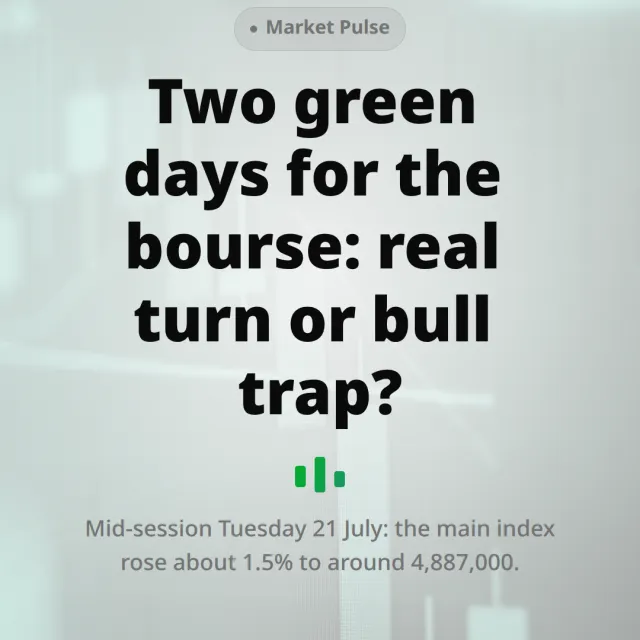 Market update
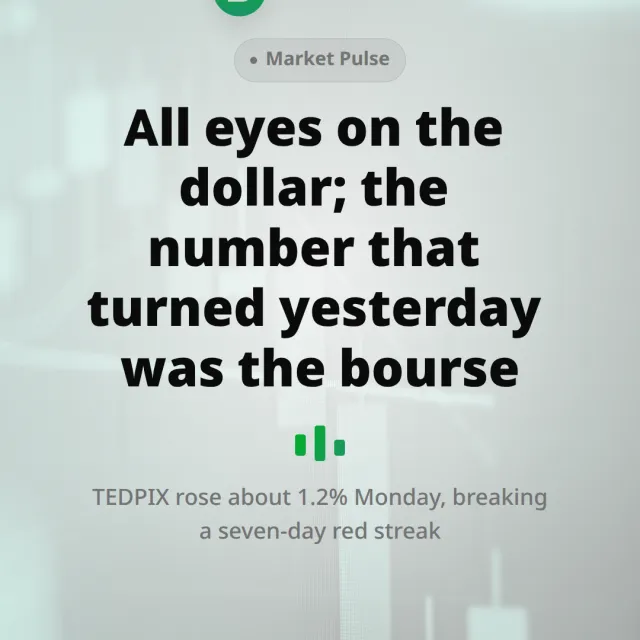 Market update
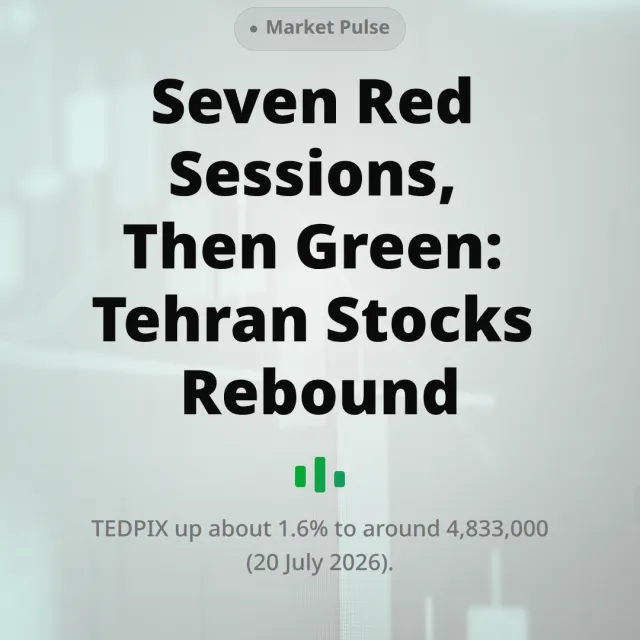 Market update
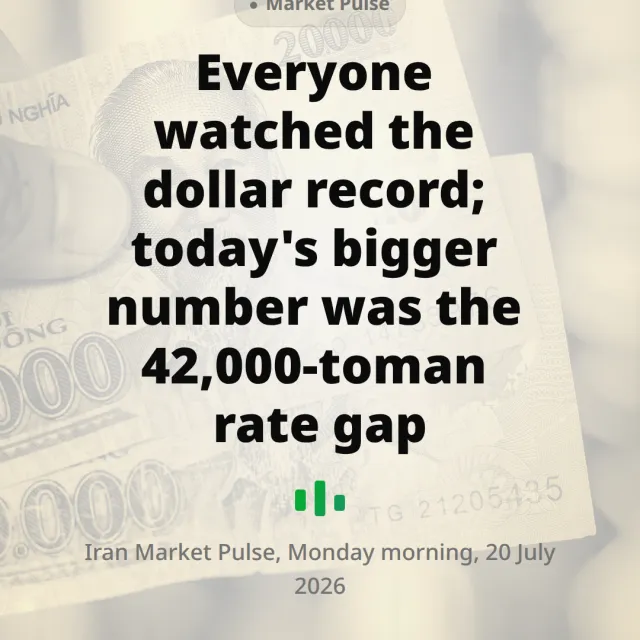 Market update