
Up to 53% offSee the plans
Back to articles

News

Central Bank Gives Marriage and Childbirth Loan Priority to Gam Bond Welfare Card Holders; Store Credit Arrives Faster, Not Necessarily Cash (Friday, August 28, 2026)

Iran's central bank says applicants for interest-free marriage and childbirth loans who choose the "welfare card linked to Gam bonds" get priority in payment order; the card gives store credit for specific goods at contracted merchants, not cash the household can spend freely (Aug 27-28, 2026).

Sahmino editorial· 28 August· 8 min read· Housing

Your marriage loan is about to reach you faster. But here is the question that matters: do you actually end up with more money to start your life?

Iran's central bank says applicants for marriage and childbirth interest-free loans (قرض‌الحسنه, gharz al-hasaneh) who choose the "welfare card linked to Gam bonds" will get priority in the payment queue.

At first glance, this looks like good news, especially for people who have waited months in the loan queue.

But there is one big difference:

This card is not necessarily the same as cash you can spend anywhere you want.

You may get your credit sooner, but where that credit can be used, for which goods, and at what price will decide what it is actually worth for your life.

So this is not just a story about banks.

It is a story about a young couple's purchasing power, the cost of starting a life, and even the price of home appliances for millions of Iranians.

Here is the question:

Does the welfare card actually untangle people's lives, or does it just change the shape of the loan?

What exactly was announced?

According to Iran's central bank (Bank Markazi), in an announcement carried on Thursday, August 27, 2026 (5 Shahrivar 1405), applicants for marriage and childbirth interest-free loans who choose the "welfare card linked to Gam bonds," instead of receiving cash directly, move up in the bank's payment queue. Banks are also required to issue this card in the shortest possible time. The key point: "payment priority" means these applicants' turn comes sooner, not that the loan is guaranteed to land in their account immediately. The core terms of the interest-free facility (ceiling, rate, repayment period) do not change on this path; what changes is the type of asset the applicant receives.

What is the welfare card, exactly?

Gam bonds (اوراق گام) are a financial instrument the central bank designed to shorten the path money takes through the economy: a credit note that changes hands instead of cash, which the holder can spend at contracted merchants or cash in at a bank. The welfare card applies the same logic, in simpler form, to a loan applicant: instead of a cash deposit, credit is loaded onto a card that can only be used within the bank's contracted merchant network, for specific goods, mainly home appliances and other durable goods.

Cash loan versus welfare card

  • Cash loan: money goes directly to the household and can be used freely, from a rental deposit to essential expenses.
  • Welfare card: purchasing power comes as restricted credit, usable only at contracted merchants and only for approved goods.

For a young couple, 300 million tomans in cash and 300 million tomans in shopping credit are not necessarily the same thing; the number is identical, but what it can actually be used for is not.

What does this change for people's everyday lives?

For a couple that needs a refrigerator, a washing machine and a stove, the welfare card can shorten the path to getting them. But for a couple that wants the money for a rental deposit, or a family that needs cash for essential costs, the same card can become a constraint, since it cannot be converted directly into cash for those needs.

Why did the central bank choose this method?

This is not only about helping households. Banks face limited resources and a mass queue of applicants, and cash disbursement puts direct pressure on their liquidity. Steering part of these mandated loans toward a credit card linked to Gam bonds eases the cash-payment pressure on banks while directing demand toward domestic goods purchases, a pattern that is more manageable for the banking network.

Who else stands to gain?

If implemented properly, merchants and manufacturers of durable goods could benefit from this new credit flow, since demand that would have been scattered as cash is instead channeled directly into goods purchases. That could also help finance the production supply chain. But the actual outcome depends on how broad and fair the contracted merchant network turns out to be.

What is the hidden risk?

If the merchant network is narrow, households will have little real choice and will have to buy from a limited set of options. If the prices of goods available through the card run higher than real market prices, the very credit meant to help loses its real value. Put simply, more credit does not always mean more purchasing power; it all depends on how transparent pricing is within the merchant network.

What could this mean for Iran's economy?

According to central bank data, Iran's money supply (liquidity) reached about 15,581 trillion tomans by the end of the 1404 Iranian year (March 2026), up roughly 53.3 percent year on year; over roughly the same period, according to Iran's Statistical Center, year-on-year point inflation in Tir 1405 (July 2026) stood at about 83.9 percent (details in Sahmino's report Inflation outpaced liquidity growth by 30.6 points). In that context, steering part of these mandated loans toward goods-only cards instead of cash could, in theory, slow the immediate inflationary effect of freshly disbursed liquidity a little, since the money is not released straight into the open market for goods and services. But this effect is not certain, and depends on the real volume of these loans, how much the cards actually get used, and how contracted merchants behave; it is too early for a firm judgment.

The bottom line for households

If you need a marriage or childbirth loan, before choosing the welfare card you should know: when the card is issued; exactly which stores accept it; which goods you can buy with it; how those goods are priced against the open market; what the real repayment terms are; and, most importantly, whether at this point in your life you need "credit to buy goods" or "cash you can use freely." The answers determine what this new priority is actually worth to your household. The central bank's decision changes the form the loan takes, not necessarily the core problem in every household's life; which one matters more to you depends on your real need, not on how the plan is marketed.

For background on this facility and central bank policy, see Sahmino's explainers on how central bank monetary policy works and the state budget and markets. The original central bank announcement is also covered in Sahmino's newsroom.

Now it is your turn

Now it is your turn.

If you had to choose between these two:

1. A cash loan, even if it arrives later

or

2. A welfare card, with payment priority, but usable only to buy goods

Which would you choose?

Tell us 1 or 2 in the comments, and say why.

Because your answer might show what Iranians need more right now than a "loan": cash, or purchasing power?

Send this report to anyone waiting in the marriage or childbirth loan queue too; this decision may directly affect their choice.

Also posted on:Instagram

Related articles

Currency · News

Hemmati Says Central Bank Has Supplied $500 Million in Negotiated-Rate FX to the Parallel Market; Gap With the Free Dollar Still 21 Percent (Thursday, Shahrivar 5, 1405)

Central Bank Governor Abdolnaser Hemmati said Thursday, Shahrivar 5, 1405 (August 27, 2026) the bank has supplied $500 million in negotiated-rate FX to the parallel market to curb "fake FX jobs," with more available if needed. Sahmino's board put today's negotiated dollar at 158,039 tomans against a free-market dollar near 200,600 tomans, a gap of…

6 min read · 27 August
Crypto · News

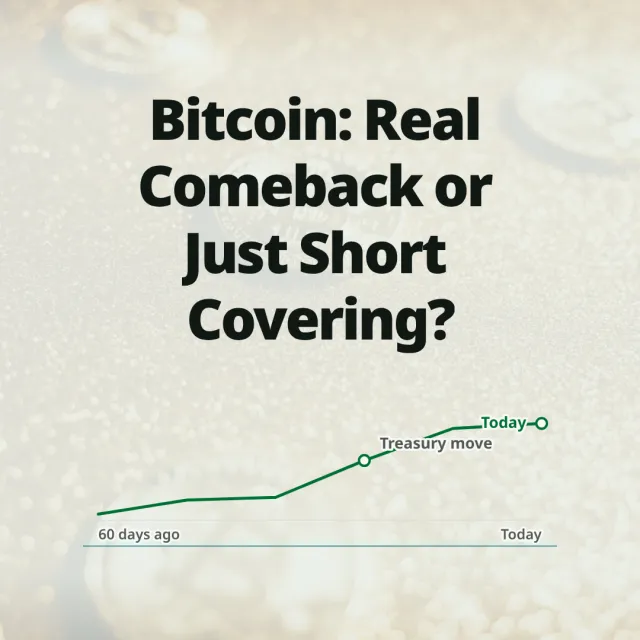
Bitcoin Reached About $79,650 Today, Its Strongest Month in Over a Year, But It's Still Well Below Its All-Time Record (Thursday, August 27, 2026)

Bitcoin traded around $79,650 today, Thursday, August 27, 2026, per CoinGecko, ArzDigital and TradingEconomics. The world's largest cryptocurrency is having its best monthly performance in over a year, but it remains clearly below its October 2025 all-time record. The main driver has been the US Treasury's August 19 decision to roughly double its l…

7 min read · 27 August

Stocks · Analysis

Rail Pardaz Novafarin's Stake in Dlip Jumps From 49.5% to 80.9% After a 450% Rights-Stripped Capital Increase (Saturday, August 29, 2026)

Rail Pardaz Novafarin's stake in Tehran Stock Exchange base-market ticker Dlip (Delijan Talaei Shokouh Pars) rose from 49.53% to 80.93% in the exchange's official ownership record dated August 26, 2026, three days after Dlip's 450.5% capital increase, funded entirely from cash with existing shareholders' pre-emptive rights stripped, was formally re…

6 min read · 29 August

Stocks · Analysis

Tehran's TEDPIX Jumps 2.03% to a Fresh Record of 6.516 Million Points; This Week's Liquidity Flows From Parallel Markets Into the Bourse (Saturday, August 29, 2026)

Tehran's TEDPIX (main stock index) rose 2.03% (up 129,581 points) on Saturday, August 29, 2026, to a record 6,516,000 points, its sixth straight gaining session, up nearly 7.5% since August 22. Trading value hit about 41.8 trillion tomans and 224 stocks gained more than 2%, as the dollar and gold pulled back this week.

7 min read · 30 August