
Six Saudi flagged tankers abandon the Bab el-Mandeb route and sail around Africa
Aug 4, 2026
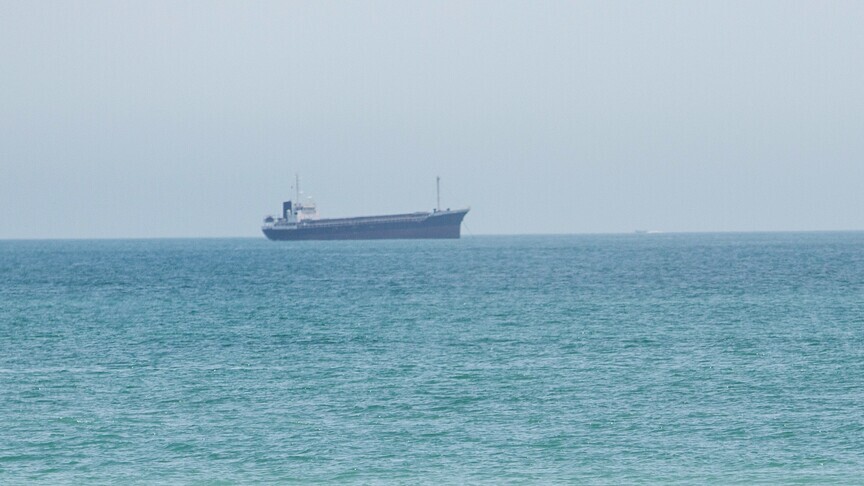
Anadolu Agency reported on Tuesday 4 August 2026 that six Saudi flagged very large crude carriers sailing in ballast have turned away from the Bab el-Mandeb route and are heading south through the Indian Ocean.
Ship tracking platform MarineTraffic said the first automatic identification system destination changes for five of the six vessels were recorded on 30 July. The Ghinah and Laynah updated their destinations to Durban in South Africa, the Burqan first signalled Durban before switching to Algoa Bay and later Port Elizabeth, while the Dilam and Hazm initially listed Gibraltar, with the Hazm changing to Durban at 2220 GMT on 31 July. The sixth tanker, the Salam, was also signalling a South African destination.
The longer route around the Cape of Good Hope adds at least two weeks to a voyage compared with passage through Bab el-Mandeb and the Red Sea. The diversions follow threats by Yemen's Houthis against vessels linked to Saudi ports.
Source
Anadolu Agency
Related news
Bloomberg says Saudi Arabia has opened back channel talks with Yemen's Ansarullah under Omani mediation
Bloomberg reported on Tuesday 4 August 2026, citing people familiar with the matter, that Saudi Arabia has opened back channel talks with Yemen's Ansarullah movement under Omani mediation. The stated aim of the quiet diplomacy is to prevent a renewed escalation of the conflict and to reduce the risk of attacks by the movement on the Saudi oil industry and economy. According to the report, the sources, who asked not to be named because of the sensitivity of the matter, said Riyadh is pursuing the diplomatic track while still preparing military options should it fail. Tension between Saudi Arabia and Yemen's armed forces rose again in recent weeks after an attack on Sanaa international airport and tighter restrictions on it. Yemen's armed forces called that attack a violation of earlier agreements and responded with missile and drone strikes on targets in Saudi Arabia, including Abha airport, while declaring a naval blockade of the kingdom. That blockade is what pushed Saudi tankers off the Bab el-Mandeb route and around the Cape of Good Hope, and cut loaded tanker capacity in the Red Sea by 22%. Any diplomatic opening between the two sides therefore bears directly on freight costs and on the region's oil supply routes.
اقتصاد آنلاین (به نقل از بلومبرگ) · Aug 4, 2026
Goldman Sachs says Persian Gulf oil exports have fallen to about 36% of their pre war level
Goldman Sachs estimated in a report published on Tuesday 4 August 2026 and carried by Reuters that oil exports from Persian Gulf countries, measured on a seven day moving average, have fallen to about 36% of their level before the start of the US war against Iran. The same measure stood at close to 80% in early July. According to the report, observable global oil inventories have drawn down by 6.3 million barrels a day over the past two weeks, the result of lower exports from the Persian Gulf and the Red Sea, reduced Russian exports and higher imports by Asian countries. Loaded tanker capacity in the Red Sea has fallen 22% since Yemen's Ansarullah declared its blockade, and Saudi Arabian oil exports are down 2.4 million barrels a day from a year earlier. Russian crude and condensate exports have fallen by 1.3 million barrels a day over the past two weeks, while repeated loading disruptions at the Caspian Pipeline Consortium terminal on the Black Sea have kept volumes on that route well below normal. The bank puts fair value for spot Brent at about $80 a barrel and argues that the market has priced in only a limited part of the geopolitical risk premium. Goldman Sachs expects crude to trade in a range of $80 to $90 a barrel until the fate of a possible US and Iran agreement becomes clear or the conflict escalates significantly. The estimates describe a physical supply squeeze that sits awkwardly with the same day fall in prices driven by hopes of a Hormuz deal.
اقتصاد آنلاین (به نقل از رویترز) · Aug 4, 2026
Oil plunges about 6% as Brent drops below $80 for the first time since 13 July
World oil prices plunged about 6% on Tuesday 4 August 2026. According to Anadolu Agency, Brent crude futures fell to around $79 a barrel as of 1550 GMT, down about 5.7% from the previous close of $83.77. It was the first time Brent has traded below $80 since 13 July. West Texas Intermediate declined about 5.9% to $75.60 a barrel from a previous close of $80.34. The main driver was intensified diplomacy over reopening the Strait of Hormuz. US Treasury Secretary Scott Bessent told CNBC that negotiations were continuing and that a deal could be reached that day or the next. US Secretary of State Marco Rubio was more cautious the same day, saying: "There's been progress made in those talks, but not finality yet." Iranian Foreign Ministry spokesman Esmaeil Baghaei said Tehran is not holding direct negotiations with Washington and that talks under Omani mediation are focused on securing safe passage for commercial vessels. Qatar said a de-escalation plan is circulating but that no clear timetable for an agreement has been set. A second factor was OPEC+ proceeding with a planned production increase of 188,000 barrels per day in September. The fall unwinds part of the geopolitical risk premium that pushed prices sharply higher in July. Crude is the single most important external variable for Iran's foreign currency earnings, and through that for the currency and gold markets and for refinery and petrochemical names on the Tehran bourse.
Anadolu Agency · Aug 4, 2026
Iran and Oman close in on a temporary Hormuz route, and Tehran's own plan would give it oversight of both lanes
US Secretary of State Marco Rubio said on Tuesday 4 August 2026 that talks with Iran on reopening the Strait of Hormuz have reached a final stage and that a reopening is possible within days. The same day, US Treasury Secretary Scott Bessent said an agreement could be reached within a day or two. What is on the table, according to Anadolu Agency, is a new Iran and Oman framework for managing shipping. Iranian Foreign Ministry spokesman Esmaeil Baqaei said on Monday 3 August that Tehran is working with Muscat to establish "a temporary route" through the strait. Oman had proposed a regional mechanism modelled on the Strait of Malacca, splitting the route 50 to 50 between the two countries' waters. Iran rejected that and tabled its own plan, under which one lane would lie entirely inside Iranian territorial waters and part of the second lane would also pass through Iranian waters. Anadolu's assessment is that this would give Tehran oversight of both inbound and outbound traffic, that is of both lanes. Foreign Minister Abbas Araghchi said on Sunday 2 August that the negotiations with Muscat were close to being finalised. No agreement has been announced. Qatari foreign ministry spokesman Majed al-Ansari said on Tuesday 4 August that no deal has been reached and that the parties are still exchanging drafts, while Baqaei has said nothing will change at the strait while the naval blockade continues. A US official told the New York Times that the Iranian account was "not accurate" and that temporary routes would not require Iranian approval. Roughly one fifth of world oil trade passes through the waterway. On Tuesday, West Texas Intermediate fell about 5% to around $76 a barrel and Brent dropped about 4% to around $80.
Anadolu Agency · Aug 4, 2026