
Newsroom
Short, verified market news summaries; every item names its source and publication date.
European Natural Gas Prices Hit Three Year High as TTF Contract Reaches €71.70 per Megawatt Hour
According to Eco Iran, citing the German business publication WirtschaftsWoche, European natural gas prices rose on Tuesday, 1 September 2026 (10 Shahrivar 1405), after reports of an attack on tankers in the Strait of Hormuz, with the front month TTF futures contract on the Amsterdam exchange climbing nearly 3 percent from the previous day to €71.70 per megawatt hour, the highest level since 2022, when prices briefly topped €300 per megawatt hour after Russian gas supplies were halted following the war in Ukraine. Norman Liebke, a commodities analyst at Germany's Commerzbank, said a one month extension of Qatari LNG delivery restrictions was a key driver of the increase. According to the comparison portal Verivox, gas prices for new customers in Germany have also risen noticeably, now standing at about 11 euro cents per kilowatt hour. Prices have climbed almost 40 percent over roughly the past three weeks, a rise tied to concern over a possible closure of the Strait of Hormuz as well as relatively low levels of European gas storage.
Eco Iran

European Gas Prices Jump 5 Percent to Three and a Half Year High as Iran US Tensions Escalate
According to Oilprice.com, Europe's benchmark natural gas price at the Dutch TTF hub jumped 5 percent in early Amsterdam trading on Monday, 9 Shahrivar 1405 (August 31, 2026), rising above 70 euros, about $81.20, per megawatt hour, the front month contract's highest level in more than three and a half years, since January 2023. According to Trading Economics, the benchmark remained above 70 euros on Tuesday as well. The resumption of US Iran strikes since Sunday night deepened concern over LNG supply from the Persian Gulf. Global oil prices also rose 3.6 percent over the same period. LNG tanker traffic through the Strait of Hormuz remains halted, even though some crude oil shipments through the route had partly resumed in recent weeks. Qatar also said last week it was extending the force majeure on its LNG deliveries by another month, a factor that, combined with the renewed fighting, pushed European gas prices higher at the start of this week.
Oilprice.com
Germany's Finance Minister Urges Trump to End the Iran War, Renews Call for an EU Windfall Tax on Oil Profits
German Finance Minister and Vice Chancellor Lars Klingbeil told public broadcaster ARD on Friday, 7 Shahrivar 1405 (August 28, 2026), that he wants US President Donald Trump to end what he called an "irresponsible" war against Iran before Trump's trip to the United States next week for the G20 finance ministers' meeting. According to ISNA, carried by Donya-e-Eqtesad, Klingbeil blamed Trump for rising fuel prices, saying "we feel it at the pumps." G20 finance ministers are set to meet Monday and Tuesday in Asheville, North Carolina, ahead of the group's leaders' summit in Miami; a US Treasury official separately confirmed Washington is working to coordinate G20 members around Iran sanctions. Klingbeil also repeated his earlier call for a unified European Union tax on oil companies' windfall profits, warning that such firms are exploiting crises and geopolitical tensions for large gains. The proposal is due to be discussed at an EU finance ministers' meeting in Dublin on September 19 (28 Shahrivar).
Donya-e-Eqtesad, citing ISNA
Netherlands Says It Will Miss Its Winter Gas Storage Target
Dutch gas network operator Gasunie said on Wednesday, 4 Shahrivar 1405 (August 26, 2026), that the Netherlands will not meet its target of storing 115 terawatt hours of natural gas ahead of winter. According to Oilprice.com, the target, roughly half the country's annual gas consumption, had been set based on the harshest winter the Netherlands has seen in 30 years. Gasunie said the shortfall does not necessarily mean the country's gas supply is at risk, but that without further policy action the Netherlands will be insufficiently prepared for a severe winter scenario. EU gas storage currently stands at 63 percent of capacity, below the five year average of 80 percent and below the roughly 76 percent level seen at this time last year. Oilprice.com said part of the shortfall is linked to a sharp drop in Qatari LNG exports caused by the Strait of Hormuz crisis.
Oilprice.com
In the North Sea, Equinor and Aker BP Discover New Gas and Condensate Field
Norwegian companies Equinor and Aker BP have announced a gas and condensate discovery near the Balder field in the North Sea. According to Oilprice.com, citing Norway's Offshore Directorate, the exploration well was drilled 16 kilometers northwest of the Balder field and 205 kilometers west of Stavanger, with preliminary estimates putting the discovery's size between 0.1 and 2.1 million standard cubic meters of recoverable oil equivalent. The announcement was made on Monday, August 24, 2026 (2 Shahrivar 1405). Norway, which became the European Union and UK's largest gas supplier after most Russian gas to Europe was cut off, produces more than 4 million barrels of oil equivalent per day, split roughly evenly between oil and gas.
Oilprice.com
Six European countries call for a windfall tax on oil company profits
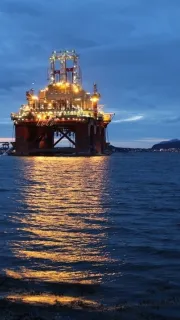
According to Ecoiran, citing Tasnim and a Euronews report published Tuesday, Shahrivar 3, 1405 (August 25, 2026), the finance ministers of Germany, Italy, Austria, Poland and Portugal, along with Spain's economy minister, sent a joint letter to Ireland's finance minister, who holds the EU's rotating presidency, calling for a windfall tax on oil company profits to be discussed at next month's EU finance ministers meeting in Dublin. The letter, obtained by Euronews, said oil company profits have surged amid the Middle East war, and the signatories called for using the EU's temporary 2022 windfall tax, imposed after Russia's invasion of Ukraine, as a model. German Finance Minister Lars Klingbeil said energy companies must not take advantage of consumers during the current crisis. The EU has not yet outlined any plan to impose such a tax.
EcoIran, citing Tasnim and Euronews
Goldman Sachs: Without a Gas Price Jump, Europe's Winter Storage Won't Fill Amid the Hormuz Crisis
Analysts at Goldman Sachs, in a note published over the weekend and carried by Bloomberg, said that if the Strait of Hormuz crisis persists and keeps Asian LNG prices elevated, European gas prices need to rise sharply by December 2026 for the continent's storage to fill for the coming winter, according to Oilprice.com. The note said that in a scenario where West Asian energy exports normalize only gradually through 2027, the Dutch TTF gas futures contract for December 2026 delivery would likely need to move above 100 euros per megawatt hour, 110 percent above Goldman's base case of 50 euros. The report said European gas storage is currently about 62 percent full, per data from Gas Infrastructure Europe, the lowest level for this time of year in nearly two decades. As of Monday morning, Shahrivar 2, 1405 (August 24, 2026), TTF gas was trading up 1.5 percent at 66.85 euros ($78) per megawatt hour.
Oilprice.com
UK Household Energy Bills Set to Rise 4% From October, Highest Since Summer 2023
According to Oilprice.com, citing energy consultancy Cornwall Insight and published Wednesday, 27 Mordad 1405 (August 19, 2026), the UK's household energy price cap for the October to December period is likely to rise 4%, taking the annual figure to 1,729 pounds (about 2,344 dollars), up from the current 1,663 pounds (2,254 dollars) and the highest level since July 2023. British energy regulator Ofgem is due to formally announce the period's price cap next week. Cornwall Insight said the increase stems from tightening global gas supply and gas restocking in Europe becoming harder and costlier because of the Iran war. UK energy bills had already risen 13% for the July 1 to September 30, 2026 period under the cap set in May. Official data released the same day showed the higher energy costs pushed UK inflation to 2.9% in July, the highest reading in four months.
Oilprice.com, citing Cornwall Insight

Romania Restarts Coal Plant to Offset Nuclear Shutdown Caused by Danube Drought
Romania's Ministry of Energy said on Tuesday, August 18, 2026 (27 Mordad 1405), that it has reconnected the roughly 300 megawatt Rovinari coal unit 4 to the national grid. The move offsets part of the power lost after the country's only nuclear plant, Cernavoda, went fully offline; its two 680 megawatt reactors normally supply about 20 percent of Romania's electricity. According to state operator Nuclearelectrica and AFP, the Danube river's lowest water level in 90 years made reactor cooling difficult and forced the shutdown. The low Danube water has also affected Hungary's Paks nuclear plant.
Oilprice.com, citing Nuclearelectrica and AFP
Grossi: Drone Attack Near Zaporizhzhia Plant Is the Most Serious Incident in Its History
According to ISNA, carried by Donya-e-Eqtesad on Tuesday, 18 August 2026 (27 Mordad 1405) at 18:37 Tehran time, International Atomic Energy Agency Director General Rafael Grossi said a drone exploded around 6 a.m. that day at a bus stop in Enerhodar used by staff traveling to the Zaporizhzhia nuclear plant. Per Tass, citing information the plant's management gave the IAEA team, the blast wounded 16 plant employees and contractors, including one killed and three severely injured. Grossi described the incident as "the most serious in the plant's history." The agency said it was also aware of attacks in the plant's industrial zone, though no damage affecting nuclear safety or security has been reported so far. Grossi called on the military commanders responsible to immediately halt such actions. Russian foreign ministry spokeswoman Maria Zakharova said Kyiv had previously refused to guarantee the safety of Grossi's planned visit to the facility on 20 and 21 August (29 and 30 Mordad).
Donya-e-Eqtesad, citing ISNA and Tass
Romania Fully Shuts Down Its Only Nuclear Plant as Danube Water Levels Fall
Romania's Energy Ministry said on Thursday, August 13, 2026 (22 Mordad 1405), according to Mediafax, as carried by Ecoiran citing Tasnim, that the Cernavoda nuclear plant, Romania's only nuclear facility and normally the source of about 20 percent of the country's electricity, has been fully shut down. The ministry said the plant's first reactor unit was taken offline in late July due to a shortage of cooling water, and the second unit went offline the same Thursday. Cristian Bușoi, Romania's energy ministry secretary, said power supply to some large industrial consumers could be restricted in the worst case, but that this would have no impact on households, and that Romania is negotiating electricity imports from Ukraine and Bulgaria. About ten days earlier, Romanian authorities had tried to boost water flow to the plant with a controlled rock blast in the Danube riverbed, a measure that only bought the second reactor a few extra days of operation. Cernavoda produces about 10 million megawatt hours of electricity a year; its two CANDU reactors entered service in 1996 and 2007.
Ecoiran, citing Tasnim and Mediafax

France and Germany Power Prices Top 300 Euros a Megawatt Hour Amid Heat Wave and Wednesday's Solar Eclipse
According to Bourse News, citing Bloomberg, European power prices surged after a fresh heat wave and reduced solar output from Wednesday's solar eclipse on August 12, 2026 (21 Mordad 1405). Data from the European Power Exchange (EPEX Spot) showed French and German power prices topping 300 euros per megawatt hour between 8 and 9 p.m. local time that day, above the level for the same window on Tuesday. France's nuclear fleet, the backbone of Europe's power supply, has faced reduced output this year as high river water temperatures have kept some plants from using river water for cooling, while a jellyfish swarm off the country's northern coast has knocked out more than three gigawatts of capacity. E.ON CEO Leonard Birnbaum told Bloomberg Television on Wednesday that the drop in French nuclear output is being felt elsewhere in Europe too. The heat wave has also hit Danube-cooled reactors in Hungary and Romania, after the river's water level fell this month to its lowest in 90 years.
Bourse News, citing Bloomberg
UK Grid Operator Warns of Tighter Power Margins During Solar Eclipse
Britain's National Energy System Operator (NESO) issued a notice to the power market and generators on Wednesday, August 12, 2026 (21 Mordad 1405), according to Oilprice.com, to encourage actions to widen the system's safety margin between 18:00 and 20:00 local time that day, when a solar eclipse, coinciding with a widespread European heatwave and higher power demand, would block sunlight needed for solar generation. The estimated system margin shortfall for the period was put at about 1.2 gigawatts, against a current contingency requirement of 676 megawatts, with 1,000 megawatts of generation capacity also excluded from the available margin due to system constraints. The operator said the notice does not signal a risk of blackouts for customers, though a Maximum Generation Service instruction may be issued. Wednesday's total solar eclipse, Europe's first in three decades, was total across parts of Greenland, Iceland, Spain and Portugal and partial across most of Europe, including the UK, where up to 95% of the sun was obscured in Cornwall. Energy operators across Europe had prepared for a temporary drop in solar output during the event.
Oilprice.com
Uniper's Profit More Than Doubles in First Half of 2026 as Germany Moves to Sell the Energy Giant
Germany's Uniper said on Tuesday, August 11, 2026 (20 Mordad 1405) that its adjusted net income for the first half of 2026 reached $448 million (388 million euros), more than double the $156 million (135 million euros) posted in the same period of 2025. According to Oilprice.com, the company also raised the lower end of its full year 2026 earnings forecast. Uniper CEO Michael Lewis said the company is now more resilient to outside shocks than in the past. The German government, which spent about $53 billion nationalizing Uniper in 2022 to prevent its collapse amid the energy crisis and the loss of Russian gas supplies, is now weighing a sale or an initial public offering of its 99 percent stake. According to the report, Norway's Equinor, Brookfield Asset Management, Czech firm EPH and Abu Dhabi's Taqa have all expressed interest in acquiring the stake.
Oilprice.com
Heatwave Cuts France's Nuclear Output as Power Prices Jump 22 Percent
According to Oilprice.com, in a report published Tuesday, August 11, 2026 (20 Mordad 1405), France's day ahead power prices jumped as much as 21.8 percent on Tuesday morning local time to 142.5 euros ($164.39) per megawatt hour, according to LSEG data cited by Reuters. The spike followed a new heatwave that has curbed nuclear power generation in France, Europe's largest supplier of nuclear electricity. Data from French utility EDF showed the country's nuclear output would be cut by 7.3 gigawatts, or 12 percent of total capacity, on Wednesday, August 12 (21 Mordad), the fifth severe heatwave to hit France since June. Nuclear power makes up about 70 percent of France's electricity mix, and low water levels and elevated temperatures in rivers used to cool reactors have constrained output; a similar heatwave in mid July had already cut 6.4 gigawatts of French nuclear capacity. Oilprice.com said the heatwaves have also forced nuclear plants in Hungary and Romania to shut down reactors because of the lowest water levels on the Danube River in 90 years.
Oilprice.com, citing Reuters and LSEG
Heatwave and Drought Push Europe's Energy Crisis Into New Phase as Brent-Diesel Spread Nears 20-Year High
According to Eghtesad Online, citing ISNA and Oilprice.com, an intense heatwave and drought across Europe are cutting refinery cooling efficiency, reducing nuclear and hydropower output, and raising the cost of shipping fuel on inland waterways. The Brent-ICE gasoil (diesel) spread topped $75 a barrel last Friday (August 1), near its highest level in 20 years, the report said. Citing Reuters, the report said output at Hungary's Paks nuclear plant, which supplies half the country's electricity, has fallen from 2,000 megawatts to just 240 megawatts, with Prime Minister Peter Magyar warning of the plant's first-ever full shutdown in its 44-year history if Danube water levels drop further. In the Alps, inflows into hydropower reservoirs are running about 50% below the 15-year average, and Norway has recorded its lowest snow reserves in two decades, leaving a 25-terawatt-hour energy shortfall.
Eghtesad Online, citing ISNA and Oilprice.com
European gas prices fell 4% as Hungary shut the Paks nuclear plant for the first time in 44 years
According to an OilPrice report on Monday, 3 August 2026 (12 Mordad 1405), European natural gas prices sank by 4% at the start of trading that day. The drop followed US President Donald Trump's announcement that he had called off a planned attack on Iranian energy sites and that talks would begin that week. Dutch TTF natural gas futures, Europe's benchmark contract, fell alongside a 5% slump in oil prices. European gas pared some of its losses by midday, however, as another heatwave lifted electricity demand. The heat and a lack of rainfall have pushed water levels on the Danube to their lowest in nearly 90 years, forcing Hungary and Romania to curb output at nuclear plants that draw on the river to cool their reactors. Hungarian Prime Minister Peter Magyar said on Sunday, 2 August, that the Paks Nuclear Power Plant would shut down on Monday because of the continued fall in the Danube's water level, the first such shutdown in 44 years. The same report notes that Qatari cargoes are not yet flowing freely out of the Persian Gulf through the Strait of Hormuz, and that Europe is losing the competition with Asia for spot LNG supply because Asian demand and prices are higher. European gas storage is also heading for its second lowest level for this time of year in 15 years, well below the five year average.
OilPrice.com
Germany's energy demand falls 1.9% in the first half of 2026 as oil product use drops 8%
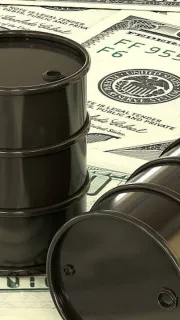
Preliminary data from Germany's Working Group on Energy Balances (AGEB), published on Tuesday 4 August 2026, show the country's energy demand fell 1.9% in the first half of 2026 as oil and gas prices surged. Oil product consumption dropped 8% over the period. The decline was sharpest in light heating oil, down more than 30%, and diesel, down close to 6%, while gasoline consumption fell only 0.6% and jet fuel 1%. Coal consumption rose 7% and natural gas consumption rose 1.3%. In total, hydrocarbons accounted for 75.9% of German energy consumption in the half year. Wind and solar together made up 22.2% of overall energy consumption, up from 20.9% a year earlier. In electricity generation, hydropower, wind and solar reached an all time high combined share of 58% in the first half, against 55.8% a year earlier, with most of the increase coming from wind while hydropower fell 7.7%.
Oilprice.com
BP to sell its Archaea biogas business in a further retreat from green energy
BP announced on Tuesday 4 August 2026 that it will offload Archaea, its US biogas business. According to Oilprice, the decision comes just days after the company confirmed its exit from the North Sea and is part of a shift back toward core oil and gas products at the London listed major. BP had previously told investors it planned to market assets across its operating regions as part of a restructuring overseen by new chief executive Meg O'Neill. The company acquired Archaea for $4.1 billion in 2022, but the business has since faced financial underperformance and slower than expected growth, forcing BP to reassess the asset's value. The announcement came alongside BP's second quarter 2026 underlying replacement cost profit of $5.7 billion.
Oilprice.com
An EU naval mission boards a sanctioned Russian tanker west of Sicily
Italy's Defence Ministry said on Sunday, 2 August 2026 (11 Mordad 1405), that the Italian led European Union naval mission boarded the tanker Toa Payoh, which is under EU sanctions, west of the island of Pantelleria near Sicily while it was sailing from Benin to Istanbul. Reuters reported the operation and Iranian business outlets relayed it. According to published reports, the vessel had presented itself last week as a Cameroon flagged tanker. An informed official said the EU naval mission does not have the authority to seize vessels during such inspections, meaning the Toa Payoh was not impounded. Documents gathered during the operation are still being reviewed, however, and may be passed to national authorities for further action if needed. The ship's captain initially did not cooperate with the EU team, which prompted a group of Italian military personnel to board. According to the Italian Defence Ministry, the inspection was supported by a Greek vessel and a Polish maritime patrol aircraft, lasted about two hours and ended without incident. Russia has not commented on the operation. It is the second EU action against Russian tankers in less than two weeks, after EU forces stopped and inspected another Russian tanker last month over the use of a false flag. The EU has sanctioned dozens of Russian vessels, saying they form part of a "shadow fleet" used to circumvent restrictions on Russian oil exports. Tighter inspections in the Mediterranean raise freight and insurance costs for sanctioned crude and, in turn, affect the discounts at which such cargoes sell.
Eghtesad Online, citing Reuters and وزارت دفاع ایتالیا
Europe needs more than 660 billion euros a year of investment to bring power costs down
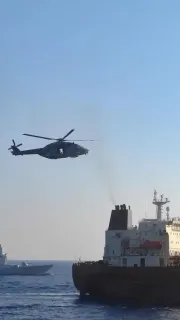
The European Union is seeking to cut its high energy costs and rebuild its industrial competitiveness through large scale investment in domestic power generation and renewables. According to a report published on Sunday, 2 August 2026, the International Energy Agency has said European electricity prices are now about 50 percent higher than in China and twice the level in the United States. The EU plans to raise the share of renewables from about 26 percent today to at least 42.5 percent by 2030, and to lift electricity to 46 percent of final energy consumption by 2040. Delivering that plan requires annual investment of more than 660 billion euros through to 2040. The European Commission estimates the path could cut roughly 260 billion euros a year from fossil fuel import costs, against the roughly 450 billion euros a year the bloc has spent on fossil fuel imports since the 2022 crisis. The current pressure traces back to the jump in energy prices after Russia's invasion of Ukraine in 2022. At the peak of that crisis, gas prices passed 260 euros per megawatt hour in August 2022, and Europe replaced long term pipeline contracts with more expensive liquefied natural gas imports. The shift hit energy intensive industries including chemicals, fertiliser, aluminium, steel, cement and paper. The need for cheap power has been sharpened further by the spread of artificial intelligence: the United States holds more than 50 percent of global data centre capacity, China about 30 percent and Europe only 12 percent.
Eghtesad Online
A heatwave forces Hungary's largest nuclear plant offline for the first time in 44 years
Hungary said on Sunday, 2 August 2026, that a heatwave has forced the shutdown of its largest nuclear power plant for the first time in 44 years. According to the report, scorching temperatures and drought have pushed the Danube river to record low water levels, disrupting the reactor cooling systems. Nuclear plants depend on a continuous intake of river water for cooling, and a sharp fall in water levels interrupts that cycle. The shutdown comes in weeks when unprecedented summer heat has been straining Europe's power grid. Lost nuclear output at the peak of the consumption season usually means substitution with fossil fuels and stronger demand for imported power and gas, a path that can feed through to energy prices across the continent.
Al Jazeera
A heatwave pushed European power prices to winter levels, with German power reaching 210 euros a megawatt hour on 23 June
An intense heatwave across Europe this summer has pushed electricity prices to levels normally seen in the cold winter months at the peak of heating demand. According to London Stock Exchange Group data reported on Sunday 2 August 2026 (11 Mordad 1405), the day ahead power price in Germany reached 210 euros per megawatt hour on 23 June 2026, while power contract prices in France and the United Kingdom rose to their highest levels since January 2025. The pressure has come from two directions. On the supply side, according to data from Kpler, when temperatures passed 40 degrees Celsius in parts of France, the country's nuclear output fell by more than 9 gigawatts over several days and 12 of its 57 reactors were affected, because the reactors rely on river water for cooling. According to the think tank Ember, nuclear plants supply about 23 percent and gas plants about 17 percent of the European Union's electricity; Rystad Energy reports that a typical gas plant can lose roughly 7 to 12 percent of its output at 30 degrees Celsius. The channel to Iran's market is the gas price: according to Bourse News, gas prices have approached their highest levels since the start of the Russia and Ukraine war in 2022 because of disruption to energy transit from West Asia following the US attack on Iran, and that has raised the cost of generating electricity in Europe.
Bourse News, citing Reuters and دادههای LSEG
Hungary to shut its only nuclear power plant as the Danube falls to a record low
Hungarian Prime Minister Peter Magyar said the Paks Nuclear Power Plant in central Hungary would be powered down on Sunday, 2 August 2026, the first full shutdown in its 44 year history. Paks supplies nearly half of Hungary's electricity and draws cooling water for its reactors from the Danube River. Magyar said output had fallen to 965 megawatts on Friday, 31 July 2026, and to 240 megawatts overnight, far below the normal 2,000 megawatts. Low river levels have limited the ability of the plant's pumps to draw in enough water. A river level of minus 134cm at Paks forces a full shutdown, and the level is expected to fall as low as minus 144cm, far below the previous record of minus 98cm set in 2018. Months of heat and drought have lowered levels on several European rivers, and Hungary has placed more than 100 cities and villages under water use restrictions. The government has asked companies that use large volumes of water to cut consumption voluntarily. The event has also disrupted shipping, tourism, agriculture and industry in the country. Slovakia's Prime Minister Robert Fico said his country was closely monitoring the energy situation and was ready to help.
Al Jazeera

Shell posts best quarterly profit in four years with $9.84 billion adjusted earnings in Q2 2026
Britain's Shell reported on Thursday 30 July 2026 that its adjusted second quarter earnings reached $9.84 billion, above the $8.79 billion analyst consensus compiled by LSEG. That compares with $4.26 billion in the second quarter of 2025 and $6.92 billion in the first quarter of 2026, and is Shell's best quarterly result since the second quarter of 2022, when the company posted $11.47 billion. According to Shell's report, cash flow from operations reached $21.4 billion in the second quarter of 2026, while net debt fell to $41.75 billion from $52.6 billion at the end of the first quarter. Shell said it would maintain the pace of its share buyback programme at $3 billion over the next quarter and left its 2026 capital expenditure outlook unchanged at $24 billion to $26 billion. Chief Executive Wael Sawan said volatility had become the new normal and that high commodity prices provided a tailwind for the results. The jump in oil and gas prices during the regional war has lifted profits at the energy majors, which matters for Iran's market through the global oil price channel.
CNBC
Europe heads into winter with gas stocks below average and renewed Asian competition for LNG
Donya-e-Eqtesad reports that Europe's energy market has entered a sensitive phase with only a few months left before the cold season, this time not because of a sudden cut in Russian gas but because of several overlapping factors: a slowdown in the filling of gas storage, intense competition with Asia for liquefied natural gas cargoes, the continuing war in Ukraine, and insecurity along West Asian energy transit routes. After the 2022 crisis, the European Union required member states to fill most of their storage capacity before winter. This year, although injection into storage continues, its pace has slowed and stock levels sit below the average of recent years. The main reasons cited are higher LNG prices, reduced global supply and competition for uncommitted cargoes, and on that basis many analysts doubt Europe's ability to reach its storage targets. The key difference this year is the return of Asian demand. Rising industrial activity, growth in electricity consumption and Asian countries' efforts to fill their own stocks have again intensified competition to buy LNG. In this market price determines where cargoes go, so Europe must pay more to attract each shipment, a cost that ultimately shows up in electricity, gas and industrial product prices.
Donya-e-Eqtesad
Shell sells its stake in Cyprus's Aphrodite gas field to Hungary's MOL for $720 million
Shell announced on Friday, 31 July 2026, that it has agreed with Hungary's MOL Group to sell its wholly owned subsidiary BG Cyprus Ltd for $720 million, subject to customary adjustments and milestone linked contingent payments. BG Cyprus holds a 35% non operated interest in Cyprus Offshore Block 12, which contains the Aphrodite gas field, operated by Chevron's local subsidiary. Chevron, MOL and NewMed Energy, who will be the field's new co owners, are working toward a final investment decision to develop Aphrodite, and all the gas potentially produced there is expected to be sold to the Egyptian Natural Gas Holding Company (EGAS). Shell acquired the interest when it bought BG Group in early 2016. Cederic Cremers, Shell's Integrated Gas President, said the decision to exit was "driven by disciplined capital allocation and portfolio choices," as the company focuses on opportunities that strengthen its integrated LNG value chain. Gas discoveries offshore Cyprus have drawn interest from the majors in recent years; this week Eni and TotalEnergies took the final investment decision to develop the Cronos gas field in deep water offshore Cyprus, the country's first hydrocarbon development, expected to bring first gas to market in 2028.
OilPrice.com
Italy Became Europe's Top LNG Importer in July as German Gas Storage Fell to Its Lowest Since 2009
Italy became Europe's largest importer of liquefied natural gas in July 2026. Bloomberg reported on Friday, 31 July 2026, that Italian traders kept buying cargoes by making use of government incentives, while neighbouring countries held back on costly purchases and allowed storage levels to lag. According to Bloomberg ship-tracking data going back to 2017, this is the first time Italy has taken the top spot. War and supply disruptions in West Asia have caused European gas prices to roughly double so far this year, and European gas futures have added more than 30% in July alone. Italy's power sector is the most reliant on gas in Europe and its energy needs jumped during recent heat waves; the country's storage regulation also carries strict refilling targets and fines for missing them. Italy's gas storage sites are currently 75% full, below the five-year seasonal average but the highest among Europe's top markets. Germany's facilities are at 47%, the lowest share of utilised capacity for this time of year in records going back to 2009, while France's inventories are 56% full. According to Bloomberg, Goldman Sachs sees the possibility of prices reaching 100 euros a megawatt hour in December if the market remains tight, some 75% above current levels.
gCaptain, citing Bloomberg
BP launches sale of its North Sea business, ending some 60 years of production
BP announced on Friday 31 July 2026 that it has begun a process to market its North Sea business for a potential sale. The portfolio comprises five production hubs off the UK coast and employs about 1,100 people. A full divestment could bring to an end some 60 years of BP production in the North Sea. The move is part of a broad portfolio overhaul under new chief executive Meg O'Neill, a plan targeting $20 billion in asset disposals by 2027 to cut debt and simplify the company's structure. Bloomberg has estimated that a full sale of the unit could fetch around £2 billion (close to $2.7 billion). BP's chief executive said the UK has been the company's home for more than 100 years and will continue to play a role in its future. Upstream asset disposals by the oil majors are being followed closely in energy markets at a time when global crude prices are swinging under geopolitical pressure.
bp
European natural gas prices fall by up to 9 percent on Monday, dipping below 58 euros
European natural gas prices fell sharply on Monday, 27 July 2026, as the geopolitical risk premium was cut back. Dutch TTF benchmark contracts dropped by close to 9 percent in early trading, and the nearest expiring contract, down as much as 8.5 percent, briefly traded below 58 euros per megawatt hour. The move followed signals from Iranian officials of a conditional halt to attacks on commercial shipping and a simultaneous fall in crude oil prices. The easing of tensions strengthened expectations of smoother LNG cargo traffic and reduced the perceived risk of large scale rerouting of supply towards Asia. The underlying picture nonetheless remains fragile. European gas storage stands near 54 percent of capacity, below the five year norm, and on current estimates will miss the region's 80 percent refill target before winter. The 30 day average volume of LNG imports into Europe has also been running as much as 23 percent below the five year average.
Tradingpedia
European natural gas drops more than 7% Monday to below 59 euros as Iran and Oman discuss the Strait of Hormuz
European natural gas prices fell more than 7 percent on Monday, 27 July 2026 (5 Mordad 1405), to below 59 euros per megawatt hour, pulling back from a four-month high. According to Trading Economics data, the TTF benchmark stood at 58.54 euros the same day, down 7.28 percent from the previous session. The Dutch TTF hub contract is the benchmark for Europe's gas market. The driver is the easing of military tension. The United States has launched no further operations against Iran since late Friday, 24 July, after 13 consecutive nights of strikes, and Tehran said on Sunday, 26 July, that it had suspended its retaliatory operations. The pause coincided with talks between Iranian and Omani officials on shipping through the Strait of Hormuz, raising hopes that further disruption to the key energy transit route could be avoided. The same benchmark had reached close to 63 euros on Friday. Concerns over Europe's gas supply security nevertheless persist. European gas storage is 54.2 percent full, well below the 65 percent recorded a year earlier, and unusually hot weather has lifted electricity demand. For Iran, European gas prices have become one of the market's most precise gauges of Strait of Hormuz risk, on a waterway that also carries Iran's oil exports.
Trading Economics
The EU adopts its 21st sanctions package on Russia as Greece secures a one year exemption for shipping Russian LNG
The European Union agreed on Thursday, 23 July 2026, on its 21st package of sanctions against Russia. The package imposes new restrictions on the Russian banking sector. At the same time, following a request from Greece, the package includes a one year exemption with automatic renewal that allows European companies to continue transporting Russian liquefied natural gas to third countries, but only under contracts concluded before 24 February 2022. Under the arrangement, existing activities are preserved while European operators may not undertake new ones, effectively freezing transport volumes at current levels, and the EU Council will be able to review the exemption annually. Athens had argued that a full ban on transfer services for Russian LNG to third countries would do little to cut Moscow's revenue and would simply hand market share to non European competitors while reducing European oversight. For an Iranian audience the case is instructive because it shows how energy sanctions regimes are softened in practice through contractual carve outs.
Anadolu Agency
TotalEnergies' adjusted net income rose 68 percent to $6.03 billion in the second quarter of 2026
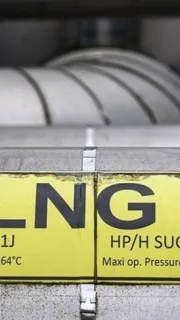
France's TotalEnergies reported on Thursday, 23 July 2026, adjusted net income of $6.03 billion for the second quarter of 2026, up 68 percent from $3.58 billion a year earlier and 12 percent higher than the $5.39 billion recorded in the first quarter. According to the results, the Refining and Chemicals segment posted adjusted net operating income of $1.8 billion, up 13 percent from the first quarter and more than four times the prior year figure. Cash flow from operations excluding working capital came in at $9.8 billion, up 14 percent from the previous quarter and 48 percent higher than in the second quarter of 2025. The company said higher oil prices, refining margins and trading performance offset lower production and weaker results from its liquefied natural gas business. The figures show how the Strait of Hormuz crisis and higher crude prices have lifted the earnings of the world's oil and refining majors, the same variable that shapes refining margins at Iran's listed refiners.
Anadolu Agency

Wall Street Journal: US warns Ukraine against striking third country tankers in the Black Sea
The Wall Street Journal reported on Saturday, 25 July 2026, that the US administration has formally warned Ukraine that attacks on ships and oil infrastructure belonging to third countries in the Black Sea are unacceptable. According to the report, the warning followed a Ukrainian drone attack near the Russian port of Novorossiysk that damaged four tankers, one of them chartered by the US company Chevron. Chevron chief executive Mike Wirth spoke with administration officials this week about the situation in the Black Sea. Novorossiysk is the export terminal of the Caspian Pipeline Consortium, which carries about 2 percent of the world's daily oil supply, and Chevron holds stakes in the consortium and in Kazakhstan's Tengiz oil field. Ukraine's ambassador has also confirmed that Washington raised concerns over strikes that affected US oil interests. Disruption on this route, alongside the constrained traffic through the Strait of Hormuz, is a second front of pressure on global oil supply, a variable that bears directly on oil prices and Iran's foreign currency earnings.
Eghtesad Online
European Natural Gas Hits a Four-Month High as Reduced Persian Gulf LNG Cargoes Tighten the Market
European natural gas prices climbed above 63 euros per megawatt hour on Friday, 24 July, reaching their highest level in four months. The front-month contract at the Dutch TTF hub, Europe's benchmark, rose about 0.4 percent and is up nearly 8 percent on the week and more than 42 percent since the start of July. The rally is driven mainly by reduced LNG cargo flows from the Persian Gulf, as military tensions and disrupted tanker and gas-carrier traffic through the Strait of Hormuz curb supply. With flows tighter, Asian buyers have outbid European utilities for spot cargoes, diverting some shipments away from European import terminals. An intense heatwave across Europe has also lifted power demand for cooling, adding to gas consumption.
Investing.com
European natural gas tops €62/MWh, nearing its wartime peak
European natural gas prices kept climbing as the Iran-US war continued. According to GMK Center, the benchmark TTF index rose above 62 euros per megawatt-hour (August contract) in intraday trading on Tuesday, 22 July 2026, a level near the price peak at the start of the conflict. On 20 July the price had briefly touched 60 euros. The main drivers are geopolitical concerns and fierce competition for spot liquefied natural gas (LNG) cargoes, alongside rising freight and insurance costs in the region. Even so, analysts say there is no immediate concern for supply security next winter, and storage-filling targets remain within reach. For Iran, holder of one of the world's largest gas reserves, the moves are a reminder of energy's strategic role in regional dynamics, though the country's gas exports remain constrained under sanctions.
GMK Center
European natural gas tops €59, a four-month high
The price of Dutch TTF natural gas, Europe's main benchmark, rose above €59 per megawatt-hour this week, its highest in about four months. The main driver was cited as the military tensions in West Asia and the disruption to tanker and ship traffic through the Strait of Hormuz, together with delays to Qatari LNG exports. Europe is refilling gas storage ahead of the cold season, and reduced LNG supply from the Persian Gulf could make the continent's competition with Asian buyers more costly. The Strait of Hormuz is a vital channel for Iran's and the region's energy exports, and its volatility directly affects the global energy market and inflation expectations.
Trading Economics
Europe's diesel refining margins climb to their highest in years
According to Argus, diesel and gasoil refining margins in Europe have reached their highest in years, moving above roughly 60 dollars a barrel, prompting European refiners to shift their economics back toward producing road transport fuels. The main drivers are lower global supply of refined products, curbs on Russia's diesel exports and disruptions stemming from the Strait of Hormuz crisis. The average price of diesel across European Union countries in mid-July 2026 was around 1.75 euros per litre. The diesel shortage and costlier gasoil are an important global variable for the energy market and indirectly affect product prices and transport costs in import-dependent markets as well.
Argus Media
European natural gas jumps more than 29 percent in July; Goldman Sachs warns of a possible 130 percent surge
The price of Dutch TTF natural gas, Europe's benchmark, jumped amid the Strait of Hormuz crisis and Qatar's halt to its LNG output ramp-up, reaching around 54.5 euros per megawatt-hour, the highest in more than three months. Market data show the benchmark has risen more than 29 percent in July 2026, erasing a decline of over 14 percent in the spring quarter. Qatar, the region's largest LNG exporter, halted its production increase and suspended maritime activity after one of its tankers was attacked near Hormuz. Goldman Sachs commodity analysts warned that if LNG flows through the Strait of Hormuz were fully halted for a month, TTF could approach about 74 euros per megawatt-hour, roughly 130 percent above end-of-week levels. The channel to Iran is indirect: the same Hormuz disruption lifting European gas also chokes regional energy exports and hard-currency revenue.
Yahoo Finance
European natural gas hits three-month high near €53 as Hormuz crisis deepens
European natural gas (the Dutch TTF futures contract) rose about 3% to near €53 per megawatt-hour on Tuesday, July 14, 2026, climbing to its highest level in more than three months and extending Monday's rally. The main driver is Donald Trump's decision to resume the blockade of Iran's ports and the tension in the Strait of Hormuz. LNG exports from West Asia, which had only recently begun to recover after the interim Iran-US agreement in June, have stalled again with the renewed hostilities, heightening concerns over disruptions to Qatar's shipments. Europe is entering the season of refilling gas storage for winter and is therefore sensitive to a cut in the region's exports. For Iran, holder of one of the world's largest gas reserves, swings in global energy markets are an important gauge of the sanctions and demand backdrop.
Yahoo Finance
European natural gas jumps on Hormuz crisis; Dutch contract tops 50 euros
Natural gas prices in Europe rose on Monday, 13 July 2026, as the Strait of Hormuz crisis intensified. The Dutch TTF front-month contract, Europe's main benchmark, gained about 3.5 percent to roughly 50.4 euros per megawatt-hour, again crossing the 50-euro mark. The move was driven by Iran's declaration that the Strait of Hormuz was closed and Qatar's halt to maritime activity after attacks on tankers. Hormuz carries about one-fifth of the world's liquefied natural gas (LNG) trade, including the bulk of Qatar's exports. Goldman Sachs analysts have estimated that a full disruption could push European gas prices up by around 130 percent. The development matters for Iran's economy through the energy market and global oil prices.
Anadolu Agency
European Natural Gas Falls on Friday After a Hormuz Driven Spike
European natural gas futures (Dutch TTF) fell about 2 percent on Friday, July 10, 2026, to around 49.2 euros per megawatt hour. The drop came after prices had jumped more than 12 percent over the previous three sessions, a surge triggered by fresh US strikes on Iranian targets and tension in the Strait of Hormuz. The Strait of Hormuz carries about one fifth of global oil and LNG trade, and any disruption there lifts global spot LNG prices and, in turn, European gas rates as the continent works to refill storage ahead of winter. The recent swings underline how sensitive the European gas market is to developments involving Iran and West Asia.
Trading Economics
EU Races to Avert Automatic Jump in Russian Oil Price Cap by July 15
EU ambassadors met on Friday, July 10, 2026, to try to prevent an automatic six-monthly revision of the G7/EU price cap on Russian seaborne oil. The current cap, confirmed by the European Commission, stands at $44.10 a barrel, but the recent spike in global oil prices following the Strait of Hormuz crisis threatens to push the automatic revision formula to a far higher level. According to Euronews (July 10, 2026), Brussels wants to freeze the cap at $44.10 through January 2027, but Bulgaria has blocked the package over an unrelated sanctions-list dispute. The deadline to avoid the automatic revision is July 15.
Euronews
European Gas Prices Hit One-Month High on Strait of Hormuz Supply Fears
European natural gas prices, tracked by the Dutch TTF benchmark, climbed to about 50 euros per megawatt hour on Thursday, July 9, 2026, after a 5.1 percent rise in the prior session, the highest level in a month. Markets cited concerns over potential disruption to Persian Gulf LNG supplies as Iran-US military tensions escalated again around the Strait of Hormuz. The Strait of Hormuz carries about a fifth of global oil and LNG trade, and analysts have warned a prolonged disruption could complicate Europe's efforts to rebuild gas storage ahead of winter demand. Goldman Sachs kept its base-case second-half 2026 TTF forecast at 41 euros per megawatt hour, but flagged a risk scenario in which a full Hormuz disruption could push prices above 100 euros per megawatt hour.
Investing.com