
Newsroom
Short, verified market news summaries; every item names its source and publication date.
Bank of Russia cuts its key rate for a tenth straight time, to 14%
The Bank of Russia cut its policy rate by 25 basis points on Friday, 24 July 2026 (2 Mordad 1405), lowering it from 14.25 percent to 14 percent. It was the tenth consecutive rate cut in Russia. The central bank attributed the decision to a moderate pace of economic growth since the start of the year, rising inflation expectations among households, businesses and financial markets, and a slowdown in lending. Alongside the cut, the Bank of Russia lowered its 2026 economic growth forecast to a range of zero to 1 percent, from 0.5 to 1.5 percent previously. It raised its 2026 inflation forecast to a range of 6 to 7 percent, from 4.5 to 5.5 percent, citing the considerable rise in fuel prices as the reason for the revision. Its estimates of underlying inflation remain in the range of 4 to 5 percent on an annualised basis. Friday's decision ran against market expectations: most analysts in a Reuters poll that week had forecast that the Bank of Russia would hold the rate steady because of higher fuel costs. Russia is one of Iran's trading partners, and the path of the rouble and Moscow's monetary policy affect trade between the two countries. The main driver of Moscow's inflation revision, the jump in fuel prices, is the same energy shock that has weighed on global markets in recent weeks.
Anadolu Agency
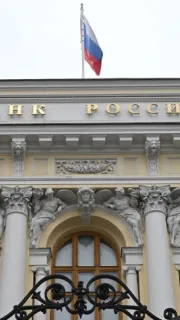
Bank of Russia cuts key rate to 14%; lifts 2026 inflation forecast to 6 to 7 percent
On Friday, 24 July 2026, the Bank of Russia board cut its key interest rate by 0.25 percentage point, from 14.25 percent to 14 percent. It was the tenth consecutive cut and came against expectations; a Reuters poll before the meeting had leaned toward the rate being left on hold. The central bank simultaneously raised its 2026 inflation forecast from a range of 4.5 to 5.5 percent to 6 to 7 percent, citing a considerable rise in fuel prices and a temporary decline in production capacity in some sectors. Annual inflation stood at 5.9 percent as of 20 July. The bank also lowered its 2026 economic growth forecast to between zero and 1 percent, from 0.5 to 1.5 percent previously. Under its baseline scenario, the key rate is expected to average about 14.5 to 14.6 percent in 2026, and the next meeting is set for 11 September. Russia is one of Iran's important trade and energy partners, so the path of its interest rate and the value of the ruble matter for bilateral transactions. Continued rate cuts amid inflationary pressure sketch a picture of the simultaneous growth and inflation squeeze in the Russian economy.
Bank of Russia
Bank of Russia to decide on key rate on Friday
The Board of the Bank of Russia will decide on its key interest rate on Friday, 24 July. At its previous meeting on 19 June, the bank cut the rate by 0.25 percentage point to 14.25 percent, a more cautious move than some analysts who had expected a larger reduction. The central bank has flagged inflation risks from higher energy prices following the war in West Asia, as well as strikes on domestic refineries. Russia, as a major sanctioned oil exporter, is alongside Iran part of the oil supply equation and the discounted export routes to the Asian market.
Bank of Russia
Russia's key rate stands at 14.25 percent ahead of a 24 July decision
Russia's central bank key rate stands at 14.25 percent after a 25 basis point cut on 19 June 2026. The board's next rate-setting meeting is scheduled for 24 July. Russia's annual inflation was about 5.6 percent as of 15 June, above the central bank's 4 percent target. Russia is a trade and energy partner of Iran.
The Moscow Times
Russian Ruble Nears 76 Per Dollar, Down 5% on the Month
The USD/RUB exchange rate reached 75.91 on Thursday, July 9, 2026, down 1.16 percent from the previous session in ruble terms. According to Trading Economics, the ruble has weakened 5.07 percent over the past month, though it remains up 2.11 percent from a year earlier. Russia's central bank had previously said fiscal policy would be more accommodative than expected over the next three years, as the federal government increases bond issuance to fund the war in Ukraine and subsidies for industries hit by Western sanctions.
Trading Economics