
Newsroom
Short, verified market news summaries; every item names its source and publication date.
Bank of Russia Blacklists 2,600 Crypto Wallets in First Half of 2026
The Bank of Russia said in a new report that it identified and blacklisted about 2,600 cryptocurrency wallets linked to illegal activity in the first half of 2026, a figure down roughly 31 percent from the same period last year. Rather than blocking wallets directly on the blockchain, the report said Russia's monitoring system links flagged wallets to bank accounts and payment gateways, cutting the owners of suspicious transactions off from the formal financial system once flagged. The central bank warned that despite fewer identified cases, about 74 percent of Ponzi schemes in Russia now use cryptocurrency to raise funds, and the use of tether for illegal lending has doubled compared with the previous year.
Arzdigital

Russia's Central Bank Blacklists Over 2,600 Suspicious Crypto Wallets
The Bank of Russia has blacklisted more than 2,600 cryptocurrency wallets suspected of involvement in illegal schemes and fraud. The central bank said more than one billion rubles moved through these addresses in the first half of 2026. The data has been shared with banks' monitoring systems and law enforcement agencies. The bank said that while the number of illegal entities identified fell 31 percent from a year earlier, 74 percent of identified Ponzi schemes used digital assets to raise funds, and scammers have recently turned to offering "crypto loans" in USDT or rubles at unrealistic rates.
Arzdigital

Reuters: Binance Gave Russia Identity Data on a User Who Funded Ukraine's Military
According to a Reuters investigation reported by Arzdigital on Monday, 26 Mordad 1405 (August 17, 2026), cryptocurrency exchange Binance provided Russian authorities with identity information and transaction records for Yuri Belenkiy, a Russian IT specialist based in Bulgaria. The data included his home address, phone number, date of birth, and passport and Bulgarian residency details, and was later used as part of a terrorism financing case against him in Russia. Per documents reviewed by Reuters, Belenkiy is accused of transferring more than 700 dollars in cryptocurrency to wallets promoted by exiled Kremlin critic Arkady Babchenko for the purchase of medical equipment for Ukrainian forces. Belenkiy is currently in detention in Russia. Binance has not commented on the case's details but said that, like other financial institutions, it cooperates with lawful requests from law enforcement within privacy regulations, while it remains unclear whether EU data protection rules apply in the case.
Arzdigital, citing Reuters
Russia Bans Crypto Mining in Moscow and Parts of Kursk Through 2032
Moscow and parts of Russia's Kursk region were banned from cryptocurrency mining and mining-pool participation through the end of December 2032, under government decree No. 936, which was signed on 3 Mordad 1405 (July 25, 2026) and published on 9 Mordad (July 31). According to CoinDesk, Russia's Energy Ministry said the nationwide restriction is meant to reduce the risk of power-capacity shortages on the country's grid. Per Luxor's Hashrate Index, Russia accounted for an estimated 16.4% of global bitcoin computing power (about 175 exahashes per second) in the first quarter of this year, placing it second behind the United States. Crypto mining currently consumes roughly 1 gigawatt on the Moscow power grid, the report said.
CoinDesk
Bank of Russia Proposes Allowing Bitcoin and Ethereum Trading on Licensed Domestic Exchanges
According to Bourse News, Russia's central bank published a draft regulation on Tuesday, August 11, 2026 (20 Mordad 1405) that would allow trading of Bitcoin, Ethereum and Tether on the country's official exchanges, following President Vladimir Putin's signing of a law formally legalizing crypto trading in Russia. Under the proposed framework, retail investors (about 98 percent of Russia's crypto market participants) would need to pass a qualifying test before trading starting September 1, and their annual purchase limit through licensed intermediaries would be capped at 300,000 rubles (about $3,690), while qualified investors could trade without that limit. The central bank said it chose the three assets because each has at least five years of price history on foreign trading platforms, high liquidity and significant market value. Under the framework, digital assets could be used to settle cross border transactions but would remain banned as a domestic means of payment. The public comment period runs through August 24, with the rules set to take effect September 1.
Bourse News
In Russia, Bitcoin, Ether and Tether Enter Official Exchange Trading Starting September
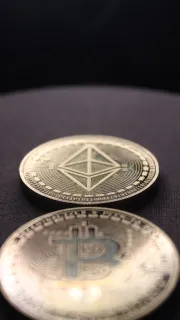
According to Arzdigital, Russia's central bank approved Bitcoin, Ether and Tether for public trading on the country's licensed exchanges in a decision announced Tuesday, August 11, 2026 (20 Mordad 1405), the first time several digital assets have been cleared for organized trading under Russia's new crypto law. Under the framework, which takes effect September 1, 2026 (10 Shahrivar 1405), only assets with at least 5 trillion rubles in market value, more than 1 trillion rubles in average daily trading volume over the past two years, and at least five years of price history on international markets can be admitted; privacy coins are explicitly excluded. Qualified investors can trade the three assets without limit, but non-professional retail investors face an annual purchase cap of about $4,000 and must pass a risk assessment before investing. Using cryptocurrency to buy goods and services inside Russia remains banned. The decision marks a shift for Russia's central bank, which in 2022 had called for a broad ban on crypto trading and mining.
ArzDigital
Putin signs Russia's first comprehensive law regulating crypto assets
Russian President Vladimir Putin on Tuesday, 4 August 2026 (13 Mordad 1405), signed a law establishing the country's first comprehensive framework for regulating cryptocurrency and digital asset activity. According to Russia's state news agency TASS, the law governs the issuance, custody, registration, mining and exchange of crypto assets, along with digital depositories, brokerages and digital asset platform operators. Under the law, only entities registered with a dedicated state system will be permitted to operate as crypto exchanges. Existing operators may continue without registration until 1 July 2027, provided registered exchanges hold at least 15 million rubles (about 187,000 dollars) in capital. The law keeps in place a ban on using crypto as payment for goods and services in Russia. Retail investors may buy up to 300,000 rubles a year in highly liquid crypto through each licensed intermediary, while qualified investors who pass a crypto knowledge test face no purchase limit.
Bourse News, citing TASS
Russia adopts a new crypto law requiring exchanges to register and hold at least 15 million roubles in capital
Russia's state news agency TASS reported on Wednesday, 5 August 2026 (14 Mordad 1405), that a new law establishes a clear framework for the issuance, circulation, custody and registration of cryptocurrencies and digital financial assets, as well as crypto mining, and brings exchanges, digital depositories, brokerages, clearing organisations and digital asset platform operators under regulation. Under the law, only organisations listed in a dedicated state register may operate as crypto exchanges, while existing operators may continue without registration until 1 July 2027. Registered exchanges must hold at least 15 million roubles, about $187,000, in capital and join a financial self regulatory organisation. Monthly transactions above 3.5 million roubles fall within the law's scope. The ban on using cryptocurrencies as a means of payment for goods and services in Russia is retained, though exceptions apply to settlement under foreign trade contracts and to transactions involving mined crypto. Retail investors may buy highly liquid cryptocurrencies through licensed intermediaries up to 300,000 roubles a year per intermediary. According to Anadolu Agency, investors must pass a mandatory crypto knowledge test.
Eghtesad Online, citing TASS and Anadolu Agency
Putin signs Russia's first comprehensive legal framework for cryptocurrencies
Russian President Vladimir Putin on Tuesday 4 August 2026 signed a law establishing the country's first comprehensive legal framework for cryptocurrencies and digital assets. According to Anadolu Agency, citing the state news agency Tass, the law regulates the issuance, circulation, storage and accounting of cryptocurrencies and digital financial assets, as well as mining and the activities of crypto exchanges, digital depositories, brokers and clearing organisations. Under the law, only organisations listed in a special state register will be allowed to operate cryptocurrency exchanges, while existing operators may continue without registration until 1 July 2027. Registered exchanges must hold at least 15 million rubles (about $187,000) in capital and join a self regulatory financial organisation. Transactions totalling more than 3.5 million rubles in a month qualify as regular exchange activity. The legislation keeps Russia's ban on using cryptocurrencies as a means of payment for goods and services, and prohibits advertising that promotes crypto payments, but it allows several exceptions. These include settlements under foreign trade contracts between residents and non residents and transactions involving cryptocurrencies obtained through mining. Retail investors may buy the most liquid cryptocurrencies through licensed intermediaries for up to 300,000 rubles a year with each intermediary, while qualified investors face no purchase limit. Most provisions take effect on 1 September.
Anadolu Agency