
Gold Funds: How They Work, What They Cost, and Why the Board Price Drifts From NAV
This lesson explains exactly what an Iranian gold fund buys, why its unit trades at a price separate from the value of its holdings, which costs quietly reduce your return, and the conditions under which the board price pulls away from NAV. Includes a step by step hypothetical worked example for calculating a fund's premium.
Transcript
You bought a gold fund, but what exactly is registered in your name? Let us find out. This lesson covers the mechanism, the fees, and the gap from real value. Because the price you pay is not always the gold behind the unit. A gold fund pools money and buys paper assets backed by gold. The manager buys coin and bullion deposit certificates on the Iran Mercantile Exchange. The rules require at least seventy percent of assets in those gold certificates. Net asset value is the basket's current worth divided by units outstanding. The board price, though, is simply what the market will pay today. If NAV is twenty thousand and the board twenty thousand nine hundred, the premium is four and a half percent. Four forces open that gap: buy queues, reporting lag, market hours, and the underlying. The premium has two layers: the fund's own, and the coin premium inside it. A fund's return multiplies two variables: world gold and the dollar rate. Commission runs about one eighth of a percent per side, and trades are tax exempt. A common mistake is treating the board price as what your gold is worth. Before every purchase, compare the published net asset value against the board price. So now you know: you bought a share of a basket, not bullion. Save this lesson and review it on Sahmino.com.
Related videos
 01:11Short
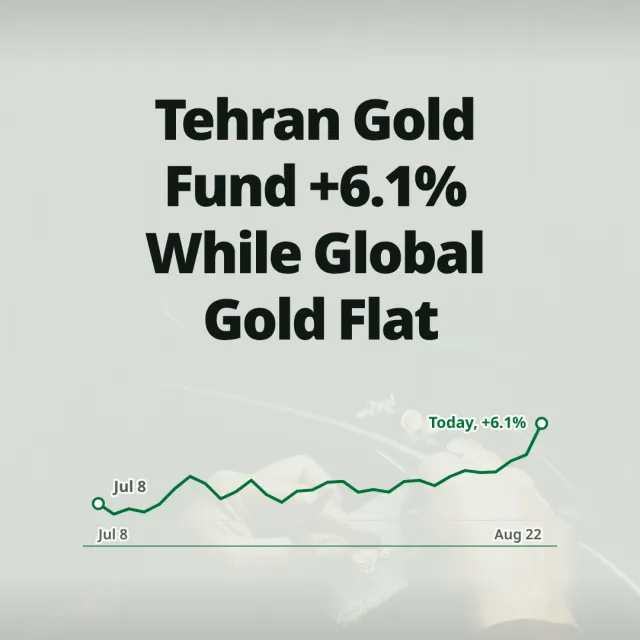
Tehran's Gold and Silver Funds Jumped Up to 6.1% Today While Global Bullion Barely Moved (Saturday, August 22, 2026)
 01:27Short
Global Gold Jumps Nearly 4% to a Two-and-a-Half-Month High; Tehran's Coin and Free-Market Dollar Rise Together (Wednesday, August 19, 2026)
 01:30Short
One Ounce of Gold in the World; Two Numbers That Set Its Price in Iran
 01:14Short