
Newsroom
Short, verified market news summaries; every item names its source and publication date.
Divergence on the Iran Mercantile Exchange: Hot Rolled Coil Holds Steady as Long Steel Products Swing More Than 20 Percent
According to Boursenews, a review of Iran Mercantile Exchange industrial floor data from Khordad to mid Shahrivar 1405 (roughly June to early September 2026) shows long steel products swung sharply while hot rolled coil stayed relatively stable over the same period. Per the report, rebar (18mm, A3 ribbed) started at 728,436 rials, fell to 611,982 rials, and then rose to 742,994 rials, a swing of more than 21 percent. Beams (14 and 16) ranged from 632,139 rials up to a peak of 783,499 rials, down to a low of 650,023 rials, and finally settled at 761,828 rials, a swing of about 24 percent. Bloom billet (5SP) ranged between 546,444 and 657,152 rials, a swing of about 20 percent. By contrast, per the same report, hot rolled coil (HR) held within a narrow 850,000 to 870,000 rial channel throughout the period. Iron ore pellet supplied by Foolad Sangan rose more linearly, from 101,509 to 136,631 rials. Boursenews attributed hot rolled coil's relative stability to Foolad Mobarakeh's supply management of the product, an assessment made by the outlet itself rather than an independent company claim.
Boursenews

Iran Mercantile Exchange Trades 430,000 Tons of Products, 145,000 Tons of It Steel
According to Bourse News, Iran Mercantile Exchange traded 430,519 tons of products on Wednesday, September 2, 2026 (11 Shahrivar 1405). On the industrial floor, 145,806 tons of steel products, 20,000 tons of iron ore, 130 tons of copper, 35 tons of concentrate and 25 tons of aluminum changed hands. On the export floor, 60,000 tons of sponge iron, about 30,000 tons of cement, 29,000 tons of clinker, 12,020 tons of bitumen, 2,000 tons of sulfur and smaller volumes of chemical products and waterproofing material were traded. The cement floor traded 16,989 tons of cement, and the petrochemical and oil products floor traded 48,000 tons of lube cut and 26,922 tons of chemical products along with other items. The secondary floor hosted trade of 26,276 tons of products.
Bourse News
China's Coking Coal Prices Post Record 46 Percent Monthly Surge
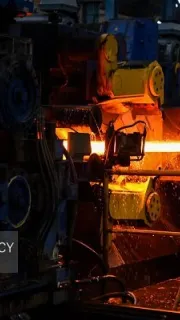
According to Oilprice.com, citing data compiled by Bloomberg, coking coal futures on China's Dalian exchange posted a record 46 percent monthly surge in August 2026, the biggest monthly gain since the contract began trading in 2013, surpassing the previous record of a 38 percent rise in July 2025. The rally followed the shutdown of some mines after a deadly accident in May and tighter safety inspections at other Chinese mines. Bloomberg reported the price surge has spilled beyond China's borders, squeezing margins for steelmakers in India, the world's second largest steel producer, which relies on imports for 95 percent of its coking coal needs. Mining giant BHP said Indian import demand and supply disruptions, including those linked to the Iran war, have tightened the global coking coal market. The trend could affect raw material costs for the steel industry worldwide, including for Iranian steel exporters.
Oilprice.com
Hormozgan Steel Rolls Out Predictive Maintenance with Real Time Profibus Network Monitoring
The casting and product dispatch maintenance unit at Hormozgan Steel (ticker Hormoz) implemented a process improvement project that replaced the traditional reactive maintenance approach with predictive maintenance, enabling real time monitoring of the plant's Profibus network. According to Donya e Eqtesad, published Tuesday, August 25, 2026 (3 Shahrivar 1405), the project was carried out by the unit's own staff. Replacing reactive maintenance with a predictive approach is a common method industrial and steel plants use to reduce unplanned downtime and improve production stability.
Donya-e-Eqtesad
Hormozgan Steel: The 65,000 Toman Slab Figure Was Only a Disclosure Estimate, Not a Fixed Sale Price to Foolad Mobarakeh
According to EcoIran and Donya-e-Eqtesad, published Saturday, August 22, 2026 (31 Mordad 1405), after analyses circulated treating the 65,000 toman per kilogram figure in Hormozgan Steel's (ticker Hormoz) disclosure on its slab sale contract with Foolad Mobarakeh (ticker Fooladh) as a fixed sale price, the company's sales and marketing director, Shokrizadeh, clarified that the figure was only an estimated rate used to calculate the deal's value at the time the disclosure was filed. He said the actual sale price of Hormozgan Steel's slab to Foolad Mobarakeh is set, and adjusted each month, based on the monthly weighted average price of the company's slab on the Iran Mercantile Exchange, meaning it will not stay fixed over the life of the contract. Shokrizadeh advised shareholders and capital market analysts to value the contract based on the commodity exchange linked pricing formula rather than treating the 65,000 toman figure as a constant.
EcoIran
Coking Coal's 25 Percent Surge Squeezes India's Steelmakers
The price of coking coal, or metallurgical coal, one of the essential raw materials in steelmaking, rose 25 percent in the first seven months of this year compared with last year, squeezing the margins of India's steelmakers. According to Oilprice, citing Reuters, India imports as much as 95 percent of its coking coal demand, a dependence that has left its steel industry exposed to supply disruptions. Analysts at consultancy CRU said the price rise stemmed from a slower ramp up of new mines, higher prices due to the Iran war, supply disruptions in Australia, and a deadly coal mine explosion in China's Shanxi province that killed more than 80 people. India expanded its steelmaking capacity 10 percent in fiscal 2026 to about 220 million tons a year, but executives said competition from Chinese steel prevents Indian producers from raising their selling prices.
Oilprice
Arfa Steel Launches Oxygen Injection System, Raising Output Capacity by About 10 Percent
According to Boursenews, Arfa Iron and Steel Company has commissioned an oxygen injection system for bustle gas at its direct reduction unit. The project was designed to optimize process conditions, improve furnace temperature control and allow more precise management of operating parameters. The company said the main results include an output capacity increase of about 10 percent and lower natural gas consumption per ton produced, alongside improved uniformity and quality of its sponge iron product.
Boursenews
Steel Producers Association Head: Energy Shortfalls Have Cost Iran's Steel Industry $18 Billion in Lost Output Over Four to Five Years
Bahram Sobhani, head of the Iran Steel Producers Association, said on Monday, 19 Mordad 1405 (10 August 2026), at the "Steel and Iron Ore Industry in Transformation" conference hosted by the Donya-e-Eqtesad media group, that Iran's steel industry has lost about $18 billion in potential output value over the past four to five years because of power and natural gas shortages. He said that with a stable energy supply, the steel chain's annual foreign currency earnings could exceed $20 billion. Sobhani said Iran, with output of about 32 million tonnes of steel, has at times ranked tenth globally, while Turkey produces about 38 million tonnes and South Korea produces more than that. He put the steel chain's share of GDP at about 5 percent and its share of national employment at about 8 percent, and said profit margins at major listed steelmakers fell from about 33 percent to 6 percent over the past six years. He said the industry consumes about 5,300 megawatts of electricity, equal to 6.9 percent of national power consumption, and that simultaneous or alternating power and gas shortages leave much of its production capacity idle, since direct reduction and electric arc furnaces cannot substitute for one another.
Donya-e-Eqtesad
Economist Farhad Nili: Iran's Steel Chain Needs a Paradigm Shift Toward an Integrated Ecosystem
Economist Farhad Nili said Monday, 19 Mordad 1405 (August 10, 2026), at the "Iron and Steel Industry in an Era of Transformation" conference, that Iran's steel chain must be seen as more than a physical supply chain, calling it an integrated ecosystem of goods, cash, credit and information flows. According to Donya-e-Eqtesad's coverage of the same conference, Nili said a "paradigm shift" in the steel industry's financing system is necessary, and that the country needs to migrate toward an integrated, smart ecosystem model. Ecoiran reported that the remarks came as steel industry players complain of liquidity locked up across the production chain and stress the need to rescue the chain using the capital already circulating within it.
Donya-e-Eqtesad
Mobarakeh Steel Delivers First 1405 Hot Rolled Coil Shipment to Pipe Makers as Water Transfer Megaprojects Resume
According to Donya-e-Eqtesad, Mobarakeh Steel Company delivered its first hot rolled coil shipment of 1405 to pipe manufacturing plants for use in national water transfer projects. Steel supply for these projects had been halted in previous years due to financing problems, but with funding secured and the projects resumed this year, deliveries have started again. Estimates put more than 500,000 tons of Mobarakeh Steel output allocated in 1405 to water, oil and gas transfer projects, a volume that both creates a new market for the company and helps meet part of the country's infrastructure project needs from domestic production.
Donya-e-Eqtesad
Foolad Mobarakeh's AGM approves 55 rial dividend per share as EPS comes in at 518 rials
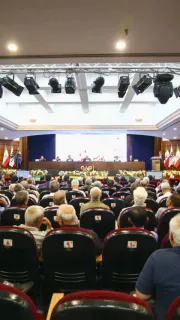
According to the annual general meeting decision report published on Iran's Codal disclosure system for Foolad Mobarakeh Esfahan (ticker Foolad), shareholders approved a cash dividend of 55 rials per share at the AGM for the fiscal year ended March 19, 2026 (29 Esfand 1404), which resumed after a recess and was held in Isfahan at 9:00 a.m. on Sunday, August 2, 2026 (11 Mordad 1405). The approved financial statements show earnings per share of 518 rials and total net profit of 1,003,001 billion rials for the year; given the company's 1,935,000 billion rial capital, the total dividend payable to shareholders comes to 106,425 billion rials. The meeting selected the State Audit Organization as the company's legal inspector and auditor, named Donya-e-Eqtesad, Jahan-e Sanat and Samt as its official gazette newspapers, and approved allocating 3,500 billion rials to continue health support services for retirees of the Foolad pension fund. At the same meeting, Foolad Mobarakeh had earlier reported its highest billet output in 33 years and 14,000 billion toman in forgone profit due to energy restrictions.
سامانه کدال
Jahan Foolad Sirjan to execute second stage of capital increase toward 17,000 billion tomans
Jahan Foolad Sirjan said on Wednesday, 14 Mordad 1405 (5 August 2026), that following a resolution passed at its extraordinary general meeting on 7 Tir 1405, its board will execute the second stage of a delegated capital increase. According to Khabar Online, the plan's final goal is to raise the company's capital from 15,300 billion tomans to 17,000 billion tomans. In this second stage, the board intends to raise capital from 16,300 billion tomans to the 17,000 billion toman ceiling, funded through shareholders' realized receivables, cash contributions and retained earnings. Management said the aim is to improve the company's financial structure, fund working capital needs and strengthen its liquidity position to improve competitiveness.
Khabar Online
Iran's Trade Promotion Organization issues the tariff list for steel and non ferrous metals subject to full export currency repatriation
The director general of the currency and rail services office at Iran's Trade Promotion Organization has issued a circular, published on Wednesday, 5 August 2026 (14 Mordad 1405), setting out the final and updated list of tariff codes for steel and basic non ferrous metals subject to clause 1 of article 8 of the executive regulation under note 6, paragraph H of article 2 bis of the law on combating goods and currency smuggling. Under article 8 of that law, exporters are required to return 100 percent of the foreign currency amount stated on the customs licence to the country's economic cycle, and all exporters of petrochemical, refining, steel, basic non ferrous metal and petroleum products must settle 100 percent of their export currency obligations by selling currency as remittance through the NIMA system. The list was prepared and finalised following a response from the mineral industries office of the Ministry of Industry, Mine and Trade to enquiries from the Trade Promotion Organization. The circular was accompanied by files covering the applicable tariff codes, a list of steel chain production units and the tariff codes of permitted import items.
Eghtesad Online, citing Tasnim
Mobarakeh Steel tells its annual meeting that energy restrictions cost it forgone profit
Mobarakeh Steel of Isfahan held its annual ordinary general meeting on Sunday 2 August 2026. According to what the company told the meeting, forgone profit caused by energy restrictions has reached 14,000 billion toman, while the company said its commercial and sales flow has been maintained and continues. Net profit for the year 1404 was given as 100,000 billion toman, with consolidated group profit of 103,000 billion toman. Saeed Zarandi, the company's managing director, told the same meeting that crude steel output across the group rose 8.3 percent in 1404. He pointed to the rise in the gas price from about 2,800 toman to 11,200 toman in Esfand 1403 and 16,500 toman in Dey as one of the main pressures on profitability, and named mandated pricing of steel products as another challenge of the past year. Mobarakeh Steel is the largest producer of flat steel products in the region and one of the heavyweights of the Tehran exchange.
EcoIran
Mobarakeh Steel reports its highest billet output in 33 years
Saeed Zarandi, chief executive of Mobarakeh Steel, told the company's annual general meeting, reported on Sunday, 2 August 2026, that output reached about 7,054,000 tonnes in the Iranian year 1404, the highest billet production in Mobarakeh's 33 years of operation. He said crude steel output across the Mobarakeh Steel group rose 8.3 percent in 1404, pellet production rose 22 percent, and direct reduced iron output grew about 16 percent to roughly 11 million tonnes. Zarandi said group exports reached 1.1 billion dollars in 1404, against a target of 1 billion dollars set at the start of the year. He described the result as coming in a year when the company faced energy restrictions, the 12 day war, disruption to contractor activity and interruptions in access to global markets, adding that the gas price rose from about 2,800 toman at the start of his tenure to roughly 11,200 toman in Esfand 1403 and then 16,500 toman in Dey. He also said Iran held its position as the world's tenth largest steel producer in 2025 with output of about 32 million tonnes, and that global steel overcapacity is forecast to exceed 700 million tonnes by 2028.
Bourse News
Copper, rebar and bloom billet led Iran Mercantile Exchange turnover in the week to 9 Mordad
According to the Iran Mercantile Exchange's report on physical market trading in the week ending 9 Mordad 1405 (31 July 2026), published on Sunday 2 August 2026 (11 Mordad), base metals and the steel chain accounted for the bulk of the market's turnover. Copper was the most valuable product on the physical market that week, with trading worth 11,323 billion toman. Rebar ranked second at 8,776 billion toman and bloom billet third at 8,435 billion toman. By volume, cement remained in first place with 1,078,000 tonnes traded. Iron ore pellet rose to second place with 428,000 tonnes, returning to the list of heavily traded products after several weeks, and iron ore concentrate was third with 316,500 tonnes. The return of pellet and concentrate to the high volume group, alongside cement's continued lead, indicates that the mining and building materials chain held a large share of physical trading volume.
Bourse News, citing Iran Mercantile Exchange
Ehya Steel Foolad Baft presented for a Farabourse listing, a sponge iron producer with the highest price on the commodity exchange
The first press conference introducing the shares of Ehya Steel Foolad Baft was held at Iran Farabourse on Saturday 1 August 2026 (10 Mordad 1405), attended by the company's managers and capital market reporters. Yaghoub Hatami, the company's chief executive, said the company was founded and registered in 1394 (2015 and 2016) and that phase one of Foolad Baft came on stream in Farvardin 1398 (spring 2019). He said two sponge iron units are currently in operation at the complex. Hatami said the company's main product is sponge iron and that its quality is such that it currently commands the highest price on the Iran Mercantile Exchange. Sponge iron, or direct reduced iron, is the middle link of the steel chain and the main feedstock for electric arc furnace steelmakers. An introductory press conference is the stage before a company's shares are listed and offered on Iran Farabourse, with the timing and terms of the offering announced in the exchange's official notices.
Iran Capital Market News Agency (SENA)
Iranian mining investment chief says steel industry margins fell from 36 percent in 1400 to about 12 percent in 1404
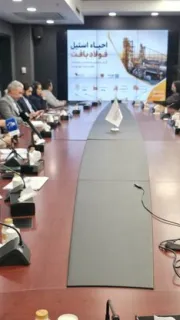
Ardeshir Saadmohammadi, chief executive of the Mines and Metals Development Investment Company, said on the sidelines of a steel and mining think tank seminar that the profit margin of Iran's steel industry has fallen from about 36 percent in the year 1400 to about 12 percent in 1404, with part of the decline caused by higher energy carrier prices. The remarks were published on Saturday 1 August 2026. He added that if the current trend continues, energy carrier prices in Iran will approach global levels within at most three years, and that under those conditions replacing existing technology would be the only way to preserve profitability and keep the industry attractive to investors. Saadmohammadi also pointed to international carbon dioxide emission requirements, saying exporters who fail to provide carbon emission certificates will face heavy tariffs and penalties. Referring to the continuing electricity shortage facing the steel industry, he said moving toward new technologies is no longer a choice but a necessity.
Bourse News
Chinese Steel Rebar Prices Hit Their Lowest Since October 2025 as Tangshan Mill Losses Passed 100 Yuan a Tonne
Steel rebar futures in China fell to around 3,010 yuan a tonne, their lowest level since October 2025. According to Trading Economics on Friday, 31 July 2026, widening losses at Chinese steel mills and a deteriorating industry outlook continued to weigh on the market. Industry data showed that average losses at steel mills in Tangshan have passed 100 yuan a tonne and are expected to keep widening, leaving the sector likely to remain under pressure next month. China's prolonged property downturn has also curbed steel demand, as construction accounts for roughly one third of the country's steel consumption and the bulk of rebar usage. Investors are awaiting the outcome of the Politburo meeting in Beijing, where policymakers are widely expected to refrain from announcing major new stimulus and instead focus on implementing existing fiscal policies to support the slowing economy. The benchmark steel price was recorded at 2,993 yuan a tonne on 31 July, down 1.74% over one month and 6.85% compared with a year earlier.
Trading Economics
Iron ore edges lower on the Dalian exchange on Wednesday, with the main contract closing at 739 yuan a tonne
The main iron ore contract on China's Dalian Commodity Exchange closed at 739 yuan a tonne on Wednesday, 29 July 2026 (7 Mordad 1405), down 0.27% from the previous session. Spot prices at Qingdao port were also reported one to three yuan a tonne lower than the previous day. According to the daily iron ore index report, traders showed moderate willingness to quote and steel mills bought mostly for essential needs, leaving spot transaction sentiment generally weak. Iron ore is the principal raw material in the steel chain, and China is the world's largest buyer. Price trends on Chinese exchanges matter to Iran's steel industry, because they feed into both export prices for billet and pellets and the profit margins of steel companies listed on the Tehran exchange.
Hellenic Shipping News
Foolad Mobarakeh says rebuilding production lines would take one to two years without localised equipment
Gholamreza Salimi, deputy for operations at Foolad Mobarakeh, set out the company's work on equipment risk management, preparedness against military attacks, prevention of secondary explosions, damage assessment and the rebuilding of production lines, speaking on the sidelines of a production sustainability conference in an interview with a steel sector reporter. Tejarat News published its account of the interview on Tuesday, 28 July 2026 (6 Mordad 1405). According to that report, rebuilding the complex's production lines would take one to two years without localised equipment. Foolad Mobarakeh is Iran's largest steel producer and one of the heavyweight names on the capital market, and the timetable for restoring its production lines feeds directly into the supply of steel sheet in the domestic market. IMIDRO figures published earlier this week show Iran's steel billet output fell 5.7 percent in the 1403 Iranian year, from 32.108 million tonnes to 30.285 million tonnes, meaning the steel chain was already trending lower before recent events.
Tejarat News
Power restrictions on Iran's industrial estates cut from two days to one day a week
Mostafa Rajabi Mashhadi, deputy energy minister for electricity and energy, said on Tuesday, 28 July 2026, that power restrictions on 48 of the country's large industrial estates have been cut from two days to one day a week, and that supply restrictions on steel plants producing slab have also been eased significantly. He said the decision followed an order by the president and an agreement between the energy ministry and the ministry of industry, mining and trade, and was extended the same day to every industrial estate in the country, bringing the working restriction at all industrial estates down to one day a week. Rajabi Mashhadi added that to offset the electricity shortfall for industry, the outage programme for households will continue, and he expressed hope it would end within the next few weeks. A stable power supply matters directly for the output and profitability of steel and industrial symbols on the Tehran Stock Exchange.
Eghtesad Online
Deputy industry minister says the steel industry lost 10 million tonnes of output capacity last year to energy shortfalls
A deputy minister of industry, mines and trade said Iran's steel industry lost 10 million tonnes of production capacity last year because of energy shortfalls, adding that the energy imbalance has affected the country's entire steel chain. The remarks were published on Tuesday 28 July 2026 (6 Mordad 1405). The steel chain, running from iron ore and concentrate through pellets, sponge iron and billet, is among the most electricity and gas intensive industrial chains, and it faces quota restrictions during the peak consumption months of summer and winter. A lower capacity utilisation rate feeds directly into sales volumes and profitability at the steelmakers listed on the Tehran Stock Exchange, and into the group's offerings on the Iran Mercantile Exchange.
Tejarat News
Government spokesperson says 400 megawatts plus new plant capacity will go to industry
The government spokesperson said 400 megawatts of electricity, together with output from power plants due to come online by the end of summer 1405, will be allocated to industry. The announcement was published on Monday 27 July 2026 (5 Mordad 1405). Electricity shortfalls this summer have been one of the constraints on output at Iran's energy intensive industries, including steel, cement and petrochemicals. The volume of power allocated to industry feeds directly into capacity utilisation rates and therefore into the profitability of listed companies in those sectors.
Mehr News Agency
Pricing of Mokran Steel reviewed by the specialist working group of Iran's divestment board
The specialist working group of Iran's divestment board met at the Privatisation Organisation on Sunday 26 July 2026, with the pricing of Mokran Steel on its agenda. According to Mehr News Agency, the divestment board's specialist working group is the stage of the privatisation process at which a company's base price is set before it is offered. The report did not state the base price agreed, the size of the stake to be divested, or the timing of the Mokran Steel offering. Steel company divestments matter to equity market participants and to the steel supply chain.
Mehr News Agency
Iran says industrial power will not be cut for the next 45 days, with two to three hour planned outages in some regions
Jafar Ghaem-Panah, the Iranian president's executive deputy, said on Thursday 23 July 2026 (1 Mordad 1405), at the opening of a crisis management centre for the Alborz province water and wastewater company, that the government has decided industrial electricity will not be cut over the next 45 days. He said officials from the power and industry sectors had agreed the night before to prevent outages at industrial plants and keep production units running, so that the country's production does not halt and workers do not lose their jobs. He added that some regions may face two to three hours of planned outages per day, and apologised to the public for them. To avoid production stoppages, he said, arrangements have been made for large industries including cement and steel, and the shutdown schedules of some units have been changed so that power consumption matches the grid's generating capacity. Ghaem-Panah attributed the difficulty in supplying power to an imbalance carried over from previous years and to conditions created by the war. He said public cooperation in saving electricity in Khuzestan province had previously delivered savings of about 2,000 megawatts. He also announced the simultaneous commissioning of four power industry infrastructure projects in Alborz province worth more than 4,500 billion toman.
Mehr News Agency

Alloy steel association calls for repeal of the 1.5 point rise in concentrate and pellet base-price coefficients
In a letter to the Minister of Industry, Mine and Trade published on Saturday, 25 July 2026, the Iranian Alloy Steel Producers Association called the 1.5 percentage point increase in the base-price coefficients for iron ore concentrate and pellet on the commodity exchange "unprofessional" and demanded the immediate repeal of the directive. Base-price coefficients are the basis for calculating the offer price of steel-chain raw materials on the Iran Mercantile Exchange. Raising these coefficients increases the input cost of concentrate and pellet for steelmakers; the mid and downstream links of the chain, including alloy steel producers, are the first group to feel the increase in their margins. Disputes over the pricing formula for the iron ore and steel chain go back several years, and every revision of the coefficients shifts profits among the listed companies in the chain, which is why it matters directly to shareholders in mining and steel tickers on the capital market.
Mehr News Agency
China iron ore and rebar prices fall on Monday as seasonal lull cuts steel demand
Iron ore and steel prices on China's exchanges fell on Monday, 20 July 2026. Iron ore futures slipped 0.33% to 759.5 yuan per tonne and, despite the daily drop, are up about 2.7% over the past month and remain near a one month high. Steel rebar futures fell 1.03% to 3,070 yuan per tonne, retreating from a one month high. Rain in southern China and intense heat in the north have slowed construction and steel consumption, and blast furnace utilization has dropped below 90%. These prices matter for Iran's steel exporters and the steel tickers on the Tehran bourse.
Trading Economics
Iran rebar prices edge higher on Monday amid currency and geopolitical pressure
Rebar prices in Iran's open market moved higher on Monday, 29 Tir 1405 (July 20, 2026), with most products trading slightly above the previous day. According to market tables, 16 mm ribbed rebar from Neyshabur was quoted at around 65,600 tomans per kilogram. Traders cited continued geopolitical tensions, currency volatility, and stronger inflation expectations as the main drivers of the increase. Base rebar prices on the Iran Mercantile Exchange are shaped by the same factors and by official and open market exchange rates, and swings in the domestic steel market remain tied to the path of the currency and the broader economy.
Taadol
War and power crisis cripple Iran's steel output as Mobarakeh and Khouzestan Steel fall idle
According to a report by the analytics firm GMK Center, the Iran-US war and damage to the power grid have sharply reduced Iran's steel production capacity. The country's two largest electricity consumers, Mobarakeh Steel in Isfahan and Khouzestan Steel, have effectively fallen out of production after being hit by air strikes; Mobarakeh previously drew about 1,400 megawatts and Khouzestan about 600. The first damage to these complexes dates back to the air strikes of March 27, which targeted their power infrastructure and storage. On these estimates, returning Mobarakeh to its pre-war capacity could take about four years. Steel is among the heaviest-weighted sectors on the Tehran Stock Exchange and a major Iranian non-oil export; the halt at these two large complexes affects both domestic steel supply and the country's foreign-currency earnings.
GMK Center
Summer power cuts to industry take hold; steel and cement squeezed by energy shortfall
With the summer 1405 peak-demand season under way, electricity restrictions on industry have been reimposed. According to the Taadol newspaper, producers say the industrial power cut has been eased from two days a week to one. Iran's cement industry association has warned that output could be halted by the cuts, while steel units are also facing severe energy limitations. The electricity and gas imbalance has become one of the main obstacles to production in Iran's energy-intensive industries in recent years, especially steel and cement, resulting in lower output, reduced corporate revenue, and a decline in exports and foreign-exchange earnings.
Taadol
Iranian Rebar Prices Rise 1,700 to 2,000 Tomans in Three Days as Market Exits Wait and See Mode
According to ILNA, Iranian rebar prices were flat and in wait and see mode on July 7, 2026 (16 Tir 1405): 16mm A3 rebar from the Neyshabur mill traded at 60,092 tomans and 12mm A3 Qaem Razi rebar at 59,633 tomans. By July 9 (18 Tir), according to Ta'adol newspaper, the market turned upward: 14mm A3 Anahita Gilan rebar rose 1,800 tomans to 62,844 tomans, 12mm A3 Qaem Razi rose 1,700 tomans, about 2.6 percent over two days, to 61,193 tomans, and 10mm A3 Arian Foulad rebar rose 2,000 tomans to 65,963 tomans.
Taadol