Newsroom
Short, verified market news summaries; every item names its source and publication date.
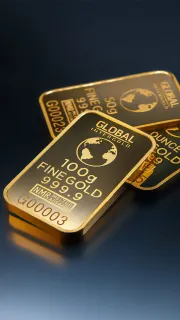
Gold Prices Hold Steady in Baghdad and Erbil on Sunday at About 940,000 Dinars per Mithqal
According to Shafaq News, gold prices held steady in Baghdad and Erbil markets on Sunday, August 9, 2026 (18 Mordad 1405), at around 940,000 Iraqi dinars per mithqal (five grams). Per the outlet's market survey, on Baghdad's Al-Nahr Street, 21-carat gold (Gulf, Turkish and European varieties) sold for 937,000 dinars and was bought for 933,000 dinars, unchanged from Saturday. Iraqi 21-carat gold sold for 907,000 dinars and was bought for 903,000 dinars. In jewelry stores, 21-carat Gulf gold sold between 940,000 and 950,000 dinars, while Iraqi gold sold between 910,000 and 920,000 dinars. In Erbil, 22-carat gold traded at 973,000 dinars, 21-carat at 930,000 dinars and 18-carat at 797,000 dinars per mithqal.
Shafaq News
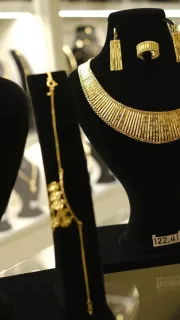
Gold rallies in Baghdad and Erbil markets as 21 carat gold reaches 920,000 dinars a mithqal
According to a Shafaq News market survey, gold prices in Baghdad and Erbil hovered around 900,000 Iraqi dinars per mithqal (five grams) on Thursday, August 6, 2026 (15 Mordad 1405). On Baghdad's Al Nahr Street, 21 carat gold imported from the Persian Gulf, Turkey and Europe sold for 920,000 dinars and was bought for 916,000 dinars per mithqal, up from 897,000 dinars on Wednesday. Iraqi made 21 carat gold traded in the same market at a selling price of 890,000 dinars and a buying price of 886,000 dinars. In Erbil, 22 carat gold sold for 956,000 dinars per mithqal, 21 carat gold for 914,000 dinars and 18 carat gold for 783,000 dinars.
Shafaq News
Gold trading stayed limited in Baghdad on Arbaeen while 21 carat gold in Erbil reached 880,000 dinars a mithqal
According to a Shafaq News survey, gold trading in Baghdad remained limited on Tuesday, 13 Mordad 1405 (August 4, 2026), during the Arbaeen holiday, while in Erbil 21 carat gold traded at around 880,000 Iraqi dinars per mithqal (about five grams). In those Baghdad gold shops that stayed open, imported 21 carat gold from Persian Gulf countries ranged from 870,000 to 880,000 dinars per mithqal, while Iraqi-made gold traded between 840,000 and 850,000 dinars. In Erbil, where markets operated normally, 22 carat gold sold for 916,000 dinars per mithqal, 21 carat gold for 875,000 dinars and 18 carat gold for 750,000 dinars. Arbaeen fell on August 4 this year, marking the 40th day after the martyrdom of Imam Hussein, which draws millions of pilgrims to Karbala each year and ranks among the largest religious gatherings in the world. The gap in activity between the Baghdad and Erbil markets on the day reflects the difference in holiday calendars between the two.
Shafaq News
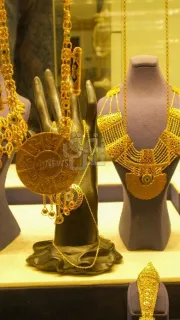
Gold rises in Baghdad and Erbil with 21 carat at 866,000 dinars per mithqal on Baghdad's Al Nahr Street
According to a Shafaq News market survey, gold prices climbed in Baghdad and Erbil on Saturday 1 August 2026, with the mithqal, equivalent to five grams, hovering around 860,000 Iraqi dinars. On Baghdad's Al Nahr Street, 21 carat gold of Persian Gulf, Turkish and European origin recorded a selling price of 866,000 dinars per mithqal and a buying price of 862,000 dinars. The same gold had sold for 853,000 dinars on Thursday 30 July 2026. Iraqi 21 carat gold traded at a selling price of 836,000 dinars and a buying price of 832,000 dinars. In jewellery stores, 21 carat Persian Gulf gold ranged between 865,000 and 875,000 dinars, while Iraqi gold sold for between 835,000 and 845,000 dinars. In Erbil, 22 carat gold sold at 900,000 dinars per mithqal, 21 carat at 860,000 dinars and 18 carat at 736,000 dinars. Iraq's gold market matters for Iran because Baghdad and Erbil pricing is one of the channels through which precious metal and the dinar move in cross border trade between the two countries.
Shafaq News
Turkey's central bank became the world's largest official gold seller in 2026, selling about 81 tonnes net to defend the lira
According to reports carried by Turkish media, Turkey's central bank has become the world's largest official seller of gold in 2026. Over the first five months of the year the bank sold about 81 tonnes of gold on a net basis from its reserves, using the proceeds to supply dollar liquidity and defend the lira against external shocks. Pressure on the lira intensified after the Iran war began on February 28, 2026, and the resulting energy-price surge drove the currency to a fresh record low. The central bank first spent roughly US$26 billion of its foreign exchange reserves supporting the lira and, when that proved insufficient, turned to selling and swapping more than 127 tonnes of gold in the weeks that followed; its currency interventions peaked at close to US$60 billion. Turkey's gold reserves had climbed to a record 823.5 tonnes in the week ending March 6 before starting to decline. The trend shows that, rather than serving as a safe haven during the war, gold became Ankara's defensive tool for containing the lira's slide. The lira is an important regional variable for Iran's market, since part of the trade and commodity pricing between the two countries is linked to it.
Türkiye Today