
Newsroom
Short, verified market news summaries; every item names its source and publication date.
Turkey Announces Restart of a Nuclear Research Reactor in Istanbul
According to Khabaronline, citing ISNA and Russia's RIA Novosti, Turkish Energy and Natural Resources Minister Alparslan Bayraktar said authorities expect to soon restart the TR-2 research reactor in Istanbul. He said nuclear research and material testing would resume there shortly, and that results of theoretical studies would become observable in laboratories and research centers. The TR-2 research reactor, located at Turkey's Energy, Nuclear and Mineral Research Institute in western Istanbul, has received a new operating license after a long pause. Another research reactor is located at Istanbul Technical University. The news comes amid Turkey's plans to expand civilian nuclear infrastructure, as countries in the region seek to diversify their energy sources.
Khabaronline, citing ISNA and RIA Novosti

US Sanctions Turkey's Golden Global Bank Over Alleged Transfer of Iranian Oil Revenue to Quds Force
The US Treasury sanctioned Istanbul based Golden Global Bank on Friday, 13 Shahrivar 1405 (September 4, 2026), according to Khabaronline and Donya e Eqtesad, both citing the New York Post. The Treasury alleged the bank and its subsidiaries moved tens of millions of dollars tied to Iranian oil sales to China, funneling the proceeds to the Islamic Revolutionary Guard Corps Quds Force through an exchange network known as Rahbar. Per the report, Golden Global Bank, founded in 2019 and describing itself as Turkey's first interest free investment bank, is the country's 35th largest bank with about 517 million dollars in assets. John Hurley, the Treasury's acting under secretary for terrorism and financial intelligence, said the institution had received repeated prior warnings. Treasury Secretary Scott Bessent said the effort will continue until the international community stops supporting Iran. The Treasury said this marks its first direct sanction of a Turkish bank and has cut the bank's access to the international financial system.
Khabaronline, citing New York Post
Wall Street Journal: US Extends West Asia Military Deployment for Scenario of Tension With Iran Through 2027
According to Khabaronline, citing the Jerusalem Post and the Wall Street Journal, the US military has extended its troop deployment across West Asia, a move the report says shows the Trump administration is preparing for the possibility that tension with Iran continues through 2027. The report says the US currently has about 50,000 troops in the region, alongside 19 warships, including two aircraft carriers and 13 guided missile destroyers, along with fighter squadrons and air defense units. US President Donald Trump wrote in a social media post about the current situation: "I much prefer our current position, with near total control of the Strait of Hormuz and an economy that is totally collapsing." Citing people familiar with the matter, the Wall Street Journal reported that Trump has been discussing privately with senior aides whether to declare an end to the war with Iran. Tom Karako, missile defense project director at the Center for Strategic and International Studies, warned that sustaining this pace of operations could wear down military personnel and delay equipment maintenance.
Khabaronline, citing The Wall Street Journal
Century Old Hejaz Railway Could Return as Turkey and Saudi Arabia Weigh a Land Route Around Risky Waterways
According to Eco Iran, citing Tabnak and the analysis outlet Arabian Business, Turkey, Syria and Saudi Arabia are examining the revival of the historic Hejaz Railway, which linked Damascus to Medina between 1900 and 1908, while the United Arab Emirates and Oman have entered talks about possibly joining the planned Persian Gulf Cooperation Council rail network. Turkey and Saudi Arabia signed a rail cooperation memorandum this summer, and Turkey's Transport and Infrastructure Minister, Abdulkadir Uraloglu, has estimated that rebuilding the rail link between Turkey and Aleppo would cost about $100 million, with a full Turkey to Saudi Arabia line via Syria and Jordan potentially completed within three to four years. Dr Liju John, an assistant professor of logistics and supply chain management at Heriot Watt University Dubai, said successive Red Sea and Strait of Hormuz crises have shown regional states that the cost of being unable to move goods exceeds the cost of an expensive alternative route. The plan under discussion involves reviving existing infrastructure in Medina, Tabuk and AlUla and, if completed, would provide a new overland route paralleling the region's high risk waterways to connect Turkey with Saudi Arabian and Persian Gulf markets.
Eco Iran
US bases in Jordan and Erbil hit by Iranian strikes as Washington denies its Jordan bases were hit
Iran's Revolutionary Guard said in a statement early Wednesday, September 2, 2026 (11 Shahrivar 1405), that it had struck the Prince Hassan base in Jordan, which houses US drones, with missiles and destroyed a number of them. Separately, Donya e Eqtesad reported additional missile and drone strikes on US bases in Erbil, Iraq, with several explosions heard in the city. Al Jazeera, citing the US military, reported that Washington denied its bases in Jordan had been hit, though it confirmed carrying out new strikes on targets inside Iran. No independent report confirming Iran's claim about the Jordan strike had been published as of this writing.
Al Jazeera
Iraq's Domestic Debt Reaches $81 Billion at End of June, Up 17.2 Percent Since Year Start
Iraq's domestic public debt reached 106.072 trillion dinars (about $81 billion) at the end of June 2026, up 2.8 percent (2.893 trillion dinars, about $2.21 billion) from May, according to Central Bank of Iraq (CBI) data reported by Shafaq News on Monday, 9 Shahrivar 1405 (August 31, 2026). The debt has risen 17.2 percent (15.557 trillion dinars, about $11.9 billion) since the end of 2025, when it stood at 90.515 trillion dinars (about $69.1 billion). The largest share is the Finance Ministry's liabilities to the central bank, which rose to 67.499 trillion dinars ($51.5 billion) in June from 63.199 trillion dinars ($48.2 billion) in May. Treasury bills accounted for 8.742 trillion dinars ($6.67 billion), loans for 18.964 trillion dinars ($14.5 billion) and bonds for 10.867 trillion dinars ($8.30 billion). Shafaq News reported that the increase comes as Iraqi government spending continues to outpace revenue: through May, public expenditure reached 46.697 trillion dinars ($35.6 billion) against revenue of 33.747 trillion dinars ($25.8 billion), a gap of about 12.95 trillion dinars ($9.9 billion). The government's growing reliance on borrowing from the central bank indirectly bears on the bank's capacity to supply dollars through its daily currency auction, one of the main sources of hard currency for Iranian traders active in Iraq's trade corridor.
شفقنیوز (Shafaq News, citing بانک مرکزی عراق)

Dollar Holds Near 154,000 Dinars for a Second Day in Baghdad and Erbil
The US dollar held steady against the Iraqi dinar for a second consecutive day on Monday, 9 Shahrivar 1405 (August 31, 2026), trading around 154,000 dinars per 100 dollars in Baghdad and Erbil. According to a Shafaq News market survey, the dollar traded at 154,000 dinars per 100 dollars at Baghdad's Al Kifah and Al Harithiya central exchanges, unchanged from Sunday. At Baghdad exchange shops, the selling rate stood at 154,500 dinars and the buying rate at 153,500 dinars per 100 dollars. In Erbil, the dollar sold at 153,950 dinars and was bought at 153,850 dinars per 100 dollars. The stability of Iraq's parallel exchange rate matters for Iran's economy, since Iraq is one of Iran's most important channels for trade, exports and informal currency transfers, and Baghdad's dollar rate indirectly affects the cost of imports and money transfers for Iranian traders active in that corridor.
Shafaq News
Eco Iraq Observatory: Four Pipeline Routes Could Cut Baghdad's Reliance on the Strait of Hormuz
Iraq's Eco Iraq Observatory proposed developing four oil pipeline corridors to reduce the country's reliance on the Strait of Hormuz, Shafaq News reported on Sunday, 8 Shahrivar 1405 (August 30, 2026), suggesting alternative routes through Jordan, Syria, Oman and Turkiye. Before the regional war began, about 95 percent of Iraqi crude exports passed through Hormuz. Iraq's Oil Minister, Basim Mohammed Khudair Al Abadi, has said the country's oil exports in August averaged about two million barrels per day, still below pre war levels. According to the report, a Basra to Haditha to Jordan's Al Aqaba route and a Haditha to Syria's Baniyas route are proposed to reach the Red Sea and the Mediterranean; Iraq is already advancing the Basra to Haditha section, designed to carry about 2.25 million barrels per day. A third route would run through Saudi Arabia and Oman to the Arabian Sea, and a fourth would connect Haditha to Kirkuk and Turkiye's Ceyhan port. Iraq's northern pipeline was exporting about 130,000 barrels per day in mid August under a one year agreement with Turkiye that provides for capacity of about 750,000 barrels per day.
Shafaq News
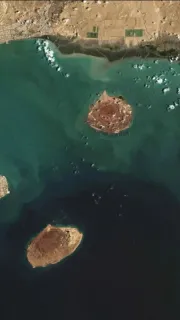
US Strikes IRGC Rocket Launchers on Larak Island, Iran Hits Two US Bases in Jordan
A US official confirmed on Sunday, 8 Shahrivar 1405 (August 30, 2026), according to a Guardian report citing Reuters and Agence France-Presse, that US forces struck two Islamic Revolutionary Guard Corps (IRGC) rocket launchers on Larak Island in the Strait of Hormuz. The official said IRGC forces had been observed preparing to launch rockets carrying sea mines into the strait. US Central Command described the action as a limited, precise strike meant to protect civilian mariners and the free flow of global trade. The IRGC said in a statement that the US strike killed and wounded several of its personnel and civilians, and vowed to punish the attacker. According to the Guardian, the IRGC responded by striking, with ballistic missiles, technical infrastructure, maintenance facilities and fighter jet positions at two US operated bases in Jordan known as King Hussein and al Azraq, describing the damage as heavy. Jordan's army confirmed, in a statement carried by Al Jazeera, that eight missiles entered its airspace. A US source told Reuters that all incoming missiles aimed at US forces in Jordan had been intercepted, with no significant damage reported so far. Hours after the exchange, US President Donald Trump claimed on social media that Kharg Island, the hub of Iran's oil exports, had been completely destroyed, without providing further details. The White House and the Pentagon did not immediately respond, and Iran had not addressed the claim as of this report. The Guardian noted Kharg handled about 90 percent of Iran's oil exports before the war, and the Strait of Hormuz carried about a fifth of the world's oil consumption before tensions escalated. This marks the first disclosed US strike on Iran since late July.
The Guardian
Turkiye's Economic Confidence Index Climbs Above 100 in August
According to official data from the Turkish Statistical Institute (TURKSTAT), reported by Anadolu Agency on Friday, 6 Shahrivar 1405 (August 28, 2026), Turkiye's economic confidence index rose 0.8 percent from the previous month to 100.6 in August 2026, up from 99.8 in July. A reading above the 100 point threshold signals that optimism about the overall economic outlook now outweighs pessimism. The improvement was driven mainly by stronger consumer and manufacturer sentiment: the consumer confidence index rose 1 percent to 90.8, while the real sector (manufacturing) confidence index climbed 1.2 percent to 102.4. By contrast, confidence eased slightly in services, retail trade and construction: the services confidence index slipped 0.1 percent to 111.9, retail trade confidence fell 0.8 percent to 110.1, and construction confidence, still the weakest of the sectoral readings, dropped 0.4 percent to 83.1. The data came as the Turkish lira has traded near the 48 per dollar level in recent weeks, with Turkiye remaining a major travel and trade destination for Iranians.
Anadolu Agency (citing TURKSTAT)
Turkish Exports to Iraq Topped $1.1 Billion in July 2026
According to official data from the Turkish Statistical Institute (TURKSTAT), reported by Shafaq News on Sunday, 8 Shahrivar 1405 (August 30, 2026), Turkiye exported 1.113 billion dollars worth of goods to Iraq in July 2026, making Iraq its fourth largest export market for the month, narrowly ahead of Italy at 1.110 billion dollars. Germany led Turkish export destinations at 2.042 billion dollars, followed by the United States at 1.683 billion dollars and the United Kingdom at 1.349 billion dollars; together the five countries accounted for about 28.5 percent of Turkiye's total exports in July. Turkiye's overall exports rose 2.9 percent year on year to 25.623 billion dollars in July 2026, while imports increased 5.1 percent to 32.966 billion dollars, widening the trade deficit by 13.6 percent. Over the first seven months of the year, exports grew 3.4 percent to 161.539 billion dollars and imports rose 4.7 percent to 222.085 billion dollars. Iraq remains one of Turkiye's most important regional export markets and a key link in the flow of goods reaching Iran through Turkey.
Shafaq News (citing TURKSTAT)
US Crude Oil Imports From Iraq Fell to Zero Last Week
According to US Energy Information Administration (EIA) data cited by Shafaq News on Sunday, 8 Shahrivar 1405 (August 30, 2026), US crude oil imports from Iraq fell to zero barrels per day in the latest reported week, down from 6,000 bpd the week before. The same data showed Canada remained the largest supplier of crude to the United States at 3.526 million bpd, followed by Venezuela at 662,000 bpd, Brazil at 348,000 bpd, Mexico at 196,000 bpd, and Saudi Arabia at 165,000 bpd. Per the EIA report, no crude shipments were recorded that week from Ecuador, Algeria, Angola, Congo, Equatorial Guinea, Kuwait, Norway, Russia, Trinidad and Tobago, or the United Kingdom either.
Shafaq News, citing US Energy Information Administration
Iraq's Banking Sector Reaches a Turning Point in Its Reform Drive
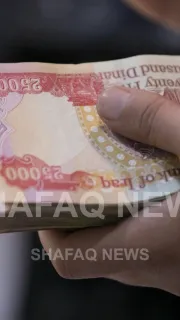
Mudher Mohammed Saleh, economic adviser to Iraq's prime minister, told Shafaq News in a report published Saturday, 7 Shahrivar 1405 (August 29, 2026), that Iraq's banking sector has reached a critical crossroads after years of weak management, oversight failures and declining public confidence, and that reform can no longer be delayed, particularly in an economy that depends heavily on oil for foreign currency. He called for stronger governance, tighter supervision, adherence to anti-money-laundering and counter-terrorist-financing standards, and bank capital increases matched to risk levels. Per the report, the Central Bank of Iraq's reform program, developed with global consultancy Oliver Wyman, offers banks paths including staying in business, merging, or exiting the market; seven Iraqi banks have already entered the program's first phase and been allowed to resume transactions in non-dollar foreign currencies. Economic expert Ahmed Al-Janabi said in the same report that currency issued by the Central Bank of Iraq totals about 103 trillion dinars, of which roughly 20 trillion dinars remains outside the banking system, much of it kept in homes.
Shafaq News
Basrah Crude Loses More Than 6 Percent on the Week
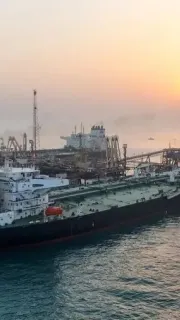
According to a Shafaq News report published Saturday, 7 Shahrivar 1405 (August 29, 2026), Basrah Heavy and Basrah Medium crude each lost 5.37 dollars a barrel over the week ending that day, falling 6.72 percent and 6.46 percent respectively. Both grades nevertheless rose in the week's final trading session: Basrah Heavy gained 1.67 dollars a barrel (2.29 percent) to settle at 74.52 dollars, and Basrah Medium also rose 1.67 dollars a barrel (2.19 percent) to 77.82 dollars. Global oil prices moved lower the same day: West Texas Intermediate fell 0.10 percent (0.08 dollars) to 83.46 dollars a barrel, while Brent declined 0.37 percent (0.33 dollars) to 89.37 dollars a barrel.
Shafaq News
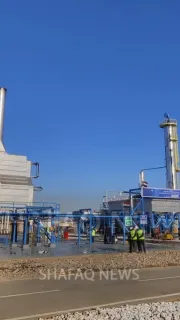
Dollar Trades Around 154,000 Dinars per 100 Dollars in Baghdad and Erbil
According to Shafaq News, the US dollar closed Saturday's trading, 7 Shahrivar 1405 (August 29, 2026), lower than recent sessions in Iraq, holding around 154,000 dinars per 100 dollars, the same rate recorded in the morning's session. Per Shafaq News's market survey, Baghdad exchange shops sold the dollar at 154,500 dinars and bought it at 153,500 dinars, while in Erbil selling prices stood at 154,000 dinars and buying prices at 153,900 dinars per 100 dollars. The rate is about 0.7 percent higher than Shafaq News's previous report on 19 Mordad 1405 (August 10, 2026), which put Baghdad's dollar rate at 152,950 dinars, a sign of the gradual rise in the dollar's price in Iraq's market in recent weeks.
Shafaq News
Iraq's Oil Minister: Kirkuk-Baniyas Pipeline Would Add 2.25 Million Bpd of Export Capacity Outside Hormuz
Iraqi Oil Minister Basim Mohammed Khudair al-Abadi said on Saturday, 7 Shahrivar 1405 (August 29, 2026), according to Shafaq News, at a meeting attended by Deputy Oil Minister for Extraction Affairs Nasir Aziz and the directors general of state run South Oil Company and North Oil Company, that Iraq is pushing ahead with a strategic oil pipeline that could open new export routes for up to 2.25 million barrels per day. He directed officials to accelerate technical and commercial arrangements and finalize preparations for signing the contract. According to the report, the proposed pipeline would run from Basra in southern Iraq, through Haditha, to Fishkhabur in northern Iraq, with a separate section connecting Haditha to Baniyas on Syria's Mediterranean coast. Iraq's oil ministry also reviewed plans for the project to be carried out by a consortium including US companies Chevron and TI Capital, alongside Qatar's UCC. Iraq and Syria signed a memorandum of understanding on July 17, 2026 (26 Tir 1405), under US sponsorship, to reactivate the pipeline and allow Iraqi crude to reach Mediterranean ports through Syrian territory.
Shafaq News
Iraqi MP: Baghdad Needs 8 Trillion Dinars a Month for Salaries as Hormuz Crisis Squeezes Oil Revenue
Ahmad al-Khazali, an Iraqi member of parliament and member of the security and defense committee, said on the Al-Sumaria TV program "Openly" on Friday, 7 Shahrivar 1405 (August 28, 2026), that Iraq faces a "clear economic problem" from the war's disruption of oil exports, and that the country's heavy reliance on oil revenue has made its economy more vulnerable to the current crisis. He said Iraq needs nearly 8 trillion dinars (about $6 billion) a month just to cover government salaries, and while the finance minister has confirmed salaries are funded, the economic pressure from the Strait of Hormuz crisis requires finding alternative solutions. Al-Khazali said a committee of political leaders representing Iraq's different factions has been formed and will travel to Iran to negotiate the passage of Iraqi oil tankers. Separately, Sayyid Sadr al-Din al-Qabanji, the Friday prayer leader in Najaf, thanked Iran on Friday, according to Al-Furat network, for its position on Iraqi oil exports through the Strait of Hormuz, saying a delegation from Iran had traveled to Iraq to convey the Iranian leadership's thanks to the Iraqi people.
Donya-e-Eqtesad
Iraq's SOMO Holds Second Tender This Week to Sell Basrah Crude Outside the Strait of Hormuz
Iraq's State Oil Marketing Organization (SOMO) offered Basrah crude cargoes for September loading on Thursday, 5 Shahrivar 1405 (August 27, 2026), for sale via ship to ship transfers near the Omani coast, outside the Strait of Hormuz. According to Reuters, carried by Zawya, this is SOMO's second tender this week, and it closes Friday, 6 Shahrivar (August 28). SOMO issued its first tender of the week on Monday, 2 Shahrivar (August 24), offering cargoes loading from the Basrah oil terminal that require buyers to send tankers through the Strait of Hormuz; that tender closed Wednesday, 4 Shahrivar (August 26). SOMO does not typically comment on its commercial dealings. Iran's state news agency IRNA had reported earlier, on Saturday, 1 Shahrivar (August 22), that Tehran granted permission for a number of Iraqi oil tankers to transit the Strait of Hormuz following repeated requests from Baghdad.
Zawya (Reuters)
US Strikes Syria From Its State Sponsors of Terrorism List; al-Sharaa Calls It the Close of a Dark Chapter
The United States removed Syria from its list of state sponsors of terrorism on Monday, August 24, 2026, a designation dating back to 1979 under Hafez al-Assad. Syrian President Ahmed al-Sharaa said the move meant Syria "shakes off a dark stain" and thanked President Donald Trump and supporting nations. US Treasury Secretary Scott Bessent said the step "will help foster additional investment in Syria to promote political and economic stability," though the Treasury stressed its broader counterterrorism posture is unchanged. Secretary of State Marco Rubio called it a "path to prosperity," saying it removes the last major barriers to private sector investment in Syria. The World Bank has estimated Syria's post-war reconstruction costs at more than $216 billion. Turkiye, Qatar, Jordan and Saudi Arabia welcomed the decision.
Al Jazeera

To Bypass the Strait of Hormuz, TotalEnergies Backs Two Major Oil Pipelines in the UAE and Iraq
TotalEnergies CEO Patrick Pouyanne said on Monday, Shahrivar 2, 1405 (August 24, 2026), at the ONS energy conference in Norway that the French company will invest in two pipeline projects designed to bypass the Strait of Hormuz. According to Oilprice.com, citing Pouyanne's remarks carried by Reuters, TotalEnergies will back the expansion of the UAE's Habshan to Fujairah pipeline and will also become a partner in a planned pipeline carrying Iraqi crude from Baghdad to Syria for export via the Mediterranean. The company has not disclosed the size of its investment or its stake in either project. The report said the existing Habshan to Fujairah pipeline can carry up to 1.8 million barrels per day, and Abu Dhabi plans to roughly double that capacity by next year. The Iraq to Syria pipeline is estimated to cost around $15 billion and take at least four years to build. Before the Iran war, roughly a fifth of global oil supply passed through the Strait of Hormuz.
Oilprice.com
The Turkish Lira Sets a Fresh Record Low, Crossing 48 to the Dollar
The US dollar to Turkish lira pair reached an all time high on Monday, 24 August 2026 (2 Shahrivar 1405). XE.com put the mid market rate at 48.0764 at 04:10 GMT, and Trading Economics recorded 48.0762 in a live reading the same day, a difference between the two sources of less than one ten thousandth of a lira. XE's own data shows the pair had reached at most 48.0334 over the previous seven days, on 23 August, making today's print a fresh step up. The lira has lost 17.3 percent of its value against the dollar over the past year, while the Turkish central bank's policy rate stands at 37 percent. The move is a continuation of an existing trend rather than the result of any new policy decision by the central bank. For Iranian readers, the lira's path feeds directly into the cost of cross border trade, travel and property purchases in Turkey: a cheaper lira means Turkish goods and assets cost a rial holder less.
XE.com
SANA Confirms Syrian Foreign Minister's Meeting With Mossad Chief in Jordan
Syria's official news agency SANA, citing a diplomatic source at the country's foreign ministry, confirmed a meeting between a senior Syrian delegation led by Asaad al-Shaibani, foreign minister of Syria's transitional government, and an Israeli delegation headed by Roman Gofman, chief of Israel's Mossad intelligence agency. According to Khabaronline, the meeting took place on Sunday, Shahrivar 1, 1405 (August 23, 2026), in Amman, the Jordanian capital, and was mediated by the United States. Per SANA, the main topics included halting Israeli military strikes on Syrian territory, reviving talks toward a durable security agreement, Damascus's insistence on full sovereignty over rebuilding its national army, and a demand for Israeli forces to withdraw to their positions before December 8, 2024. The meeting was earlier reported by the US news outlet Axios and, separately, by Agence France-Presse.
Khabaronline, citing SANA
Iraqi PM's Security Adviser: Baghdad Proposes Joint Security Coordination Council to Iran and Saudi Arabia
Qasim al-Araji, national security adviser to Iraq's prime minister, said on Sunday, Shahrivar 1, 1405 (August 23, 2026), on the television program Al-Mashhad, that Iraq has proposed forming a unified security coordination council to Iran and Saudi Arabia. According to Donya-e-Eqtesad, citing ISNA, he described a crisis of trust as the core problem between Tehran and Riyadh. Al-Araji also said September 30 marks the deadline for the international coalition's withdrawal from Iraq and the start of the government and political forces' own program, and he called the state's monopoly on weapons a purely Iraqi decision with no foreign interference.
Donya-e-Eqtesad, citing ISNA
Fire at Iraq's Al Dawra Refinery Contained With No Casualties
Iraq's Oil Ministry reported a fire at the Al Dawra refinery south of Baghdad on Sunday, Shahrivar 1, 1405 (August 23, 2026), and said the incident caused no casualties. According to Donya-e-Eqtesad, further details on the cause of the fire, the extent of the damage, or any possible impact on the complex's refining capacity have not yet been disclosed by Iraqi officials.
Donya-e-Eqtesad

Hezbollah Deputy Official: Ansarullah Is Ready to Close Bab el-Mandeb
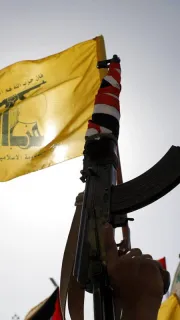
The deputy head of Hezbollah's political bureau in Lebanon said on Saturday, August 22, 2026, that no Iranian fighters are present in Lebanon, while reaffirming the group's continued push for a full withdrawal of Israeli forces from Lebanese territory, according to Donya-e-Eqtesad. He also said Yemen's Ansarullah is prepared to close the Bab el-Mandeb strait if Hezbollah and Lebanon come under blockade. Bab el-Mandeb is a key route for oil tankers between the Red Sea and the Indian Ocean, and any disruption there could raise global energy shipping costs.
Donya-e-Eqtesad
Iran-Turkey Trade Still Falls Short of Its Real Potential in 2025
According to an ecoiran report citing the Tehran Chamber of Commerce's economic studies office and International Trade Center data, Iran-Turkey trade in 2025 fell short of its real potential despite the two countries' geographic and economic ties. Turkey's imports from Iran stood at about $2.5 billion and its exports to Iran at about $3.1 billion, leaving the trade balance in Turkey's favor. The composition is also asymmetric: more than half of Turkey's exports to Iran consist of machinery, plastics and electrical equipment, while over 89% of Iran's exports to Turkey are aluminum, copper, fruit and nuts, and other raw materials and industrial inputs. The Tehran Chamber report notes bilateral trade is highly sensitive to political developments and international financial restrictions, and suggests Iran use Turkey as an export hub toward Europe, the Balkans, the Caucasus and Central Asia rather than treating it merely as a market.
EcoIran
Ghalibaf, on Iraq Trip, Calls for Ending Dollar Trade and Joint Border Industrial Zones
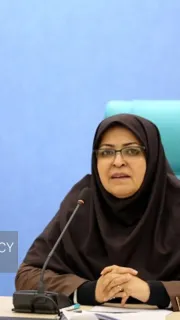
Mohammad Bagher Ghalibaf, Speaker of Iran's Parliament, on a two day visit to Iraq, told a meeting of Iranian and Iraqi business figures at Iran's embassy in Baghdad that specialized sessions with chamber of commerce officials from both countries are planned in Tehran. According to Donya-e-Eqtesad, citing Khaneh Mellat, Ghalibaf stressed the need for a precise "economic road map" between Iran and Iraq, saying that without one, the labor potential of border cities would go to waste. Addressing the gathering of economic operators, Ghalibaf said trade could be conducted in national currencies to blunt the impact of sanctions; participants at the meeting stressed the need to remove the dollar from bilateral trade, replace it with the dinar and toman, and establish joint industrial zones in border areas. Per the Khaneh Mellat report, the trip included a senior delegation from the Iran Iraq parliamentary friendship group and representatives from border provinces.
Donya-e-Eqtesad, citing Khaneh Mellat
Iraqi PM Announces Target to Double Oil Output to 10 Million Barrels Within Six Years
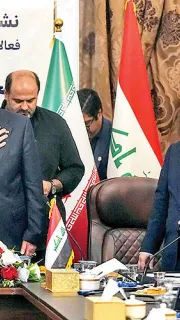
Iraqi Prime Minister Ali al-Zaidi said on Friday, 30 Mordad 1405 (August 21, 2026), that Baghdad is targeting oil output of 8 to 10 million barrels per day within six years, more than double the roughly 4 million barrels per day the country produced before the Iran war. According to Oilprice.com, Iraq dispatched its oil and finance ministers to Saudi Arabia the same day to press its case for a higher OPEC+ production quota. OPEC+ has hired consultancy DeGolyer and MacNaughton to independently assess the maximum sustainable production capacity of most members, including Iraq, with findings due by the end of September, kicking off negotiations over 2027 production baselines. Iraq, whose exports through the Strait of Hormuz remain capped near 2 million barrels per day amid the blockade, would also need to expand alternative export routes to hit the new target, including the Iraq-Turkey pipeline to Ceyhan, which is currently moving only about 170,000 barrels per day.
Oilprice.com
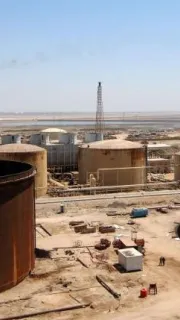
Hezbollah Reacts to New US Sanctions, Reaffirms Close Ties With Iran
Lebanon's Hezbollah, in a statement published on Thursday, August 20, 2026 (29 Mordad 1405), condemned new US Treasury sanctions targeting the group's cash network, calling them a continuation of Washington's hostile policies to weaken the resistance and destabilize Lebanon. According to Donya-e-Eqtesad, Hezbollah said in the statement that it takes pride in its close, brotherly relations with Iran and considers them effective in defending Lebanon's sovereignty. In a separate report published hours later the same day, Khabar Online said Hezbollah, in a sharper response, said it needs no one's approval to prove it is Lebanese and patriotic. The new US sanctions, announced by the Treasury Department on Thursday, targeted individuals and entities linked to Iran, Hezbollah, Russia and Cuba.
Donya-e-Eqtesad
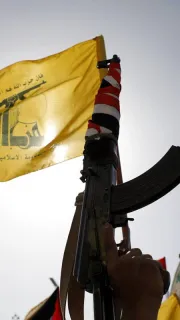
EBRD Extends $75 Million Trade Finance Facility to Iraq's Al Mansour Bank
The European Bank for Reconstruction and Development (EBRD) announced it is providing up to $75 million (equivalent to €65 million) in trade finance to Iraq's Al Mansour Bank for Investment. Delivered under the EBRD's Trade Facilitation Programme, the facility comprises guarantees and cash advances aimed at reducing commercial and political payment risks in international transactions. Al Mansour Bank, established in 2006 and majority owned by Qatar National Bank Group, plans to use the funds to expand trade financing for small and medium-sized enterprises in agriculture, construction, manufacturing and consumer goods. The deal comes less than a year after the EBRD began official operations in Iraq in September 2025. For Iran's markets, the story matters because it shows European development finance keeps expanding formal banking channels with Iraq, Iran's western neighbor and a major non-oil export market, precisely the kind of correspondent-banking access Iran's own banks remain locked out of under sanctions, a gap that could weigh on Iranian exporters' competitiveness in the Iraqi market over time.
IraqiNews.com
Turkish Lira Hovers Near Record Low, Dollar Nears 48 Lira
According to Trading Economics data, the dollar lira exchange rate reached 47.9552 lira on Thursday, August 20, 2026 (29 Mordad 1405), up 0.06 percent from the previous session. The level sits close to the pair's all time high of 47.97, which Trading Economics recorded for August 2026. The lira has weakened 1.64 percent against the dollar over the past month and 17.21 percent over the past 12 months. Turkey's central bank has held its policy rate at 37 percent at recent meetings and has cited higher energy prices tied to the regional war as a factor slowing the country's disinflation trend. Turkey is a major trading partner and travel destination for Iranians, so the lira's continued slide affects the cost of imports and travel along that route.
Trading Economics
Chinese Refiners Step Up Iraqi Crude Buying as Hormuz Traffic Thins
According to a Bloomberg report carried by OilPrice.com on Thursday, August 20, 2026 (29 Mordad 1405), Chinese refiners, citing unnamed traders, recently purchased 8 million barrels of Iraq's Basrah Heavy and Basrah Medium crude for prompt delivery. Oil exports through the Strait of Hormuz, Iraq's main export route, have continued despite Iran's blockade but have fallen to a fraction of prior volumes. Data from ship tracker Marine Traffic showed only 95 vessel crossings through the strait in the week to August 17 (26 Mordad), down from 118 the previous week. Iraq's State Oil Marketing Company (SOMO) said the country has been exporting via Hormuz at a rate of 2 million barrels a day since the start of the month. Saudi Arabia, facing Houthi attacks, has rerouted its oil exports from Hormuz to the Red Sea and then from the port of Yanbu to Egypt via the Suez Canal. Emirati crude has been another destination for Chinese buyers; at a tender at the end of July, Sinopec, PetroChina and Sinochem bought 2 million barrels of Upper Zakum crude, while ADNOC sold a total of 12 million barrels at that same tender.
OilPrice.com, citing Bloomberg
Iraq-Syria Pipeline to Bypass Hormuz Still Four Years and $15 Billion Away
According to Oilprice.com, published Monday, August 17, 2026 (26 Mordad 1405) citing Reuters, the project to ship Iraqi crude to Syria's Mediterranean coast to bypass the Strait of Hormuz is still at least four years and $15 billion in investment away. Sources familiar with the project said the plan, backed by the US administration as a way to reduce Hormuz's importance and under feasibility review by a consortium that includes US supermajor Chevron, is moving forward even as Washington hopes to make Hormuz irrelevant within two years. The existing pipeline, inactive for more than two decades, cannot be reused for the new project, meaning new infrastructure must be built. Youssef Qablawi, chief executive of the state owned Syrian Petroleum Company, had earlier said rebuilding the pipeline from Haditha in Iraq to Syria's Baniyas port would take at most three years, and that Iraq and Syria have begun negotiations to finalize a contract. The pipeline, expected to have a capacity of 1.5 to 2 million barrels per day, is considered strategically important for Iraqi oil exports independent of Hormuz and for Syria's postwar economy.
Oilprice.com, citing Reuters
Netanyahu's Office Claims Responsibility for Airstrike on Syria's Idlib Airbase
Israeli media reported on Wednesday, August 19, 2026 (28 Mordad 1405), according to Ecoiran citing IRNA, that the office of Israeli Prime Minister Benjamin Netanyahu formally claimed responsibility, about 24 hours later, for a Tuesday morning airstrike on the Abu al-Duhur military airbase in Syria's northwestern Idlib province. Per the reports, Netanyahu's office alleged Syria had been on the verge of breaching the existing security arrangement by allowing Turkish forces to deploy at an airbase near Aleppo. Israeli army radio described the strike as a message to Turkey that Israel would not accept a Turkish military presence in Syria. Syria's Foreign Ministry called the strikes an unjustified act of aggression and a violation of Syrian sovereignty, and urged the international community and the UN Security Council to condemn them. Syria's state news agency SANA separately reported Israeli fighter jets violated the airspace of Daraa province. The tensions come as the US special envoy has previously warned of rising Israeli Turkish friction over Syria.
Ecoiran, citing IRNA

In Syria's Deir ez-Zor, IAEA Reports Discovery of Another Hidden Nuclear Site
International Atomic Energy Agency Director General Rafael Grossi said on Wednesday, August 19, 2026 (28 Mordad 1405), according to Ecoiran citing Hamshahri Online, that agency inspectors have begun extensive excavation and survey work at Syria's Deir ez-Zor site, which he said had been linked to the former Syrian government's clandestine nuclear program. Grossi said he and his team had visited the site in person. The IAEA chief also said the agency had discovered another site in Syria containing nuclear material, but gave no further detail on its exact location or the nature of the material found. The remarks come as the agency continues inspecting the nuclear legacy of Syria's former government, a process that could affect regional diplomacy and the international sanctions track.
Ecoiran, citing Hamshahri Online

Araghchi Tells Iraqi Counterpart He Has No Information Confirming Iranian Origin of Erbil Drone Attack
Iraq's Foreign Ministry said, according to Khabaronline citing Mehr News Agency and Al Jazeera, that Foreign Minister Fuad Hussein, in a phone call on Monday, 26 Mordad 1405 (August 17, 2026), with his Iranian counterpart Seyed Abbas Araghchi, discussed that day's drone attack on the residence of the head of the Kurdistan Regional Government in Erbil. Per the report, Araghchi told Hussein he has no information indicating the attack originated from Iranian territory. Iraq's Foreign Ministry added that previous such attacks had been justified by claims that Iranian opposition parties or groups were present in the Kurdistan region. Hussein stressed in the call that the attack represents a dangerous escalation with negative consequences for Iraqi and regional security. The Kurdistan region's counterterrorism agency had earlier blamed the attack on two Hadid-110 drones it said were launched from Iranian territory, and Kurdistan Regional Government Prime Minister Masrour Barzani called it illegitimate and unacceptable.
Khabaronline, citing Mehr and Al Jazeera
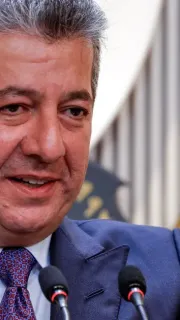
Hemmati Calls for Faster Release of Iran's Frozen Currency Reserves at Iraq's Central Bank
According to Ecoiran, citing Tasnim, Abdolnasser Hemmati, governor of the Central Bank of Iran, stressed the need to speed up the removal of banking obstacles and implement mechanisms for accessing Iran's currency reserves held in Iraq's banking system, at a meeting on Monday, 26 Mordad 1405 (August 17, 2026), with his Iraqi counterpart, Nazar Naser Hussein. Hemmati also called for resolving Iran's outstanding claims against the Iraqi government and easing banking procedures for Iranian economic operators. Iraq's central bank governor welcomed the expansion of economic ties between the two countries at the meeting and emphasized using shared capacities to boost financial cooperation. Hemmati concluded the meeting by inviting his Iraqi counterpart on an official visit to Tehran; the two sides also discussed issues facing Iranian traders and exporters active in Iraq.
Ecoiran, citing Tasnim

Drones Launched From Iranian Territory Target Iraqi Kurdish PM's Office
The Kurdistan Regional Government's counterterrorism agency said on Monday, 26 Mordad 1405 (August 17, 2026), that two Hadid-110 drones, which it said were launched from Iranian territory, targeted the private office of Iraqi Kurdish Prime Minister Masrour Barzani and the residence of the region's security and intelligence chief in Erbil. According to Al Jazeera, citing the agency and Iraq's official news agency, no casualties were reported in the attack. Barzani condemned the attack in a post on X as illegitimate and unacceptable and a direct threat to the security and stability of the Kurdistan Region. No official Iranian source has confirmed the attack so far. Iran and Iran-aligned groups have previously accused Iraq's Kurdistan region of harboring Iranian Kurdish opposition groups, an allegation Iraqi Kurdish authorities deny.
Al Jazeera
Erdogan Says Israel Is the Main Driver of War in West Asia
Turkish President Recep Tayyip Erdogan said in an interview with Al Jazeera published Sunday, 25 Mordad 1405 (August 16, 2026), that Israel has been the main driver and instigator of war in the West Asia region and has always favored the war option, adding that other regional countries have paid a heavy price as a result. According to EcoIran, citing Tasnim, Erdogan said on Gaza that Hamas has shown sincere solidarity while Israel has shown no positive approach and continues its attacks on Lebanon and Gaza. Erdogan also discussed the mutual defense pact known as the Mecca agreement between Turkey, Saudi Arabia and Pakistan, describing it as having a mechanism similar to Article 5 of the NATO treaty. According to Donya-e-Eqtesad, the Turkish president said elsewhere in the same interview that if any country sought war with Turkey, Ankara would not hesitate to fight and would not run from it; he also said EU membership is no longer Turkey's priority.
EcoIran, citing Tasnim

Kushner and Witkoff, After Meeting Hamas Delegation in Cairo, Arrive in Israel to Meet Netanyahu
Steve Witkoff, the US president's special Middle East envoy, and Jared Kushner, Donald Trump's son in law and senior adviser, arrived in Tel Aviv on Sunday, 25 Mordad 1405 (August 16, 2026), and are due to meet Israeli Prime Minister Benjamin Netanyahu today, Monday, 26 Mordad. According to Donya-e-Eqtesad, citing CNN, the two had earlier met on Sunday in Cairo with a Hamas delegation and officials from Egypt, Qatar and Turkey. Citing Reuters and a diplomatic source, several Hamas officials also attended some of the joint sessions with Kushner and Nikolai Mladenov, the senior coordinator for the Gaza peace council. The talks aim to consolidate the Gaza ceasefire and advance phase two of Trump's roadmap; Hamas had earlier said in a statement that it agreed to the roadmap and called for Israel to fully honor its phase one commitments under the Sharm el Sheikh ceasefire deal.
Donya-e-Eqtesad, citing CNN

Erdogan: Reopening the Strait of Hormuz Is Our Priority; Turkey Says It Has Trump's Promise on F35 Jets
Turkish President Recep Tayyip Erdogan said in an interview with Al Jazeera on Saturday, August 15, 2026 (24 Mordad 1405), that reopening the Strait of Hormuz is a priority for Turkey, since its continued closure benefits no one. According to Khabaronline, citing Al Jazeera and Mehr News Agency, Erdogan said he discussed the need to stop Israeli attacks on Lebanon with US President Donald Trump during Trump's recent visit to Turkey, calling the US role in that effort essential. Erdogan also said Turkey has received a promise from Trump regarding the delivery of F35 fighter jets and is waiting for it to be fulfilled. He referred to the "Mecca Agreement," under which signatory states commit to joint action in the event of external aggression against any of them, and said Egypt could eventually join the pact. He described Qatar as playing an important mediating role in efforts to end the war in the region.
Khabaronline, citing Al Jazeera and Mehr News
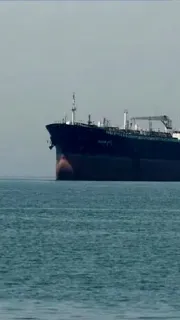
Iraq Exported 49 Million Barrels of Crude in July, Advances Basra-Fishkhabur Pipeline
Iraqi Oil Minister Basim Mohammed Khudair Al-Abadi said at a joint press conference with the governor of Basra on Friday, August 14, 2026 (23 Mordad 1405), that Iraq exported about 49 million barrels of crude oil in July, as talks with Iran and the United States continue over the passage of Iraqi oil shipments through the Strait of Hormuz. According to Shafaq News, Al-Abadi said daily exports have averaged 2 million barrels since the start of August, which he called the first time Iraq has reached that level since the regional crisis began, adding that four tankers were loaded that day and are preparing to sail. Al-Abadi announced plans for a strategic pipeline linking Basra to Fishkhabur, near the Turkish border, aimed at diversifying Iraq's oil export routes and reducing reliance on the Strait of Hormuz. The project, previously delayed by financial constraints, will be built by a consortium of Chevron, IT Capital and Qatar's UCC under an agreement signed during the Iraqi government delegation's visit to Washington in July. The oil minister said Iraq, OPEC's second largest producer, ships about 90 percent of its crude exports through the Strait of Hormuz.
Shafaq News
Turkey's Central Bank Governor Raises This Year's Inflation Forecast
Fatih Karahan, governor of the Central Bank of the Republic of Turkiye (TCMB), raised the country's forecast for year end inflation in the current calendar year from the bank's previous estimate, speaking at the release of its third quarter 2026 Inflation Report in Istanbul on Thursday, August 13, 2026 (22 Mordad 1405), according to Bourse News. He said the upward revision reflects a higher assumed pass through of import prices to the Turkish lira, driven by moves in diesel, natural gas and other commodity prices. Karahan said inflation's pace of increase has slowed in recent months under the bank's tight monetary policy stance, but the bank expects the rate to accelerate again in coming months. He kept the bank's forecasts for year end 2027 inflation at 15 percent and 2028 at 9 percent unchanged. Official data show Turkey's monthly consumer inflation reached 1.78 percent in August (Mordad), while annual inflation eased slightly to 31.75 percent. The TCMB held its policy rate unchanged at 37 percent last month for a fourth consecutive meeting.
Bourse News
Saudi Arabia and 13 Other Nations Formally Launch Red Sea Maritime Coalition
Saudi Arabia's Ministry of Defence said on Thursday, August 13, 2026 (22 Mordad 1405), following the coalition's third meeting in Jeddah, that of the 15 countries that signed the joint declaration to form the Multinational Maritime Defense Alliance, 13 including Bahrain, Bangladesh, Comoros, Djibouti, Egypt, Jordan, Kuwait, Saudi Arabia, Pakistan, Somalia, Sudan, Turkiye and Yemen have completed their national procedures and formally joined. According to Al Jazeera, the ministry called it the coalition's "actual launch" toward institutional and operational activation, and said applications from other countries continue to be received. The coalition, first announced on Thursday, July 30, 2026 (8 Mordad), aims to protect freedom of navigation through the Bab el Mandeb Strait, the Red Sea and the Gulf of Aden through intelligence sharing, joint exercises and naval operations. Al Jazeera noted the move comes as the Strait of Hormuz remains effectively closed amid the US and Israeli war on Iran, and as Houthi attacks on Saudi linked vessels in the Red Sea have intensified.
Al Jazeera
Turkish Foreign Minister Calls for Urgent Solution to Strait of Hormuz Crisis and Its Damage to Global Trade and Energy
Turkish Foreign Minister Hakan Fidan, at a joint press conference with his Egyptian counterpart reported by Tasnim News Agency on Thursday, August 13, 2026 (22 Mordad 1405) and carried by Donya-e-Eqtesad, stressed the need for urgent solutions to the Strait of Hormuz crisis and its damaging effects on global trade and energy. The remarks came as Turkey, a regional energy importer, has been affected by the disruption to shipping through the strait since Iran's war began in February 2026 (Esfand 1404). Fidan did not detail Turkey's proposed solution, but his comments add to a series of regional diplomatic reactions to the continued closure of the Strait of Hormuz and the US naval blockade of Iranian ports, a standoff that ship tracking data shows has cut daily transits through the strait from roughly 130 to 140 vessels before the war to fewer than ten a day.
Donya-e-Eqtesad, citing Tasnim
Central Bank of Iraq Disbursed Nearly $3.2 Billion Under Its Four Trillion Dinar Lending Initiative in 2025
The Central Bank of Iraq said on Wednesday, August 12, 2026 (21 Mordad 1405), according to Shafaq News, that loans issued under its four trillion dinar lending initiative reached about 4.195 trillion dinars ($3.2 billion) in 2025, covering investment projects and personal financing. Large projects worth more than one billion dinars ($763,000) received the largest share, at about 2.211 trillion dinars ($1.69 billion), while small project loans totaled about 249.6 billion dinars ($190.5 million). The report said financing for large projects went mainly to the commercial and industrial sectors, while small business loans were spread across services, industry, agriculture and trade. The initiative also disbursed 5.6 billion dinars ($4.27 million) in concessional personal loans. Earlier this month, the central bank said Iraq's private sector held nearly 65 percent of total outstanding bank credit as of the end of May 2026.
Shafaq News
Basrah Medium Crude Fell $6.73 in July, the Fourth Largest Monthly Decline Among OPEC Crudes
According to a new OPEC report carried by Shafaq News on Thursday, August 13, 2026 (22 Mordad 1405), Iraq's Basrah Medium crude fell $6.73 per barrel in July from June to average $78.37, the fourth largest monthly decline among crudes in OPEC's reference basket, after Kuwait Export crude, down $10.26, Arab Light, down $9.01, and Iran Heavy, down $8.70. Basrah Medium averaged $91.24 a barrel over the first seven months of 2026, about 28 percent above last year's average of $71.27. OPEC's Reference Basket fell $6.76 in July to $82.99 a barrel; its average for the first seven months of this year stands at $92.04, compared with $71.88 in 2025.
Shafaq News
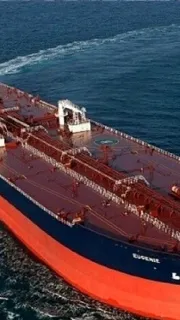
Iraq to Begin Laying Basra Gas Pipeline Network With France's TotalEnergies and China's CPP
Iraq's state owned Company for Oil Projects (SCOP) said on Wednesday, August 12, 2026 (21 Mordad 1405), according to Shafaq News, that technical and operational preparations to begin laying the pipeline network for the major gas capture project at the Artawi oilfield in Basra have been completed, with work set to start this August. Abdul Hakim Qadouri, director of the company's South Projects Authority, said a joint meeting with France's TotalEnergies and China Petroleum Pipeline (CPP), attended by representatives of Basra Gas Company, settled the final technical requirements, including pipeline routes and supporting facilities. The project includes 10, 12 and 24 inch pipelines for sweet gas and a 20 inch line for sour gas within the West Qurna 2 block. Its goal is to reduce the flaring of gas produced alongside crude oil, a practice that has simultaneously made Iraq an importer of gas and fuel for its own power stations. The project is part of TotalEnergies' broader Gas Growth Integrated Project in Basra, which also covers oilfield redevelopment, a seawater supply plant and solar power.
Shafaq News
Iraq's Car Sales Fall 28.6 Percent to 59,264 Vehicles in First Half of 2026
According to a report from automotive market research platform Focus2move, carried by Shafaq News on Thursday, August 13, 2026 (22 Mordad 1405), Iraq's car market contracted sharply in the first half of 2026, with sales falling 28.6 percent year on year to 59,264 vehicles. Kia remained the country's best selling brand with a 28 percent market share despite a 27.8 percent drop in sales, while Toyota ranked second with a 22 percent share and a 24 percent decline, and Nissan placed third after a 13.3 percent fall. Hyundai recorded the steepest decline among major brands at 69.7 percent, while Great Wall was one of the few brands to grow, up 6.9 percent. The electric vehicle segment saw an even sharper contraction of 72 percent, with BYD leading at a 48.3 percent share and Toyota at 43.4 percent. Iraq's car sales, which grew steadily from 2021 to 2024 and reached 158,076 vehicles in 2024, are now on a downward trend.
Shafaq News
Central Bank of Iraq's Reserves Fall Nearly $22 Billion Since Start of 2026 to $77.8 Billion
Manar Al Obaidi, head of the Future Iraq Foundation for Economic Studies and Consultancy, said on Thursday, August 13, 2026 (22 Mordad 1405), based on operational and banking data, that the Central Bank of Iraq's official reserves have fallen to 102 trillion dinars (about $77.8 billion), down from 130 trillion dinars (about $99.2 billion) at the start of 2026. According to Shafaq News, the central bank lost about 10.3 trillion dinars (roughly $7.9 billion) in foreign currency and banking reserves in July alone. By contrast, the central bank's net claims on the government jumped sharply to 66.6 trillion dinars (about $50.8 billion), up from 35 trillion dinars (about $26.7 billion) at the start of 2025. The trend comes as Iraq's oil exports, the government's main revenue source, have been hit by the Strait of Hormuz crisis.
Shafaq News
Egyptian and Emirati Foreign Ministers Stress Importance of Returning to Iran-US Memorandum in Phone Call
Egyptian Foreign Minister Badr Abdelatty and Emirati Deputy Prime Minister and Foreign Minister Sheikh Abdullah bin Zayed Al Nahyan discussed bilateral relations and the latest regional developments in a phone call on Thursday, August 13, 2026 (22 Mordad 1405). According to Donya-e-Eqtesad, citing Al-Shorouk, the two ministers stressed the importance of stepping up efforts to reduce tensions and of returning to the memorandum of understanding between Iran and the United States. The two sides also discussed developments in the Gaza Strip, the West Bank and Sudan, and shared their assessments of regional and international efforts to address those crises.
Donya-e-Eqtesad, citing Al-Shorouk

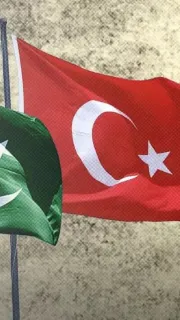
Turkish Defense Ministry: Mecca Agreement Is Defensive in Nature, Not a NATO Replacement
Turkey's Defense Ministry said at its weekly press briefing in Ankara on Thursday, August 13, 2026 (22 Mordad 1405), that the Mecca Agreement for Joint Defense, signed on August 7 (16 Mordad) between Turkey, Saudi Arabia and Pakistan, is defensive in nature, names no country as a common enemy, and will not replace NATO. According to Khabar Online, citing Mehr News and Al Jazeera, the ministry described the agreement's main goal as supporting regional security and stability and developing military cooperation among the three countries. The Mecca Agreement, signed at the Saudi Royal Court by Crown Prince Mohammed bin Salman, President Recep Tayyip Erdogan and Prime Minister Shehbaz Sharif, states that an armed attack on any one of the three countries will be considered an attack on all of them. Turkey's Defense Ministry said other countries could be considered for the mechanism if the necessary understandings are reached.
Khabar Online, citing Mehr News and Al Jazeera
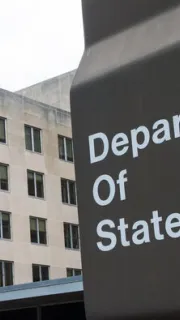
US Troop Withdrawal From Iraq to Be Completed by End of September 2026
An American official told The Associated Press, in a report Ecoiran carried on Wednesday, August 12, 2026 (21 Mordad 1405), that Washington expects to fully complete the withdrawal of its remaining forces from Iraq by September 30, 2026 (8 Mehr 1405). The official did not disclose the exact number of remaining troops or where they would be redeployed. AP reporting the same day said Iraq's prime minister and the US Department of Defense separately confirmed the completion of the American troop withdrawal from Iraq by the end of September. The withdrawal comes amid the regional war between the United States and Iran and wider tension across West Asia that has weighed on Iraq's stability, oil exports and its dinar market.
Ecoiran, citing The Associated Press

US Embassies in West Asia Prepare for an Extended Period With Minimal Staff
According to Khabaronline, citing CNN, the US State Department has issued an urgent directive asking its embassies across West Asia to draw up plans for continuing operations with minimal staff. Khabaronline, citing the newspaper Hamshahri, reported on Wednesday, August 12, that the decision followed rising tensions and Washington's concern over the possibility of direct military conflict with Iran. Under the directive, staff who had already left their posts in the region have now been given options to formally end their diplomatic assignments. The move comes as the US and Israel's war with Iran has disrupted transit through the Strait of Hormuz for weeks, with concern growing over the conflict's reach into American diplomatic facilities in the region.
Khabar Online, citing CNN
Six Killed in Houthi Attack on Ship in Bab al Mandeb Strait, First Shipping Deaths of This War
According to Al Jazeera, in a report published Wednesday, August 12, 2026 (21 Mordad 1405), Yemen's internationally recognized government said Houthi forces fired three ballistic missiles at the Egyptian owned cargo ship Tihamah in the Bab al Mandeb strait on Tuesday, August 11, killing at least six people (three Pakistani nationals and one Indonesian national, plus two rescue personnel) and wounding ten others. Yemen's Transport Ministry said the Houthis fired an additional missile at the site of the rescue operation. These are the first shipping deaths linked to the Houthis since the US and Israel launched their war with Iran on February 28. The Houthi run Saba news agency claimed the group had targeted a Saudi ship carrying military equipment in Bab al Mandeb, without naming the vessel, and there was no immediate official Saudi response. Yemen's Foreign Ministry condemned the attack and called for "decisive action" by the international community against the Houthis. The escalation follows the collapse of a years long truce between the Houthis and the Saudi led coalition, adding to concerns over shipping security and insurance costs for vessels transiting the Red Sea.
Al Jazeera

US Energy Secretary Claims 9 Million Barrels a Day Now Flow Through Strait of Hormuz, Above Earlier EIA Estimate
US Energy Secretary Chris Wright claimed on social platform X on Tuesday, August 11, 2026 (20 Mordad 1405) that the seven day average of oil exports through the Strait of Hormuz has now reached nearly 9 million barrels a day, and that more than 20 million barrels left the wider Persian Gulf region on Sunday. According to Donya-e-Eqtesad, citing ISNA and Sputnik, the figure is well above the US Energy Information Administration's (EIA) earlier estimate, which put second quarter 2026 flow through the strait at about 4.9 million barrels a day, a 4.4 fold drop from the pre conflict level of 21.6 million barrels a day. In response, Mohsen Rezaei, the new secretary of Iran's Supreme National Security Council, wrote on X the same day that the Strait of Hormuz will remain closed until the United States ends the war and the blockade, releases Iran's frozen assets, and fighting across the region, including in Lebanon and Gaza, comes to an end.
Donya-e-Eqtesad, citing ISNA and Sputnik

Gulf Arab States See Iran's Control of the Strait of Hormuz as Likely Permanent, Wall Street Journal Reports
The Wall Street Journal, in a report carried by Arabi21 and reflected by Iran's Donya-e-Eqtesad newspaper by Tuesday, August 11, 2026 (20 Mordad 1405), wrote that Gulf Arab energy producers have concluded that Iran's control of the Strait of Hormuz will likely be permanent, even though oil and gas exporters are unhappy with the deal under negotiation to reopen the waterway, since the alternative, a resumption of the war, is worse. According to Kpler data cited in the report, crude oil exports through the Strait of Hormuz fell to about 2.2 million barrels a day last week, down from around 8.5 million barrels a day a month earlier; Iran's own oil exports halved over the same week to 47,000 barrels a day. The Journal said the United Arab Emirates has reported that four of its vessels were attacked by Iran last week while attempting to transit the strait, and that a gas tanker was hit in a drone attack at Egypt's Damietta port. Omar Karim, a Gulf security researcher at the University of Birmingham, told the paper that Gulf Arab states can no longer guarantee full security in the strait and have no option but to partially meet Iran's demands. Brent crude was trading at about $87 a barrel on Monday, August 10.
Donya-e-Eqtesad, citing The Wall Street Journal via Arabi21
Iran Sets Six New Conditions for Reopening Strait of Hormuz; Trump Demands 50 Years of Reparations From Tehran
According to a report published by Al Jazeera on Tuesday, August 11, 2026 (20 Mordad 1405), Iran's Supreme National Security Council announced six new conditions on Saturday, August 8, for fully reopening the Strait of Hormuz: an end to US threats and insults, a permanent halt to attacks on Iran and its allies in Lebanon, Palestine, Yemen and Iraq, the lifting of the US naval blockade and withdrawal of US naval and air forces from around Iran, compensation for two "imposed wars," the lifting of sanctions, and the unconditional release of Iran's frozen assets. In response, US President Donald Trump told reporters at the White House on Monday, August 10, that the United States would also seek compensation from Iran "for the damage they've done over a 50-year period," and in a Truth Social post demanded reparations for the families of the 17 US sailors killed in the 2000 USS Cole attack, as well as for damage to the people of Lebanon, Syria, Yemen and Gaza. According to Al Jazeera, citing ship-tracking data from MarineTraffic, crossings through the Strait of Hormuz fell from 15 vessels on Friday to six on Sunday. Iranian Foreign Ministry spokesperson Esmaeil Baghaei said on Monday that talks with Oman on a shipping route map were progressing smoothly and constructively, though some technical issues remained unresolved.
Al Jazeera
Houthi Attack on Cargo Ship off Yemen Coast Causes Casualties; UK Maritime Body Reports Separate Sea of Oman Incident
According to Ecoiran, citing IRNA, the UK Maritime Trade Operations agency (UKMTO) said on Tuesday, August 11, 2026 (20 Mordad 1405) that it had received a report of an incident involving a cargo ship near Yemen's al-Makha coast in the southern Red Sea. Citing Al Jazeera, the report said the ship was struck by a projectile and sustained casualties, though an exact toll has not yet been released. The same day, UKMTO reported a separate incident in the Sea of Oman, south of Pakistan's Gwadar port, in which gunfire was exchanged between a tanker's crew and armed men. The incidents add to a recent surge in maritime insecurity in the region, including a missile strike on a vessel linked to Abu Dhabi's national oil company while transiting the Strait of Hormuz in recent days.
EcoIran, citing IRNA and Al Jazeera

Yemen's Houthis launch fresh ballistic missile attacks on al-Makha and Marib
Yemen's internationally recognised government armed forces said on Monday, August 10, 2026 (19 Mordad 1405), that the Houthis launched a fresh round of ballistic missile attacks on the Red Sea port of al-Makha and on residential areas of the city of Marib, Al Jazeera reported. The forces did not disclose any casualty figures for the latest strikes. The attack came a day after a Houthi missile strike on al-Makha killed at least seven people, wounded 30 others and caused extensive damage to the city's port. Local media reported a separate Houthi drone strike killed two government soldiers in the south central province of Shabwa. The escalation, reignited since the US and Israeli war on Iran that began on February 28, has been described by international officials as among the deadliest periods of Yemen's civil war in recent years.
Al Jazeera
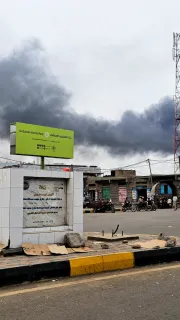
Iraq Seeks New Oil Export Routes via Jordan and Syria to Cut Reliance on Strait of Hormuz
Zainab Al-Khazraji, a member of the Iraqi parliament's Oil Committee, told Shafaq News on Monday, 19 Mordad 1405 (August 10, 2026), that Baghdad is moving toward Syria and Jordan as potential new crude export outlets, alongside Turkiye, as it seeks to diversify its routes to international markets. According to Shafaq News, Iraq, OPEC's second-largest producer, relies on oil exports for about 90 percent of federal revenue, leaving it especially exposed to disruptions in the Strait of Hormuz; only seven vessels transited the strait in the 24 hours to Monday. The same day, Iraq's Oil Ministry announced plans for a new pipeline system along two routes, one reaching Fishkhabur on the Turkish border and the other extending to Baniyas on Syria's Mediterranean coast, aimed at reducing reliance on Hormuz. A government source had earlier told Shafaq News that an Iraqi delegation would travel to Iran for talks on energy supplies and securing safe passage for tankers carrying Iraqi crude through the strait.
Shafaq News
Basrah Crude Recovers 24 Percent From July Low to Reclaim the $57 Mark
Basrah Medium crude, Iraq's main export benchmark, has recovered about 24 percent from its July low to reach 57 dollars and 9 cents a barrel, according to price data reviewed by Shafaq News on Monday, 19 Mordad 1405 (August 10, 2026), though it remains nearly 58 percent below its peak earlier this year. The crude rose 3.93 percent Monday, extending a gradual recovery that began after prices fell to about 46 dollars a barrel in mid-July. Basrah crude had reached about 135 dollars a barrel in early April, its highest level this year, before a sharp decline of about 89 dollars, or roughly 66 percent, over the following months. Since hitting the July low, the crude has gained about 11 dollars, or 24 percent, bringing it back above the 57 dollar mark.
Shafaq News
Iraq Stock Exchange Trading Value Reaches $91.2 Million in July; ISX60 Index Rises 2.1 Percent
The Iraq Stock Exchange (ISX) recorded 120.03 billion Iraqi dinars (roughly 91.2 million dollars) in trading value during July 2026, up 1.2 percent from June, according to Shafaq News, citing market data. More than 166.66 billion shares were traded during the month across 21 regular trading sessions, up 54.9 percent from June. The ISX15 index fell 0.48 percent to close at 1,267.67 points, while the broader ISX60 index rose 2.1 percent from June's 1,019.39 points to close at 1,041.07 points. The exchange executed 24,342 sale and purchase contracts during the month, down 8.3 percent month on month, with 85 of the 125 listed companies recording trading activity.
Shafaq News
Dollar Strengthens in Baghdad and Erbil Monday, Reaching 153,000 Dinars per 100 Dollars
According to Shafaq News, the US dollar strengthened in Iraq by the end of Monday's trading session, August 10, 2026 (19 Mordad 1405), reaching about 152,950 dinars per 100 dollars at Baghdad's Al-Kifah and Al-Harithiya exchanges, up from the morning session's rate of 152,500 dinars. In Baghdad exchange shops, the dollar sold for 153,500 dinars and was bought for 152,500 dinars. In Erbil, the selling price stood at 152,800 dinars and the buying price at 152,750 dinars per 100 dollars. The rise continues the dollar's strengthening trend in the Iraqi market in recent days.
Shafaq News
Turkey's Annual Inflation Eases to 31.75 Percent in July
Turkey's annual inflation rate eased to 31.75 percent in July 2026, down from 32.11 percent in June, according to data from the Turkish Statistical Institute (TUIK) as published by Trading Economics. Monthly inflation in July was 1.78 percent, up from 0.99 percent the previous month. Core inflation, which excludes volatile items, ticked up to 29.91 percent. Food prices remained the fastest-rising category, up 37.53 percent year on year. Turkey's central bank (TCMB) has held its policy rate steady at 37 percent over recent consecutive meetings and has warned that the recent surge in energy prices, driven by the regional war, is adding to underlying inflationary pressure. The Turkish lira, which has repeatedly hit fresh record lows against the dollar in recent weeks, traded around 47.7 per dollar on Monday.
Trading Economics, citing TUIK
Israel Renews Artillery Strikes on Southern Lebanon, Including Ali al-Taher Hill
According to IRNA, carried by Ecoiran, the Israeli military renewed artillery strikes early Monday, 19 Mordad 1405 (August 10, 2026), on Ali al-Taher hill in Lebanon's Nabatieh district and on the area between the villages of Deir Seryan and al-Tayyibah in southern Lebanon. Citing Al Mayadeen, the report said the fresh strikes came less than 24 hours after Israeli artillery hit four villages in Nabatieh province on Sunday, 18 Mordad. Israeli fighter jets had also flown over the Bekaa Valley and Mount Lebanon on Sunday morning, with Israeli drones over Beirut's southern suburb. The renewed strikes come as a Lebanese diplomat said there is no plan for a new round of US-mediated Lebanon-Israel talks in Rome before the end of summer at the earliest, after a seventh round of talks was held a few days ago. US and Israeli officials have demanded Hezbollah withdraw from the Ali al-Taher heights, while the Lebanese delegation has rejected Israeli claims that strikes have targeted only military infrastructure.
ایرنا (IRNA) به نقل در اکوایران
Houthis renew missile and drone attacks on Yemen's al-Makha port, killing at least 11
Yemeni government-aligned forces said on Sunday, August 9, 2026 (18 Mordad 1405), that the Houthis launched a new wave of missile and drone attacks on the port of al-Makha (Mocha) on Yemen's western coast, less than 24 hours after an earlier barrage struck the same port. According to AFP, cited by Al Jazeera, Sunday's initial attacks killed at least 11 people, including eight military personnel and three civilians, and wounded 32 others, while damaging port facilities and commercial goods. Government forces said that during a second wave later on Sunday, they intercepted and destroyed six drones, and that two ballistic missiles fell into the sea without hitting their targets. Houthi military spokesman Yahya Saree told Reuters the operation targeted Saudi troop concentrations and weapons depots in the area. The attacks extended to the al-Khokha district south of Hodeidah, where, according to al-Jumhuriya television, the government-appointed governor of Hodeidah survived a missile strike on his residence. The escalation on Yemen's western coast adds to the security risk facing shipping in the Red Sea near the Bab al-Mandab Strait.
Al Jazeera
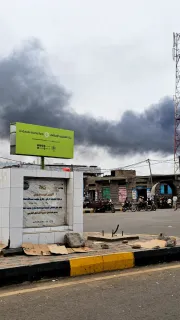
Iraq Recovers $370 Million in Stolen Assets Under Dawn Crackdown Campaign
Iraq has recovered about 482.6 billion Iraqi dinars (roughly $371.6 million) in stolen assets as of Sunday, 18 Mordad 1405 (August 9, 2026), under its anti-corruption campaign known as the Dawn Crackdown (Sawlat Al Fajr), according to Shafaq News, citing the Eco Iraq Observatory. The total includes about 390.08 billion dinars ($300.3 million) in cash, including $141 million converted into Iraqi currency, plus half a ton of gold valued at 185,000 dinars per gram. Eco Iraq said the sum exceeds the combined monthly payroll of Iraq's Transport, Environment, Migration and Displacement, and Oil ministries. Launched on June 28, 2026, the nationwide campaign targets current and former officials, lawmakers and business figures suspected of major corruption, and has led to dozens of detentions so far.
Shafaq News
Netanyahu Rejects Trump Brokered 15 Point Gaza Plan
Israeli Prime Minister Benjamin Netanyahu rejected on Sunday, 18 Mordad 1405 (August 9, 2026), a 15 point Gaza plan drawn up by the US backed Board of Peace chaired by President Donald Trump. According to Ecoiran, Netanyahu said Israeli forces will not withdraw from Gaza until Hamas is fully disarmed. Al Jazeera also reported that the Gaza peace board's envoy said Israel is not required to withdraw without verification. The development comes as tensions across West Asia, including the standoff over the Strait of Hormuz, continue to weigh on global oil and gold price risk.
EcoIran
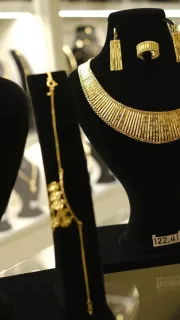
Gold Prices Hold Steady in Baghdad and Erbil on Sunday at About 940,000 Dinars per Mithqal
According to Shafaq News, gold prices held steady in Baghdad and Erbil markets on Sunday, August 9, 2026 (18 Mordad 1405), at around 940,000 Iraqi dinars per mithqal (five grams). Per the outlet's market survey, on Baghdad's Al-Nahr Street, 21-carat gold (Gulf, Turkish and European varieties) sold for 937,000 dinars and was bought for 933,000 dinars, unchanged from Saturday. Iraqi 21-carat gold sold for 907,000 dinars and was bought for 903,000 dinars. In jewelry stores, 21-carat Gulf gold sold between 940,000 and 950,000 dinars, while Iraqi gold sold between 910,000 and 920,000 dinars. In Erbil, 22-carat gold traded at 973,000 dinars, 21-carat at 930,000 dinars and 18-carat at 797,000 dinars per mithqal.
Shafaq News
Iraqi Crude Oil Exports to the US Remain at Zero for a Sixth Straight Week
According to Shafaq News, citing US Energy Information Administration (EIA) data released Sunday, August 9, 2026 (18 Mordad 1405), US crude oil imports from Iraq remained at zero last week, extending the halt to a sixth consecutive week. Canada was the largest supplier to the US at 4.215 million barrels per day, followed by Venezuela at 411,000 bpd, Mexico at 388,000 bpd, Ecuador at 223,000 bpd and Brazil at 196,000 bpd; Saudi Arabia also recorded no shipments to the US that week. Iraq last supplied the US during the week ending June 19, averaging 71,000 bpd. Shafaq News reported that Iraq lost an estimated 302.8 million barrels of production in the first half of 2026 due to export disruptions through the Strait of Hormuz stemming from the US-Iran war. Iraq, OPEC's second largest producer, relies on oil for about 90 percent of state revenue.
Shafaq News
Dollar Strengthens Against the Iraqi Dinar in Baghdad and Erbil on Sunday, Reaching 152,250 Dinars per 100 Dollars
According to Shafaq News, the US dollar strengthened in Iraq by the end of Sunday's trading session on August 9, 2026 (18 Mordad 1405). Per the outlet's market survey, the dollar traded at 152,250 dinars per 100 dollars at Baghdad's Al-Kifah and Al-Harithiya exchanges, up from the morning session's rate of 152,100 dinars. In Baghdad exchange shops, the dollar sold for 152,750 dinars and was bought for 151,750 dinars. In Erbil, the selling price stood at 152,350 dinars and the buying price at 152,300 dinars per 100 dollars.
Shafaq News

Yemen's Recognized Government Announces Retaliatory Operations Against Houthis After Escalating Attacks
Yemen's internationally recognized government announced the launch of retaliatory military operations against Houthi positions on Sunday, August 9, 2026, accusing the Iran-backed group of escalating attacks on military sites, Al Jazeera reported. The announcement came a day after forces aligned with the Houthis, who style themselves the "Yemeni Armed Forces," claimed responsibility for a drone strike on Saudi Aramco's Jazan refinery in Saudi Arabia. The escalation between Yemeni factions near the Red Sea and the Bab al-Mandab Strait raises security risk for regional oil facilities and shipping lanes.
Al Jazeera

Basrah Crude Posts Weekly Loss of Over 2 Percent Despite Friday Rebound
Basrah Heavy and Basrah Medium crude posted weekly losses of $1.42 a barrel, or 2.56 percent and 2.49 percent respectively, in the week to Saturday, August 8, 2026, despite rising in the final trading session, Shafaq News reported. Basrah Heavy gained $2.16 a barrel (4.10 percent) in that final session to settle at $54.79, while Basrah Medium rose $2.16 a barrel (3.92 percent) to $57.09. Global benchmarks closed lower in the same session: West Texas Intermediate fell $0.23 (0.30 percent) to $77.06 a barrel, and Brent declined $0.30 (0.36 percent) to $82.19 a barrel.
Shafaq News
BP to Raise Kirkuk Oil Output to 420,000 Barrels per Day
Iraqi Oil Ministry spokesman Salim al-Rikabi said on Saturday, August 8, 2026, that Kirkuk's oilfields currently produce 320,000 barrels per day, with a BP development project targeting peak output of 420,000 bpd, Shafaq News reported. The project includes rehabilitating and developing Kirkuk's fields, expanding Northern Gas Company facilities, building a 400 megawatt power plant, and eliminating continuous gas flaring by using produced gas as power station fuel. Al-Rikabi added that Iraq currently produces 2.7 million barrels of oil per day nationwide and exports between 1.5 and 1.7 million barrels daily, while talks with Iran to resume Iraqi oil exports through the Strait of Hormuz continue without an agreement yet in place.
Shafaq News
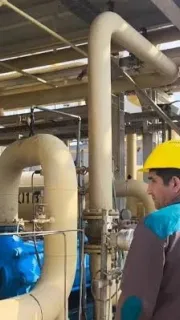
Iraq's Oil Minister: Talks With Iran Continue on Iraqi Oil Exports Transiting Hormuz
Iraqi Oil Minister Basim Mohammed Khudair said at a press conference on Saturday, August 8, 2026 (17 Mordad 1405), according to Shafaq News, that Iraq is currently producing 2.7 million barrels of oil per day, with exports ranging between 1.5 and 1.7 million barrels daily. He said talks are underway with Iran to allow Iraqi oil exports to transit the Strait of Hormuz, though no agreement has yet been implemented. He added that current output cannot return to previous levels, but that exports could return to prior volumes once the war ends. Khudair also said memoranda of understanding and contracts had been signed with American companies following his recent visit to the United States, including two field development contracts and an annex to the Qurna-2 agreement. He said the oil agreement with Turkiye had been renewed with certain conditions. On the oil and gas file in the Kurdistan Region of Iraq, he confirmed the existence of a tripartite agreement between the federal government, the region and oil companies, which can be amended through negotiation.
Shafaq News
Syria Has Exported More Than 2 Million Tonnes of Iraqi Oil via Baniyas Port Since Start of 2026
Syria's General Authority for Land and Sea Border Crossings said on Thursday, August 6, 2026 (14 Mordad 1405), that Syria has exported more than 2 million metric tonnes of Iraqi oil through the Baniyas port transit system since the start of the year. According to Shafaq News, about 30 tankers carrying fuel oil and refined petroleum products have transported the shipments; the port has received 108 tankers loaded with roughly 3.23 million metric tonnes of various petroleum products since the start of 2026. Last month, Iraq and Syria signed a US-brokered memorandum of understanding to restart the Kirkuk-Baniyas oil pipeline, opening a new route for Iraqi crude exports to Mediterranean ports through Syrian territory. The project is aimed at diversifying Iraq's export routes and strengthening economic cooperation between the two countries.
Shafaq News
Iraq's Currency Issuance Rises 13.8 Percent to 113.56 Trillion Dinars Through May 2026
The volume of banknotes issued by the Central Bank of Iraq rose 13.8 percent in the first five months of 2026, reaching about 113.56 trillion Iraqi dinars (roughly $86 billion) by the end of May. According to Shafaq News, Mudhhir Mohammed Salih, financial and economic adviser to Iraq's prime minister, said the figure was 13.761 trillion dinars (about $10.4 billion) higher than at the close of 2025. Salih said the rise was an exceptional response to a sharp drop in oil revenue rather than an attempt to stimulate demand; Iraq's oil exports fell to about 15 percent of usual levels because of the Strait of Hormuz crisis and have since recovered to around 30 percent. Most of the government's funding needs were met through treasury bills, of which the central bank now holds more than 60 percent in its investment portfolio. Salih said foreign reserves still cover the money supply above the 75 percent threshold and annual inflation has held steady at about 4.5 percent.
Shafaq News
Dana Gas Denies Breaching Gas Agreement with Kurdistan Regional Government
Dana Gas, whose shares trade on the Abu Dhabi Securities Exchange, and its partner Crescent Petroleum denied on Friday, August 7, 2026 (16 Mordad 1405), a report by the UAE newspaper The National, that they breached an agreement with authorities in Iraq's Kurdistan region by supplying natural gas from the Khor Mor field to Iraq's Electricity Ministry. The Kurdistan Regional Government (KRG) had earlier accused the consortium of acting unilaterally, saying it was notified only at the same time as the public announcement. Dana Gas said in a statement to the Abu Dhabi exchange that the 100 million standard cubic feet a day supplied to the ministry, on top of the 655 million cubic feet a day currently provided to the KRG, comes from Khor Mor's excess capacity and did not require additional KRG authorization. The company said the KRG was given a copy of the gas sales agreement in January and that its Ministry of Natural Resources was kept updated throughout years of discussions. Dana Gas and Crescent Petroleum said they have invested more than $4 billion in the Kurdistan region's energy sector since 2007 and remain committed to their obligations there.
The National
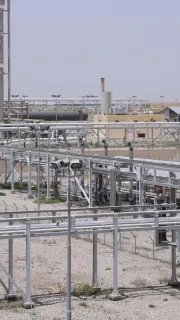
India's Reliance Pays Record $25 Million to Charter Tanker for Iraqi Crude
India's Reliance Industries has agreed to pay a record $23 million to $25 million to charter a supertanker to carry two million barrels of Iraqi crude, three shipping sources told Reuters, according to a report carried by Shafaq News on Thursday, August 6, 2026. The rate, at 1,200 World Scale, is roughly twelve times the benchmark freight rate. Before the US Iran war began in late February, similar voyages typically cost around $2 million, or 0.8 to 0.9 times the benchmark rate. The tanker is being supplied by South Korea's Sinokor, one of the few shipowners still operating through the Strait of Hormuz despite growing security risks. Sources said Reliance is still expected to save millions of dollars because Iraq's state oil marketer SOMO is offering crude at discounts of $25 to $30 a barrel against Dubai benchmarks. SOMO figures showed Iraq earned $18.679 billion from exporting 268.1 million barrels of crude in the first half of 2026, compared with more than 606 million barrels exported in the same period of 2025.
Shafaq News (Reuters)
Yemen's Foreign Ministry Issues Threatening Statement Against Saudi Arabia
Yemen's Foreign Ministry said in a statement carried by Tasnim news agency on Friday, August 7, 2026 (16 Mordad 1405), that Yemen has a full right to confront any hostile activity that targets its security and stability. The ministry's statement said Saudi Arabia's level of interference in Yemen's affairs is becoming clearer every day, adding that the world would soon hear Saudi Arabia's reaction to strikes on its camps in Yemen. Hizam al Asaad, a member of the political council of Yemen's Ansar Allah movement, said separately that anyone who has tied themselves to the Saudi riyal no longer belongs to the Yemeni nation. The threat comes as shipping traffic through the Strait of Hormuz and the Bab al Mandeb Strait has fallen sharply in recent days following Ansar Allah's claim of a ballistic missile strike on the Saudi oil tanker Wafa, keeping shipping insurance and freight costs elevated across the region.
Eghtesadonline, citing Tasnim
Gold rallies in Baghdad and Erbil markets as 21 carat gold reaches 920,000 dinars a mithqal
According to a Shafaq News market survey, gold prices in Baghdad and Erbil hovered around 900,000 Iraqi dinars per mithqal (five grams) on Thursday, August 6, 2026 (15 Mordad 1405). On Baghdad's Al Nahr Street, 21 carat gold imported from the Persian Gulf, Turkey and Europe sold for 920,000 dinars and was bought for 916,000 dinars per mithqal, up from 897,000 dinars on Wednesday. Iraqi made 21 carat gold traded in the same market at a selling price of 890,000 dinars and a buying price of 886,000 dinars. In Erbil, 22 carat gold sold for 956,000 dinars per mithqal, 21 carat gold for 914,000 dinars and 18 carat gold for 783,000 dinars.
Shafaq News
Gasoline shortage in Iraq's Nineveh creates long queues as smart card fuel distribution plan advances
According to Shafaq News reporting from Nineveh, a gasoline shortage in Iraq's Nineveh province has created long queues at fuel stations, with drivers complaining about the quality of the fuel being supplied, including subsidized "improved" gasoline; they say low octane levels in some supplies have caused vehicle engine damage. An official at Iraq's State Oil Products Distribution Company said new measures are being introduced to regulate fuel distribution and curb unauthorized trading, requiring vehicle owners to obtain gasoline through paper cards, electronic cards or mobile linked QR codes after verifying vehicle ownership. In Iraq's Kurdistan Region, gasoline prices have also been under pressure in recent months. Commercial gasoline exceeded 1,300 dinars ($0.99) per liter before a price cap was introduced in July, and in Al Sulaymaniyah regular gasoline reached 1,000 dinars ($0.76) per liter in June. Acting Natural Resources Minister Kamal Mohammed said the Kurdistan Region needs between 126,700 and 140,000 barrels of fuel a day but receives only about 50,000 barrels from the federal government.
Shafaq News
Dollar closes higher in Baghdad and Erbil on Thursday, reaching 153,000 dinars per 100 dollars
According to a Shafaq News market survey, the US dollar closed Thursday's trading higher in Iraq on August 6, 2026 (15 Mordad 1405), hovering around 153,000 dinars per 100 dollars. In Baghdad's Al Kifah and Al Harithiya exchanges, the dollar traded at 152,350 dinars per 100 dollars, up from the previous session's 152,050 dinars. In the Iraqi capital, exchange shops sold the dollar at 153,000 dinars and bought it at 152,000 dinars, while in Erbil selling prices stood at 152,550 dinars and buying prices at 152,500 dinars.
Shafaq News
Electric and hybrid vehicles account for more than half of Turkey's car sales in first seven months of 2026
According to Daily Sabah, reporting on Wednesday, August 5, 2026 (14 Mordad 1405) on data compiled by the Automotive Distributors and Mobility Association (ODMD), despite an overall contraction in Turkey's auto market, the combined share of electric and hybrid vehicles rose to 51.7 percent in the first seven months of 2026, exceeding half of the 259,970 vehicles sold in the period for the first time, driven mainly by strong hybrid demand. Over the same period, total car sales in Turkey fell 12.14 percent year on year to 502,712 units, and light commercial vehicle sales dropped 5.05 percent to 136,253 units. The share of gasoline cars fell from 45.3 percent in the first seven months of last year to 41.4 percent this year, while the hybrid share rose from 28 to 33 percent and the electric share rose from 18.1 to 18.7 percent. Even so, electric car sales alone fell 27.1 percent year on year in July.
Daily Sabah
Three tankers with combined 5.3 million barrel capacity dock at Basra to load Iraqi crude
According to Shafaq News reporting from Basra, three oil tankers with a combined storage capacity of 5.3 million barrels docked at Iraq's southern Basra port on Thursday, August 6, 2026 (15 Mordad 1405) to load crude oil, a source familiar with the matter said. Two of the vessels have a capacity of 2 million barrels each, while the third can carry 1.3 million barrels. According to Iraqi Oil Ministry figures cited in the report, Iraq normally exports about 3.6 million barrels per day, including around 3.4 million bpd through its southern Basra terminals, before the US Israeli war on Iran caused the sharpest oil revenue decline among Gulf producers.
Shafaq News
Turkish auto industry exports hit a record $24.4 billion in the first seven months of 2026
According to a report by the state-run Anadolu Agency (AA) published Thursday, August 6, 2026 (15 Mordad 1405), Türkiye's automotive industry posted export volume of $24.4 billion (1.16 trillion lira) in the January to July period of 2026, the highest such figure on record and a 2.6 percent increase from the same period a year earlier. The sector has broken its own January-July export record every year for the past four years, rising from $20 billion in 2023 and $20.8 billion in 2024 to $23.8 billion in 2025. Data from the Türkiye Exporters Assembly (TIM) showed the country's total exports rose 3.4 percent in the seven-month period to $161.6 billion, with July alone up 2.9 percent year on year to $25.6 billion, the best July figure on record. The automotive sector's share of total exports stood at 15.1 percent, with Germany the top destination at $3.95 billion.
Daily Sabah

Daily output at Türkiye's Gabar oil field hits a record 83,300 barrels
Türkiye's Energy and Natural Resources Minister Alparslan Bayraktar said in an official statement on Thursday, August 6, 2026 (15 Mordad 1405), that daily output at the Gabar oil field in Şırnak province had reached a fresh record of 83,300 barrels per day. The ministry described the field, which it called the hub of the country's oil production, as having broken its own record again. Bayraktar linked the increase to the "terror-free Türkiye" process, a draft bill for which, titled the Law on Strengthening National Solidarity and Social Cohesion, was submitted to parliament on Wednesday, August 5. The ministry said more than 50 million barrels of crude have been produced from the Gabar fields since 2021.
Daily Sabah

Iraq tasks BP with raising output at four Kirkuk oil fields to more than 450,000 barrels a day
Iraq on Thursday, August 6, 2026 (15 Mordad 1405) tasked BP with raising production at four oil fields in Kirkuk province, namely Bai Hassan, Jambur, Khabbaz, and the Kirkuk field's Avana and Baba formations, according to Shafaq News citing the Iraqi Oil Ministry. Under the plan, output at the fields will rise from about 328,000 barrels per day, the level recorded when Iraq began implementing the BP contract in October 2025, to more than 450,000 barrels per day, while associated gas production expands to around 12.5 million cubic meters a day. BP Iraq General Manager Zaid Al-Yasiri pledged to Patriotic Union of Kurdistan lawmakers in Iraq's parliament that hiring for the project would prioritize Kirkuk residents, after Kirkuk's Oil and Gas Syndicate demanded on July 26 that residents receive at least 85 percent of project jobs. BP resumed work on June 29 with the return of its technical and engineering teams after suspending most foreign operations during regional security tensions.
Shafaq News
Iraq's private sector share of bank credit reaches 65 percent as lending and deposits fall for a third month
According to official Central Bank of Iraq figures reported by Shafaq News on Thursday, August 6, 2026 (15 Mordad 1405), the private sector held close to 65 percent of all outstanding bank credit in Iraq at the end of May 2026. Of the 73.173 trillion dinars in cash credit outstanding, 47.329 trillion dinars belonged to the private sector, 23.420 trillion to the central government, and 2.424 trillion to public institutions. Total cash credit fell for a third consecutive month, sliding from 73.832 trillion dinars in March to 73.637 trillion in April and 73.173 trillion in May. Deposits followed the same downward path over the period, easing from 105.090 trillion dinars to 104.296 trillion dinars, with the private sector holding the largest single block at 49.615 trillion dinars, about 47.6 percent of the total.
Shafaq News
Mossad chief removes two senior officials over failures on the Iran file
According to Israel's Channel 12, reported by Donya-e-Eqtesad on Thursday, 15 Mordad 1405 (6 August 2026), the head of Mossad, Israel's foreign intelligence agency, removed two senior division chiefs over failures on the Iran file. The Times of Israel reported the same day, citing similar accounts, that the officials removed were linked to a now shelved plan for regime change in Iran. Further details on the identities of the officials or the exact timing of the decision have not yet been published. The report comes as attention remains on Iran and Israel's intelligence and security dossier alongside the ongoing Iran Oman talks over the Strait of Hormuz and the nuclear file.
Donya-e-Eqtesad, citing شبکه ۱۲ اسرائیل

Iraqi health minister says government needs $8.24 billion a month for salaries as 'there is no money'
Iraqi Health Minister Abdul Hussein al-Musawi told a meeting of ministry staff in Baghdad "there is no money," saying the government needs about 10.8 trillion dinars (roughly $8.24 billion) a month to cover salaries and basic obligations. According to Al Jazeera's report on 6 August 2026 (15 Mordad 1405), it is the first time an Iraqi minister has spoken this openly about the state's difficulty financing basic expenditure. Iraq's oil revenue has fallen sharply since exports through the Strait of Hormuz halted, the report said. A government source told Al Jazeera total monthly salaries for civil servants, retirees and welfare beneficiaries run to 7.8 trillion dinars ($6 billion), of which only 3.5 trillion dinars ($2.7 billion) has been disbursed so far, leaving a deficit of about 3.2 trillion dinars ($2.4 billion) for the current month. Government spokesman Haider al-Aboudi had earlier warned Baghdad may be forced into domestic and external borrowing if the effects of the Hormuz closure continue. Government sources said an austerity plan is under consideration, including cutting food ration card allocations and reducing the number of beneficiaries from 27 million to 20 million people.
Al Jazeera
Iraq central bank dollar sales rise 15% to $5.857 billion in June
According to Shafaq News, reporting official Central Bank of Iraq data on Thursday, August 6, 2026 (15 Mordad 1405), the CBI's foreign currency sales rose 15 percent in June to $5.857 billion from $5.092 billion in May. Most of the increase came from funding Iraqi banks' overseas accounts outside the CBI's former foreign currency sales window, which climbed 12.1 percent to $5.538 billion. Cash dollar sales more than doubled during the month, rising to $319 million from $151 million in May. In the first six months of 2026, the CBI's total foreign currency sales reached $25.91 billion, including $24.74 billion allocated to funding banks' overseas accounts and $1.17 billion in cash sales.
Shafaq News, citing بانک مرکزی عراق
Hebrew media: Netanyahu and Katz hold emergency meeting to weigh response to Hezbollah ceasefire violation
Hebrew-language media reported on Wednesday, 5 August 2026 (14 Mordad 1405), that Israeli Prime Minister Benjamin Netanyahu and Defense Minister Yisrael Katz held an emergency meeting to weigh a response to a serious incident in southern Lebanon. Israel's public broadcaster, citing a source, said the meeting would discuss a possible operation against Hezbollah requiring approval from senior political leadership. Israel's Channel 12 and the newspaper Yedioth Ahronoth separately reported that the Israeli military has asked the political leadership to approve a broader strike against Hezbollah in southern Lebanon, but that approval has not yet been granted. TheYeshivaWorld, citing i24 News, reported that the Israeli military is pressing for a forceful response to what it describes as a serious Hezbollah ceasefire violation. The developments come as a new round of Lebanon-Israel talks is scheduled to resume on Thursday. The risk of renewed escalation in southern Lebanon is one of the background factors that, alongside the status of the Strait of Hormuz, is feeding safe-haven demand in the global gold market.
اکوایران (شفقنا, citing رسانههای عبری)
Latest round of Lebanon Israel talks in Rome ends over security developments
According to Khabar Online, citing the Mehr news agency and Al Jazeera, a US State Department official said on Wednesday, 14 Mordad 1405 (5 August 2026), that the latest round of Lebanon Israel talks in Rome ended early that day due to developments on the ground. The US official told Al Jazeera that talks between Lebanon and Israel had been constructive and some progress had been made, and that the negotiations would resume on Thursday. The remarks came as the Israeli military said in a statement that it had begun strikes on southern Lebanon, alleging a ceasefire violation by Lebanon's Hezbollah.
Khabar Online (Mehr News Agency and Al Jazeera)
Yemen's Houthis claim a ballistic missile hit on a Saudi oil tanker in the northern Red Sea
Oilprice reported on Wednesday 5 August 2026 that Yemen's Houthi group claimed it had struck a Saudi oil tanker in the Red Sea. Yahya Saree, the group's military spokesperson, said Yemeni armed forces had conducted an operation against the Saudi oil tanker Wafaa north of the Red Sea off the Yanbu area using several ballistic missiles. According to the statement carried by the news outlet Al Bawaba, the spokesperson said the group achieved a "precise hit". The vessel, NCC WAFA, is a Saudi flagged products tanker. The claim comes from the Yemeni side and the report cited no confirmation from Saudi officials. Repeated attacks on vessels in the Red Sea, alongside the restrictions at the Strait of Hormuz, are keeping risk elevated on the region's maritime energy routes.
Oilprice
India flagged cargo vessel sinks in the Red Sea after projectile strike, 13 Indian seafarers rescued
Oilprice reported on Wednesday 5 August 2026 that an India flagged commercial vessel, the MSV Faize Noore Oliya, sank in the Red Sea off the coast of Yemen on Tuesday 4 August 2026. According to reports the vessel was carrying Saudi oil. India's Ministry of External Affairs condemned the attack on the vessel on Tuesday. Sarbananda Sonowal, India's Minister of Ports, Shipping and Waterways, said the vessel had been hit by a projectile near Yemeni waters. All seafarers on board, including 13 Indian nationals, were rescued. Coming alongside the disruption at the Strait of Hormuz, the incident adds to the pressure on maritime oil transit routes in West Asia, a factor that feeds into insurance costs, freight rates and ultimately global oil prices.
Oilprice
Iraq to Syria oil pipeline bypassing the Strait of Hormuz could be revived within three years
Oilprice reported on Wednesday 5 August 2026 that a senior Syrian official has said the rebuilding of an old oil pipeline running from Iraq to Syria, which bypasses the Strait of Hormuz, would take at most three years. Youssef Qablawi, a chief executive, said completing the renovation of the line from Haditha in Iraq to the Syrian Mediterranean port of Baniyas would take "three years at most". The route is designed to carry crude oil from the Kirkuk fields to the Mediterranean. According to the report, the Hormuz crisis that has halted most of Iraq's crude oil exports has accelerated plans by Baghdad and Damascus to rebuild the damaged pipeline. Any export route that reduces the region's dependence on the Strait of Hormuz carries direct significance for the oil market and for Iran's economy, which sits at the centre of that waterway.
Oilprice
US Treasury lists Iraqi carrier Fly Baghdad among counter terrorism sanctions removals
The US Treasury's Office of Foreign Assets Control, known as OFAC, published an action headed "Counter Terrorism Designations Removals and Update" on Wednesday 5 August 2026. The published list covers Fly Baghdad Airlines Company together with its alternative names Iraq Express and Fly Baghdad, and two of the carrier's Boeing 737 aircraft with tail numbers YI-BAF and YI-BAN. Fly Baghdad had previously been listed under Executive Order 13224 with the SDGT tag and a reference to links with the Islamic Revolutionary Guard Corps Qods Force. In the same action, the entry for Basheer Abdulkadhim Alwan al-Shabbani, an Iraqi national born on 1 May 1986, was updated so that he is now recorded as linked directly to the IRGC Qods Force rather than to Fly Baghdad. The changes alter the sanctions status of a company operating on the air corridor between Iran and Iraq.
US Department of the Treasury, OFAC
Commercial traffic rises at Iraq's Trebil and Al-Waleed crossings, with about 1,000 tankers leaving daily
Commercial traffic has increased at two of Iraq's western border crossings. Imad Al-Rishawi, commissioner of the Al-Rutba district in western Al-Anbar province, told Shafaq News that about 1,000 tankers leave daily through the Trebil crossing with Jordan and the Al-Waleed crossing with Syria, with a similar number of empty tankers entering. The report was published on Wednesday, 14 Mordad 1405 (5 August 2026). Al-Rishawi attributed the increase to security stability along the trade routes, which has eased the flow of cross border exchange. He said the two crossings still require infrastructure rehabilitation to match current traffic volumes. Al-Rutba is a district in western Al-Anbar province bordering both Jordan and Syria. Busier traffic on these routes bears on the cost and transit time of goods moving between Iraq and its western neighbours, a corridor that, alongside Iraq's eastern borders with Iran, carries part of the region's trade.
Shafaq News