Why was Trump unwilling to go to war with Ansar Allah on Saudi Arabia's behalf? The answer to that decision could move the price of oil, gold and the dollar. On Friday, 11 September 2026 (20 Shahrivar 1405), Axios, followed by Reuters, CBS News and Haaretz, reported, citing people familiar with the matter, that Saudi Crown Prince Mohammed bin Salman asked US President Donald Trump for American military help against Yemen's Ansar Allah, and that Washington offered intelligence support rather than joining strikes. Neither government has formally confirmed or denied the reporting.
The market answered across the same four sessions, and its answer was not one simple number: on Sahmino's own tracked series, Brent crude travelled a total of $12.8 only to finish just $5.4 above where it started.
Background
These four sessions begin on Tuesday, 8 September 2026 (17 Shahrivar 1405), the day Al Jazeera reported that fighting between Ansar Allah and Saudi Arabia had escalated sharply. Major General Turki al Malki, spokesman for the Saudi led coalition, said the cities of Abha, Khamis Mushait, Jizan and Najran had been struck and at least 73 people wounded, and Saudi Arabia's Energy Ministry reported fires at several oil facilities in the kingdom's south, including near the 400,000 barrel per day Jizan refinery. The item is filed in Sahmino's newsroom.
Brent's four closing prices over that span, all from Sahmino's own series and stamped in Tehran time, were: $99.17 on 8 September, $100.85 on 9 September, $108.30 on 10 September and $104.60 on 11 September. The sum of the absolute moves between those four readings is 1.68 plus 7.46 plus 3.70, which is $12.84 of distance travelled, while the difference between the last reading and the first is only $5.43, or 5.5 percent. Put another way, the market walked more than twice as far as it moved.
Two independent references confirm the closing level. Trading Economics recorded Brent at $104.42 on 11 September 2026, down 2.98 percent on the day, and described the week's gain as about 9 percent; OilPrice.com showed Brent at $104.61 in the early hours of 12 September. The most recent reading Sahmino has stored is $104.42 at 01:39 on Saturday, 12 September, Tehran time. The day by day series is on the Brent crude price page.
The numbers from these four sessions
The three markets at the centre of the story gave three different answers, and the difference between them matters more than the direction of any one of them.
- Brent crude: from $99.17 on 8 September to $104.60 on 11 September, a rise of $5.43 or 5.5 percent, after an intermediate peak of $108.30 on 10 September.
- Spot gold: from $4,358.47 on 8 September to $4,349.38 on 11 September, a fall of $9.09 or 0.2 percent. The latest stored reading is $4,350.36 in the early hours of 12 September, on the gold ounce price page.
- Free market dollar (دلار آزاد, the open market rate Iranians actually transact at): from 226,700 tomans on 8 September to 235,975 tomans on 10 September, a rise of 9,275 tomans or 4.1 percent. That is the last recorded open market rate, because Thursday and Friday are the Iranian weekend and the domestic market was closed; the full series is on the dollar price page.
The pattern is clear: the global oil market was the most volatile but handed back much of its move, global gold barely shifted, and the only price that rose in one direction without giving anything back was the dollar inside Iran.
Drivers
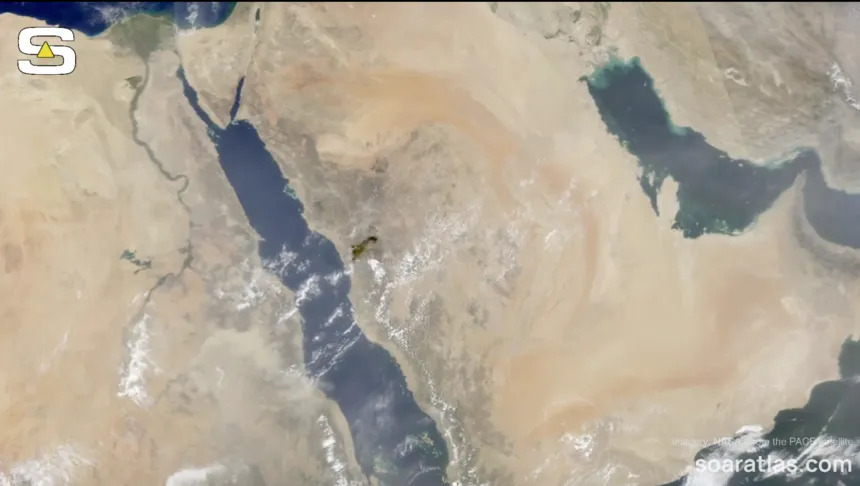
Three separate events on 11 September, each dated and sourced, pushed supply risk higher. First, Saudi Arabia's Energy Ministry said it had shut the kingdom's East-West pipeline as a precaution after several attacks on Thursday; that pipeline is the route carrying Saudi crude from the east of the country to its Red Sea coast, and its whole purpose is to bypass the Strait of Hormuz. Second, CNN reported, citing US officials, that drones believed to have originated in Iraq struck pump stations near the pipeline, and satellite imagery together with thermal anomalies recorded by NASA showed a smoke plume and emergency flaring along its route. Third, according to Anadolu Agency, Ansar Allah took the strategic Perim Island in the Bab el-Mandeb Strait and the city of Dhubab; a source told Anadolu the move completes the group's control of the waterway. Ansar Allah said the same day that an operation launched on 3 September had covered 5,400 square kilometres and that its maritime restrictions apply only to Saudi vessels.
Against those three, two factors worked the other way and explain why $3.70 of the previous day's jump was handed back. Iran's foreign ministry spokesman said Oman would host a regional meeting on Monday about shipping through the Strait of Hormuz, and per Trading Economics, Gulf Cooperation Council diplomats are expected at that meeting to discuss a temporary arrangement for managing traffic. At the same time, the US Energy Information Administration raised its 2027 American crude production forecast to 14.3 million barrels a day and the International Energy Agency sharply cut its global demand outlook.
The analytical point, as distinct from the reported facts, is this: the story about Riyadh's request being turned down landed on the same day Brent gave back part of its jump. That coincidence alone does not establish cause, and at least three other price negative headlines ran the same day. What can be said is that the global market has not, so far, priced a scenario in which the war widens into direct American engagement with Ansar Allah.
Outlook
The estimates that follow belong to outside sources, not to Sahmino. On the same 11 September page, Trading Economics estimated Brent would trade near $97.41 by the end of the current quarter. On the other side, Egyptian Foreign Minister Abdelatty said on 11 September that Suez Canal losses from the disruption of traffic near Bab el-Mandeb had reached almost $11 billion, and per Anadolu, average daily transits through Bab el-Mandeb have fallen to about 26 vessels. For Iran the transmission channel is straightforward: costlier oil raises hard currency revenue, but it simultaneously intensifies the regional risk that gets priced into the free market dollar, and the evidence of these four sessions is that the second channel moved faster.
Conclusion
Washington, according to Axios and Reuters, was unwilling to take on Saudi Arabia's war with Ansar Allah, and the global market read that answer as containment rather than escalation. To arrive at a $5.4 gain, Brent travelled $12.8; spot gold ended the same span $9 lower; and the only market that rose in one direction was Iran's free market dollar, up 9,275 tomans. The one thing to remember: Brent crude stays above $100 as long as Saudi Arabia's East-West pipeline remains shut, at the $100 level, with a horizon running to the Oman meeting on 14 September; the call is void on a close below $100 before that date.
What to watch
- Whether Saudi Arabia's East-West pipeline reopens or stays shut, and any formal statement from its Energy Ministry.
- The outcome of the Oman meeting on Strait of Hormuz shipping on Monday, 14 September 2026 (23 Shahrivar 1405).
- Average daily transits through Bab el-Mandeb, currently about 26 vessels a day.
- The first free market dollar rate after the Iranian market reopens on Saturday, 12 September, against Thursday's 235,975 tomans.
- Any formal confirmation or denial from the White House or Riyadh regarding the Axios report.
For background on the disruption of Saudi maritime routes, read Sahmino's report on the Saudi tankers that took the 56 day route around Africa.