
Iran Market Pulse: Sunday Morning, 11 Mordad 1405 / 2 August 2026; After the Strike Cancellation, Tether Fell 1.72 Percent
The free-market dollar closed Saturday 10 Mordad 1405 (1 August 2026) at 193,700 tomans, a fourth record in two weeks. On Saturday night Trump announced he had cancelled a planned strike and that a framework including the reopening of the Strait of Hormuz was agreed. Sunday's first prices opened lower: tether down 1.72 percent at 192,006 tomans and traded 18-karat gold down 1.58 percent at 18,475,100 tomans, while global gold had not fallen.
Related video
Lead
Tehran's currency and gold markets closed Saturday 10 Mordad 1405 (1 August 2026) at a record and ended the night with news that reversed the direction of trade. The free-market dollar was recorded on the Sahmino price board at 19:59 on Saturday at 193,700 tomans, and the day's high, per TGJU, was 194,520 tomans; according to EcoIran this was the fourth time in the past two weeks that the dollar had reached an all-time high. That same evening Donald Trump announced in a message that he had cancelled a planned military strike on Iran and that understandings had been reached on "the perimeters of a deal", including the "immediate and complete reopening of the Strait of Hormuz".
The first prices to trade after the news opened lower. As of 07:58 on Sunday morning, 11 Mordad 1405 (2 August 2026), the tether rate on the Sahmino board was down 1.72 percent at 192,006 tomans and traded 18-karat gold was down 1.58 percent at 18,475,100 tomans. The key point sits right here: over those same hours the global gold price had not retreated. What came out of Tehran's gold price did not come from the world market.
Today's snapshot
| Market | Latest figure | Change | Reference time |
|---|---|---|---|
| Tether (tomans) | 192,006 | down 1.72% | 07:58, Sunday 11 Mordad |
| Traded 18-karat gold (tomans per gram) | 18,475,100 | down 1.58% | 07:58, Sunday 11 Mordad |
| Free-market dollar (tomans) | 193,700 | day's high 194,520 | 19:59, Saturday 10 Mordad |
| Exchange Center remittance dollar (tomans) | 152,977 | gap of 40,723 with the free rate | 08:06, Sunday 11 Mordad |
| Board 18-karat gold (tomans per gram) | 18,698,000 | day's high 18,884,800 | 19:59, Saturday 10 Mordad |
| Emami coin (tomans) | 188,010,000 | premium 3,522,000 | 19:59, Saturday 10 Mordad |
| TEDPIX (points) | 5,054,000 | down 0.4% | close, Saturday 10 Mordad |
| Bitcoin (dollars) | 63,460 | up 1.41% | 07:58, Sunday 11 Mordad |
| Spot gold (dollars) | 4,045 | week's end, down 0.45% on the week | end of week to 9 Mordad |
| Brent crude (dollars) | 87.93 | last recorded figure | 04:51, Saturday 10 Mordad |
Today's headlines
- Per Al Jazeera, Donald Trump announced on the evening of Saturday 10 Mordad 1405 (1 August 2026) that he had cancelled a planned strike on Iran and that understandings had been reached on the perimeters of a deal, including the immediate and complete reopening of the Strait of Hormuz. No official reaction from Tehran had been announced by the time that report was published.
- Per the daily Donya-e-Eqtesad citing Axios, Qatari mediators held separate talks on Saturday 10 Mordad with Abbas Araghchi, Steve Witkoff and Omani officials on reopening the Strait of Hormuz.
- Per Eghtesad Online, the Ministry of Foreign Affairs announced on Saturday 10 Mordad that the naval blockade of the country's ports and commercial shipping continues, calling it a violation of the war-termination understanding.
- Per EcoIran, the Tehran Stock Exchange's headline index closed Saturday 10 Mordad down 0.4 percent at 5,054,000 points, and more than 1,300 billion tomans of retail money left the equity market.
- Per Reuters, global gold ended the month with a gain of about 1.8 percent, its first monthly rise in five months. The same report notes that, based on the CME FedWatch tool, markets are pricing a 63 percent probability of a US rate increase in September.
Currency
Saturday was a record day. The free-market dollar on the Sahmino currency price board was recorded at 19:59 on Saturday 10 Mordad 1405 at 193,700 tomans, while the same day's high per TGJU was 194,520 tomans and its low 192,780 tomans. EcoIran reported that the dollar had reached an all-time high for the fourth time in the past two weeks.
Sunday morning changed the picture. As of 08:05 on Sunday 11 Mordad, Alanchand quoted the US dollar sell rate at 194,100 tomans and the buy rate at 192,150 tomans, and showed tether at 191,302 tomans. The Sahmino board had recorded tether down 1.72 percent at 192,006 tomans as of 07:58. Because the physical banknote market has not yet opened, tether is at these hours the most accurate live proxy for dollar demand, and all three readings put it below Saturday's closing figure.
The official rate did not move. The dollar remittance sell rate at Iran's Currency and Gold Exchange Center stood at 152,977 tomans as of 08:06 on Sunday 11 Mordad, a gap of 40,723 tomans with the free market, which puts the free rate roughly 26.6 percent above the official one. Analysis: part of the distance that opened over the past two weeks was risk premium, not a fundamental divergence between the two markets; if Saturday night's news holds, this gap is the first place to watch for a narrowing.
A historical anchor for the scale of it: per TGJU, the dollar is 109.63 percent higher than on the same day last year (11 Mordad 1404, at 92,400 tomans) and 10.3 percent higher than a month ago.
Gold and coin
At the close of trading on Saturday 10 Mordad, each gram of 18-karat gold was recorded on the Sahmino board at 18,698,000 tomans and each mesghal of melted gold at 81,003,000 tomans. The Emami coin was at 188,010,000 tomans, the Bahar Azadi coin at 183,615,000 tomans, the half coin at 95,500,000 tomans and the quarter coin at 53,500,000 tomans. The Emami coin premium (habab) at the same moment was 3,522,000 tomans, about 1.9 percent of the coin price, a low-pressure reading compared with more feverish periods.
On Sunday morning the gold market reacted first: traded 18-karat gold (sell rate) was down 1.58 percent at 18,475,100 tomans as of 07:58 on Sunday 11 Mordad, and the buy rate down 1.56 percent at 18,301,500 tomans.
The mechanism: this decline did not come from the world market. Per Sena, spot gold closed the week to 9 Mordad at 4,043 dollars with a weekly return of minus 0.45 percent, and the Sahmino board had recorded 4,045 dollars; at 07:59 on Sunday morning, tether gold, which acts as a 24-hour proxy for the ounce, was trading up 0.15 percent at 4,049.3 dollars. When the ounce holds up and Tehran's gold comes down, the difference has to be sought in the rial, not in the global market. Put simply, what left the domestic gold price last night was war risk premium.
A number that drew less attention: per TGJU, despite the dollar's successive records, 18-karat gold is still 8.05 percent below its level three months ago (13 Ordibehesht 1405) and the Emami coin 8.72 percent below the same date. In other words a large part of the risk premium had already been priced in once, and then given back.
Money also moved toward gold instruments in the capital market. Per Eghtesad Online, the net change of ownership in gold funds in Saturday 10 Mordad trading was a positive 719 billion tomans, and of 35 active funds, 30 closed the day higher. Per Sena, the net asset value of these funds settled around 678,000 billion tomans in the week to 9 Mordad.
Stocks
The week's first working day was red, but not across the whole board. Per EcoIran, the Tehran Stock Exchange headline index ended Saturday 10 Mordad 1405 down 0.4 percent at 5,054,000 points; EcoIran put the size of the fall at 20,437 points and Sena at 20,335 points, a range of roughly 20,300 to 20,440 points. The value of retail trading in shares and equity funds exceeded 26,500 billion tomans per Sena, slightly below the more than 27,000 billion tomans of Wednesday 7 Mordad. Retail money outflow was more than 1,300 billion tomans, with another estimate putting it at about 1,400 billion tomans.
Beneath the index, the picture was different. Per Sena, 22 industry indices rose and the average return of active industry indices was a positive 0.26 percent; radio equipment led with 3.51 percent, coal with 2.99 percent and publishing and printing with 2.93 percent, while oil extraction fell 2.58 percent, transport 2.49 percent and technical and engineering 2.35 percent. Seven industry indices closed at their all-time highs. The equal-weight index also outpaced the headline index for the fourth consecutive session. Together these two facts mean Saturday's selling pressure was concentrated in a few large symbols, particularly refiners and oil extraction, rather than across the market.
In the debt market, per Sena the yield to maturity on Islamic treasury bills fell 0.22 percentage points in the first week of Mordad, to 39.58 percent.
Crypto
The global crypto market spent the night in the green. As of 07:58 on Sunday morning 11 Mordad, bitcoin was trading on the Sahmino board up 1.41 percent at 63,460 dollars, and Alanchand showed 63,545 dollars at 08:05. On the domestic side, the tether rate fell 1.72 percent as noted in the currency section; that is, a tether holder in Iran went through last night with a lower rial value, even while the global crypto market was positive. This is exactly what makes the domestic crypto price two-layered: the global price and the dollar rate.
On the margins of the market, per Bourse News the company Tether raised its gold reserves to more than 146 tonnes in the second quarter of 2026 and recorded net operating profit of 1.5 billion dollars.
Iron and steel
Factory prices were little changed as of 10 Mordad 1405: 10-millimetre A3 rebar from Arian Foulad at 69,550 tomans per kilogram, 12-millimetre rebar from the same mill at 68,270 tomans and 14-millimetre rebar at 68,180 tomans.
The more important news was on the profitability side. Per Bourse News, Ardeshir Sadmohammadi, chief executive of Mines and Metals Development Investment, said on Saturday 10 Mordad that the profit margin of Iran's steel industry had fallen from about 36 percent in 1400 to about 12 percent in 1404, and that part of that fall comes from higher energy carrier prices. The remark explains why metals symbols have lagged the dollar's rise: when energy costs climb alongside the exchange rate, growth in rial revenue does not necessarily reach profit. On the energy demand side, per Shana the power restriction on industrial estates was reduced from two days to one day a week, with full removal expected within three to four weeks.
Cars
Unlike the currency market, the car market spent Saturday falling. Per Eghtesad Online, in the Tehran market on Saturday 10 Mordad 1405 the Peugeot 207 manual with hydraulic steering traded down 9 million tomans at 1,791 million tomans, the Peugeot 207 manual panorama down 6 million tomans at 2,109 million tomans and the new Peugeot 207 automatic down 3 million tomans at 2,527 million tomans. The same report attributed the moves to continued trading stagnation and weaker effective demand.
The supply side had news too: per Bourse News, the number of incomplete vehicles at Saipa has fallen from 12,770 units to about 4,000 units, a drop of 69 percent. What stands out is that cars have lagged on days when the dollar is setting records, a sign that effective purchasing power, not currency expectations, is what sets this market.
Building materials
Materials prices were stable as of 10 Mordad 1405: Abyek Portland type 2 bulk cement at 3,593,000 tomans per tonne, a 50-kilogram bag of Tehran cement at 291,000 tomans and a 50-kilogram bag of Abyek cement at 289,000 tomans.
On the commodity exchange, per Kalakhabar the export hall led trading on Saturday 10 Mordad with sales of 40,000 tonnes of clinker. In the wider frame, per Sena the value of physical-market trading on the commodity exchanges in the first four months of 1405 rose 95 percent to 1,563,000 billion tomans.
Regional and global backdrop
Today's main driver is political and its channel is direct. Per Al Jazeera, Trump announced on the evening of Saturday 10 Mordad the cancellation of a planned strike and understandings on the perimeters of a deal including the immediate reopening of the Strait of Hormuz; before the war about one fifth of the world's oil and LNG passed through this waterway. In a separate Al Jazeera report, Iran did not accept Oman's proposal for joint management of the strait and put forward an alternative plan. Channel to Tehran: every step toward reopening Hormuz takes risk premium out of the currency and gold rates, and every step in the opposite direction puts it back.
In global markets, per Reuters spot gold stood at 4,076.53 dollars on Friday 9 Mordad 1405 (31 July 2026), down 0.5 percent on the day, but closed the month up about 1.8 percent, its first monthly gain in five months. Silver was down 0.5 percent at 58.70 dollars the same day. The dollar index firmed about 0.3 percent on Friday, after a 2.4 percent fall on Thursday 8 Mordad that was its largest one-day drop since January 2023. The Federal Reserve held rates unchanged on Wednesday 7 Mordad and markets are pricing a 63 percent probability of a rate rise in September. Channel to Tehran: higher US rates usually put downward pressure on the ounce and therefore on the dollar base of domestic gold.
In the neighbourhood, per Shafaq News the Central Bank of Iraq's foreign reserves fell by 7.4 billion dollars in the first five months of 2026, and Iraq and Türkiye signed an agreement to move at least 750,000 barrels of oil a day to the port of Ceyhan; both matter for Iran's trade and transit routes in West Asia. Per Shana, Russia extended its ban on petrol and diesel exports to 31 January 2027, a factor keeping the region's product market tighter. The Turkish lira was recorded on the Sahmino board at 47.52 to the dollar (9 Mordad) and the Chinese yuan at 6.75 (10 Mordad).
The takeaway
This morning's verdict is clear: the market is giving back war risk premium, not changing the rial's fundamental course. On Saturday the dollar set a record, and on Sunday morning tether retreated 1.72 percent and traded gold 1.58 percent, while the global ounce had not fallen; that difference in direction is what identifies the decline as domestic in origin. One thing to remember: geopolitical news moves prices fast, but as long as the 40,723-toman gap between the free rate and the official rate stays where it is, the structural currency problem remains unresolved.
What to watch today
- Tehran's official reaction to last night's announcement and any fresh news on the status of the Strait of Hormuz and the naval blockade of the ports.
- The 09:00 open of the Tehran Stock Exchange: after four sessions of lagging the equal-weight index, does the headline index catch up on last night's news?
- The behaviour of the banknote rate in the first hours of the free market, and whether tether's fall reaches the cash dollar.
- The gap between the free rate and the Exchange Center remittance rate; a narrowing there is the first sign the market believes in de-escalation.
- Retail money flow in gold funds, which was a positive 719 billion tomans on Saturday.
- Follow the scheduled events ahead on the Sahmino market calendar.
Media

Talks on managing and reopening the Strait of Hormuz, August 2026
Source: Al Jazeera
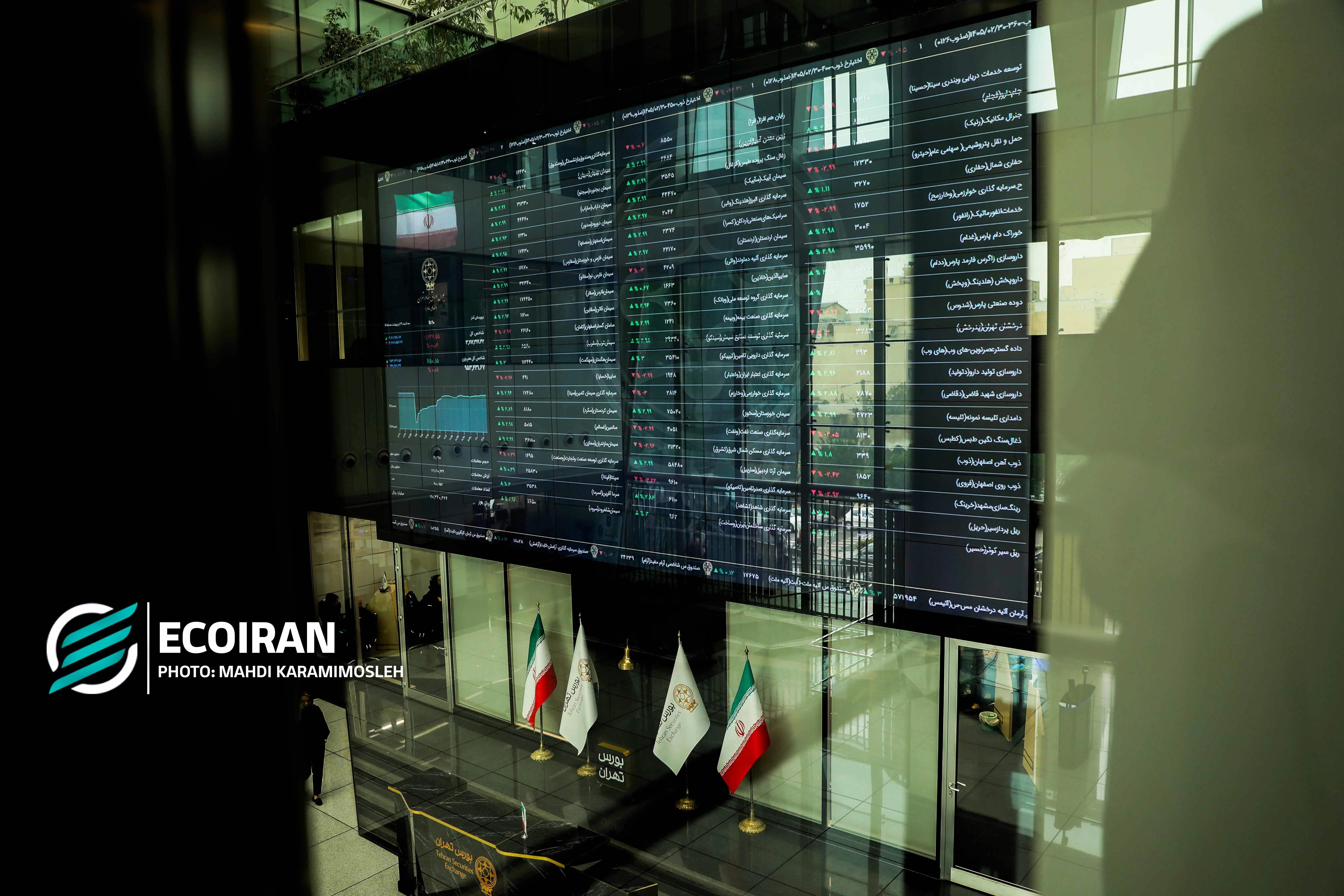
The Tehran Stock Exchange session on Saturday 1 August 2026
Source: اکوایران