
Newsroom
Short, verified market news summaries; every item names its source and publication date.
Nearly $6 Billion in US Arms Sales to Saudi Arabia, Oman and Iraq Approved
The US State Department confirmed on Friday, September 4, 2026 (13 Shahrivar 1405), according to Khabaronline citing Reuters and IRNA, a possible sale of extended range offensive munitions worth about 5 billion dollars to Saudi Arabia, with Boeing as the prime contractor. The department also confirmed a possible sale of AGT-1500 engines used in Abrams tanks to Saudi Arabia worth about 750 million dollars, with Honeywell as the prime contractor. Per the same report, a sustainment and support contract for Oman's F-16 fleet worth 188 million dollars and a sale of Bell 412 helicopters to Iraq worth 150 million dollars were also approved. The State Department said the sales support US foreign policy and national security objectives and would not alter the region's military balance. Ecoiran separately confirmed the 5 billion dollar Saudi package the same Friday.
Khabaronline, citing Reuters and IRNA
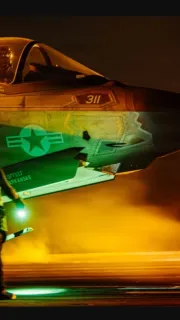
South Korea to bring Strait of Hormuz deployment plan to parliament
South Korean media, citing government and military sources, reported that Seoul is preparing to send equipment and forces to the Strait of Hormuz. According to Ecoiran, citing Tasnim and Reuters, the South Korean government intends to deploy the equipment before the end of 2026 and has begun seeking parliamentary approval. Options under review include sending a maritime patrol aircraft, a logistics support ship, or a mine reconnaissance and clearance unit, and Seoul is also consulting on the scale and nature of possible participation alongside the United States, Britain and France. South Korea's presidential office said on Thursday, September 3, 2026, that the deployment is not yet certain. The decision comes as US President Donald Trump has been pressing South Korea to join the US military presence in the Persian Gulf.
Ecoiran, citing Tasnim and Reuters
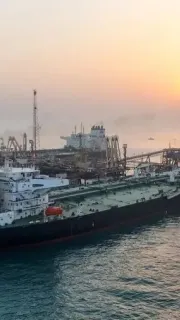
CENTCOM says it rerouted more than 80 commercial ships in the Strait of Hormuz, stopped three
US Central Command (CENTCOM) said on Thursday, September 3, 2026, that it has rerouted more than 80 commercial vessels in the Strait of Hormuz to enforce a naval blockade against Iran. According to Al Jazeera, reported by Donya-e-Eqtesad, CENTCOM also said it stopped three ships and inspected two others to ensure compliance with the blockade. The statement is the latest CENTCOM notice on the Strait of Hormuz, the key export route for Persian Gulf oil, amid ongoing military tension between the United States and Iran. CENTCOM did not release further details on the identity of the stopped or inspected vessels.
Donya-e-Eqtesad, citing Al Jazeera
Standard Chartered Launches Spot Bitcoin and Ether Trading in the UAE
According to Arzdigital, Standard Chartered has launched spot crypto trading for institutional clients in the United Arab Emirates through its branch at the Dubai International Financial Centre. The move makes it the first globally systemically important bank to offer direct Bitcoin and Ether trading in the region. Eligible institutional clients can access the Bitcoin and Ether market through electronic trading gateways previously used for foreign exchange trading. Unlike derivatives, the service delivers assets physically, and clients can choose to hold them in the bank's own custody service or with another custodian. The launch follows the bank's introduction of similar spot trading through its UK branch in July 2025.
Arzdigital
Trump Claims Oil Flow Through Strait of Hormuz Has Returned to Normal
US President Donald Trump said in a post on Truth Social on Thursday, September 3, 2026 (12 Shahrivar 1405) that the volume of oil transiting the Strait of Hormuz, previously about 20 million barrels a day, has returned to normal. According to Donya-e-Eqtesad, Trump also reposted a Washington Post report about a possible Syrian plan to serve as an alternative route to the strait, calling it great. The claim came hours after ISNA, citing Reuters, reported that preliminary data from shipping tracker Kepler showed only four cargo vessels transited the Strait of Hormuz on Wednesday, September 2, against a 10 day average of about 13 vessels.
Donya-e-Eqtesad
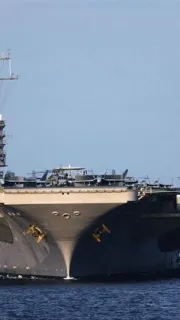
Trump and UAE President Discuss West Asia Developments in Phone Call
According to the UAE's official news agency (WAM), as reported by Donya-e-Eqtesad, US President Donald Trump and UAE President Sheikh Mohamed bin Zayed Al Nahyan discussed ways to strengthen cooperation between the two countries, as well as developments in West Asia and ongoing efforts to address them, in a phone call on Thursday, September 3, 2026 (12 Shahrivar 1405). The call followed a report by Axios that White House envoy Steve Witkoff met this week on the Italian island of Sardinia with UAE National Security Adviser Sheikh Tahnoun bin Zayed Al Nahyan to discuss next steps on Iran, a meeting held days after US Treasury Secretary Scott Bessent announced a sanctions push against Iran known as "Operation Economic Outcast."
خبرگزاری وام (WAM) and به نقل دنیای اقتصاد

Kepler: Ship Transits Through Strait of Hormuz Fall to 10 Day Low
According to ISNA, citing Reuters, preliminary data from shipping company Kepler showed only four cargo vessels transited the Strait of Hormuz on Wednesday, September 2, 2026 (11 Shahrivar 1405), against a 10 day average of about 13 vessels. Brent crude fell 0.62 percent to $95.04 a barrel and US West Texas Intermediate fell 0.42 percent to $90.63 a barrel on Wednesday, after both benchmarks hit their highest levels since July 24 on Tuesday, September 1 (10 Shahrivar). Sahmino's own live data showed Brent trading around $94.9 a barrel at 11:12am Thursday, September 3 (12 Shahrivar), consistent with the pullback reported by ISNA. Two Iraqi energy officials also told Reuters on Wednesday that Iraq's oil exports rose from about 1.35 million barrels per day in July to about 2.34 million barrels per day in August, and are expected to rise further in September amid steep discounts and Iran's agreement to let Iraqi vessels transit the Strait of Hormuz.
ISNA, citing Reuters
Foreign Policy: Ship Traffic Data Contradicts Claim That Hormuz Mines Are Fully Cleared
Foreign Policy magazine reported that despite US President Donald Trump's August 25, 2026 (3 Shahrivar 1405) Truth Social post claiming all mines in the Strait of Hormuz had been removed or detonated, daily ship transits through the strait remain around 30, versus a pre-war daily average of about 129. Per Donya-e-Eqtesad, citing Foreign Policy, most transiting vessels are choosing routes hugging the Iranian and Omani coasts rather than the strait's official mid-channel shipping lane, behavior the magazine said shows the shipping industry still does not trust Washington's claim. CENTCOM commander Brad Cooper had earlier said US forces cleared international shipping lanes of Iranian mines, without claiming every mine in the area had been cleared.
Donya-e-Eqtesad, citing فارن پالیسی
Saudi Shipping Firm and UK Maritime Body Confirm Attack on VLCC Sedr in Strait of Hormuz
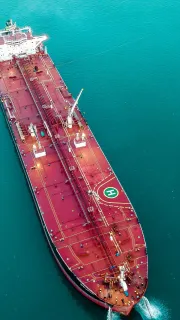
Saudi Arabia's national shipping company, Bahri, said on Wednesday, September 2, 2026 (11 Shahrivar 1405), that its VLCC tanker Sedr was struck by unidentified projectiles and caught fire while transiting the Strait of Hormuz near Khasab, Oman, at 23:40 local time on Monday, August 31 (9 Shahrivar), killing two Filipino crew members. Per Ecoiran, citing Hamshahri Online, the UK Maritime Trade Operations (UKMTO) body also confirmed the incident, saying three projectiles struck the vessel. Sedr, with a capacity of about two million barrels of crude, is one of Bahri's very large crude carriers (VLCCs).
EcoIran, citing Hamshahri Online
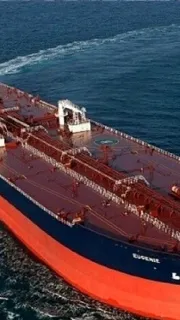
LNG Carriers Still Avoiding Strait of Hormuz Despite Resumed Oil Tanker Traffic
Unlike oil tankers, whose transits through the Strait of Hormuz have increased, LNG carriers have still not resumed their route through the waterway. Donya-e-Eqtesad reported the halt has kept LNG prices near their highest levels of the military-tension period. Reuters, via gCaptain (September 2, 2026), reported Qatar and the UAE have carried out several ship-to-ship LNG cargo transfers outside the Strait of Hormuz in recent weeks to deliver cargoes to India and Japan, involving vessels including QatarEnergy's GasLog Shanghai and Savannah and ADNOC's Mraweh. Reuters reported Asian spot LNG prices at their highest level in five months.
Donya-e-Eqtesad
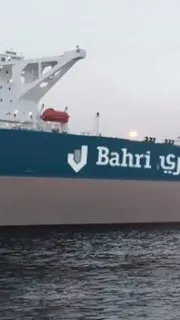
Axios: US targets two Iranian tankers with missiles for the first time
Axios reporter Barak Ravid, citing US officials, reported that the US military targeted two Iranian oil tankers during a fresh wave of strikes on Tuesday, September 1, 2026 (10 Shahrivar 1405). According to the report, the tankers were anchored near the Iranian coast, north of the US naval blockade line, and were struck in their engine rooms by missiles fired from American drones. A US official told Axios this was the first time the US had targeted Iranian tankers under the Trump administration's new "tanker for tanker" policy, adopted to increase pressure in response to Iranian attacks on ships transiting the Strait of Hormuz. Both Ecoiran and Donya e Eqtesad independently carried the Axios report, citing Tasnim news agency.
EcoIran, citing آکسیوس
Bahrain and Kuwait air defenses respond to missile and drone attacks as Kuwait airport halts flights
Bahrain's National Communication Centre said early on Wednesday, September 2, 2026 (11 Shahrivar 1405), that its air defenses had engaged several drones and urged citizens to stay calm and move to safe locations. Kuwait's army said in a statement that the country had come under missile and drone attack and that its air defenses were responding. Kuwait's airport suspended all flights. Tasnim news agency reported that Iran's armed forces carried out the strikes on US military positions and assets in Bahrain and Kuwait in response to what it called US military aggression. Arab sources reported hearing several explosions in both countries.
Khabar Online

Two Tankers Carrying Saudi Oil Struck by Projectiles in the Strait of Hormuz
Early Tuesday, September 1, 2026 (10 Shahrivar 1405), Reuters reported, citing maritime risk firms Kpler and Marisks, that two supertankers carrying Saudi crude oil were struck by unidentified projectiles in the Strait of Hormuz. The Saudi VLCC "Sidr" was hit first by three projectiles, and just minutes later a second vessel, the Liberian-flagged "Senegal Prosperity" operated by South Korea's Sinokor, was also struck by three projectiles about 17 nautical miles east of Khasab, Oman. The UK Maritime Trade Operations agency (UKMTO) confirmed an incident at the same coordinates, saying crews on both ships were safe and no environmental damage had been reported. Each tanker was carrying roughly 2 million barrels of Saudi crude loaded at the Ju'aymah terminal. The incident came amid renewed military tension between Iran and the United States in the region.
Reuters, citing gCaptain
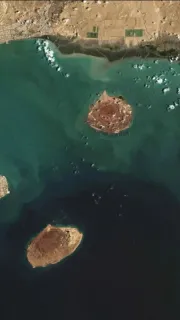
UAE Intercepts Iranian Drone as Gargash Calls for De-escalation and Reopening of Hormuz
The UAE's Ministry of Defence said on Monday, 9 Shahrivar 1405 (August 31, 2026), that its air force intercepted a drone approaching its territorial waters from Iran. In a post on X, the ministry called reports of an attack on its Al Menhad airbase false and urged the public to rely only on official sources. The statement followed Iran's army saying on Sunday that it had fired dozens of drones at US military assets at Al Menhad, describing the move as retaliation for the US strike on Larak Island. According to Al Jazeera, Anwar Gargash, the UAE presidential adviser, condemned the renewed escalation, saying political solutions must begin with de escalation and restoring normal shipping through the Strait of Hormuz. Trump had ordered a halt to new strikes on Iran on August 1, but US and Iranian forces resumed exchanging fire on Sunday night. The UAE is Iran's most important trade and exchange corridor, and rising geopolitical risk along this route could affect Tehran's free market dirham and dollar rates and safe haven demand for gold.
Al Jazeera
Iran Targets US Base in UAE With Drones as Abu Dhabi Denies Base Was Hit
Iran's army said in a statement carried by Iranian news agencies and reported by Al Jazeera on Monday, 9 Shahrivar 1405 (August 31, 2026), that it launched dozens of drones at US military assets at the Al Menhad base in the United Arab Emirates, describing it as retaliation for Iranian personnel and civilians killed and wounded in the US strike on Larak Island a day earlier. The UAE's Ministry of Defence responded that its air force had reacted to a drone approaching its territorial waters from Iran, but rejected Iran's claim that the base itself had been targeted. The UAE Foreign Ministry, in a post on X, "strongly condemned" what it called "the Iranian aggression." The UAE strike was separate from the IRGC's earlier missile barrage on the US operated King Hussein and Al Azraq bases in Jordan hours before. Iranian President Masoud Pezeshkian, in his first comments, said Iran is not seeking war but will not stay silent in the face of any aggression. The UAE is Iran's most important trade, transit and exchange corridor, with a large share of Iran's currency transfers and re-exported goods moving through its dirham market; extending the conflict onto Emirati territory risks lifting the geopolitical premium priced into Tehran's free market dollar and dirham rates, and into safe haven demand for gold.
Al Jazeera
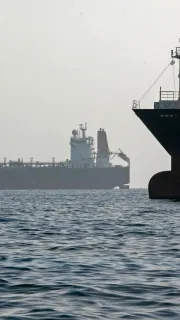
Starlink Satellite Internet Goes Live for Home Users in the UAE
According to Ecoiran, citing Gulf News, published Sunday, 8 Shahrivar 1405 (August 30, 2026), SpaceX's Starlink satellite internet service has gone live in the United Arab Emirates, and home users in the country can now access the service. Starlink's own website now lists the UAE among its covered regions. Starlink's entry into the UAE market began in 2024, when the country's communications regulator and digital government authority issued it a license, initially focused on maritime services and later expanded to aviation; Emirates airline began installing Starlink internet on its fleet last year. Kuwait joined the list of countries with Starlink coverage earlier in 2026. Starlink now operates the world's largest communications satellite constellation, with more than 11,000 active satellites in low Earth orbit.
Ecoiran, citing Gulf News
US Treasury Proposes Cutting Banque Misr's UAE Branches From Dollar System Over Iran Ties
The US Treasury Department proposed a rule on Friday, August 28, 2026, that would cut the United Arab Emirates branches of Banque Misr, Egypt's second largest bank, off from the US dollar financial system. Treasury Secretary Scott Bessent said in a statement the move is a first step in holding the bank accountable for what he called its continued support for Iran's government. The proposed rule, subject to a thirty day public comment period, applies only to the UAE branches' dollar transfers and does not extend to Banque Misr's operations inside Egypt or its other overseas branches, the Central Bank of Egypt confirmed the same day. Also on Friday, the Treasury Department added the Dubai branch manager of Iran's Bank Melli, Reza Mohammad Taeedi, and a Hong Kong based firm called Kameng Trading Limited to its sanctions list, accusing them of helping launder funds for Iran. The actions are part of a new campaign Bessent announced this week to press countries that still do business with Iran to sever those financial ties.
Associated Press (AP)

Axios Reporter: More Than 200 Mine-Like Objects Collected From Hormuz Strait's Main Shipping Lane
Barak Ravid, a reporter for the American outlet Axios, wrote on X on Friday, 7 Shahrivar 1405 (August 28, 2026), that US officials told him more than 200 mine-like objects have been collected from the Strait of Hormuz's main shipping lane. Citing the same officials, he said only 11 of those objects were actual mines, and just a handful had been properly armed. The report, carried by Donya-e-Eqtesad, follows an earlier claim by CENTCOM Commander Brad Cooper that the US had fully cleared mines from the Strait of Hormuz, a claim Iran's deputy foreign minister for legal and international affairs, Kazem Gharibabadi, had previously rejected, saying only Iran knows the exact location of the mines in the strait. The new figures are the first specific breakdown reported of how many of the suspicious objects collected from the Strait of Hormuz were actual mines, a detail relevant to assessing the risk of continued shipping through the strategic waterway.
Donya-e-Eqtesad, citing آکسیوس
VLCC Freight Rates Hit $650,000 a Day as the Iran War Reshapes Gulf Shipping
According to Oilprice.com's Julianne Geiger, citing Baltic Exchange data reported by Bloomberg, earnings on the benchmark Saudi Arabia to China VLCC (very large crude carrier) route surged to a record $647,000 a day on Thursday, 6 Shahrivar 1405 (August 27, 2026), more than ten times the rate a year earlier and about 27% above the $510,000 recorded just ten days before. The spike coincides with a rise in Persian Gulf oil exports through the Strait of Hormuz. TotalEnergies CEO Patrick Pouyanne said earlier in the week that moving a cargo through Hormuz now costs about $20 million, and the report said costs have climbed further since. Few tanker owners are willing to send vessels through the strait, forcing exporters to compete for the smaller pool willing to take the risk. A tanker traveling from Oman to China now commands roughly $220,000 a day, up from $131,000 a month ago. Traders estimate Hormuz outflows at 6 to 8 million barrels a day, while Goldman Sachs puts the flow at roughly two thirds of pre-war levels.
Oilprice.com, citing بورس بالتیک and Bloomberg
Sheikh Tahnoon bin Zayed Takes Major Stake in Trump Linked Crypto Bank Project
World Liberty Financial, the crypto project linked to Donald Trump, has moved a step closer to launching a national trust bank after receiving preliminary and conditional approval from the US Office of the Comptroller of the Currency (OCC). Reports say an entity linked to Sheikh Tahnoon bin Zayed Al Nahyan, the UAE's national security adviser, together with co investors, holds 49 percent of WLTC Holdings, the proposed bank's holding company, the largest stake in its ownership structure. According to the Wall Street Journal, Sheikh Tahnoon backed a 500 million dollar investment in World Liberty Financial last year in exchange for a 49 percent stake in the company. The proposed bank would handle issuance, redemption and custody of the USD1 dollar stablecoin, though final approval to operate has not yet been granted.
Arzdigital
UAE Extends Starlink's License for 10 Years
The United Arab Emirates has extended Elon Musk's Starlink a 10 year license to provide public satellite communications services in the country. Under the license, Starlink is authorized to launch, manage and operate its public satellite internet network in the UAE. UAE media outlets confirmed the move and described it as a step toward faster internet speeds and a potential alternative to the country's telecom duopoly.
EcoIran

Qatar Loses $24 Billion in LNG Sales Six Months Into the Strait of Hormuz Crisis
According to Reuters calculations published Wednesday, 4 Shahrivar 1405 (August 26, 2026), and carried by Oilprice.com, Qatar has lost about $24 billion in sales six months since the Strait of Hormuz crisis crippled its liquefied natural gas exports, with shipments down as much as 96 percent. Citing data from analytics firm ICIS, Reuters said the number of LNG cargoes Qatar managed to export fell to just 18, down from 509 cargoes in the same period a year earlier. According to Oilprice.com, the de facto closure of the Strait of Hormuz has trapped about 20 percent of daily global LNG flows, and drone and missile strikes on regional energy infrastructure have damaged Qatar's main liquefaction complex, Ras Laffan. State firm QatarEnergy estimates the damage could cost about $20 billion a year in lost revenue and take up to five years to repair, and it has been forced to declare force majeure on some long term LNG contracts for up to five years. The report said the drop in Qatari cargoes has left Europe struggling to fill its gas storage sites ahead of winter.
Oilprice.com, citing Reuters and آیسیآیاس
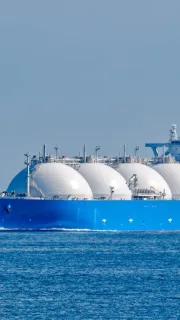
Gulf Oil Exports Rebound to Two Thirds of Pre War Levels, Despite Iran War
According to a Goldman Sachs note carried by Bloomberg and reported by Oilprice.com on Friday, 6 Shahrivar 1405 (August 28, 2026), crude and product export volumes from the Persian Gulf have recovered to about two thirds of their typical pre war levels. The bank said the whole West Asia region is now shipping out 15 to 16 million barrels a day, 5 to 6 million barrels above the March 2026 (Esfand 1404) trough, though still 7 to 8 million barrels a day below February (Bahman 1404) levels before the war. Goldman Sachs analysts said a rise in dark, untracked transits and ship to ship transfers shows producers and shippers are adapting to the conflict, a trend that could cap oil price gains even if disruption in West Asia continues. Outbound flow through the Strait of Hormuz alone is now close to the US estimate of 8 to 10 million barrels a day, the note said.
Oilprice.com, citing گلدمنساکس and Bloomberg
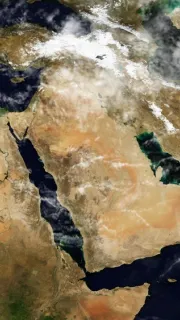
Trump Sends US-Saudi Civilian Nuclear Deal to Congress as Riyadh Rejects Israel Condition
The Trump administration formally sent the US Saudi civilian nuclear cooperation agreement to Congress on Thursday, August 27, 2026 (5 Shahrivar 1405), Oilprice.com reported. The submission starts a 90 legislative day congressional review period for the 30 year agreement, which would allow US companies to export civilian nuclear technology to Saudi Arabia. Congress can reject the agreement during that period, but Trump can veto such a resolution, which would then need two thirds majorities in both chambers to override. Under the deal, Washington and Riyadh will spend two years assessing whether domestic uranium enrichment inside Saudi Arabia, under US oversight through a black box arrangement, is technically and commercially warranted, a provision that, unlike the 2009 US UAE nuclear agreement, does not rule out enrichment on Saudi soil. Separately on Thursday, Saudi Arabia reiterated it will not normalize relations with Israel without the creation of an independent Palestinian state, a condition Trump has said must be met before the nuclear deal takes effect. Saudi Crown Prince Mohammed bin Salman has previously said the kingdom would pursue a nuclear weapon if Iran obtained one.
Oilprice.com

Bloomberg: Qatar and Kuwait Boost Hormuz Oil Exports Through Ship to Ship Transfers
According to Bloomberg, carried by Oilprice.com on Thursday, 5 Shahrivar 1405 (August 27, 2026), anonymous oil traders said Qatar and Kuwait, following the pattern set by the United Arab Emirates, have raised their crude exports through the Strait of Hormuz to a significant share of pre war levels by using ship to ship transfers in the Gulf of Oman. Before the war, the two countries together exported about 2 million barrels a day through the strait, but struggled badly in the conflict's first two months because, unlike Saudi Arabia and the UAE, they lack alternative export routes. The report said Kuwait and Qatar began shuttling crude through the Strait of Hormuz and transferring it to larger tankers outside the chokepoint around June (Khordad 1405). Bloomberg's trading sources told the outlet that total oil flow through the strait, including undeclared activity and vessels without tracking signals, has risen to about 7 to 8 million barrels a day, up from about 4 million barrels a day in mid July (Tir 1405). These figures rest on traders' accounts and have not yet been confirmed by official or independent data.
Oilprice.com, citing Bloomberg

Another Tanker Struck in the Strait of Hormuz as Shipping Traffic Remains Sharply Reduced
Another tanker was struck by a projectile in the waters between Iran and Oman on Tuesday, 3 Shahrivar (August 25, 2026), the UK Maritime Trade Operations reported, as carried by Germany's DPA news agency on Thursday, 5 Shahrivar 1405 (August 27, 2026), a day after a similar attack near the coast of Oman. According to Oilprice.com, citing maritime tracking firm Windward, the vessel was a Liberian flagged Aframax tanker carrying 704,000 barrels of jet fuel, which eventually reached the port of Fujairah. Data from tracking firm Kpler, cited in the same report, showed only five commodity vessels transited the Strait of Hormuz on Tuesday, well below the 15 vessel average of the past ten days. Windward said that as of Wednesday, 11 inbound and 6 outbound crossings had been recorded in the strait, of which 6 were tankers; the data showed about 65 percent of oil exports through the strait are bound for China.
Oilprice.com, citing یوکیامتیاو and ویندوارد

Iran and Oman Announce Joint Statement on a Temporary Shared Corridor and Mine Clearing Project in the Strait of Hormuz
Iran and Oman said in a joint statement on Wednesday, August 26, 2026 (4 Shahrivar 1405), that they had discussed a phased framework for managing ship traffic through the Strait of Hormuz. According to Arzdigital, the framework includes setting up a temporary shared corridor and carrying out a maritime mine clearing project. Technical talks between the two countries on establishing a permanent crossing, traffic management, and navigation and security services are set to continue. Global oil prices fell more than 2 percent the same day: Brent crude dropped to $86.27 a barrel and US West Texas Intermediate to $80.87. An unexpected 4.2 million barrel build in US crude inventories, reported by the American Petroleum Institute, added further downward pressure on prices.
Arzdigital
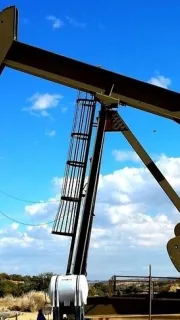
Iran Names 45 Tankers on a Hormuz Compliance Blacklist as Indian Refiners Steer Clear
Three Indian oil refining companies and a global energy major will stop using tankers on a blacklist Iran issued last Sunday, Shahrivar 1 (August 23, 2026), in response to US sanctions, Oilprice.com reported on Wednesday, Shahrivar 4 (August 26, 2026), citing Reuters and unnamed sources. The list names 45 vessels that Tehran says violated its rules for transiting the Strait of Hormuz; Iran's newly formed Persian Gulf Strait Authority warned in a social media statement that listed vessels caught in the strait could face fines, detention and cargo confiscation. Citing sources, Reuters reported the curbs also affect so called shuttle tankers that the UAE and Saudi Arabia use to move Persian Gulf crude to larger vessels for export; one source at an Indian refinery said the company's fleet will avoid any ship to ship transfer involving non compliant vessels for Middle East cargoes. The blacklist announcement came a day before the US Treasury unveiled its new sanctions package against Iran on Monday, Shahrivar 2 (August 24). Reuters also reported some shipping companies are weighing whether to suspend ship to ship transfers in the Persian Gulf altogether, a step that could deepen disruption to tanker traffic through the Strait of Hormuz.
Oilprice.com, citing Reuters
Saudi Crown Prince and Macron Sign Multibillion-Dollar Deals in Paris, Call for Normal Shipping Through Hormuz
Saudi Crown Prince Mohammed bin Salman signed a raft of deals spanning energy, defense, AI and tourism with French President Emmanuel Macron at the Elysee Palace on Monday, August 24, 2026. The largest agreement was a six billion euro (about $7 billion) investment by Qiddiya, the investment arm of Saudi Arabia's sovereign wealth fund, in three theme parks near Paris, one of them manga themed, expected to create around 22,000 jobs. Two further contracts were signed with French firms: $434 million with shipping group CMA CGM to help develop Jeddah Islamic Port, and $580 million with Alstom to supply metro carriages for Riyadh's metro. In a joint statement, Macron and the Saudi crown prince called for a negotiated end to the US Iran war and a return to normal shipping through the Strait of Hormuz. The visit marked the Saudi crown prince's third official trip to France.
Al Jazeera

Seven Tankers Load at Once Off Iraq's Coast as Iran's Oil Exports Sink to 300,000 bpd
Satellite imagery analyzed by Bloomberg showed seven crude carriers moored at once at Iraq's Persian Gulf export terminals on Monday, August 24, 2026, with a combined capacity of roughly 13 million barrels. TankerTrackers.com separately confirmed about 13 million barrels loading at the Al Basrah Oil Terminal the same day. Before Iran's war, six tankers occupying the eight-berth terminal at once was normal; Monday's snapshot does not mean Iraqi exports have fully returned to pre-war levels. Meanwhile, Iran's own crude loadings have fallen to around 300,000 barrels per day in August, compared with a 2025 average of roughly 1.7 million bpd, while Iranian floating storage outside the Gulf has dropped to about 24 million barrels. Iraq says it is exporting close to 2 million bpd despite the Hormuz disruption, and Chinese refiners have been buying more Basrah crude as other Gulf supplies tighten.
Oilprice.com, citing Bloomberg and تانکرترکرز / citing Bloomberg and TankerTrackers.com

Qatari Foreign Ministry Spokesperson: US Sanctions on Iran Are Unilateral, Mediation Continues
Qatar's Foreign Ministry spokesperson said the country's efforts to secure a return to and resumption of talks between the United States and Iran are continuing. According to Khabar Online, citing Al Jazeera and Mehr, Majed Al Ansari said on Tuesday, August 25, 2026 (3 Shahrivar 1405), that US sanctions on Iran are unilateral and that Qatar supports mediation efforts to resolve the crisis, though no new development has occurred in the file. He added that any escalation of tension in the region would have consequences across the region and the world, and stressed that conditions in the Strait of Hormuz must return to their pre crisis state with freedom of navigation guaranteed. The spokesperson also said Persian Gulf states are fully coordinated in preparing for various escalation scenarios.
Khabar Online, citing Al Jazeera and Mehr News Agency

Saudi Arabia opens talks on a war risk insurance fund for Red Sea shipping
According to Donya-e-Eqtesad, reporting Monday, Shahrivar 2, 1405 (August 24, 2026) on a Financial Times report, Saudi Arabia has opened talks with insurance brokers in London to set up a state backed fund covering war risk insurance for ships operating in the region. Rising costs and shrinking insurance coverage, driven by escalating tensions and Yemeni force operations against Saudi Arabia, have turned the Red Sea port of Yanbu into a vital artery for the kingdom's oil exports, the report said. Under one proposed version, the fund would provide up to 700 million Saudi riyals (about 186 million dollars) of coverage per covered incident, such as a ship seizure or missile strike, with reinsurers Saudi Re and Riyadh Re leading a group of underwriters. Talks are ongoing and may not result in a final agreement.
Donya-e-Eqtesad, citing Financial Times
Tanker Traffic Through the Strait of Hormuz Hits Bottom as Oil Flow Falls to 6.7 Million Barrels a Day
According to Oilprice.com, citing Reuters, Kpler and the UK Maritime Trade Operations (UKMTO), published Sunday, Shahrivar 1, 1405 (August 23, 2026), tanker traffic through the Strait of Hormuz remained very weak over the weekend: Kpler data showed only 13 tankers crossed on Saturday, 30 Mordad (August 22), and just 4 on Sunday, versus 16 on Friday, 29 Mordad. UKMTO said AIS detected transits are running about 90 percent below pre war levels. In the week to August 21 (30 Mordad), 103 vessels entered and 89 exited the strait, of which 45 percent were tankers. According to Mehr News Agency, citing Kpler, published Monday, Shahrivar 2, 1405 (August 24, 2026), implied oil flow through Hormuz has also fallen sharply to 6.7 million barrels a day. The decline comes as US Treasury Secretary Scott Bessent threatened to launch the "greatest economic attack" on Iran, and Mohsen Rezaei, secretary of Iran's Supreme National Security Council, responded that oil exports from the Persian Gulf would stop entirely if the economic war continues.
Oilprice.com, citing Reuters and Kpler
The UAE-Russia Trade in Services and Investment Agreement Enters Into Force
According to The National, the UAE Ministry of Foreign Trade said the UAE-Russia Trade in Services and Investment Agreement (Tisia) officially entered into force on Sunday, 23 August 2026 (1 Shahrivar 1405). The agreement was signed a year earlier, on 8 August 2025, during Sheikh Mohamed's visit to Moscow, and targets sectors including fintech, healthcare, transport, logistics and professional services. According to the report, non oil bilateral trade between the UAE and Russia reached 20.4 billion dollars in the prior year, up 77.7 percent. The UAE now has 18 comprehensive economic partnership agreements in force out of 38 concluded since 2021. The story matters to Iranian readers because of its timing: the agreement takes effect four days after the UAE suspended all trade and financial relations with Iran on 19 August. Abu Dhabi is deepening its economic integration with Moscow at the same time as it cuts off Tehran, which is relevant to anyone tracking how the region's trade and remittance flows are being rerouted.
The National
Iran Warns Gulf States That Supporting US Military Operations Would Make Them Parties to the War
According to OilPrice.com on August 21, 2026, Iran has warned Gulf states that any support for US military operations would make them participants in the war, and Tehran said it is tracking US aircraft operating from regional bases. The UAE suspended all trade, commercial exchanges, and financial transactions with Iran on Tuesday, citing an accusation that Iran fired two ballistic missiles toward vessels off the Emirati coast, which Iran has denied. The outlet reported that US President Donald Trump has threatened "tremendous" economic consequences for any country whose banks, businesses, airports, or government entities provide Iran with "any type of lifeline." The US is set to announce the "toughest sanctions in history" on Monday, with China, which buys more than 80 percent of Iran's seaborne oil, described as the main target.
OilPrice.com
UAE Halts All Trade and Financial Dealings With Iran Until Further Notice
The United Arab Emirates halted all trade and financial dealings with Iran until further notice on Wednesday, 28 Mordad 1405 (August 19, 2026). According to Foreign Policy, carried by Donya-e-Eqtesad, a UAE Foreign Ministry spokesperson described the move as a response to "escalating regional tensions that undermine regional and international peace and security." The announcement came just hours after a phone call between US President Donald Trump and UAE President Mohamed bin Zayed. Per World Trade Organization data, bilateral trade totaled about $28 billion in 2024, when the UAE was Iran's largest source of imports. Donya-e-Eqtesad reported that economic operators have warned the decision will raise the cost and risk of Iran's foreign trade, though some currency transfers between the two countries continue through indirect channels. Anwar Gargash, diplomatic adviser to the UAE president, called accusations that Dubai has helped Iran evade sanctions "disinformation," saying the UAE remains "fully committed to the integrity of the international financial system."
Donya-e-Eqtesad, citing Foreign Policy
Aramco Shuttles Oil From the Red Sea to the Mediterranean to Dodge the Houthi Threat
Saudi Arabia has increased its crude oil exports from Egypt's Mediterranean port of Sidi Kerir by about 33 percent over the past month, since Yemen's Houthis threatened Saudi shipping in the southern Red Sea and the Bab el Mandeb Strait. According to OilPrice.com, citing Bloomberg tanker tracking data published Friday, August 21, 2026 (30 Mordad 1405), Aramco is now shuttling oil from its Yanbu port on the Red Sea north to Egypt's Ain Sukhna port, from where it moves via the SUMED pipeline to Sidi Kerir. Based on data from Kpler, the new route has increased Aramco's shipments via the northern Red Sea route by about a third, to 1.1 million barrels per day. At least four tankers have each made the journey twice, moving more than 16 million barrels of oil. The new route, which then continues through the Mediterranean and around the Cape of Good Hope to Asia, adds nearly a month to the time it takes Saudi oil to reach Asian refiners.
OilPrice.com, citing Bloomberg
ADNOC Holds Ninth Crude Tender Since June, Selling Over 100 Million Barrels
Abu Dhabi National Oil Company (ADNOC) held its ninth spot crude tender since June on Thursday, August 20, 2026 (29 Mordad 1405), offering oil for October and November loadings, as the UAE keeps pushing its oil production and exports higher despite the Hormuz crisis. According to Oilprice, citing Reuters, ADNOC offered Upper Zakum, Umm Lulu and Das crude grades in the tender. Per the report, ADNOC is estimated to have sold more than 100 million barrels of crude in its previous eight spot tenders this summer. The UAE, which left OPEC on May 1, has found workarounds to the blockage of the strait by shuttling crude to larger vessels outside Hormuz and maximizing use of its onshore pipeline, allowing it to restore exports to pre-crisis levels as early as June. UAE oil output reached an all time record of 4.1 million barrels per day in June.
Oilprice
Coinbase Wins License to Launch Tokenized Securities Hub in Abu Dhabi
US exchange Coinbase said on Thursday, August 20, 2026 (29 Mordad 1405) that it had received the regulatory license it needed from the Financial Services Regulatory Authority (FSRA) in Abu Dhabi Global Market (ADGM) to launch an international hub for tokenizing assets. The license allows Coinbase to offer custody and brokerage services for blockchain issued securities backed by real company shares. The move builds on Coinbase's Project Diamond in Abu Dhabi, which previously used the Base blockchain and the USDC stablecoin and focused on debt instruments, and is now expanding into tokenizing large company equities. Arvind Ramamurthy, ADGM's director of market development, described the license in a statement as part of an effort to improve capital market access. Rival firm Ondo Finance had earlier obtained a similar Abu Dhabi license for tokenizing shares of Apple and Tesla. Coinbase plans to centralize its on chain capital markets operations in Abu Dhabi and its global derivatives trading in Dubai.
Arzdigital
Saudi Mining Sector's 38.7 Percent Jump Drives May Operating Revenue Index Higher
According to a report published by Ecoiran on Thursday, August 20, 2026 (29 Mordad 1405), Saudi Arabia's Operating Revenue Index (ORI) rose 11.4 percent year on year in May 2026 and 2.9 percent from April. Among economic sectors, mining and quarrying posted the largest contribution, jumping 38.7 percent year on year and 10.2 percent month on month. Mining was followed by finance and insurance, up 12.9 percent year on year, manufacturing, up 9.6 percent, and transport and storage, up 9.5 percent. Riyadh views the figures as evidence of progress on its national mining strategy, which aims to grow mining's share of the non oil economy by 2030. Saudi Arabia holds substantial gold, phosphate, copper and zinc reserves within the Arabian Shield geological region.
Ecoiran
West Asian Supertanker Prices Hit an All Time High
According to a Financial Times report carried by OilPrice.com on Thursday, August 20, 2026 (29 Mordad 1405), prices for new and second hand very large crude carriers serving West Asian oil producers passed 130 million dollars in the second quarter of this year, an all time high. Data from shipbroker Braemar showed the annual charter rate for a supertanker has also hit its highest level on record. David Holland, Braemar's head of sale and purchase, told the Financial Times that owning tankers outright has become strategically important for some West Asian exporters. The demand surge follows major shipping lines' growing reluctance to send vessels through the Strait of Hormuz amid repeated attacks on tankers, pushing oil producing states toward their own dedicated fleets. Abu Dhabi National Oil Company (ADNOC) bought six supertankers and five very large gas carriers earlier this month for a combined 1.3 billion dollars. Unlike the UAE, Iraq has no dedicated tanker fleet and depends on international traders and buyers to move its crude, so it has had to offer steep discounts to persuade buyers to make the risky Hormuz passage.
OilPrice.com, citing the Financial Times
Despite Hormuz and Red Sea Disruption, Aramco Guarantees Full September Contractual Deliveries to Three European Refiners
Saudi Arabia's Aramco, according to a Bloomberg report carried by The Edge Malaysia and reflected by Oilprice.com on Wednesday, 27 Mordad 1405 (August 19, 2026), said it will deliver full contractual September crude volumes to at least three European refiners, loading from the Egyptian Mediterranean port of Sidi Kerir, Saudi Arabia's Red Sea port of Yanbu, or via a ship to ship transfer off Malta. Citing people familiar with the matter, Aramco notified its European customers about a week later than usual this time. The move comes as traffic through the Strait of Hormuz remains heavily disrupted by the US Iran war, while Houthi attacks have made Red Sea shipping more difficult. Saudi Arabia has simultaneously resumed loading crude from inside the Persian Gulf, with three VLCCs loading at the Ras Tanura and Juaymah terminals last week.
Oilprice.com, citing Bloomberg via The Edge Malaysia
Official Data: Saudi Economy Contracts 4.8% in Spring 2026 Amid Hormuz Closure
Preliminary estimates from Saudi Arabia's General Authority for Statistics, reported by IRNA via the outlet Al Araby Al Jadeed, show the kingdom's real GDP shrank 4.8 percent year on year in the second quarter of 2026, driven mainly by a 24.7 percent contraction in the oil sector. A July 30 Trading Economics report also showed GDP down 4.9 percent quarter on quarter, tied to a 21.5 percent drop in oil activity, while the Financial Times reported on July 31 that the months long US and Israeli campaign in the region has weighed heavily on the Saudi economy. Economists told Al Araby Al Jadeed that the closure of the Hormuz and Bab el Mandeb straits has curbed Saudi oil exports, and the IMF has cut its 2026 Saudi growth forecast to about 1.7 percent.
EcoIran, citing IRNA and Al-Araby Al-Jadeed
After a Three Week Pause, Aramco Resumes Tanker Loadings Through the Strait of Hormuz
According to Oilprice.com, published Tuesday, August 18, 2026 (27 Mordad 1405), Saudi Aramco resumed crude loadings from its Ras Tanura and Juaymah terminals inside the Strait of Hormuz last week, ending a three week pause in activity at those ports. Citing data from ship tracking firms Kpler and Vortexa reported by Reuters, three VLCCs, the Malaysia Prosperity, Algeria Prosperity and Singapore Prosperity, each loaded roughly two million barrels between August 12 and 16 (21 to 25 Mordad). Provisional Kpler data shows six more VLCCs could load Saudi crude from inside Hormuz later this month. Oilprice.com also reported that seven VLCCs operated by Saudi Arabia's Bahri were anchored off the UAE and Oman on Tuesday, with two more heading toward Fujairah, evidence traders said suggests Aramco may also use Saudi controlled tankers for future Hormuz transits. The shift follows Aramco's weeks long halt of exports from inside the strait after earlier attacks on its tanker fleet amid the escalation of the US Iran war.
Oilprice.com, citing Reuters and Kpler/Vortexa data
UAE Suspends Trade and Financial Relations With Iran Until Further Notice
The United Arab Emirates' Ministry of Foreign Affairs said in a statement in the early hours of Wednesday, August 19, 2026 (28 Mordad 1405) that all trade activity, economic relations and financial transactions with Iran are suspended until further notice. According to Khabar Online, citing ISNA, the decision came hours after the UAE's Ministry of Defense claimed it had detected two Iranian ballistic missiles, which the ministry said had targeted maritime traffic and were not deliberately fired at the UAE. Esmail Baghaei, spokesperson for Iran's Foreign Ministry, rejected and denied the claim. The Al Alam news network also reported that the allegation of an Iranian missile attack on the UAE was untrue, noting that during the current war, Iran has publicly claimed responsibility whenever it has taken action. The developments follow an earlier UAE Defense Ministry warning that it had intercepted a missile threat over Dubai's skies on the evening of Tuesday, August 18 (27 Mordad).
Khabar Online, citing ISNA

Gulf-to-China Supertanker Charter Rates Hit $510,000 a Day
According to Oilprice.com, published on Tuesday, 18 August 2026 (27 Mordad 1405), the daily charter rate for very large crude carriers (VLCCs) picking up oil in the Persian Gulf for delivery to China surged to as high as 510,000 dollars a day this week, the highest level since the end of June. Per Baltic Exchange data compiled by Bloomberg and cited by Oilprice.com, the surge came as exporters sought vessels to deliver crude to Asian buyers despite a deteriorating security backdrop in the Strait of Hormuz. Shipbroker Fearnleys said in its weekly report that tanker owners with enough risk tolerance to transit the Strait of Hormuz and return through the same chokepoint stand to earn substantial money at these elevated rates. Per Oilprice.com, observable tanker traffic through the Strait of Hormuz dipped further over the weekend, though analysts say it remains difficult to estimate how much oil is actually leaving the region on vessels operating in "dark mode" with transponders switched off.
Oilprice.com, citing the Baltic Exchange and Bloomberg
Yemen's Houthis Claim Third Attack on Saudi Aramco's Jazan Refinery in Two Weeks
According to Oilprice.com, published on Tuesday, 18 August 2026 (27 Mordad 1405), Yemen's Houthi group claimed it targeted Saudi Aramco's Jazan refinery on the Red Sea coast with a number of drones, in what Oilprice.com said was the group's third claimed attack on the same refinery in two weeks. A Houthi military source told the group-affiliated Saba news agency the strike was in response to "violations of Yemeni airspace over the Saada and Hajjah governorates." Saudi Arabia had not confirmed or denied the claim as of this report. The 400,000 barrel-per-day Jazan refinery was shut down at the end of July (Tir) after an attack the Houthis claimed responsibility for. Per Oilprice.com, escalating Houthi threats have pushed Saudi Arabia to reroute part of its oil exports from the Red Sea port of Yanbu through the Suez Canal to Egypt's Sidi Kerir port on the Mediterranean, with some Asian refiners asking Aramco to have their cargoes picked up at Sidi Kerir instead.
Oilprice.com
A Cargo Ship Was Struck by an Unidentified Projectile While Transiting the Strait of Hormuz
The UK Maritime Trade Operations body (UKMTO) said on the evening of Tuesday, 18 August 2026 (27 Mordad 1405, 18:51 Tehran time), per Tasnim News Agency and carried by Donya-e-Eqtesad, that a cargo ship was struck by an unidentified projectile while transiting the Strait of Hormuz. The statement adds new detail to the same body's earlier report that morning, which had only said a "maritime incident" had occurred in the strait, without disclosing the vessel's identity or the nature of the incident. The vessel's exact identity, the scale of any damage, or the projectile's origin had not been disclosed as of this report. The incident came on a day when global Brent crude traded above 91 dollars a barrel, and only hours after the UAE's Defense Ministry said it had intercepted a missile threat over Dubai, developments analysts say reflect escalating geopolitical risk in the Strait of Hormuz in recent days.
Donya-e-Eqtesad, citing Tasnim and UKMTO
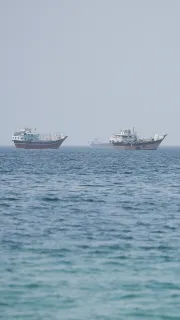
UAE Defense Ministry: Air Defenses Intercepted a Missile Threat Against the Country
According to ISNA, carried by Donya-e-Eqtesad on Tuesday, 18 August 2026 (27 Mordad 1405) at 19:16 Tehran time, the United Arab Emirates' Ministry of Defense said in a statement that the country's air defense systems detected and intercepted a missile threat targeting the UAE. Per the statement, loud explosions were heard over Dubai at the same time, which the ministry said resulted from the air defense operation. The UAE's Ministry of Interior sent emergency alert messages to residents' mobile phones, urging them to immediately follow safety measures and take shelter in secure locations. The Defense Ministry said the UAE remains fully prepared to counter any threat. Details on the projectile's origin, the exact interception location, or any damage had not been released as of this report. The incident follows months of tension between Iran and the United States and Israel, and a series of earlier missile strikes on Emirati tankers in the Strait of Hormuz.
Donya-e-Eqtesad, citing ISNA, citing the UAE Ministry of Defense
Oil Slick From Grounded Tanker off Oman Grows to About 1,300 Square Kilometers as Salvage Operation Begins
According to Al Jazeera, reported on Tuesday, 18 August 2026 (27 Mordad 1405), risk management firm Ambrey said a salvage operation has begun to stabilize the tanker Caroline Bezengi, a suspected member of Russia's sanctioned shadow fleet that has been leaking oil since it ran aground near Oman's Hallaniyat archipelago on 30 June 2026 (9 Tir 1405). Based on satellite imagery analysis by Greenpeace, the spill grew from 45 square kilometers in late July to about 1,300 square kilometers as of Wednesday, 12 August (21 Mordad), well above Omani authorities' earlier estimate of about 400 square kilometers. The International Maritime Organization (IMO) said it is closely monitoring the situation. The International Oil Pollution Compensation Funds said they will not take part in the cleanup, citing a likely war exclusion. Ambrey said the salvage effort has been complicated by the annual Khareef monsoon, and environmental experts warned that the delayed response has reduced the chance of containing the source of the leak.
Al Jazeera
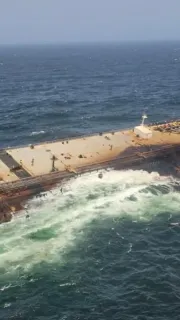
UK Maritime Trade Body Reports a Maritime Incident in the Strait of Hormuz
The UK Maritime Trade Operations body (UKMTO) said early on Tuesday, 18 August 2026 (27 Mordad 1405), that it had received a report of a maritime incident in the Strait of Hormuz. According to Ecoiran and Donya-e-Eqtesad, details of the incident, including the vessel's identity or the scale of any damage, had not been disclosed as of this report. The advisory came on a day when global Brent crude traded above 91 dollars a barrel, a level analysts say reflects persistent risk to shipping through the strait amid the region's recent tensions. Sahmino will update this report as the Strait of Hormuz situation develops.
Ecoiran, citing UKMTO
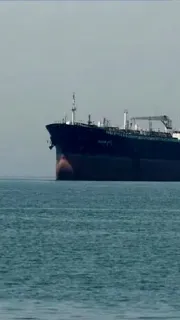
Oil Spill From Tanker Caroline Bezengi Reaches Oman's Coast, Threatening Up to 40 Km of Shoreline
An oil leak from the tanker Caroline Bezengi, which ran aground near Oman's coast on 9 Tir 1405 (June 30, 2026), reached the country's shoreline on Wednesday, 21 Mordad (August 12, 2026), Al Jazeera reported. Oman's Environment Authority said the pollution could affect up to 40 km of coastline in the Ras Madrakah area and parts of Masirah Island; satellite-imagery analysis cited by Reuters shows the slick now covers more than 2,000 square kilometers. The tanker, believed to be part of Russia's "shadow fleet" used to circumvent Western sanctions, was carrying an estimated 800,000 barrels of sanctioned oil on a voyage from the Russian port of Novorossiysk to India that passed through the Red Sea near Yemen's coast. CBS News confirmed the incident in a separate report, describing it as a threat to the region's sensitive marine ecosystem, including the Hallaniyat Islands marine reserve.
Al Jazeera

Qatar Denies Detaining Iranian Pilots; Tehran Asks Red Cross to Press the Case
Majed al-Ansari, spokesperson for Qatar's foreign ministry, categorically denied reports of detaining Iranian pilots in remarks carried by Al Jazeera on Saturday, August 15, 2026 (24 Mordad 1405). He said that after two Iranian fighter jets violated Qatari airspace, Qatari forces took the necessary steps to defend the country's territory, and that Doha's teams contacted Tehran to arrange the handover of one pilot's body but have not received a response. The statement followed a letter from Brigadier General Seyed Mohammad Baqerzadeh, commander of the Armed Forces General Staff's missing persons search committee, to the International Committee of the Red Cross, urging an urgent follow up on the status of three Iranian pilots reported as captured in Qatar. According to the letter, two Su-24 jets were hit by air defenses while returning from a mission on March 2, 2026 (11 Esfand 1404), forcing the pilots to eject. The exchange comes against the backdrop of regional tension around the Strait of Hormuz and Persian Gulf security, which in recent weeks has included attacks on oil tankers and a complete halt in ship traffic through the strait.
EcoIran, citing Al Jazeera
Saudi Ships Reroute via Cape of Good Hope to Avoid Bab el Mandeb
Maritime intelligence firm Windward said in a report that 12 vessels linked to Saudi Arabia have rerouted toward the Cape of Good Hope to avoid transiting the Bab el Mandeb strait, a diversion that makes voyages longer and more costly. According to Khabaronline, citing ISNA and the report, some Saudi linked vessels have repeatedly changed their declared destination over the past two weeks, while others only confirmed their final destination after rounding the coast of South Africa. The report said this pattern points to uncertainty over which sea routes are safe. Forces based in Sanaa, Yemen, under a policy they describe as "blockade for blockade," have been blocking the passage of Saudi linked vessels through Bab el Mandeb, forcing shipping companies to take longer routes to bypass the chokepoint.
Khabaronline, citing ISNA and Windward
Another ADNOC Tanker Was Attacked in the Strait of Hormuz on Friday Evening
The Abu Dhabi National Oil Company (ADNOC) said one of its vessels was attacked on Friday evening, August 14, 2026 (23 Mordad 1405), while transiting the Strait of Hormuz. According to ISNA, carried by Donya-e-Eqtesad and citing the UAE's official news agency WAM, ADNOC said the attack caused no casualties and that the situation was brought under control after the incident. It was the third reported attack on ADNOC vessels in the Strait of Hormuz in under two days. The UAE had earlier said two other ADNOC vessels were attacked earlier the same Friday while transiting the same waterway, calling it piracy. The UAE Foreign Ministry blamed Iran for those attacks, though Tehran has not officially responded to the allegations.
Donya-e-Eqtesad, citing ISNA/WAM
Middle East Oil Tankers Are Staying in Dark Mode Longer
According to Oilprice.com, in a report published Friday, August 14, 2026 (23 Mordad 1405), a growing number of tankers are switching off their AIS positioning systems at the Middle East's two key chokepoints, the Strait of Hormuz and the Bab el Mandeb Strait, with the length of this dark mode activity stretching from a few hours to a week or more. According to ship tracking data monitored by Bloomberg, the supertanker Romania Prosperity disappeared from radar near Fujairah in late July and reappeared 10 days later, with trackers unable to confirm whether it still carried the same cargo or had transferred it to another vessel. The report added that Saudi ships moving oil out of the Red Sea port of Yanbu through Bab el Mandeb have also adopted dark mode, amid Houthi attacks on Saudi linked vessels. The trend has made it significantly harder for the market to track how much oil is actually leaving the Middle East.
Oilprice.com, citing Bloomberg
Saudi King Issues Decree Replacing Capital Market Authority Chief, Puts Energy Minister Atop Local Content Body
Saudi Arabia's Royal Court issued a package of royal decrees on Wednesday, August 12, 2026 (21 Mordad 1405), according to Mehr News as carried by Donya-e-Eqtesad, reshuffling the Council of Ministers under Crown Prince Mohammed bin Salman, with current cabinet members retaining their posts. Under a separate decree, Energy Minister Prince Abdulaziz bin Salman was appointed chairman of the Local Content and Government Procurement Authority, replacing Bandar Al Khorayef; the body is responsible for increasing the impact of state purchases and localizing industry. Another decree concerned Saudi Arabia's Capital Market Authority, removing Mohammed El Kuwaiz as chairman and appointing Mazen Al Sudairy, currently an advisor to the Council of Ministers' secretariat and former head of research at Al Rajhi Capital, as the new chairman with ministerial rank. The Capital Market Authority is the regulator overseeing the Tadawul stock exchange, the largest stock market in the Middle East.
Donya-e-Eqtesad, citing Mehr News

In Strait of Hormuz, Two ADNOC Vessels Attacked; UAE Calls It 'Piracy'
The United Arab Emirates' Ministry of Foreign Affairs said in a statement in the early hours of Friday, August 14, 2026 (23 Mordad 1405), that Iran attacked two vessels linked to the Abu Dhabi National Oil Company (ADNOC) on Thursday evening while they were transiting the Strait of Hormuz. According to Al Jazeera, ADNOC confirmed two of its vessels were attacked while transiting the waterway and that the situation was brought under control, with no injuries reported. The UAE Foreign Ministry described the attack as a hostile Iranian action and strongly condemned it, saying Iran's attempt to use the Strait of Hormuz as a tool of economic coercion amounts to piracy and a direct threat to the stability of the region, its peoples, and the global energy supply. Iran did not immediately comment on the claim. The attack came just six days after a missile strike on a single ADNOC tanker in the same strait on August 8 (17 Mordad), and ADNOC said the total number of its vessels attacked in the strait since the war began has now reached 15.
Al Jazeera
Abu Dhabi's Mubadala Raises Stake in Developer Aldar to 28.03 Percent
Abu Dhabi's Mubadala Investment Company, through its subsidiary Mamoura Diversified Global, has raised its stake in real estate developer Aldar Properties from 27.01 percent to 28.03 percent of the company's issued share capital. Aldar said in a filing to the Abu Dhabi Securities Exchange on Wednesday, August 12, 2026 (21 Mordad 1405), reported by The National, that the increase resulted from a series of independent market share purchases by Mubadala between May 8 and August 11, and is unrelated to any Aldar corporate action; the 1 percentage point increase is estimated at about 78.6 million shares. Aldar reported last month that its second quarter net profit rose 10 percent year on year to $580 million, despite uncertainty stemming from the Iran war. The company's development backlog stood at Dh71.6 billion at the end of June, of which Dh59.9 billion is concentrated in the UAE. Mubadala and Aldar have previously collaborated on several joint projects, including a Dh10 billion retail platform.
The National

Daily Supertanker Rates for Hormuz Route Near $500,000 as Shortage of Willing Ships Persists
The daily charter rate for very large crude carriers (VLCCs) hauling oil from the Middle East to Asia through the Strait of Hormuz has approached $500,000, according to Bloomberg data reported by Donya-e-Eqtesad on Monday, 20 Mordad 1405 (August 11, 2026). The Baltic Exchange, which publishes the industry's benchmark index, assessed the Middle East to China route at around $498,000 per day on Friday, up from $428,000 a week earlier and just over $200,000 a day before the regional conflict escalated. The latest jump came after South Korea's Sinokor, the world's largest VLCC owner, temporarily chartered one of its tankers at a very high rate to load a cargo from inside the Persian Gulf. According to analysts at Clarksons Securities, few owners remain willing to send ships into the Strait of Hormuz, and the resulting shortage of available tonnage has pushed rates well above normal levels; by contrast, ships loading from the Gulf of Oman toward Asia are earning a much lower rate of around $147,000 per day.
Donya-e-Eqtesad, citing Bloomberg
Saudi Arabia and Oman Launch New Land Logistics Corridor Bypassing the UAE
Saudi Arabia's Spark and Oman's Arkan companies signed a strategic cooperation agreement on Wednesday, August 12, 2026 (21 Mordad 1405) to launch a land logistics corridor linking the two countries without passing through the United Arab Emirates. According to Khabar Online, citing ISNA and Arabi21, the agreement aims to boost transit traffic, improve supply chain efficiency and ease the movement of goods between the two states. The corridor is built on the Empty Quarter (Rub al Khali) road, which Saudi Arabia and Oman officially opened on December 8, 2021, alongside two border crossings between the countries. The road runs about 725 kilometers in total, 161 kilometers inside Oman and 564 kilometers inside Saudi Arabia. According to the Saudi Press Agency, the Saudi section of the road was completed at a cost of about 1.908 billion Saudi riyals. Before the direct route opened, overland travel between the two countries typically passed through the UAE.
Khabar Online, citing ISNA and Arabi21
Saudi Arabia Names Commander of Multinational Maritime Defence Coalition for Bab al Mandeb, the Red Sea and the Gulf of Aden
According to Al Jazeera, Saudi Arabia's Ministry of Defence said in a statement that Rear Admiral Abdullah bin Salem Al Shehri has been appointed commander of the Multinational Maritime Defence Coalition, a week after its establishment. The coalition, formed on July 30 by 14 countries including Saudi Arabia, Bahrain, Egypt, Jordan, Kuwait, Qatar, Pakistan, Turkiye and Yemen, aims to secure freedom of navigation through the Bab al Mandeb Strait, the Red Sea and the Gulf of Aden. Al Shehri will oversee joint naval defense coordination with member states and other maritime coalitions, and the group will hold a planning meeting on August 12 and 13 to finalize its institutional framework. Al Jazeera noted the appointment comes as the US and Israel's war with Iran has effectively closed the Strait of Hormuz, through which about 20 percent of global oil and gas supplies transited before the conflict, weighing heavily on the global economy.
Al Jazeera
Massive Oil Slick From Grounded Tanker Reaches Oman's Coast as Agencies Warn of Exxon Valdez Scale Disaster
According to Reuters, the tanker Caroline Bezengi, carrying an estimated 800,000 barrels of Russian oil and under international sanctions, has been grounded near Al Qibliyyah Island in an Omani marine nature reserve since June 30. The UN's International Maritime Organization (IMO) told Reuters on Wednesday, August 12, that the resulting oil slick has reached Oman's mainland. John Amos, an oil spill specialist and CEO of the nonprofit SkyTruth, said satellite imagery shows the slick now covers more than 2,000 square kilometers, and that a full loss of the remaining cargo could release 40 to 50 million gallons of oil, rivaling the scale of the 1989 Exxon Valdez disaster. Greenpeace said the affected area grew from 150 square kilometers in early August to 600 square kilometers by August 5, while Oman's government had put the figure at about 400 square kilometers on Monday, August 10. The IOPC Funds, the intergovernmental body covering tanker spill compensation, said it will not fund the cleanup because the incident is being treated as an act of war; the 25 year old tanker is also not insured by any recognized Western insurer.
Reuters, citing gCaptain
Persian Gulf Oil Output Still About 10 Million Barrels Below Pre War Levels
According to Bourse News, in a report published Wednesday, August 12, 2026 (21 Mordad 1405), data from the US Energy Information Administration's STEO chart and analysis by Labyrinth Consulting Services show that liquid fuel output from Persian Gulf producers (Saudi Arabia, Iraq, Iran, Kuwait and the UAE), which stood at about 25.9 million barrels a day before the war intensified, fell at one point to about 13.9 million barrels a day and has since recovered to roughly 16.1 million barrels a day in the latest data point, still about 10 million barrels a day below the pre war level. The analysis said a quick return of regional oil field output to prewar levels is unlikely even if the Strait of Hormuz reopens by late 2026, given infrastructure damage and operational disruption, and could take well into 2027. The finding suggests global oil market risk is not limited to how much crude can transit Hormuz, since the drop in upstream production could keep a supply shortfall in place even after tensions ease.
Bourse News
EGA's First Half Profit Rises 34 Percent Despite Al Taweelah Drone Attack
Emirates Global Aluminium (EGA), the UAE's largest industrial company outside oil and gas, said on Wednesday, August 12, 2026 (21 Mordad 1405) that its adjusted net profit for the first half of 2026, which excludes the impact of the March drone attack on its Al Taweelah plant, rose 34 percent year on year to 2.46 billion dirhams ($670 million). According to The National, reported net income for the January to June period came to $473 million, after absorbing a $197 million hit from the Al Taweelah attack. EGA chief financial officer Pal Kildemo told The National the company expects to spend about $400 million restoring the plant, mostly during 2026 with some spending in 2027, funded from its balance sheet and operating cash flow. First half revenue fell 10 percent to 13.5 billion dirhams on lower sales volumes, partly offset by higher aluminium prices on the London Metal Exchange, which averaged $3,382 a tonne in the first half, up from $2,538 a tonne a year earlier. Total aluminium sales volume fell 32 percent to 939,000 tonnes due to logistics constraints from the regional conflict and the closure of the Strait of Hormuz.
The National

Strait of Hormuz Traffic Falls to Six Vessels on Monday, Lowest in Over Two Months
According to Oilprice.com, in a report published Tuesday, August 11, 2026 (20 Mordad 1405), ship tracking data from Kpler cited by Reuters showed only six commodity vessels transited the Strait of Hormuz in both directions on Monday, August 10 (19 Mordad), down from a 10 day average of 11 ships. Of the six, four moved inbound into the Persian Gulf and two exited outbound. Francisco Blanch, Bank of America's head of commodities and derivatives research, told CNBC on Monday that only about five to 10 ships a day are currently passing through the strait, compared with roughly 140 a day before the war, and that traffic needs to recover to near pre war levels of 80 to 100 ships a day to stabilize global energy markets. Traffic through the Bab el Mandeb strait, by contrast, held steady on Monday near its 10 day average of about 24 vessels.
Oilprice.com, citing Kpler and Reuters
Adnoc L&S Quarterly Profit Surges to $917 Million
Adnoc Logistics and Services (Adnoc L&S) said in a filing to the Abu Dhabi Securities Exchange on Tuesday, August 11, 2026, that its second quarter net profit, for the three months to the end of June 2026, jumped nearly fourfold to about 917 million dollars, up from 229 million dollars in the same period last year. Quarterly revenue rose to 2.58 billion dollars. The company, which draws most of its revenue from shipping, attributed the jump mainly to a global rise in vessel charter rates and increased chartering activity, even amid the uncertain geopolitical situation caused by the Iran war. The board approved an interim cash dividend of 85.3 million dollars for shareholders and raised its 2026 financial guidance for the third time, targeting revenue growth in the mid 20 percent range and net profit growth above 110 percent.
The National

ADNOC Holds Its Eighth Spot Oil Tender Since June as UAE Pushes Crude Exports Higher
Abu Dhabi National Oil Company (ADNOC), according to Oilprice.com, citing sources at Reuters in a report published Tuesday, August 11, 2026 (20 Mordad 1405), has issued its eighth spot oil tender since June, offering cargoes of the Upper Zakum, Umm Lulu and Das crude grades for loading in October and November. The report said ADNOC is giving buyers the option to take delivery of the cargoes at Fujairah storage, Zirku Island or Das Island, or to arrange transfers in the Fujairah to Sohar range outside the Strait of Hormuz, or in Malaysia. Oilprice.com said ADNOC has sold more than 90 million barrels of crude through such spot tenders since early June by running a kind of shuttle service to move cargoes outside the strait, and that the UAE, which left OPEC on May 1, managed to restore its oil exports to pre crisis levels as early as June. According to Bloomberg vessel tracking data published last week, the UAE shipped more crude out of the Strait of Hormuz over June and July than any other Gulf producer, and its June crude output reached a record 4.1 million barrels a day.
Oilprice.com, citing Reuters
Qatar: Iran-Oman Talks on Strait of Hormuz Reach a Sensitive Point
According to Ecoiran, citing Hamshahri Online, Qatari Foreign Ministry spokesperson Majed al-Ansari said on Tuesday, August 11, 2026 (20 Mordad 1405) that Doha has received positive responses from Iran and Oman on their ongoing talks over the Strait of Hormuz. He said the negotiations have reached an advanced stage and are now at a sensitive point. Al-Ansari added that Qatar, as mediator, wants the waterway reopened as soon as possible and supports any mechanism that guarantees its security and freedom of navigation. The remarks follow weeks of consultations between Tehran and Muscat over a safe shipping route through the strait and could affect the trajectory of global oil prices.
EcoIran, citing Hamshahri Online
Trump Claims US Navy Has "100 Percent" Control of Strait of Hormuz After Clearing Mines
US President Donald Trump told reporters at the White House on Monday evening, 19 Mordad 1405 (August 10, 2026), that the US Navy has fully cleared mines from the Strait of Hormuz and now holds "100 percent" control of the strategic waterway, saying the strait is "open now." According to Iran's IRNA news agency, also carried by Donya-e-Eqtesad and Ecoiran, Trump said: "The only one that has control of the Strait of Hormuz right now is the United States Navy... We have swept the entire strait for mines." He added that the US is not allowing ships to sail toward Iran, though he said the strait is open to other traffic. The remarks repeat claims Trump has made before about the strait, and come as commercial transit through the waterway remains sharply below pre-war levels, according to Shafaq News. The Strait of Hormuz normally carries about one fifth of the world's oil exports, and any signal about its status affects global oil prices and Iran's markets.
Donya-e-Eqtesad, citing IRNA
UAE Cyber Security Council Says It Neutralized Advanced Attacks on Aviation, Energy and Education Sectors
The UAE Cyber Security Council said on Monday, 19 Mordad 1405 (August 10, 2026), that it had monitored and neutralized advanced, organized cyberattacks targeting the country's aviation, energy and education sectors. According to Emirati state news agency WAM, as carried by Donya e Eqtesad, the council said the attacks included attempts to penetrate digital systems and infrastructure, targeting of accounts and operational data, and targeted phishing campaigns aimed at using users as an entry point. The council said it remains at the highest level of readiness to monitor and counter cyber threats. The announcement comes as Persian Gulf states have increasingly faced cyber and security incidents in recent months.
Donya-e-Eqtesad, citing خبرگزاری وام
ADNOC Gas Commits $8.2 Billion to Rich Gas Project, Targets 60 Percent EBITDA Growth by 2030
ADNOC Gas, the natural gas arm of the Abu Dhabi National Oil Company, said on Monday, August 10, 2026, that it will invest more than $8 billion in its Rich Gas Development project. According to Oilprice.com, citing the company's statement, $3.9 billion of the total will go toward building a new gas processing train at the Habshan facility, the UAE's largest gas processing plant, to be built by Wison Engineering, while $4.3 billion will fund a new natural gas liquids fractionation unit at the Ruwais LNG project. The new spending is on top of an earlier $5 billion commitment to the same project. The Ruwais project, slated to enter operation in late 2028, will more than double ADNOC Gas's existing LNG capacity to roughly 15 million tons per year. ADNOC Gas chief executive Fatema Al Nuaimi called the final investment decision "a defining moment" for the company, targeting 60 percent EBITDA growth by 2030. The investment comes even as the UAE continues expanding its natural gas sector despite ongoing disruption in the Strait of Hormuz.
Oilprice.com

Iran Foreign Ministry Spokesperson: Mecca Defense Pact Signals a Shift in the Region's Security Thinking
Esmail Baghaei, spokesperson for Iran's Foreign Ministry, said Monday, 19 Mordad 1405 (August 10, 2026), according to IRNA, in response to a question about the joint defense pact between Pakistan, Saudi Arabia and Turkiye known as the Mecca Pact, that the development reflects a shift in regional countries' security thinking, and that regional states have concluded from developments over the past two to three years that security cannot be bought from false brokers. He added that the Islamic Republic of Iran's consistent policy has been to encourage regional cooperation and mutual trust to build homegrown security without relying on actors from outside the region. The remarks came a day after Pakistan's foreign minister said the Mecca Pact targets no country and that any regional state wishing to join may do so.
Donya-e-Eqtesad, citing IRNA

Pakistan's Foreign Minister: Mecca Defense Pact Targets No Country, Open to All Regional States
Pakistan's Deputy Prime Minister and Foreign Minister Muhammad Ishaq Dar said in a statement on Sunday, 18 Mordad 1405 (August 9, 2026), that the trilateral "Mecca Joint Defense Pact" signed by Saudi Arabia, Pakistan and Turkiye targets no country and remains open to any regional state willing to commit to its principles. According to Shafaqna, citing Al Nashra, Dar said the pact reflects the depth of strategic ties among the three countries after years of negotiation, and does not cancel or replace any of their existing bilateral or multilateral agreements. Dar added that under the pact, any external armed attack on one of the three countries will be treated as an attack on all three, a principle he said is consistent with Article 51 of the UN Charter on individual and collective self-defense. The pact, signed in Mecca last week on 16 Mordad, was concluded amid the US Iran war and the Strait of Hormuz crisis, and Turkish officials had previously told Al Jazeera the agreement is not aimed at Iran.
Shafaqna, citing النشره
CENTCOM: Vessels Diverted Near Strait of Hormuz Rise to 55
US Central Command (CENTCOM) said in a statement reported late Sunday, 18 Mordad 1405 (August 9, 2026), that it has diverted a total of 55 commercial vessels and disabled two ships in the Strait of Hormuz since resuming its naval blockade against Iran. The figure is up from the 53 diverted vessels CENTCOM reported on Saturday, 17 Mordad. According to Donya-e-Eqtesad, citing Tasnim, CENTCOM has been updating the vessel count from the strategic waterway on a near daily basis in recent days. The Strait of Hormuz, the main export route for Gulf oil including Iran's, has been the site of military tension between Iran and the United States for weeks, while Iran-Oman talks on a security framework for reopening the strait have yet to reach a final conclusion.
Donya-e-Eqtesad
Vance: United States Nearing a Deal on the Strait of Hormuz
US Vice President JD Vance said, according to Al Jazeera's Washington correspondent, that the United States is nearing a deal on the Strait of Hormuz that could be finalized in the coming days. Donya-e-Eqtesad reported the remarks on Sunday, 18 Mordad 1405 (August 9, 2026). On the prospects for resolving the standoff between Washington and Tehran, Vance said Iranians have faced major pressure and that the US administration is waiting to see what Iran offers in the period ahead. The remarks come after weeks of talks among Iran, Oman and the United States over shipping arrangements in the Strait of Hormuz. The same day, Iranian Foreign Minister Abbas Araghchi said talks with Oman are in their final stage but that no direct negotiations with the United States are under way. The strait carries a large share of Persian Gulf oil exports, and any progress in the talks affects global oil prices and Iran's markets.
Donya-e-Eqtesad, citing Al Jazeera
Yemen's Armed Forces Claim Responsibility for Drone Strike on Aramco's Jazan Refinery in Saudi Arabia
Brigadier General Yahya Saree, spokesperson for Yemen's armed forces, said in a statement on Sunday, 18 Mordad 1405 (August 9, 2026), that the forces had struck Saudi Arabia's Aramco refinery in Jazan with a drone. According to Ecoiran, citing ISNA, he described the strike as a response to violations of the airspace of Yemen's Saada and Hajjah provinces by Saudi drones, and said the intended target was hit precisely. The statement came after Saudi Arabia's energy ministry said earlier the same morning that a fire at one of the facilities of the Jazan refinery had been brought under control with no casualties reported so far. The Jazan refinery, with a production capacity of 400,000 barrels per day, has been offline since July 27 (5 Mordad) following an earlier strike by Yemeni forces.
Ecoiran, citing ISNA

UAE: Iran Targeted ADNOC Tanker With Missile in Strait of Hormuz, Gulf States Condemn
The United Arab Emirates' Ministry of Foreign Affairs said on Saturday, August 8, 2026 (17 Mordad 1405), that a tanker owned by the Abu Dhabi National Oil Company (ADNOC) was hit by a missile early that morning while transiting the Strait of Hormuz. According to Al Jazeera, the UAE described the strike as an act of piracy by the Islamic Revolutionary Guard Corps Navy and called on Tehran to halt the attacks and reopen the strait fully and unconditionally. ADNOC, cited by the UAE's state news agency WAM, confirmed one of its vessels was targeted by a missile, without giving details on damage or the ship's exact location. The company had said on Friday that 15 of its vessels have been hit by missiles or drones since the war began, including three in the same week, with the attacks killing one crew member and injuring 20 others. Gulf Cooperation Council Secretary General Jassim Mohammed al Budaiwi called the attack a "dangerous and unacceptable escalation," and Saudi Arabia described it as a grave breach of international law and Resolution 2817; Qatar and Jordan also condemned the attack.
Al Jazeera
Fire Extinguished at Aramco's Jazan Refinery in Saudi Arabia; Cause Undisclosed
Saudi Arabia's Energy Ministry said on X on Sunday, August 9, 2026 that firefighters extinguished a fire that broke out earlier that day at a facility inside Aramco's Jazan refinery in southwestern Saudi Arabia, near the border with Yemen, and that no injuries were reported. The ministry did not disclose a cause. The 400,000 barrel per day refinery has been shut since July 27, when an attack claimed by Yemen's Houthis damaged its Integrated Gasification Combined Cycle complex and tank farm. Aramco's chief executive has previously said the attacks caused some production interruptions but no material financial or operational impact.
Reuters (The Straits Times)

IRGC Spokesman: Hormuz Reopening Has Its Own Mechanism, Separate From Iran-Oman Talks
IRGC spokesman Hossein Mohebbi told Iranian state media on Saturday, August 8, 2026 (17 Mordad 1405), that the reopening of the Strait of Hormuz "has its own specific mechanism and has nothing to do with the negotiations between Iran and Oman," adding that the United States will have no choice but to accede to the conditions the Islamic Republic sets for reopening the strategic waterway, Al Jazeera reported. Mohebbi described Hormuz as not just an economic waterway but a source of leverage tied to Iran's geography, and urged the Trump administration not to "interfere" in the Iran-Oman talks. The same day, Foreign Minister Abbas Araghchi described the arrangement with Oman as "very close" but said a full reopening depends on the US fully honoring commitments made under the June 2026 memorandum of understanding. Al Jazeera reported that Iranian markets reacted positively on Saturday, the first trading day of the week, with the rial strengthening to about 1.85 million to the dollar and the Tehran Stock Exchange's main index climbing 112,000 points to 5.52 million.
Al Jazeera
Oman's Foreign Ministry: Talks on the Strait of Hormuz Are Progressing in a Positive Atmosphere
Oman's Foreign Ministry said in a statement on Saturday, August 8, 2026 (17 Mordad 1405), that current talks on shipping arrangements in the Strait of Hormuz are proceeding in a positive and constructive atmosphere. According to Khabaronline, citing ISNA, the ministry also condemned repeated attacks on vessels in the strait, describing them as a violation of international law and territorial sovereignty, and stressed the importance of preventing any action that could harm the talks and the interests of all parties. Iran's Foreign Ministry spokesperson, Esmaeil Baghaei, was separately quoted by Al Jazeera the same day describing talks with Omani officials on designating safe shipping routes as "positive."
Khabar Online, citing ISNA
Vance: Iran Says It Will Not Collect Tolls for Hormuz Passage
US Vice President JD Vance said in a Fox News interview on Saturday, August 8, 2026 that negotiations over the conflict surrounding Iran are still ongoing, stating "We are in the middle of the game... we're using diplomatic, economic and military tools to get the best outcome for the American people," Donya-e-Eqtesad reported citing Fars News. On the Strait of Hormuz, Vance said he expects oil and gas exports from the Persian Gulf to return to pre-war volumes once the conflict ends, adding "the Iranians told us they don't have a plan to collect tolls from the Strait of Hormuz." Vance also said Iran and Gulf states, particularly Oman, held talks last week on ensuring safe passage for ships through the strait, and that both sides are working on designing a traffic scheme for safe transit. His remarks come after Western media had earlier reported on plans to charge fees for the safe passage of ships through the Strait of Hormuz.
Donya-e-Eqtesad, citing Fars News Agency
Iran, Oman and US Edge Closer to Interim Hormuz Deal; Trump Says 'We'll Know in 48 Hours'
The United States, Iran and Oman are edging closer to an interim agreement to reopen the Strait of Hormuz, a deal under negotiation for several weeks meant to restore the June 17, 2026 ceasefire between Washington and Tehran, resolve the dispute over shipping through the strategic waterway that carried a fifth of the world's oil supplies before the war, and open space for broader talks on Iran's nuclear programme, Al Jazeera reported. US President Donald Trump struck an optimistic tone on Tuesday evening, saying negotiations with Iran were "moving along very nicely" and adding: "We'll find out. We'll know in 48 hours. The strait is going to be open very soon, or they're going to get hit very hard, and then the strait is going to be open." Iran continues to deny holding direct talks with Washington, insisting discussions are being held through Oman as mediator; Iranian foreign ministry spokesman Esmaeil Baghaei described the Oman talks as "positive." The UK Maritime Trade Operations agency (UKMTO) reported that a cargo ship was struck by an unidentified projectile off Oman on Tuesday. Commercial traffic through the strait remains heavily disrupted, Al Jazeera said: only eight vessels transited on Monday, compared with roughly 130 ships a day before the US-Israel war on Iran began on February 28, 2026.
Al Jazeera
Araghchi Sets Out Iran's Condition for Reopening the Strait of Hormuz
Iranian Foreign Minister Abbas Araghchi said on Saturday, August 8, 2026 (17 Mordad 1405), that talks between Iran and Oman on the legal mechanism and management of transit through the Strait of Hormuz have moved close to an agreement, but that fully reopening the strait remains conditional on the United States compensating for what he called violations of an earlier understanding. According to Ecoiran, he gave no further detail on the nature of the alleged violations or an expected timeline for finalizing the agreement. The Strait of Hormuz carries a large share of Persian Gulf oil exports, and any progress or setback in the talks affects shipping traffic and global oil prices. The remarks came on the same day the UAE state news agency reported that a vessel belonging to ADNOC was struck by a missile while transiting the same strait, an incident underscoring that security risk in the waterway persists even as the two sides near a deal.
Ecoiran
ADNOC Vessel Struck by Missile While Transiting Strait of Hormuz
The UAE state news agency reported on Saturday, August 8, 2026 (17 Mordad 1405) that a vessel belonging to Abu Dhabi National Oil Company (ADNOC) was struck by a missile while transiting the Strait of Hormuz. According to Reuters, Emirati officials attributed the attack to Iran. Further details on the extent of damage or the vessel's cargo have not yet been released. The incident is the latest in a series of attacks on ADNOC vessels in the strait. ADNOC said on Friday, August 7, 2026 (16 Mordad 1405), that 15 of its ships had been struck while transiting Hormuz since the war began, three of them in the week ending that day, and that the repeated attacks were having a significant effect on its operations. Iran and Oman say they are in the final stages of an agreement on safe transit routes through the strait, though the continuing attacks show the risk to shipping there has not fully eased.
Donya-e-Eqtesad, citing the UAE state news agency
Saudi Oil Exports to the US Fell to Zero in July for the First Time Since 1985
US government data published by Bloomberg, and reported inside Iran by Bourse News and Khabaronline on Friday, August 7, 2026 (16 Mordad 1405), showed that US oil imports from Saudi Arabia fell to zero in July 2026, the first full month with no such imports since 1985. According to the report, US refiners had been buying more than 600,000 barrels a day of Saudi crude in the early months of this year, but that flow has now stopped entirely. Bloomberg attributed the shift directly to the US Iran war, which has all but halted the movement of crude oil through the Strait of Hormuz. US refiners have turned to alternative sources, including domestically produced light crude, to offset the drop in Saudi supply, the report said.
Bourse News, citing Bloomberg
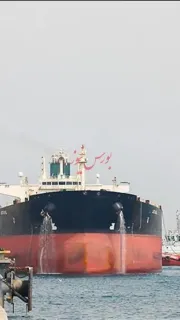
Saudi Arabia, Turkey and Pakistan Sign Trilateral 'Mecca' Defense Pact
Saudi Crown Prince Mohammed bin Salman, Turkish President Recep Tayyip Erdogan and Pakistani Prime Minister Shehbaz Sharif signed a trilateral defense pact known as the "Mecca Pact" in Mecca on Friday, August 7, 2026 (16 Mordad 1405). According to Al Jazeera and Anadolu Agency, whose coverage was also carried by Reuters, the agreement states that any armed attack against any one of the three states shall be regarded as an attack against them all. The pact was signed amid the US Iran war and the Strait of Hormuz crisis. Iranian President Masoud Pezeshkian said in response to regional tensions that Tehran does not seek war or territorial expansion but will not yield to coercion. Yahya Saree, military spokesman for Yemen's Houthi run armed forces, said the same day that new pacts would not affect the group's siege for siege approach against Saudi Arabia. The trilateral agreement, also reported inside Iran by Donya e Eqtesad, could reshape the security architecture of the Persian Gulf and West Asia amid one of the most severe disruptions to oil shipping through the Strait of Hormuz in decades.
Al Jazeera
UN Security Council Condemns Houthi Attacks on Saudi Arabia and Commercial Shipping
The UN Security Council on Friday, August 7, 2026 (16 Mordad 1405), condemned Houthi missile attacks against Saudi Arabia and commercial vessels, along with unauthorized aircraft landings at Sanaa International Airport and Hodeidah Airport, warning the actions threaten regional security. According to Arab News, Council members said unauthorized landings by Iranian aircraft at Sanaa airport on July 3 and Hodeidah airport on July 13 occurred without Yemeni government authorization, in violation of international civil aviation rules. Council members also condemned Houthi missile attacks on Saudi Arabia since July 13 and on commercial vessels since July 22, and stressed the importance of enforcing Security Council Resolution 2216, which bars arms transfers to the Houthis. The Council urged the Houthis to refrain from further escalation and use existing dialogue channels to reduce tensions, and reaffirmed support for UN Special Envoy for Yemen Hans Grundberg's efforts to reach a negotiated political settlement.
Arab News
Dubai's Emaar Properties Posts 9 Percent Rise in Q2 2026 Profit to $999 Million
Dubai-listed Emaar Properties, developer of the Burj Khalifa, said on Thursday, August 6, 2026 (14 Mordad 1405), that its second-quarter 2026 net profit attributable to shareholders rose 9 percent year on year to AED 3.67 billion ($999 million). According to Zawya, the increase came despite regional geopolitical tensions during the period. The company's net profit for the first half of 2026 reached AED 8.67 billion, according to the report. Emaar, the master developer behind much of Dubai's luxury real estate including the Burj Khalifa, continues to benefit from strong demand in Dubai's property market, though the quarterly profit was lower than the previous quarter.
Zawya
ADNOC Buys 11 Supertankers for $1.3 Billion to Expand Export Fleet
Abu Dhabi National Oil Company (ADNOC), according to Oilprice.com on Friday, August 7, 2026 (16 Mordad 1405), said through its ADNOC Logistics and Services unit that it has acquired five Very Large Gas Carriers (VLGCs) and six Very Large Crude Carriers (VLCCs) for a combined investment of about $1.3 billion. Nine of the vessels (six VLCCs and three VLGCs) were bought on the secondary market and are scheduled for delivery this quarter, entering ADNOC's fleet immediately; the remaining two VLGCs are newbuild vessels acquired through a resale transaction from a Chinese shipyard, with delivery planned for the fourth quarter of 2026. According to the report, ADNOC Logistics and Services now owns more than 340 vessels and charters another 600. The United Arab Emirates has sought to work around Strait of Hormuz restrictions by moving some of its tankers through the strait in "dark mode" with transponders off, and by increasingly offering crude cargoes for loading at Fujairah and at Sohar in Oman, outside the strait.
Oilprice.com
CENTCOM Says Commercial Ships Diverted Under Iran Blockade Reach 51
US Central Command (CENTCOM) claimed, according to Mehr News Agency in a report carried by Ecoiran on Friday, August 7, 2026 (16 Mordad 1405), that its forces have rerouted 51 commercial ships, disabled two vessels, and boarded two more for inspection since the renewed naval blockade of Iranian ports began. CENTCOM added that the guided missile destroyer USS Mason (DDG 87) is operating in regional waters in support of the blockade. The tally CENTCOM has reported has kept climbing in recent days: the count of diverted ships, which stood at 48 in a Thursday, August 6 report, has now risen to 51, while the number of disabled and boarded vessels has held steady at two each. Sahmino does not independently verify these figures and reports them as attributed to CENTCOM's statement. The claim comes as talks between Iran and Oman on reopening the Strait of Hormuz are said to be entering their final stages.
EcoIran, citing Mehr News Agency and CENTCOM
ADNOC: 15 of its ships hit in Strait of Hormuz since start of Ramadan war, three in past week
Abu Dhabi National Oil Company (ADNOC) said in a statement on Friday, August 7, 2026 (16 Mordad 1405), that 15 of its ships have been hit by missiles and drones while transiting the Strait of Hormuz since the war Iranian media call the "Ramadan war" began (late February 2026). ADNOC confirmed three of its vessels were struck in the week ending August 7 alone. According to Nournews, reflected by Donya-e-Eqtesad, the attacks have continued despite the introduction of designated safe routes through the strait, and have mainly targeted ships that stray from the approved corridors. The disclosure comes as Iran and Oman say they are in the final stages of an agreement on Hormuz transit routes, underscoring that the risk to shipping through the waterway has not fully eased even as diplomacy advances.
Donya-e-Eqtesad, citing via Nournews, citing an ADNOC statement
Britain and France Hesitate to Join US-Led Hormuz Naval Coalition
Al Jazeera reported on Friday, August 7, 2026 (16 Mordad 1405), that the United States has spent months trying to build an international naval coalition to escort ships through the Strait of Hormuz, but European allies including Britain and France, who had earlier agreed to lead such a mission in the event of a sustainable truce, now appear reluctant to move forward. A European diplomatic source told the network that a technical level meeting involving more than 30 states on the plan was held on Thursday, August 6, 2026 (15 Mordad). UK Defence Secretary Wes Streeting said Britain is "absolutely aligned" with the United States on "securing maritime freedom and free commercial shipping" in the Strait of Hormuz, but a UK Ministry of Defence spokesperson told Al Jazeera that any operational activity remains contingent on "conditions on the ground and a durable political agreement." Analysts including HA Hellyer of the Royal United Services Institute (RUSI) told Al Jazeera that Britain and France are reluctant to be drawn into confrontation with Iran without clear backing from Gulf partners.
Al Jazeera

UAE Extends Corporate Tax Relief for Small Businesses to End of 2029
The UAE Ministry of Finance said on Friday, August 7, 2026, that under Ministerial Decision No. 131 it has extended the country's small business corporate tax relief programme until December 31, 2029. Businesses with annual revenue of up to three million dirhams (about $816,880) remain eligible for simplified corporate tax compliance requirements. The ministry said small and medium enterprises make up more than 94 percent of the UAE's businesses and contribute more than 60 percent of the country's non oil GDP. The UAE has applied a standard 9 percent corporate tax rate on income above 375,000 dirhams since the financial year beginning June 1, 2023.
The National

Saudi Arabia, Turkiye and Pakistan Formally Sign Trilateral Mecca Defense Pact
Saudi Arabia, Turkiye and Pakistan formally signed a trilateral defense agreement known as the "Mecca Pact" at Al Safa Palace in Mecca on Friday, August 7, 2026 (16 Mordad 1405). The document was signed by Saudi Crown Prince and Prime Minister Mohammed bin Salman, Turkish President Recep Tayyip Erdogan and Pakistani Prime Minister Shehbaz Sharif. According to Ecoiran, citing Hamshahri Online and the three countries' joint statement, the pact aims to strengthen collective deterrence against hostile acts and expand all aspects of defense cooperation. Pakistan's Foreign Ministry said Friday the agreement specifies that an armed attack on any one of the three countries will be treated as an attack on all three. Khabaronline reported that Pakistan's army chief, General Asim Munir, attended the signing. Reuters, citing a Turkish official, reported the pact is purely defensive, is not directed against any specific party, and does not replace other bilateral or multilateral agreements. The signing comes amid ongoing tensions in the Persian Gulf and the Strait of Hormuz that have weighed on energy and gold markets in recent weeks.
Ecoiran
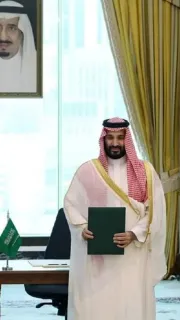
Houthi Attack on Saudi Arabia's Najran Province Kills 11 Civilians as Brent Crude Jumps Above $83
According to Reuters, reported by Oilprice.com on Friday, 16 Mordad 1405 (August 7, 2026), a spokesman for the Saudi led military coalition fighting the Houthis in Yemen said Houthi forces struck Saudi Arabia's southern Najran province, killing 11 civilians. A senior Saudi official cited by Reuters said the Houthis and Iran affiliated Iraqi groups are planning a coordinated attack on Saudi civilian targets, including energy infrastructure and ports. The Houthis have also targeted two Saudi tankers in the Red Sea over the past week, and on Thursday, 15 Mordad (August 6), claimed an attack on Saudi forces in Yemen. The escalation comes after US Treasury Secretary Scott Bessent said earlier last week that a deal was within reach and that the Strait of Hormuz could reopen as early as Wednesday, 14 Mordad (August 5), a timeline that has not materialized. Oilprice.com reported that the developments pushed Brent crude back above $80 on Friday, 16 Mordad, trading around $83.80 a barrel, while West Texas Intermediate rose to $78.33. ING commodity analysts wrote in a note that despite clear signs of progress in recent days, the tone of the talks and growing distrust between the US and Iran mean the situation could again go from bad to worse.
Oilprice.com, citing Reuters

Kepler: 21 ships entered the Strait of Hormuz this week as 6 tankers departed
According to Mehr News Agency, reported by both Ecoiran and Donya-e-Eqtesad, ship tracking firm Kepler said on Friday, 16 Mordad 1405 (7 August 2026), that 21 vessels entered the Strait of Hormuz this week while only 6 tankers left it. The Strait of Hormuz is the main route for Persian Gulf crude oil exports, and Kepler has previously published weekly data on shipping traffic through the waterway as one of the indicators of risk in the global oil market. Sahmino has reported on Kepler's earlier weekly figures, which have shown traffic through the strait swinging sharply and repeatedly departing from its pre war pattern. Today's figures, with a marked gap between the number of vessels entering and leaving, once again underline that volatility.
EcoIran, citing Mehr News Agency

UAE Non-Oil PMI Rises to Four-Month High in July as Employment Grows Despite Iran War Fallout
S&P Global said on Wednesday, August 5, 2026 (14 Mordad 1405), that the UAE's seasonally adjusted non-oil Purchasing Managers' Index climbed to 52.7 in July from 50.8 in June, the highest reading since March 2026. David Owen, principal economist at S&P Global Market Intelligence, said the July data signaled a restoration of business confidence and smoother trade flows after the PMI had dropped close to the 50.0 neutral threshold in June. The report said the UAE labor market, which had experienced one of its sharpest contractions since the height of the Covid-19 pandemic in June, returned to growth at the start of the third quarter as firms resumed hiring. Even so, business confidence about future output fell for a third straight month to its lowest level since March, with only 7 percent of firms expecting an upturn over the coming year. New order growth reached its fastest pace since February, and export orders rose for the first time since March. Dubai's PMI also rose in July, to 51.7 from 50.7 in June. The data followed an announcement by the UAE government media office on Tuesday, August 4, 2026 (12 Mordad), citing Federal Competitiveness and Statistics Centre figures, that the UAE economy grew 3 percent year on year in the first quarter of 2026 to 485 billion dirhams ($132 billion), with the non-oil sector expanding 4.8 percent to account for 79.4 percent of the national economy.
The National
Reports: Saudi Arabia, Turkiye and Pakistan Set to Sign Trilateral Defense Pact in Jeddah
Turkish President Recep Tayyip Erdogan arrived in Riyadh on Friday, August 7, 2026 (16 Mordad 1405), for a one day visit to meet Saudi Crown Prince Mohammed bin Salman and Pakistani Prime Minister Shehbaz Sharif, who has been in Saudi Arabia since Thursday alongside Pakistani army chief Field Marshal Asim Munir for a three day visit. According to Al Jazeera, Turkish presidential communications director Burhanettin Duran said the trip would focus on bilateral relations and regional developments, without detailing a formal agenda. Al Jazeera, citing AFP, reported that a source close to the Saudi military said the three countries were set to sign a joint defense agreement in Jeddah on Friday, while a Turkish intelligence source said the pact's foundational terms had already been agreed among the three sides. Al Jazeera said that, if confirmed, such an agreement would likely extend the Strategic Mutual Defense Agreement Saudi Arabia and Pakistan signed in September 2025, which treats an attack on one as an attack on both, into a three way framework with Turkiye; however, none of the three governments had publicly confirmed the report. Al Jazeera said the timing was significant, coming a week after Saudi Arabia unveiled a multinational maritime security coalition to protect shipping through the Red Sea, the Bab al-Mandeb Strait and the Gulf of Aden, and following months of upheaval in the Strait of Hormuz tied to the US and Israeli war on Iran.
Al Jazeera

Trump Set for Phone Call With Saudi Crown Prince on Iran; CBS Says Riyadh Helped Halt Wider US Strike
CBS News reported Thursday, 15 Mordad 1405 (August 6, 2026), citing US officials, that President Donald Trump is set to speak by phone with Saudi Crown Prince Mohammed bin Salman about matters related to Iran. Eghtesad Online, citing ISNA, said the US broadcaster added that Saudi Arabia has played a role in efforts to ease tensions in the Persian Gulf region. CBS News said that after the US pulled back from carrying out a wider strike on Iran late last week, Trump told an event in Las Vegas on Wednesday, 14 Mordad (August 5), that leaders of several friendly countries, including Saudi Arabia, had urged that negotiations be given one final chance. IRNA reported that Iran and the US had earlier reached a memorandum of understanding in Islamabad aimed at easing tensions, which was never implemented.
Eghtesad Online, citing ISNA and سیبیاس نیوز