
Newsroom
Short, verified market news summaries; every item names its source and publication date.
Russia Warns Over US Military Footprint Near Iran Border via Armenia Corridor
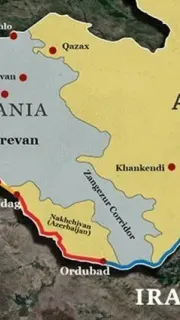
Alexei Shevtsov, deputy secretary of Russia's Security Council, warned about the project known as the Trump Route in Armenia during a speech at the Eastern Economic Forum in Vladivostok. According to Ecoiran, citing ISNA, he claimed the project could pave the way for a US military, private military contractor and intelligence infrastructure presence near Iran's border. The corridor project was announced after Azerbaijani President Ilham Aliyev and Armenian Prime Minister Nikol Pashinyan met with US President Donald Trump in Washington on August 8, 2025. It is intended to connect Azerbaijan to its Nakhchivan exclave through Armenian territory. Shevtsov said US representatives recently entered Armenia's southern Syunik region to review the project's implementation, a development he said has heightened Moscow's concern over growing Western influence in the South Caucasus.
EcoIran, citing Ecoiran via ISNA
Uzbekistan and Iran Discuss Expanding Trade, Investment and Transit Cooperation
According to Uzbekistan's Ministry of Foreign Affairs, First Deputy Foreign Minister Bakhromjon Aloyev met Iran's Deputy Foreign Minister for Trade and Economic Affairs, Hamid Kanbari, in Tehran on August 17, 2026, to discuss expanding bilateral trade, investment and transport cooperation. The two sides emphasized increasing bilateral trade volumes, broadening the range of goods exchanged, and strengthening business-to-business contacts to identify new investment opportunities. Particular attention was paid to improving the efficiency of existing transit routes and increasing cargo transportation volumes between the two countries. Uzbekistan, a double-landlocked country, is seeking to diversify access to international markets, while Iran is working to strengthen its role as a regional transit hub linking Central Asia to markets to the south and west. The talks form part of a broader push by both countries to deepen economic ties at a time when Iran, facing fresh US sanctions pressure, is looking to strengthen economic relations with Central Asian neighbors.
Caspian Post
Tajikistan Turns to Iran to Import 2.55 Million Tons of Oil and Fuels
Tajikistan's Transport Ministry said this week that the country has asked Iran to import oil and petroleum products, as a fuel crisis in Russia has cut off supply from Tajikistan's largest fuel supplier. According to Oilprice, more than a dozen cooperation agreements were signed at a meeting between Tajik and senior Iranian officials in Tehran this week. Per the ministry, Tajikistan has requested to import 2.55 million tons of oil and fuels from Iran, including 2 million tons of crude oil, 150,000 tons of gasoline, 300,000 tons of diesel and 100,000 tons of jet fuel. Transport Minister Azim Ibrohim said more than 80 percent of the country's fuel had previously come from Russia. The request came hours before Donald Trump threatened "tremendous" economic consequences for countries helping Iran.
Oilprice

Kazakhstan Offers Three Year Tax Break to Lure Back Crypto Assets That Left the Country
According to Bourse News, Kazakhstan's government has signed a decree designed to encourage citizens to declare their crypto asset holdings, move them onto regulated domestic platforms, and bring back capital that left the country or went underground about five years ago after authorities cracked down on miners' heavy electricity use. Under the decree, private investors will receive a three year exemption from personal income tax on digital asset trading profits, provided the assets are not linked to fraud, money laundering or unlicensed crypto services. Kazakhstan became the world's second largest bitcoin mining hub after the United States following China's 2021 mining ban, but the sudden influx of miners strained the country's aging power grid. In October 2021, a surge in electricity demand knocked out three power plants in the country's northeast, with miners consuming about eight percent of Kazakhstan's total electricity output at peak. Authorities responded by repeatedly tightening power consumption rules, which pushed a share of miners out of the country; the new decree is now an attempt to bring that same capital back.
Bourse News

Kazakhstan Reroutes Oil Exports Away From the Black Sea After Drone Strikes on Russian Infrastructure
Kazakhstan's Ministry of Energy said on Monday, 19 Mordad 1405 (August 10, 2026), that it is examining rerouting part of its crude oil exports away from its Black Sea terminal toward alternative routes through Azerbaijan, Georgia and Turkey, including the Baku Tbilisi Ceyhan pipeline, Caspian Sea shipments via Azerbaijan, and the Baku Supsa route. According to Oilprice.com, the ministry also said it is boosting eastward crude exports via pipeline to China. Kazakhstan's oil exports have been severely disrupted in recent weeks by Ukrainian drone attacks on Russian export infrastructure. In July alone, flows through the Caspian Pipeline Consortium (CPC) were suspended on three separate occasions for several days at a time. The latest week long shutdown briefly removed more than 1 million barrels a day of Kazakh output from the market.
Oilprice.com

Aliyev and Pashinyan Discuss Peace Deal Anniversary by Phone; Azerbaijani Oil Product Exports to Armenia Raised
According to ecoiran, citing Iran's Mehr News Agency and Anadolu Agency, Azerbaijani President Ilham Aliyev and Armenian Prime Minister Nikol Pashinyan spoke by phone on Sunday, August 9, 2026, marking the first anniversary of the peace agreement the two countries signed on August 8, 2025, to discuss the normalization of relations and expanding economic cooperation. The call also covered the export of Azerbaijani oil products to Armenia and the transit of goods through Azerbaijani territory to Armenia and other destinations.
EcoIran, citing Mehr News Agency and Anadolu Agency

Eurasian Development Bank: 402 transport projects worth $345 billion are under way in 13 Eurasian countries through 2035
The Eurasian Development Bank, in its report on the observatory of transport corridor infrastructure projects, said that as of 1 July 2026, 402 transport projects were under way or planned across 13 Eurasian countries, with a combined value of $345 billion to be pursued through 2035. According to the report, railways take the largest share of investment at about 42.8 percent, close to $150 billion. Russia holds nearly 49 percent of the projects and attracts around $225 billion, more than 65 percent of all registered investment. In Central Asia, 114 projects worth $71.7 billion are under way or planned, more than 21 percent of the total, with Kazakhstan taking over 45 percent of the regional figure; 56 percent of that investment goes to roads and close to 30 percent to rail. China is among the most active foreign investors: projects with Chinese participation exceed $12 billion in value, and more than $7 billion of their financing has come through Chinese financial institutions under the Belt and Road Initiative. The largest single project on the list is the China-Kyrgyzstan-Uzbekistan railway, valued at $4.7 billion. Of the 402 projects, 123 involve private sector participation and 27 are structured as public private partnerships, while more than 62 percent of total project value is funded from national budgets. This competition over corridors bears directly on Iran's standing as a transit route between East and West.
EcoIran, citing بانک توسعه اوراسیا
Georgia's only refinery starts replacing Russian crude with Kazakh and Libyan oil
Black Sea Petroleum, owner of Georgia's Kulevi refinery, said on Monday 3 August 2026 that the plant received and processed Kazakh crude in July and would continue taking Kazakh barrels through August. According to the Interfax news agency, a Libyan cargo is due to arrive between 20 and 30 August under a supply agreement signed on 3 July with an unnamed international company. The Libyan contract runs through the end of 2027 and includes an extension option. The switch is aimed at avoiding European Union sanctions. The EU imposed a transaction ban on Kulevi in its 21st sanctions package on 23 July 2026, targeting the refinery's processing of Russian oil. The restriction carries a six month delay, giving the company until 25 January 2027 to document a complete switch to non Russian supplies. EU officials said the refinery could be removed from the sanctions list once the European Commission verifies compliance. Black Sea Petroleum plans to eliminate Russian crude from the refinery's feedstock by early September. Kulevi began operating in October 2025 with an annual processing capacity of 1.2 million metric tons and processed more than 650,000 tons in the first half of 2026. A planned second phase would raise capacity to 4.5 million tons per year. The refinery had received six Russian crude shipments between October 2025 and May 2026, and cargoes of refined products from Kulevi later reached Spain and Bulgaria, prompting scrutiny over whether Russian crude was entering Western markets after processing in Georgia.
Oilprice.com, citing Interfax
Wildberries to build 260,000 square metres of warehouse space in Kazakhstan by early 2027
Kazakhstan's Trade and Integration Minister Arman Shakkaliyev said at a briefing in Astana on Tuesday, 4 August 2026 (13 Mordad 1405), that the Russian e-commerce company Wildberries is building warehouses in the capital Astana and in Almaty, the country's largest city, with the facilities expected to be commissioned in the first quarter of 2027. He said that about 46,000 square metres of space is currently leased, and that for the first quarter of next year the company is carrying out construction work on about 160,000 square metres in Almaty and 100,000 square metres in Astana. Shakkaliyev added that construction of Wildberries' warehouse facilities in Kazakhstan has been under way for several years, and that the projects form part of the company's expansion in the Kazakh market.
Anadolu Agency

Tajikistan says the Dushanbe to Tehran transit corridor via Kabul enters pilot phase within a month
Tajikistan's transport ministry has announced that the pilot phase of the Dushanbe, Kabul and Tehran transit corridor will begin within the next month. The announcement was reported on Sunday 2 August 2026. According to Tajik officials, once the route is active, commercial goods moving between Tajikistan and Iran will pass through Afghan territory, opening the way for higher trade volumes and wider economic cooperation among the three countries. The corridor has been pursued since Tajik, Iranian and Afghan representatives signed a trilateral agreement in the Iranian city of Mashhad. Under that agreement, the three sides committed to forming a joint working group, reducing transit barriers, improving border services and simplifying goods transfer procedures. Central Asian states have sought in recent years to build new transit routes to cut their dependence on traditional trade corridors and gain wider access to regional markets. Afghanistan, positioned between Central Asia, South Asia and Iran, has the potential to become a significant transit route.
EcoIran
Kazakhstan in talks to process Russian crude at its own refineries
Kazakhstan's Energy Ministry said the country is in talks with Moscow to process Russian crude at Kazakh refineries, under a plan in which some of the resulting fuel would be sold on Kazakhstan's domestic market and a portion sent back across the border to Russia. The news was reported on Thursday 30 July 2026. No volumes, commercial terms or specific refineries have been named, and Kazakhstan's Energy Ministry said market participants would decide where the products go. The ministry has also not said how much spare capacity it holds or how much fuel could be returned to Russia. Kazakhstan had already begun supplying some refined products to Russia. The backdrop is a sharp fall in Russian refining capacity. Russia's operating refining capacity is now estimated at about 3.91 million barrels per day, roughly 1.4 million barrels, or 26%, below the year-earlier average, following Ukrainian strikes on refining facilities including the Omsk refinery, Russia's largest, located close to the Kazakh border.
Hydrocarbon Processing
China's trade with Central Asia rises 6.5% to $52.94 billion in the first half of 2026
According to data from the General Administration of Customs of the People's Republic of China, the country's trade turnover with Central Asian states rose 6.5% year on year in the first half of 2026, climbing from $49.70 billion in the first half of 2025 to $52.94 billion. The figures were reported on Thursday, 30 July 2026 (8 Mordad 1405). The same data show notable growth in China's trade with Kazakhstan and Uzbekistan, the region's two largest economies, as well as with Tajikistan. Trade volumes with Kyrgyzstan and Turkmenistan fell over the period. The numbers matter to Iranian market participants because Central Asia is simultaneously a transit route and a neighbouring market on Iran's northern flank, and China's expanding commercial share there shapes the competitive balance along the northern and eastern corridors.
OilPrice.com
Kazakhstan says it is in talks with Moscow to process Russian oil at Kazakh refineries
Kazakhstan said on Thursday, 30 July 2026, that it is in talks with Moscow to process Russian oil at Kazakh refineries, with part of the resulting fuel sold on Kazakhstan's domestic market and part sent back across the border to Russia. No volumes, commercial terms or refineries have been named, and Kazakhstan's Energy Ministry said market participants would decide where the products go. Ukraine has spent months attacking Russian refineries, storage sites, export terminals and other oil infrastructure. The latest round included the Omsk refinery, Russia's largest, located deep in Siberia near the Kazakh border. The damage has created fuel scarcity in several Russian regions, and on Thursday the Russian government extended its restrictions on gasoline and diesel exports through 31 January 2027. Kazakhstan had already begun supplying some refined products to Russia, and processing Russian crude would widen that workaround, although its Energy Ministry has not said how much spare capacity it holds. No deal has been concluded. The point is that Russia is not short of crude oil, it is short of working refineries. The arrangement would do little to loosen the global diesel market, because fuel kept in Kazakhstan or shipped back to Russia will not reach other buyers, in a market already tight after refinery outages in Russia and West Asia.
Oilprice
Iran and Armenia prepare a draft comprehensive transit memorandum
Iran's Road Maintenance and Transportation Organization said in a report published early on Thursday, 30 July 2026 (8 Mordad 1405) that a draft comprehensive memorandum of understanding has been prepared following a transport meeting in Armenia and talks at ministerial level between the two countries. Reza Akbari, deputy roads and urban development minister and head of the organization, said the draft focuses on infrastructure development, removing obstacles to border crossings, reducing or eliminating road tolls, and increasing capacity to handle transit fleets in both countries. Akbari said opening parallel corridors in the region and fully activating the Iran, Armenia and Georgia corridor could raise the level of trade exchanges significantly. The meeting was attended by representatives of the Foreign Ministry, the international affairs centre of the Ministry of Roads and Urban Development, and the organization's transit and international transport office. A deputy at Armenia's Ministry of Territorial Administration and Infrastructure reported progress on infrastructure projects and said a further specialist meeting between officials of the two sides will be held in the near future to review the proposals in the document, with results to be announced through diplomatic channels.
Eghtesad Online, citing IRNA
Iran and Turkmenistan to form a joint committee to implement agreements, with transport, gas and electricity on the agenda
Farzaneh Sadegh, Iran's minister of roads and urban development, said during a visit to Turkmenistan that the two countries have agreed to form a committee under their joint economic cooperation commission to follow up continuously on issues raised by both sides and prepare the ground for putting joint agreements into effect. The report was published on Tuesday 6 Mordad 1405 (28 July 2026). She said the visit included meetings with the president of Turkmenistan, the transport minister, the foreign minister and the Turkmen chair of the joint economic cooperation commission. The topics reviewed covered improving the quality and size of transport fleets, developing infrastructure across all transport sectors, and matters relating to energy, gas and electricity. Turkmenistan is one of Iran's gas and transit partners in Central Asia, and its overland routes form part of the north to south corridors. Gas agreements between the two countries in recent years have largely taken the form of gas swaps to third countries.
Mehr News Agency
Iran and Turkmenistan agree to form a joint committee to implement economic accords
Iran's minister of roads and urban development said on Tuesday 28 July 2026 that during a visit to Turkmenistan it was agreed to form a committee under the two countries' joint economic cooperation commission, to follow up agreed items and prepare the ground for putting them into effect. According to the Iranian official, the two sides stressed the development of economic, commercial and international cooperation, the strengthening of the joint commission, and the expansion of relations on the basis of good neighbourliness and mutual respect. No new figures on bilateral trade volumes or specific contracts were given in the announcement. Turkmenistan is one of Iran's Central Asian land neighbours and one of the transit corridors on the country's northern flank. The move to strengthen implementation mechanisms comes as Iran seeks to diversify its trade and transit routes.
Mehr News Agency
Kazakhstan restarts CPC oil exports after a week-long Black Sea shutdown
The Caspian Pipeline Consortium (CPC) reopened its Black Sea marine terminal and Kazakh crude exports resumed on Monday, 5 Mordad 1405 (27 July 2026), after a week-long suspension. The consortium said pipeline operations restarted at 12:28 p.m. Moscow time. The earlier halt followed repeated drone attacks on vessels operating at or near the terminal, which stopped crude intake and tanker loadings. After access to the export system was cut off, Kazakhstan ordered producers to curb output to prevent storage facilities from filling. Industry data reported by Reuters showed Kazakhstan's oil and gas condensate production fell to 133,200 metric tons, or roughly 1 million barrels per day, on Sunday, 4 Mordad 1405, against an average of 2.16 million barrels per day in June. The 1,500 kilometre CPC pipeline carries crude from Kazakhstan's giant Tengiz field across southern Russia to the Black Sea port of Novorossiysk and handles more than 80 percent of the country's crude exports. International producers including Chevron and ExxonMobil rely on the route to move Tengiz output to global markets.
OilPrice.com
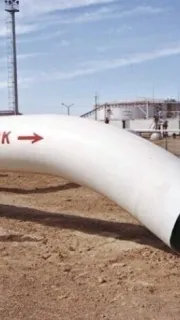
CPC terminal resumes Kazakh crude loadings as two Chevron-chartered tankers load at Novorossiysk
The Caspian Pipeline Consortium, known as CPC, resumed loadings of Kazakh crude at its marine terminal near the Russian port of Novorossiysk on Monday 27 July 2026. Kazakhstan's energy ministry said two tankers chartered by the Tengizchevroil venture, affiliated with Chevron, were loading at the terminal that day. CPC said the pipeline linking the giant Tengiz field to the terminal restarted shortly after noon Moscow time. Loadings had been paused a week earlier after drone attacks on several vessels at the terminal, forcing Kazakh producers to cut output. The route carries about 80 percent of Kazakhstan's crude exports, and European refiners are heavily reliant on its shipments. The resumption lifts pressure from one of three energy chokepoints disrupted at the same time, alongside the Strait of Hormuz and the Red Sea. Per the Bloomberg report carried by Rigzone, exports resuming in earnest depends on a continued absence of attacks in the coming days.
Rigzone
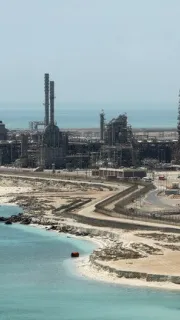
Iran and Armenia announce a new agreement to expand energy cooperation
Iran's oil minister said on Sunday 26 July 2026 that Tehran and Yerevan had reached a new agreement to expand energy cooperation. According to the minister, the agreement covers gas exports, the supply of petroleum products and the formation of a joint working group between the two countries. Armenia is one of Iran's northern neighbours and has for years received Iranian gas under a swap arrangement in exchange for electricity, while part of Iran's overland trade with the Caucasus runs through Armenian territory. No financial value, export volume or implementation timetable was announced for the new agreement.
Eghtesad Online
Drone attacks on tankers disrupt loadings on the Caspian pipeline route that carries about 80 percent of Kazakhstan's oil exports
The Caspian Pipeline Consortium, known as CPC, suspended oil loadings at its terminal at the Russian Black Sea port of Novorossiysk after drone attacks on tankers. According to published reports, the Nordic Zenith, a tanker chartered by ExxonMobil, was hit on 17 July 2026; two further tankers, the ASIA and the NISSOS IOS, were attacked on 19 July, one of which caught fire; and on 20 July a fourth tanker was attacked during loading, disrupting operations again. CPC carries about 80 percent of Kazakhstan's crude exports through a 1,510 kilometre pipeline running from the Tengiz field to Novorossiysk, and the total flow exposed to disruption has been estimated at roughly 1.5 million barrels a day of Kazakh and Russian oil. Kazakhstan said on 21 July that it would stop piping oil to the Black Sea. The disruption was one of the drivers of the weekly jump in crude prices in the week to 24 July and, alongside the situation in the Strait of Hormuz and the Red Sea, marks a third energy export chokepoint under pressure at the same time.
S&P Global Commodity Insights
Iran's energy minister presses to speed up the third Iran Armenia power line and extend the electricity corridor to Georgia and Russia
Iran's energy minister, meeting his Armenian counterpart for territorial administration and infrastructure on Saturday, 25 July 2026, pressed for faster work on the third power transmission line between the two countries, construction of the Meghri hydroelectric plant, and development of an electricity corridor linking Iran, Armenia, Georgia and Russia. Electricity exchange between Iran and Armenia has for years run on a gas for power mechanism: Iran exports gas and receives in return the electricity generated from it. A third transmission line would raise the capacity of that exchange, and the Meghri hydroelectric plant on the Aras river is another joint project between the two countries. The talks came as Iran's southern energy export routes through the Strait of Hormuz face disruption, giving northern overland routes through the Caucasus toward the Georgian and Russian markets greater weight. Fully realising such a corridor requires legal agreements and investment in transmission infrastructure, and is not a short-term prospect.
Eghtesad Online
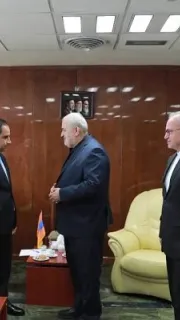
Iran's oil minister proposes redefining the trade model for gas exports to Armenia
Iran's oil minister on Saturday, 25 July 2026, proposed redefining the commercial model for gas exports to Armenia, emphasising turning Armenia into a gas trading intermediary on a scale beyond its own borders. Iran's gas exports to Armenia have for years run on a barter mechanism of gas for electricity: Iran sends gas and receives in return the power generated from it. The new proposal implies moving beyond that bilateral model and using Armenian territory to carry Iranian gas to other markets. The proposal comes as Iran's southern energy export routes through the Strait of Hormuz face serious disruption, making northern overland routes, from the Caucasus through Central Asia, lower-risk alternatives for foreign-currency revenue. Realising such a plan, however, requires legal agreements and transmission infrastructure, and is not a short-term prospect.
Mehr News Agency
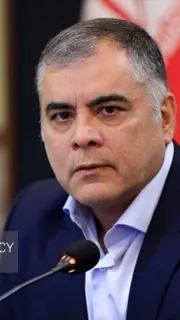
Kazakhstan Halts Black Sea Oil Exports and Cuts Output After Drone Attacks
The Caspian Pipeline Consortium (CPC) suspended oil loadings at the Novorossiysk terminal on Russia's Black Sea coast after Ukrainian drones struck two tankers around 19 to 20 July (28 to 29 Tir). According to sources, five tankers were targeted near the terminal during July. The route carries roughly 80 to 90 percent of Kazakhstan's oil exports and more than 1 percent of global oil supply. Kazakhstan cut its crude output following the attacks and activated alternative routes, including the Baku-Tbilisi-Ceyhan pipeline, to absorb part of the disruption, while urging Ukraine to stop the strikes. The Kremlin said the attacks were aimed at destabilizing the global oil market. Coming on top of the Strait of Hormuz crisis, the disruption adds to supply pressure on the world oil market and thus on prices that feed through to Iran's markets.
The Moscow Times
Georgia's Inflation Edges Up to 5.8% in June as TBC Capital Flags Intensifying West Asia Risk to Outlook
Georgia's National Statistics Office (Geostat) reported on July 3, 2026 that annual inflation rose to 5.8% in June, up slightly from 5.7% in May. Annual core inflation stood at 3.5%, with food and non alcoholic beverages, up 5.6%, the largest contributor to the increase. Investment bank TBC Capital said in an update published July 8, 2026 that renewed West Asia escalation following the collapse of the US Iran ceasefire in early July has increased uncertainty around Georgia's inflation outlook and monetary policy path. As a Caucasus transit and financial hub with trade and tourism links to Iran's near neighborhood, Georgia is directly exposed to the Iran crisis through global energy price volatility.
Georgia Today
Kazakhstan Extends Fuel Export Ban to May 2027 as Hormuz Tensions Rattle Central Asian Energy Markets
Kazakhstan's government announced on July 10, 2026 that it will extend its ban on gasoline, diesel and other petroleum product exports, originally set to expire November 22, 2026, by six months to May 22, 2027. The ban applies even to fellow Eurasian Economic Union members such as Kyrgyzstan and aims to protect domestic fuel supplies amid a gasoline shortage in Russia and renewed US Iran tensions. Separately, Kazakhstan's Energy Minister Yerlan Akkenzhenov said on Wednesday, July 8, 2026 that buyers of Kazakh crude are pushing the OPEC+ producer to deliver maximum available volumes because of restrictions on passage through the Strait of Hormuz. Kazakhstan is using spare capacity on the Baku Tbilisi Ceyhan pipeline to export via the Turkish Mediterranean port of Ceyhan to meet the extra demand. The developments show how the Hormuz crisis, the main artery for Iran's own oil exports, is reshaping energy trade patterns across Central Asia and Russia as well.
Qazinform International News Agency
Azerbaijan Finalizes Gas Supply Agreement With Georgia by Presidential Decree
Azerbaijani President Ilham Aliyev signed a decree in July 2026 (Tir 1405) giving final approval to the Azerbaijan-Georgia natural gas supply agreement, originally signed in Baku on May 18, 2026 (28 Ordibehesht 1405). The decree instructs Azerbaijan's economy and foreign ministries to complete the procedures needed for the agreement to take effect. The deal is part of a broader 20-year gas agreement and energy/transit infrastructure push between the two countries, reinforcing the "Middle Corridor" that competes with traditional transit routes including those through Iran.
Report.az
Turkmenistan-Azerbaijan Joint Economic Commission Meets in Ashgabat
The 9th Turkmenistan-Azerbaijan Intergovernmental Commission on Economic Cooperation met in Ashgabat on Wednesday, July 8, 2026 (17 Tir 1405), with both sides discussing expanded cooperation in trade, energy, transport, logistics and investment. The meeting is part of the Ashgabat Agreement transit network, which links Central Asia through Turkmenistan to Iran's Persian Gulf ports, a corridor whose strategic importance for Iran has grown amid the current war.
News Central Asia
IMF Warns Iran War Threatens Georgia's 5% 2026 Growth as Iranian Tourist Arrivals Fall 49%
The International Monetary Fund said in its Article IV concluding statement that Georgia's economy remains on track for 5 percent growth in 2026, but warned the Iran war could weigh on that outlook through damage to tourism and energy. First-quarter 2026 data showed Iranian visitor arrivals to Georgia fell 49 percent year on year to 13,757, while revenue from Iranian tourists dropped 64 percent to 10 million dollars. Arrivals from Israel also declined 17.5 percent. Galt & Taggart, the investment arm of the Bank of Georgia, cut its 2026 tourism revenue forecast for the country from 5 billion to 4.9 billion dollars.
Business Media Georgia (BM.ge)
Drone Hits Chevron-Chartered Tanker Near Novorossiysk; Kazakh CPC Oil Exports Unaffected
The tanker Yasa Polaris, chartered by Chevron to carry shipments for the Caspian Pipeline Consortium (CPC), was struck by a drone on July 7, 2026 (16 Tir 1405) near the CPC marine terminal off Russia's Black Sea coast, close to the port of Novorossiysk. The vessel, with a capacity of about 160,000 tonnes, was carrying no cargo at the time. Chevron said the crew is safe and no visible hull damage or oil pollution has been reported. The company said the incident has not disrupted Kazakhstan's oil exports. The CPC pipeline carries about 80 percent of Kazakhstan's oil exports and is scheduled to ship around 1.6 million barrels per day of CPC Blend crude in July, down from a planned 1.7 million bpd in June after earlier drone damage to a Russian gas facility forced output cuts.
Baird Maritime
Armenian PM: TRIPP Corridor Will Expand Trade With Iran, Responds to Tehran's Concern Over US Presence
Armenian Prime Minister Nikol Pashinyan said on Thursday, July 9, that implementation of the US brokered TRIPP corridor (Trump Route for International Peace and Prosperity) will significantly expand trade and economic ties between Armenia and Iran and help establish a rail link between the Persian Gulf and the Black Sea. His remarks came a day after Iran's ambassador to Yerevan voiced concern about a potential US presence near Iran's borders under the project. The Armenian government has assured Tehran that the project's implementation will not create any threat or challenge for Iran stemming from a US presence. TRIPP is a transit corridor through southern Armenia, brokered by the United States as part of the broader Armenia Azerbaijan peace process.
Public Radio of Armenia