
Newsroom
Short, verified market news summaries; every item names its source and publication date.
FAO Global Food Price Index Hits Highest Level Since November 2022 in August
The UN Food and Agriculture Organization's (FAO) Food Price Index rose to 133.3 points in August 2026, its highest level since November 2022. According to Ecoiran, intensifying climate risks and disruptions to global trade routes were cited as the main drivers of the increase. A rise in the global food price index can raise the cost of importing staple goods for countries such as Iran and add to domestic food inflation.
Ecoiran

Baltic Dry Index Hits Five-Year High, Up 13.9% on the Week Amid Strong Iron Ore and Coal Demand
The Baltic Dry Index, the global benchmark for dry bulk shipping costs, extended its rally for a third straight session on Friday, September 4, 2026 (13 Shahrivar 1405), rising 4 percent from the previous day to 3,628 points, its highest level since October 2021. Per Trading Economics data, the index has gained 13.9 percent over the past week. Its capesize sub-index, which mainly covers vessels carrying up to 150,000 tonnes of iron ore or coal, jumped 6.4 percent to 6,427 points, its highest since December 2023. The report attributed the surge in shipping rates to strong demand for commodities such as iron ore and coal, combined with tight vessel supply and longer shipping routes caused by geopolitical disruptions. The Baltic Dry Index's all time high remains 11,793 points, set in May 2008. Higher dry bulk shipping costs also affect the cost of exporting metal and mining products, including Iranian steel.
Trading Economics

CENTCOM Says US Destroyed One Iranian Tanker, Disabled Two Others in Response to Missile Fire at US Warships
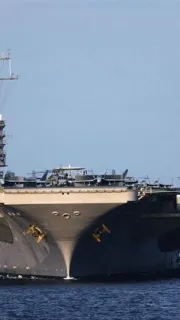
US Central Command (CENTCOM) said on Saturday, September 5, 2026 (14 Shahrivar 1405), that American forces struck three Iranian oil tankers in the Gulf of Oman and near Kharg Island, destroying one outright and disabling two others. CENTCOM described the strikes as a response to ballistic missiles it said Iran's Islamic Revolutionary Guard Corps (IRGC) fired at a US aircraft carrier and a guided missile destroyer in regional waters, claiming both American vessels evaded the attack with no casualties. This account comes from CENTCOM alone; Iran's side had not issued an official statement on the alleged missile launch at US warships at the time of writing. CENTCOM commander Admiral Brad Cooper said in a statement: "Let the message to the IRGC be clear: If you shoot at two of our ships, we will impose an even higher economic cost, taking out three of yours." According to Al Jazeera, the US described the tankers as part of a multibillion dollar network financing the IRGC and its regional proxies. Al Jazeera also reported that the six month old conflict has killed 18 US service members so far, and that negotiations to end it have collapsed. Iran's free market dollar rate in Tehran topped 227,000 tomans as the news spread today, while the Tehran Stock Exchange's main index (TEDPIX) rose more than 1.5 percent.
Al Jazeera
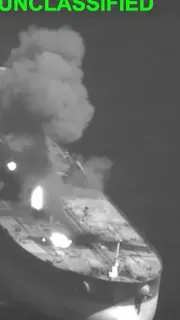
Iranian Tanker Near Kharg Island Struck by 4 US Projectiles
According to Tasnim, carried by Donya-e-Eqtesad, a small Iranian tanker was struck by a US military missile attack near Kharg Island's anchorage, about six miles from the island, on the morning of Saturday, September 5, 2026 (14 Shahrivar 1405). Per the report, the vessel was hit by 4 projectiles fired by US forces, and several explosions were heard from the direction of the Persian Gulf and Kharg Island shortly before the report was published. Local sources said the incident caused no casualties and that the tanker's crew were evacuating the vessel. Daneshjoo News Agency, carried by Khabaronline, confirmed the incident by publishing images of the struck tanker and of Kharg Island's condition afterward. Kharg Island is Iran's main crude oil export terminal, and prior reports estimate roughly 90 percent of the country's crude exports are loaded there, so any incident in the area can affect oil and currency markets. Further details on the extent of damage have not yet been released by responsible authorities.
Tasnim, citing Tasnim, via Donya-e-Eqtesad
Average US Diesel Price Hits Record High Amid Escalating Tension in West Asia
According to Ecoiran, citing ISNA, amid intensifying disruption to global energy supply following renewed fighting in West Asia and the ongoing war in Ukraine, the average US diesel price hit a record high of 5.85 dollars a gallon on Friday, September 4, 2026 (13 Shahrivar 1405), based on data from the American Automobile Association (AAA). Per the report, given a sharp decline in diesel inventories, prices could rise further in the coming days, particularly as US farm states enter their harvest and planting season and demand for diesel increases.
Ecoiran, citing ISNA
Agriculture Ministry Exempts 24 Products Including Shrimp and Cucumber From Export Ban
According to Boursenews, the Agriculture Ministry's Trade Development Deputy sent the 17th list of tariff codes exempted from Iran's agricultural export ban to the Trade Development Organization, based on a letter dated 9 Shahrivar 1405 (August 31, 2026). Under the letter, 24 tariff codes covering chapters one through 24 of the export and import regulations book, including various fish and fish fillets, tilapia, shrimp, chicory, cucumber, asparagus, eggplant, various melons, palm fruit pits, rock candy, yufka bread, pizza and cold sauces, were removed from the export ban list. Following the letter, the Trade Development Organization's export and import regulations office notified Iran's Customs Administration of the list so that exports of these items would be permitted until further notice. This is the 17th such list issued as part of ongoing correspondence on exceptions to the agricultural export ban.
Boursenews
Oil Climbs in Global Markets, on Track for Biggest Weekly Gain Since Mid July
According to Boursenews, citing Reuters, oil prices rose in global trading on Friday, 13 Shahrivar 1405 (September 4, 2026); Brent crude futures gained 0.2 percent to 95.67 dollars a barrel and US West Texas Intermediate gained 0.3 percent to 91.56 dollars a barrel. Since the start of this week, Brent has risen 7.1 percent and WTI 9.8 percent, putting both on track for their biggest weekly gain since the week ending July 20, a rise linked to intensifying military tension between the United States and Iran and concern over supply risk in West Asia. Per the Reuters report, two Iraqi energy officials said Wednesday that Iraq's oil exports rose from about 1.35 million barrels a day in July to about 2.34 million barrels a day in August. Shipping trackers Kepler, Vortexa and TankerTrackers estimate that oil flows through the Strait of Hormuz remain about 6 to 8 million barrels a day below pre war levels, a figure that contradicts a claim by US President Donald Trump that traffic has returned close to normal, near 18 million barrels a day; traders have dismissed that claim.
Boursenews, citing Reuters
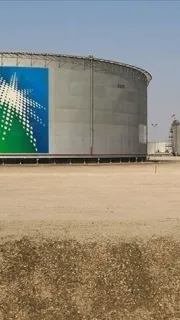
How Global Oil Markets Absorbed the Shock of the Strait of Hormuz Disruption
According to an Ecoiran analysis published Friday, 13 Shahrivar 1405 (September 4, 2026), disruption to shipping through the Strait of Hormuz, which before the war carried about 20 million barrels of oil a day, or 20 to 25 percent of the world's seaborne oil and gas trade, was initially seen as one of the biggest energy crises in a generation, with some forecasts warning oil prices could reach 150 to 200 dollars a barrel. Per the report, prices did cross 126 dollars a barrel but did not rise as much as those forecasts suggested. Ecoiran writes that strategic and commercial reserves covered about 9 million barrels a day of the shortfall, the International Energy Agency coordinated the release of about 400 million barrels from global stockpiles, the United States raised its own exports to a new record, and alternative Saudi and Emirati pipelines to Red Sea ports and Fujairah covered about 6 million barrels a day of the disrupted flow. China's crude oil imports also fell by about 4 to 5 million barrels a day, reaching their lowest level in roughly eight years, easing significant pressure on the global market.
Ecoiran
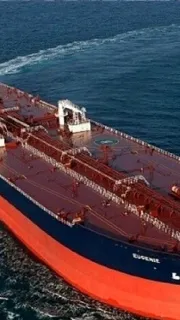
South Korea's Presidential Office Denies Reports of Troop Deployment to the Strait of Hormuz
South Korea's presidential office denied media reports on Friday, 13 Shahrivar 1405 (September 4, 2026), according to Donya-e-Eqtesad, that the country had decided to send military forces to the Strait of Hormuz, saying no such decision has been made so far. The denial came after outlets including Ecoiran had earlier reported on a plan for South Korea to deploy troops or take over minesweeping responsibility in the Strait of Hormuz, pending a vote in the country's parliament, while Al Jazeera reported Seoul was weighing a "contribution" to security in the strait under pressure from the United States. South Korea is heavily dependent on oil imports that pass through the Strait of Hormuz, and any decision on a military presence there could affect the country's energy security risk.
Donya-e-Eqtesad
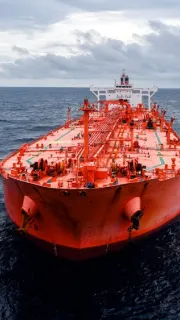
South Korea to bring Strait of Hormuz deployment plan to parliament
South Korean media, citing government and military sources, reported that Seoul is preparing to send equipment and forces to the Strait of Hormuz. According to Ecoiran, citing Tasnim and Reuters, the South Korean government intends to deploy the equipment before the end of 2026 and has begun seeking parliamentary approval. Options under review include sending a maritime patrol aircraft, a logistics support ship, or a mine reconnaissance and clearance unit, and Seoul is also consulting on the scale and nature of possible participation alongside the United States, Britain and France. South Korea's presidential office said on Thursday, September 3, 2026, that the deployment is not yet certain. The decision comes as US President Donald Trump has been pressing South Korea to join the US military presence in the Persian Gulf.
Ecoiran, citing Tasnim and Reuters
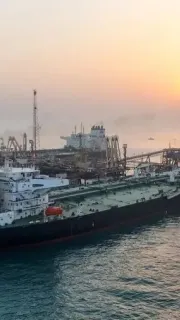
CENTCOM says it rerouted more than 80 commercial ships in the Strait of Hormuz, stopped three
US Central Command (CENTCOM) said on Thursday, September 3, 2026, that it has rerouted more than 80 commercial vessels in the Strait of Hormuz to enforce a naval blockade against Iran. According to Al Jazeera, reported by Donya-e-Eqtesad, CENTCOM also said it stopped three ships and inspected two others to ensure compliance with the blockade. The statement is the latest CENTCOM notice on the Strait of Hormuz, the key export route for Persian Gulf oil, amid ongoing military tension between the United States and Iran. CENTCOM did not release further details on the identity of the stopped or inspected vessels.
Donya-e-Eqtesad, citing Al Jazeera
Trump Claims Oil Flow Through Strait of Hormuz Has Returned to Normal
US President Donald Trump said in a post on Truth Social on Thursday, September 3, 2026 (12 Shahrivar 1405) that the volume of oil transiting the Strait of Hormuz, previously about 20 million barrels a day, has returned to normal. According to Donya-e-Eqtesad, Trump also reposted a Washington Post report about a possible Syrian plan to serve as an alternative route to the strait, calling it great. The claim came hours after ISNA, citing Reuters, reported that preliminary data from shipping tracker Kepler showed only four cargo vessels transited the Strait of Hormuz on Wednesday, September 2, against a 10 day average of about 13 vessels.
Donya-e-Eqtesad
OPEC+ Likely to Keep October Oil Output Policy Unchanged
According to Bourse News, citing Reuters, three sources familiar with the matter said OPEC+ is likely to keep its October oil output policy unchanged at Sunday's meeting, as the group completed the unwinding of one layer of voluntary supply cuts this month and is now focused on 2027 quota negotiations. The meeting involves seven core members: Saudi Arabia, Russia, Iraq, Kuwait, Algeria, Kazakhstan and Oman. The report said the US military campaign against Iran continues to disrupt oil exports through the Strait of Hormuz, reducing OPEC+'s influence over prices and market share. Consultancy DeGolyer and MacNaughton is expected to deliver its review of members' production capacity, used to set 2027 quota baselines, to the group by the end of this month. Bloomberg also reported last week that Venezuela is weighing an exit from OPEC.
Bourse News, citing Reuters
China Has Bought Up to 90 Percent of Iran's Oil Exports Since War Began
According to Al Jazeera, China, Iran's largest trading partner, has bought up to 90 percent of Iran's crude oil exports since the US and Israeli war on Iran began in late February 2026, even though Iranian crude accounts for only about 2 percent of China's overall energy mix. China's major state owned refiners, such as Sinopec and PetroChina, have shunned Iranian oil for years, leaving the trade largely to independent "teapot" refiners with limited exposure to the dollar based global financial system. Al Jazeera also reported that Chinese President Xi Jinping held a brief meeting with Iranian President Masoud Pezeshkian on the sidelines of the Shanghai Cooperation Organisation summit in Bishkek, Kyrgyzstan, before again calling for a diplomatic resolution to the Iran war during his first visit to Egypt in a decade on Tuesday. A summit between the Chinese and US presidents is also scheduled for September 24 (2 Mehr 1405).
Al Jazeera
Kepler: Ship Transits Through Strait of Hormuz Fall to 10 Day Low
According to ISNA, citing Reuters, preliminary data from shipping company Kepler showed only four cargo vessels transited the Strait of Hormuz on Wednesday, September 2, 2026 (11 Shahrivar 1405), against a 10 day average of about 13 vessels. Brent crude fell 0.62 percent to $95.04 a barrel and US West Texas Intermediate fell 0.42 percent to $90.63 a barrel on Wednesday, after both benchmarks hit their highest levels since July 24 on Tuesday, September 1 (10 Shahrivar). Sahmino's own live data showed Brent trading around $94.9 a barrel at 11:12am Thursday, September 3 (12 Shahrivar), consistent with the pullback reported by ISNA. Two Iraqi energy officials also told Reuters on Wednesday that Iraq's oil exports rose from about 1.35 million barrels per day in July to about 2.34 million barrels per day in August, and are expected to rise further in September amid steep discounts and Iran's agreement to let Iraqi vessels transit the Strait of Hormuz.
ISNA, citing Reuters
European Natural Gas Prices Hit Three Year High as TTF Contract Reaches €71.70 per Megawatt Hour
According to Eco Iran, citing the German business publication WirtschaftsWoche, European natural gas prices rose on Tuesday, 1 September 2026 (10 Shahrivar 1405), after reports of an attack on tankers in the Strait of Hormuz, with the front month TTF futures contract on the Amsterdam exchange climbing nearly 3 percent from the previous day to €71.70 per megawatt hour, the highest level since 2022, when prices briefly topped €300 per megawatt hour after Russian gas supplies were halted following the war in Ukraine. Norman Liebke, a commodities analyst at Germany's Commerzbank, said a one month extension of Qatari LNG delivery restrictions was a key driver of the increase. According to the comparison portal Verivox, gas prices for new customers in Germany have also risen noticeably, now standing at about 11 euro cents per kilowatt hour. Prices have climbed almost 40 percent over roughly the past three weeks, a rise tied to concern over a possible closure of the Strait of Hormuz as well as relatively low levels of European gas storage.
Eco Iran

China Draws on 1 to 1.4 Billion Barrel Oil Reserves to Cushion Global Market from Hormuz Crisis
According to Eco Iran, China imported about 400 million fewer barrels of crude over the past six months compared with the same period in 2025, offsetting part of the shortfall by drawing on its strategic reserves, a move the report says has played a role similar to OPEC+'s past market balancing function and has helped keep the current Strait of Hormuz tension from driving a fuller spike in oil prices. Estimates put China's total oil reserves at roughly 1 to 1.4 billion barrels, equivalent to about 120 days of the country's imports. Beijing has invested heavily in oil storage in recent years to reduce its vulnerability to disruptions along the sea routes that carry its crude, including the Strait of Hormuz and the Strait of Malacca. Expanding renewable energy and greater reliance on coal have also reduced the country's dependence on oil imports. The reserves are not unlimited, however, and a prolonged crisis would be a real test of China's economic resilience. As Iran's largest oil buyer, China's behavior has a direct bearing on the outlook for Iran's oil exports and on global demand.
Eco Iran
NIOC CEO: Iran Ranks World's Top Gas Discoverer With 17.5 Trillion Cubic Feet Found Since 2025
Hamid Bovard, CEO of the National Iranian Oil Company, said, according to Tasnim News Agency as carried by Donya-e-Eqtesad on Wednesday, September 2, 2026 (11 Shahrivar 1405), that Iran has recorded the world's largest volume of gas discovered since 2025 through a combined 17.5 trillion cubic feet found at the Takhteh gas field in southern Fars province and the Pazan field, putting the country in first place worldwide for gas exploration over that period. Bovard said drilling at the Takhteh gas field led to the discovery of 7,500 billion cubic feet of gas in place and 5,500 billion cubic feet of recoverable gas. He added that NIOC is shifting part of its exploration management activity toward the country's northern and northwestern regions, given their hydrocarbon potential, by adding exploration rigs and carrying out seismic survey projects, to help offset part of the country's energy imbalance using newly discovered resources.
Donya-e-Eqtesad, citing Tasnim
Foreign Policy: Ship Traffic Data Contradicts Claim That Hormuz Mines Are Fully Cleared
Foreign Policy magazine reported that despite US President Donald Trump's August 25, 2026 (3 Shahrivar 1405) Truth Social post claiming all mines in the Strait of Hormuz had been removed or detonated, daily ship transits through the strait remain around 30, versus a pre-war daily average of about 129. Per Donya-e-Eqtesad, citing Foreign Policy, most transiting vessels are choosing routes hugging the Iranian and Omani coasts rather than the strait's official mid-channel shipping lane, behavior the magazine said shows the shipping industry still does not trust Washington's claim. CENTCOM commander Brad Cooper had earlier said US forces cleared international shipping lanes of Iranian mines, without claiming every mine in the area had been cleared.
Donya-e-Eqtesad, citing فارن پالیسی
US Diesel Prices Hit Highest Level Since April
The American Automobile Association (AAA) reported the US retail diesel average reached $5.688 a gallon on Tuesday, September 1, 2026 (10 Shahrivar 1405), a figure Bloomberg, cited by Donya-e-Eqtesad, said was only slightly below April's record, itself the highest level since mid-2022. Goldman Sachs analysts wrote in a note dated August 28 (6 Shahrivar) that strikes on Middle East and Russian refineries have further tightened global refining capacity that was already under strain. Earlier this week, US President Donald Trump asked domestic refiners in a closed-door meeting to boost diesel and gasoline output.
Donya-e-Eqtesad, citing Bloomberg
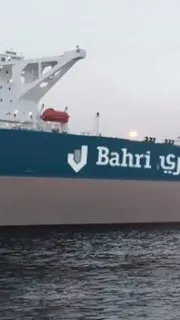
Saudi Shipping Firm and UK Maritime Body Confirm Attack on VLCC Sedr in Strait of Hormuz
Saudi Arabia's national shipping company, Bahri, said on Wednesday, September 2, 2026 (11 Shahrivar 1405), that its VLCC tanker Sedr was struck by unidentified projectiles and caught fire while transiting the Strait of Hormuz near Khasab, Oman, at 23:40 local time on Monday, August 31 (9 Shahrivar), killing two Filipino crew members. Per Ecoiran, citing Hamshahri Online, the UK Maritime Trade Operations (UKMTO) body also confirmed the incident, saying three projectiles struck the vessel. Sedr, with a capacity of about two million barrels of crude, is one of Bahri's very large crude carriers (VLCCs).
EcoIran, citing Hamshahri Online
Iran's First Methanol Deposit Certificate Begins Trading on Energy Exchange
Iran Energy Exchange hosted the country's first trading of a methanol commodity deposit certificate, tied to Sabalan Petrochemical, on Wednesday, September 2, 2026 (11 Shahrivar 1405). Per Boursenews, Mohammad Nazifi, the exchange's CEO, said at the launch ceremony that this marks the first time a methanol deposit certificate has joined the exchange's roster of commodity deposit certificates. Sabalan Petrochemical's CEO said the exchange's backing has allowed the company to begin supplying methanol on the export ring, which is expected to provide useful working capital for the firm. Exchange officials said certificates for other petrochemical products are expected to follow.
Boursenews
LNG Carriers Still Avoiding Strait of Hormuz Despite Resumed Oil Tanker Traffic
Unlike oil tankers, whose transits through the Strait of Hormuz have increased, LNG carriers have still not resumed their route through the waterway. Donya-e-Eqtesad reported the halt has kept LNG prices near their highest levels of the military-tension period. Reuters, via gCaptain (September 2, 2026), reported Qatar and the UAE have carried out several ship-to-ship LNG cargo transfers outside the Strait of Hormuz in recent weeks to deliver cargoes to India and Japan, involving vessels including QatarEnergy's GasLog Shanghai and Savannah and ADNOC's Mraweh. Reuters reported Asian spot LNG prices at their highest level in five months.
Donya-e-Eqtesad
US Treasury Secretary: Iran in 'Economic Death Spiral,' Does Not Control Hormuz
US Treasury Secretary Scott Bessent said on the sidelines of a G20 finance ministers' meeting in Asheville, North Carolina (Tuesday, September 1, 2026) that Iran's economic collapse has entered an "acceleration phase" and that Iran does not control the Strait of Hormuz, noting about 17 million barrels of crude passed through the strait on Monday, August 31. Bessent also said new US sanctions targeting Iranian financial institutions, as well as aircraft leasing firms and other entities tied to the IRGC, would be announced in the coming days, and predicted the strait's strategic importance would sharply diminish within two years as Gulf states complete pipeline bypasses. The remarks were reported by Gulf News, Oilprice.com, and Reuters (via gCaptain).
Gulf News
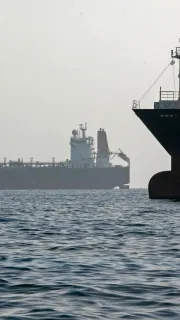
Venezuela's parliament ratifies unprecedented 100 year oil deal with the United States
Venezuela's National Assembly ratified a bilateral energy agreement with the Trump administration in an extraordinary session on Tuesday, September 1, 2026 (10 Shahrivar 1405), ahead of a planned visit to Caracas by US Energy Secretary Chris Wright. According to ISNA, citing Reuters, the deal gives the American company North American Blue Energy Partners rights to develop 17 Venezuelan oil fields under a 100 year lease, covering roughly one fifth of the country's oil reserves. Donald Trump called the deal the biggest oil agreement in history on August 28 (6 Shahrivar), and Venezuela's interim President Delcy Rodriguez the same day called it a turning point in relations with the United States. She said the project has the potential for 65 billion barrels of oil, more than $100 billion in investment, and more than $209 billion in tax revenue for the government.
Donya-e-Eqtesad, citing ISNA and Reuters

Axios: US targets two Iranian tankers with missiles for the first time
Axios reporter Barak Ravid, citing US officials, reported that the US military targeted two Iranian oil tankers during a fresh wave of strikes on Tuesday, September 1, 2026 (10 Shahrivar 1405). According to the report, the tankers were anchored near the Iranian coast, north of the US naval blockade line, and were struck in their engine rooms by missiles fired from American drones. A US official told Axios this was the first time the US had targeted Iranian tankers under the Trump administration's new "tanker for tanker" policy, adopted to increase pressure in response to Iranian attacks on ships transiting the Strait of Hormuz. Both Ecoiran and Donya e Eqtesad independently carried the Axios report, citing Tasnim news agency.
EcoIran, citing آکسیوس
Brent crude nears $95 a barrel as Iran-US tensions escalate
Global oil prices rose on the morning of Wednesday, September 2, 2026, following a fresh wave of US strikes inside Iran and Iran's military response against neighboring countries. According to Donya e Eqtesad, Brent crude in European markets reached $94.65 a barrel around 06:45 Tehran time. Oilprice.com reported Brent at $95.44, up 0.83 percent on the day, around the same time, consistent with the $95.42 reading on Sahmino's own Brent price page at 07:46 Tehran time. The increase coincided with a report from Axios that the US had struck two Iranian oil tankers, and with the continuing standoff in the Strait of Hormuz.
Donya-e-Eqtesad
Iran's Oil Exports Stall for Seven Weeks, the First Time on Record
Per Reuters, published Tuesday, September 1, 2026 (10 Shahrivar 1405), for the first time on record Iran has gone about seven weeks without shipping meaningful crude exports through the Strait of Hormuz to China, its only major remaining oil customer, a result analysts attribute to the US naval blockade rather than sanctions alone. Tanker-tracking data from Kpler, Vortexa and TankerTrackers.com show no Iranian crude cargo has cleared Hormuz for China since the US reinstated its blockade on July 14 as part of the two countries' six-month conflict; Iran can now only sell from floating storage in Asian waters. Iran's crude and condensate loadings fell to roughly 220,000 to 255,000 barrels per day in August, down from about 740,000 barrels per day in July and nearly 2 million barrels per day in March. A Kpler analyst said the export collapse could push Tehran to finance spending by printing money, risking even higher inflation; the IMF estimates Iran's inflation this year at nearly 70 percent, the world's third highest after Venezuela and Sudan.
Reuters, citing یاهو فایننس

Parliament's National Security Committee Ties Strait of Hormuz Transit to War Compensation Payments
Hassan Ghashghavi, spokesman for parliament's National Security and Foreign Policy Committee, said Tuesday, September 1, 2026, that the committee approved Article 7 of the "Strategic Action for Security and Sustainable Development in the Strait of Hormuz" bill. Under the article, any country, organization or entity that caused Iran damage during the war must agree on compensation terms with the government or be denied passage through the Strait of Hormuz. The committee also approved Note 2 of Article 5, requiring bank guarantees and insurance for transit through the strait, and Article 6, which sets a mechanism for service and insurance tariffs in the waterway. Ghashghavi said the measures still need approval from parliament's full floor and then the Guardian Council before becoming law.
IRNA
Two Tankers Carrying Saudi Oil Struck by Projectiles in the Strait of Hormuz
Early Tuesday, September 1, 2026 (10 Shahrivar 1405), Reuters reported, citing maritime risk firms Kpler and Marisks, that two supertankers carrying Saudi crude oil were struck by unidentified projectiles in the Strait of Hormuz. The Saudi VLCC "Sidr" was hit first by three projectiles, and just minutes later a second vessel, the Liberian-flagged "Senegal Prosperity" operated by South Korea's Sinokor, was also struck by three projectiles about 17 nautical miles east of Khasab, Oman. The UK Maritime Trade Operations agency (UKMTO) confirmed an incident at the same coordinates, saying crews on both ships were safe and no environmental damage had been reported. Each tanker was carrying roughly 2 million barrels of Saudi crude loaded at the Ju'aymah terminal. The incident came amid renewed military tension between Iran and the United States in the region.
Reuters, citing gCaptain
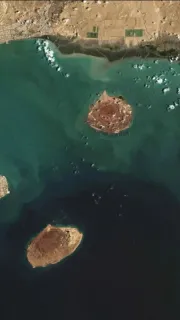
Transport Minister: Construction Begins on Bandar Imam Oil Storage Tanks With a 2,380 Billion Toman Investment
Construction began Tuesday afternoon, September 1, 2026 (10 Shahrivar 1405), on an oil-products storage project at Bandar Imam Khomeini port, attended by Iran's Minister of Roads and Urban Development, the Khuzestan governor and provincial ports officials. Per ecoiran, citing Mehr News Agency, initial investment is estimated at 2,380 billion tomans, with 71,000 cubic meters of nominal tank capacity across 11 main tanks plus one safety tank: three dedicated mazut tanks (32,000 cubic meters), four dual-use mazut and light-product tanks (17,000 cubic meters), and four light-products tanks (21,000 cubic meters). The facility is expected to create 100 jobs and aims to boost the port's competitiveness and expand transit infrastructure for petroleum derivatives.
EcoIran, citing Mehr News Agency
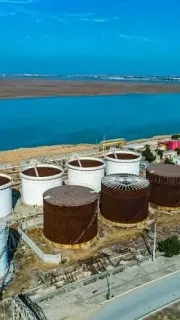
Diesel Price for Non Major Mines Set at 8,070 Tomans per Liter for the Shahrivar to Aban Period
Under a new directive from Iran's National Iranian Oil Products Distribution Company, reported by Ecoiran on Monday, 9 Shahrivar 1405 (August 31, 2026), the price of diesel for non major mines from the start of Shahrivar through the end of Aban 1405 (roughly September through November 2026), within the set consumption quota, will be 8,070 tomans per liter, before value added tax and duties. The rate applies only within each mine's set consumption ceiling, and major mines are excluded from it. According to Ecoiran, at this rate, 100,000 liters of diesel costs a mine about 807 million tomans and 1 million liters about 8.1 billion tomans in base cost before tax. Ecoiran wrote that while such costs are manageable for large mining operations, they can meaningfully cut into the margins of small and medium sized mines; if the official fuel quota does not match a mine's actual operational needs, operators sourcing diesel on the open market also face the risk of being accused of fuel product smuggling.
Ecoiran
Brent Crude Tops 91 Dollars as Fears of US Iran Escalation Mount
Global oil prices rose on Tuesday, 10 Shahrivar 1405 (September 1, 2026), according to Al Jazeera, on fears of escalation in West Asia following the first direct exchange of fire between the US and Iran in more than a month. Brent crude, the global benchmark, rose more than 1 percent to top 91 dollars a barrel, extending a gain of more than 2.5 percent the previous day; the November delivery Brent contract stood at 91.44 dollars a barrel as of 05:00 GMT, up from just over 88 dollars at Monday's close. Sahmino's own price data at 11:28 Tehran time that day showed Brent at 91.76 dollars, up 1.4 percent on the day. The rise came alongside US strikes on Iran's Larak Island and retaliatory Iranian attacks on two bases used by US forces in Jordan. US President Donald Trump, in a Monday Fox News interview, responded to Iran's attacks on the Jordan bases by saying the US would hit back hard. The UK Maritime Trade Operations centre also reported that a tanker crossing the Strait of Hormuz was struck by three unidentified projectiles, with no casualties reported and no group claiming responsibility. Brent has traded in the 86 to 91 dollar range since peaking at nearly 94.40 dollars on 30 Mordad (August 21). Saul Kavonic, head of energy research at MST Financial, told Al Jazeera the oil market is increasingly pricing in a protracted no war, no peace scenario, with only partial volumes flowing through the Strait of Hormuz possibly lasting well into 2027.
Al Jazeera

Head of Agricultural Guilds Chamber: Border Wheat Dealers Are Paying Up to 60,000 Tomans, Above the Guaranteed Price
Peyman Alami, head of Iran's Agricultural Guilds Chamber, told Tasnim's economic desk, as carried by Ecoiran on Tuesday, 10 Shahrivar 1405 (September 1, 2026), that the guaranteed wheat purchase price is 49,500 tomans, but dealers across the country are buying wheat at about 38,000 to 44,000 tomans, and in border regions where wheat can be moved out of the country that figure reaches as high as 60,000 tomans. Criticizing the government's delay in paying wheat farmers, he said the delay forces growers to sell their crop to dealers before receiving payment from the state. He said that despite earlier hopes of self sufficiency in wheat supply, guaranteed purchases are running behind projections because of these delays, with about 8 million tonnes bought so far this year. With the new planting season starting in two to three weeks, Alami warned that discouraged farmers, frustrated by delayed payments, could also affect next year's production.
Ecoiran, citing Tasnim

European Gas Prices Jump 5 Percent to Three and a Half Year High as Iran US Tensions Escalate
According to Oilprice.com, Europe's benchmark natural gas price at the Dutch TTF hub jumped 5 percent in early Amsterdam trading on Monday, 9 Shahrivar 1405 (August 31, 2026), rising above 70 euros, about $81.20, per megawatt hour, the front month contract's highest level in more than three and a half years, since January 2023. According to Trading Economics, the benchmark remained above 70 euros on Tuesday as well. The resumption of US Iran strikes since Sunday night deepened concern over LNG supply from the Persian Gulf. Global oil prices also rose 3.6 percent over the same period. LNG tanker traffic through the Strait of Hormuz remains halted, even though some crude oil shipments through the route had partly resumed in recent weeks. Qatar also said last week it was extending the force majeure on its LNG deliveries by another month, a factor that, combined with the renewed fighting, pushed European gas prices higher at the start of this week.
Oilprice.com
Iran Mercantile Exchange Trades 290,000 Tons of Products in a Single Session
According to Boursenews and IME Report, the news outlet of the Iran Mercantile Exchange, a total of 290,024 tons of products changed hands across the exchange's various trading halls on Monday, 9 Shahrivar 1405 (August 31, 2026). The volume covered petrochemical, metal, agricultural and other commodities listed on the exchange. The Iran Mercantile Exchange is one of the main platforms for transparent price discovery for the country's industrial and mining products, and its daily trading volume serves as a gauge of activity across domestic supply chains and demand for basic and industrial goods.
IME Report
Iran Cancels Customs Duty Exemption on Mining Machinery Imports
Iran's Trade Development Organization has instructed Iran Customs to cancel the import duty exemption on machinery and equipment needed for the mining sector, previously granted under Article 109 of the Mining Law's executive regulations. According to Iran's IRIB news agency and the Donya e Eqtesad newspaper, which reported the circular on Tuesday, 10 Shahrivar 1405 (September 1, 2026), exploration, extraction and processing machinery that was previously exempt from import duties with Ministry of Industry, Mine and Trade approval will now be subject to those duties. The Trade Development Organization cited Article 3 of the Knowledge Based Production Leap Law as grounds for effectively repealing Article 109. The change could raise the cost of imported equipment for mining and mineral processing companies, including listed firms in the sector, as they pursue development projects.
Donya-e-Eqtesad
Russia-Ukraine War and Drought Push Global Wheat Prices Near Three-Year High
Global wheat prices have climbed toward a three-year high in recent weeks as Russia and Ukraine step up attacks on each other's Black Sea grain terminals and drought curbs output in several producing regions. According to Al Jazeera, Chicago wheat futures, the global benchmark, hit a three-year high on Friday, 5 Shahrivar (August 28), before easing 0.54 percent to $7.79 a bushel by 02:00 GMT on Monday, 9 Shahrivar (August 31). Ukraine's Ministry of Infrastructure reported 35 Russian attacks on vessels in port, 22 at sea and 67 on port facilities in July alone, compared with just 14 total vessel strikes for all of 2025. Ukraine's agriculture minister said on Friday that recent Russian air attacks had destroyed about 90 percent of retailers' food logistics infrastructure in the country. Joe Glauber, a research fellow emeritus at the International Food Policy Research Institute, told Al Jazeera the core problem is not a shortage of wheat but the cost and difficulty of moving it to buyers. Egypt, the world's largest wheat importer, sourced more than 82 percent of its wheat from Russia and Ukraine in the first half of 2026, while Indonesia, Asia's second largest importer, has had to seek alternative supplies from Bulgaria, Australia, Romania and Argentina. The rise in global wheat and grain prices is among the factors shaping food import costs and domestic inflation in countries, including Iran, that source part of their wheat needs from global markets.
Al Jazeera
Oil Tops $90 a Barrel as US and Iran Trade Fresh Strikes
Global oil prices jumped early Monday, 9 Shahrivar 1405 (August 31, 2026), in Asian trading, after US forces struck two Islamic Revolutionary Guard Corps rocket launchers on Larak Island near the Strait of Hormuz, and Iran responded by firing missiles at a US base in Jordan. According to Gulf News, citing Reuters data, Brent crude rose to $90.32 a barrel at 7:02am Tokyo time, breaking above the psychological $90 level, while US West Texas Intermediate rose to $85.41. Shortly after, at 9:20am Tokyo time, the OilPrice market dashboard showed Brent at $89.45, up 1.53 percent, and WTI at $84.57, up 1.40 percent; the UAE's flagship Murban crude posted the sharpest move, jumping more than 4 percent to $95.75, a reaction Gulf News said reflects the market's heightened sensitivity to Gulf supply and shipping risk. According to data provider Trading Economics, Brent settled at $90.45 by the end of that day's trading, up 2.67 percent, a gain that brings its rise for August as a whole to about 3 percent and for the past month to nearly 8 percent. Global oil prices matter for Iran's market in two ways: they affect government export revenue and the budget, while rising geopolitical risk tends to lift safe haven demand for gold and hard currency in the domestic market.
Gulf News, citing Reuters

Trump's AI Video on Kharg Island: Reuters Says Likely Fake, Iran Calls It 'Laughable'
US President Donald Trump wrote on his Truth Social platform on Sunday night, 8 Shahrivar 1405 (August 30, 2026), that Kharg Island, the hub of Iran's oil exports, had been "blown to smithereens," attaching a video showing explosions. According to Reuters, in a report carried by The Straits Times on Monday, 9 Shahrivar (August 31), Reuters used software that detects AI-manipulated imagery and found the clip was most likely synthetically generated. The White House and the US Defense Department did not respond to Reuters requests for comment outside regular business hours. Hamid Bovard, chief executive of the National Iranian Oil Company, said in comments carried by the semi-official outlet Nournews that Trump's remarks were "laughable" and that conditions on Kharg Island were "calm and normal." He said oil operations had not stopped and that workers were repairing earlier damage and modernizing facilities. The same Reuters report said a supertanker caught fire and came to a complete halt after being struck by two naval mines in the southern Strait of Hormuz, according to a Revolutionary Guard statement carried by Iranian state television. Reuters also reported that the number of commercial vessels transiting the Strait of Hormuz fell to about five a day over the weekend.
Reuters, citing Reuters, via The Straits Times

Eco Iraq Observatory: Four Pipeline Routes Could Cut Baghdad's Reliance on the Strait of Hormuz
Iraq's Eco Iraq Observatory proposed developing four oil pipeline corridors to reduce the country's reliance on the Strait of Hormuz, Shafaq News reported on Sunday, 8 Shahrivar 1405 (August 30, 2026), suggesting alternative routes through Jordan, Syria, Oman and Turkiye. Before the regional war began, about 95 percent of Iraqi crude exports passed through Hormuz. Iraq's Oil Minister, Basim Mohammed Khudair Al Abadi, has said the country's oil exports in August averaged about two million barrels per day, still below pre war levels. According to the report, a Basra to Haditha to Jordan's Al Aqaba route and a Haditha to Syria's Baniyas route are proposed to reach the Red Sea and the Mediterranean; Iraq is already advancing the Basra to Haditha section, designed to carry about 2.25 million barrels per day. A third route would run through Saudi Arabia and Oman to the Arabian Sea, and a fourth would connect Haditha to Kirkuk and Turkiye's Ceyhan port. Iraq's northern pipeline was exporting about 130,000 barrels per day in mid August under a one year agreement with Turkiye that provides for capacity of about 750,000 barrels per day.
Shafaq News
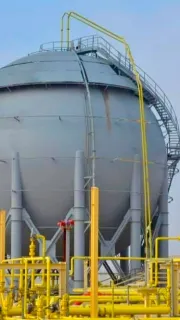
Rodriguez: Venezuela's 25 Year Oil Deal With the US Covers Development of 17 Oil Fields
Venezuela's interim president Delcy Rodriguez announced details of a 25 year oil deal with the United States on Monday, 9 Shahrivar 1405 (August 31, 2026). According to RT, carried by Donya e Eqtesad, the deal covers the development of 17 strategic Venezuelan oil fields with the goal of producing more than 1.5 million barrels per day. Rodriguez said Venezuela would receive 19 dollars for every barrel of oil produced and sold to the United States, which at a reference price of 65 dollars a barrel would generate about 209 billion dollars a year for Venezuela, equal to 21 percent of the country's total proven reserves of 303 billion barrels. Rodriguez stressed that Venezuela retains ownership and sovereignty over its oil resources, with the United States providing the capital and technology needed to rebuild the country's oil industry. US President Donald Trump called the deal "the biggest oil deal in world history" and said the United States had secured control of more than 65 billion barrels of proven reserves at no cost to American taxpayers.
Donya-e-Eqtesad, citing آرتی
US Weighs Reviving 18th Century "Prize Law" to Seize and Sell Iranian Oil
According to a report by Oilprice.com citing Bloomberg, published Saturday, 7 Shahrivar 1405 (August 29, 2026), the US government is exploring an unusual legal route for Iranian oil and ships captured under its naval blockade: reviving "prize law," a wartime mechanism largely dormant since World War II. Per the report, the Justice Department is working with the Pentagon to use the mechanism, which unlike the slower, more contested civil forfeiture process, would let courts transfer ownership of vessels and cargo captured during an armed conflict to the United States and channel the sale proceeds to the US Treasury. Aaron Reitz, the US Attorney whose office is working with Justice Department officials in Washington, told Bloomberg the department is "now reviving" prize courts, calling it an "ancient body of maritime law." Oilprice.com reported that Houston, with its major port and proximity to the largest concentration of US petrochemical infrastructure, is being considered as a central venue for such cases. US forces have intercepted a number of Iranian owned or Iran linked vessels since the naval blockade was imposed in Farvardin 1405 (April 2026). The report added that legal experts are uncertain whether the centuries old framework can operate under modern international law and whether there is sufficient legal basis given questions over congressional authorization for the conflict, while critics warned the move could set a precedent that rivals such as China could later invoke against US shipping.
Oilprice.com (citing Bloomberg)

Global Oil Jumps More Than 2 Percent After US-Iran Strikes Exchange Near Strait of Hormuz
According to a report published by Oilprice.com on the morning of Monday, 9 Shahrivar 1405 (August 31, 2026), West Texas Intermediate rose 2.47 percent to 85.46 dollars a barrel and Brent climbed 2.71 percent to 90.49 dollars a barrel in Asian trading that day. The jump followed Sunday's, 8 Shahrivar (August 30), US strike on two IRGC rocket launchers on Larak Island in the Strait of Hormuz, and the IRGC's retaliatory missile and drone strikes on US bases in Jordan. Per the same report, Jordan's armed forces said on Monday that its air defenses intercepted and destroyed eight missiles that entered its airspace. US Central Command said that as of August 30 (8 Shahrivar), its naval blockade of Iran had redirected 83 commercial vessels, disabled 3, and boarded 2. Oilprice.com noted both benchmarks had fallen more than 4 percent over the prior week, so Monday's roughly 2 percent gain recovered only a small part of that decline, and traffic through the Strait of Hormuz, now down to about five ships a day, remains far below pre-war levels.
Oilprice.com

US Strikes IRGC Rocket Launchers on Larak Island, Iran Hits Two US Bases in Jordan
A US official confirmed on Sunday, 8 Shahrivar 1405 (August 30, 2026), according to a Guardian report citing Reuters and Agence France-Presse, that US forces struck two Islamic Revolutionary Guard Corps (IRGC) rocket launchers on Larak Island in the Strait of Hormuz. The official said IRGC forces had been observed preparing to launch rockets carrying sea mines into the strait. US Central Command described the action as a limited, precise strike meant to protect civilian mariners and the free flow of global trade. The IRGC said in a statement that the US strike killed and wounded several of its personnel and civilians, and vowed to punish the attacker. According to the Guardian, the IRGC responded by striking, with ballistic missiles, technical infrastructure, maintenance facilities and fighter jet positions at two US operated bases in Jordan known as King Hussein and al Azraq, describing the damage as heavy. Jordan's army confirmed, in a statement carried by Al Jazeera, that eight missiles entered its airspace. A US source told Reuters that all incoming missiles aimed at US forces in Jordan had been intercepted, with no significant damage reported so far. Hours after the exchange, US President Donald Trump claimed on social media that Kharg Island, the hub of Iran's oil exports, had been completely destroyed, without providing further details. The White House and the Pentagon did not immediately respond, and Iran had not addressed the claim as of this report. The Guardian noted Kharg handled about 90 percent of Iran's oil exports before the war, and the Strait of Hormuz carried about a fifth of the world's oil consumption before tensions escalated. This marks the first disclosed US strike on Iran since late July.
The Guardian
China and Russia Weigh an Irtysh River Route to the Arctic Ocean
According to a report by the Hong Kong based South China Morning Post, published Sunday, 8 Shahrivar 1405 (August 30, 2026), and carried by Iran's Donya-e-Eqtesad (citing Shafaqna), China and Russia are weighing development of an inland shipping route of about 4,248 kilometers along the Irtysh River. The route would start in China's western Xinjiang region, cross Kazakhstan, join Russia's Ob River, and empty into the Arctic Ocean. According to observers cited in the report, the main goal is to reduce China's current reliance on the Bering Strait for Arctic access, a passage that could become a critical chokepoint for Chinese trade in the event of a US naval blockade or surveillance. The route could also serve as an alternative to the Strait of Malacca. The report said the plan remains at the study stage and faces political and natural obstacles, including the need for dredging and new hydraulic structures roughly every 50 to 100 kilometers.
South China Morning Post
US Crude Oil Imports From Iraq Fell to Zero Last Week
According to US Energy Information Administration (EIA) data cited by Shafaq News on Sunday, 8 Shahrivar 1405 (August 30, 2026), US crude oil imports from Iraq fell to zero barrels per day in the latest reported week, down from 6,000 bpd the week before. The same data showed Canada remained the largest supplier of crude to the United States at 3.526 million bpd, followed by Venezuela at 662,000 bpd, Brazil at 348,000 bpd, Mexico at 196,000 bpd, and Saudi Arabia at 165,000 bpd. Per the EIA report, no crude shipments were recorded that week from Ecuador, Algeria, Angola, Congo, Equatorial Guinea, Kuwait, Norway, Russia, Trinidad and Tobago, or the United Kingdom either.
Shafaq News, citing US Energy Information Administration
Customs Duty Exemption of 1.2 Percent Announced for 14 Tariff Codes of Frozen Red Meat Imports
Iran's Ministry of Agriculture Jihad deputy for commerce development announced a list of 14 tariff codes for frozen red meat, including bone in and boneless veal cuts, frozen lamb carcasses and goat meat, that are exempt from the 1.2 percent (12 in 1000) customs valuation fee, according to a report by ILNA carried by Khabar Online on Sunday, 8 Shahrivar 1405 (30 August 2026). The move follows a letter from Mohammad Reza Talaei, the ministry's deputy for commerce development, to Iran's Trade Development Organization and Customs Administration, continuing earlier correspondence on tariff codes for basic goods eligible for the exemption.
Khabar Online, citing ILNA

Agriculture Minister: No Need to Draw Down Strategic Reserves of Basic Goods Since Tensions Began on 9 Esfand
Gholamreza Nouri Ghezeljeh, Iran's Minister of Agriculture Jihad, said in televised remarks reported by Tasnim News Agency and carried by Ecoiran on Sunday, 8 Shahrivar 1405 (30 August 2026), that the country has not needed to draw down its strategic reserves of basic goods since tensions began on 9 Esfand (around late February 2026). He cited growth in agricultural output over the past two years, including a claimed 5 percent rise in poultry meat production, 8.5 percent in eggs and 2.5 percent in red meat, and said Iran has achieved self sufficiency in poultry meat production for the first time. These figures are drawn directly from the minister's own remarks; no independent dataset was available to verify them separately.
EcoIran, citing Tasnim

Delcy Rodriguez: Venezuela-US Energy Deal Set for 25 Years
Venezuela's interim President Delcy Rodriguez said on Saturday, August 29, 2026 (7 Shahrivar 1405), that the energy agreement between Caracas and Washington, unveiled days earlier when Donald Trump announced US control of more than 65 billion barrels of Venezuela's oil reserves, has been set for a 25 year term. According to Tasnim News Agency, she said the deal's goal is to raise Venezuela's oil output to 1.5 million barrels per day, while stressing that Caracas will maintain sovereignty over its natural resources. The Financial Times had earlier reported, citing a US official, that under the agreement US private companies secured a 55 percent stake in oil production from the joint venture with Venezuela, with some extraction rights granted to American companies for periods of up to 100 years. Venezuela holds the world's largest proven oil reserves, though its current output is estimated at roughly 1.2 to 1.25 million barrels per day according to earlier reports.
Ecoiran, citing Tasnim
US Secures Control of More Than 65 Billion Barrels of Venezuela's Oil Reserves
US President Donald Trump announced a deal on Friday, August 28, 2026, under which the United States gains majority control of more than 65 billion barrels of Venezuela's proven oil reserves, a figure he said would more than double America's effective reserves. Secretary of State Marco Rubio called the agreement a huge win for both countries, saying it would bring roughly 100 billion dollars in private investment and 209 billion dollars in tax revenue for Venezuela. Under the deal the US government retains 55 percent control of a joint venture with an experienced private operator in Venezuela, and full contract details have not been released. The agreement, covering 17 oil fields including the Orinoco Belt, comes as US gasoline prices have risen because of the Iran war, adding domestic pressure on Trump to bring prices down. Some analysts, including Rachel Ziemba of the Center for a New American Security, cautioned that given Venezuela's aging infrastructure and current output of about 1.2 million barrels a day, the deal is unlikely to have a material effect on global oil supply in the near term.
BBC News
Iran Mercantile Exchange Hosts 2.7 Million Tons of Product Offerings on the Week's First Day
According to Boursenews, halls at the Iran Mercantile Exchange hosted offerings of 2,682,106 tons of product on Saturday, 7 Shahrivar 1405 (August 29, 2026), the first trading day of the week. The industrial and mining hall alone offered 1,590,528 tons, including 1,397,700 tons of iron ore and 102,250 tons of sponge iron, while 946,398 tons of cement went on the board in the cement hall. The Kish export hall offered 114,598 tons of products including cement, bitumen, clinker and iron ore, and the petrochemical and oil products hall offered 27,345 tons of chemical and polymer products. In a separate report, Boursenews said the Iran Energy Exchange's physical hydrocarbon market offered a total of 4,988 tons of hydrocarbon products the same day, with 4,508 tons in the domestic ring and 480 tons in the international ring.
Boursenews
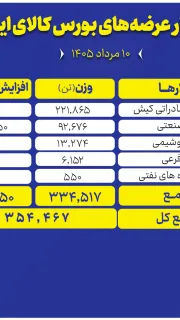
Lavrov: Moscow Does Not Want Tolls Imposed on Hormuz Transit
Russian Foreign Minister Sergei Lavrov said, according to a RIA Novosti report published Friday, 6 Shahrivar 1405 (August 28, 2026) and carried by Mehr News Agency, that Moscow does not want tolls imposed on transit through the Strait of Hormuz, though he said the matter still needs further discussion. He added that before the US and Israeli aggression against Iran began, the Strait of Hormuz was fully open and there was no talk of transit tolls. Lavrov went on to criticize the US approach of aggression against the territory of independent states, saying Moscow condemned the US and Israeli strikes on Iran from the outset and has called on powers from outside the region to refrain from intervening in the Persian Gulf region.
Donya-e-Eqtesad, citing Mehr News Agency and ریانووستی
Oil Ministry: Iran Has Enough Oil Outside the Naval Blockade for the 1405 Budget
According to Fars News, published Saturday, 7 Shahrivar 1405 (August 29, 2026) and carried by Donya-e-Eqtesad, Iran's Oil Ministry said the country, outside the naval blockade, has enough oil available for sale to fund the 1405 (2026/27) budget. The report said budgeted oil revenue realization reached 99 percent in the first 4 months of the current Iranian year. The Oil Ministry has already handed 7.5 billion dollars in foreign currency from oil sales during those first 4 months to the central bank, an amount that, based on the government's long term dollar spending pattern, is expected to cover the government's foreign currency expenditures from Tir (June/July) through Dey (December/January) of this year.
Donya-e-Eqtesad, citing Fars News Agency
Axios Reporter: More Than 200 Mine-Like Objects Collected From Hormuz Strait's Main Shipping Lane
Barak Ravid, a reporter for the American outlet Axios, wrote on X on Friday, 7 Shahrivar 1405 (August 28, 2026), that US officials told him more than 200 mine-like objects have been collected from the Strait of Hormuz's main shipping lane. Citing the same officials, he said only 11 of those objects were actual mines, and just a handful had been properly armed. The report, carried by Donya-e-Eqtesad, follows an earlier claim by CENTCOM Commander Brad Cooper that the US had fully cleared mines from the Strait of Hormuz, a claim Iran's deputy foreign minister for legal and international affairs, Kazem Gharibabadi, had previously rejected, saying only Iran knows the exact location of the mines in the strait. The new figures are the first specific breakdown reported of how many of the suspicious objects collected from the Strait of Hormuz were actual mines, a detail relevant to assessing the risk of continued shipping through the strategic waterway.
Donya-e-Eqtesad, citing آکسیوس
Iraqi MP: Baghdad Needs 8 Trillion Dinars a Month for Salaries as Hormuz Crisis Squeezes Oil Revenue
Ahmad al-Khazali, an Iraqi member of parliament and member of the security and defense committee, said on the Al-Sumaria TV program "Openly" on Friday, 7 Shahrivar 1405 (August 28, 2026), that Iraq faces a "clear economic problem" from the war's disruption of oil exports, and that the country's heavy reliance on oil revenue has made its economy more vulnerable to the current crisis. He said Iraq needs nearly 8 trillion dinars (about $6 billion) a month just to cover government salaries, and while the finance minister has confirmed salaries are funded, the economic pressure from the Strait of Hormuz crisis requires finding alternative solutions. Al-Khazali said a committee of political leaders representing Iraq's different factions has been formed and will travel to Iran to negotiate the passage of Iraqi oil tankers. Separately, Sayyid Sadr al-Din al-Qabanji, the Friday prayer leader in Najaf, thanked Iran on Friday, according to Al-Furat network, for its position on Iraqi oil exports through the Strait of Hormuz, saying a delegation from Iran had traveled to Iraq to convey the Iranian leadership's thanks to the Iraqi people.
Donya-e-Eqtesad
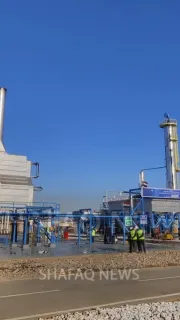
Germany's Finance Minister Urges Trump to End the Iran War, Renews Call for an EU Windfall Tax on Oil Profits
German Finance Minister and Vice Chancellor Lars Klingbeil told public broadcaster ARD on Friday, 7 Shahrivar 1405 (August 28, 2026), that he wants US President Donald Trump to end what he called an "irresponsible" war against Iran before Trump's trip to the United States next week for the G20 finance ministers' meeting. According to ISNA, carried by Donya-e-Eqtesad, Klingbeil blamed Trump for rising fuel prices, saying "we feel it at the pumps." G20 finance ministers are set to meet Monday and Tuesday in Asheville, North Carolina, ahead of the group's leaders' summit in Miami; a US Treasury official separately confirmed Washington is working to coordinate G20 members around Iran sanctions. Klingbeil also repeated his earlier call for a unified European Union tax on oil companies' windfall profits, warning that such firms are exploiting crises and geopolitical tensions for large gains. The proposal is due to be discussed at an EU finance ministers' meeting in Dublin on September 19 (28 Shahrivar).
Donya-e-Eqtesad, citing ISNA
Venezuela, One of OPEC's Founders, Is Weighing an Exit From the Group
According to Oilprice.com's Julianne Geiger, citing Bloomberg, in a report published Friday, 7 Shahrivar 1405 (August 28, 2026), Venezuela is weighing whether to leave the Organization of the Petroleum Exporting Countries (OPEC), more than six decades after it helped found the group as one of its five original members. People familiar with the discussions, who have also been in contact with US officials, said no final decision has been made. Venezuela produced about 1.117 million barrels a day in July and is currently exempt from OPEC production quotas following years of sanctions and declining output. A potential Venezuelan exit would come just months after the United Arab Emirates left OPEC, and the report said Iraq could also reconsider its membership if an ongoing capacity review does not yield a higher production quota. The UAE, Venezuela and Iraq together hold more than 7 million barrels a day of production capacity, about 32% of OPEC's total. Separately, US and Venezuelan officials are discussing a possible 100-year lease on several of the country's oil fields.
Oilprice.com, citing Bloomberg
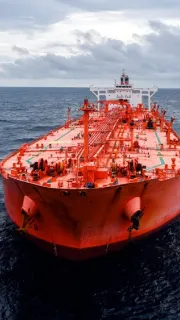
VLCC Freight Rates Hit $650,000 a Day as the Iran War Reshapes Gulf Shipping
According to Oilprice.com's Julianne Geiger, citing Baltic Exchange data reported by Bloomberg, earnings on the benchmark Saudi Arabia to China VLCC (very large crude carrier) route surged to a record $647,000 a day on Thursday, 6 Shahrivar 1405 (August 27, 2026), more than ten times the rate a year earlier and about 27% above the $510,000 recorded just ten days before. The spike coincides with a rise in Persian Gulf oil exports through the Strait of Hormuz. TotalEnergies CEO Patrick Pouyanne said earlier in the week that moving a cargo through Hormuz now costs about $20 million, and the report said costs have climbed further since. Few tanker owners are willing to send vessels through the strait, forcing exporters to compete for the smaller pool willing to take the risk. A tanker traveling from Oman to China now commands roughly $220,000 a day, up from $131,000 a month ago. Traders estimate Hormuz outflows at 6 to 8 million barrels a day, while Goldman Sachs puts the flow at roughly two thirds of pre-war levels.
Oilprice.com, citing بورس بالتیک and Bloomberg
Qatar Extends LNG Force Majeure Into November as Gas Prices Jump in Asia and Europe
State-owned QatarEnergy extended the force majeure on its liquefied natural gas (LNG) deliveries into early November on Friday, 7 Shahrivar 1405 (August 28, 2026), as LNG traffic through the Strait of Hormuz remains at a standstill. According to Oilprice.com's Charles Kennedy, citing Bloomberg, Asia's spot LNG price jumped to $23.388 per million British thermal units (MMBtu) on Friday, near four-year highs, while Europe's LNG price rose to its highest since 2023 and the Dutch TTF benchmark gas price climbed 2% in morning trading in Amsterdam to top $80 (69 euros) per megawatt-hour. The report said European gas storage sites are only about 63% full heading into winter, compared with a five-year average of roughly 80%. Unlike crude oil, which can be shuttled out of the Strait of Hormuz via ship-to-ship transfers, LNG cannot be moved that way, which is why Qatari cargoes remain trapped behind the chokepoint.
Oilprice.com, citing Bloomberg
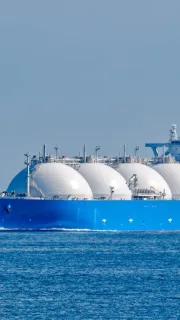
Trump Announces What He Calls the Biggest Oil Deal in History With Venezuela
US President Donald Trump announced on Friday, August 29, 2026 (7 Shahrivar 1405), on Truth Social what he called the "biggest oil deal in world history" with Venezuela. He said the agreement secures majority US control of more than 65 billion barrels of Venezuela's proven oil reserves and "more than doubles American oil reserves." According to Al Jazeera, the deal was negotiated by Secretary of State Marco Rubio and Secretary of War Pete Hegseth, working with Venezuela's interim President Delcy Rodriguez. The agreement is expected to bring about $209 billion to Venezuela's state treasury, and Rubio said it would also bring nearly $100 billion in private investment to the country. Venezuelan officials are preparing to sign new exploration and production agreements next week, mostly with US companies. Venezuela holds the world's largest proven oil reserves but currently produces only 1.25 million barrels per day. The prospect of more Venezuelan crude reaching the global market, alongside the recovering flow of Persian Gulf oil exports through routes bypassing the Strait of Hormuz, is a factor in the global oil supply balance and a potential competitive pressure on exporters such as Iran.
Al Jazeera
Reuters: War Affected Countries Produced 43 Percent of World Oil in 2025
According to Reuters calculations based on International Energy Agency data, countries at war or directly affected by conflict produced about 45 million barrels of oil per day in 2025, more than 43 percent of global supply. Reuters cited the Iran war with the United States and Israel that began about six months ago, alongside the Russia Ukraine war and export restrictions in Libya and Venezuela, as the main drivers. The report estimates current disruption to Persian Gulf oil export flows at 5 to 7 million barrels per day, and says more than 10 percent of the world's oil refining capacity has been taken offline due to the conflicts in the Persian Gulf and Ukraine.
Bourse News
Iran's Oil Minister Says Crude Sales Continue Despite Lower Volumes
Iran's Oil Minister Mohsen Paknejad said on Friday that crude oil sales and deliveries to customers in distant waters are continuing, responding to claims that oil sales had stopped. He said a significant portion of crude had been transferred to delivery points for customers at various points, and that sales continued, albeit reduced, both before and after Iran's blockade periods. Paknejad declined to give further details, saying disclosure could be exploited by adversaries, but said efforts to sustain oil sales continue in earnest.
Bourse News

Oil Slips as Hormuz Supply Risk Eases and Persian Gulf Exports Climb
US crude oil (WTI) fell to around 83.3 dollars a barrel on Friday, August 28, 2026 (6 Shahrivar 1405), down roughly 0.2 percent from the previous day and about 4 percent for the week, according to Trading Economics. The decline reflects traders increasingly viewing Iran's standoff as an economic and sanctions confrontation rather than a threat to physical oil supply, while improving flows through the Strait of Hormuz and a proposed Iran-Oman corridor have further reduced the perceived supply risk. Citing a Goldman Sachs estimate published the same day, Trading Economics reported Persian Gulf oil exports have climbed to around 15 to 16 million barrels per day, a level still well below the pre-conflict range of 22 to 24 million barrels per day but far above the low of roughly 5 to 6 million barrels per day recorded in March 2026. Iran and Oman have agreed on a revenue-sharing framework for the strait, though Tehran has stressed the deal does not mean an immediate reopening of the route.
Trading Economics
Pezeshkian Sets Iran's Third Tier Gasoline Price at 10,000 Tomans
Iranian President Masoud Pezeshkian said on the evening of Friday, August 28, 2026 (6 Shahrivar 1405), during state broadcaster IRIB's live interview program, that the country's third tier gasoline price will rise from 5,000 to 10,000 tomans per liter after coordination with relevant institutions. He stressed the third tier price would not go any higher than that figure. Debate over revising the third tier price had circulated in Iranian media since July 2026, and the government's spokesperson had denied any such plan on July 21. Friday night's remarks mark the first time the final figure has been confirmed by the country's top executive official; an exact implementation date has not yet been announced.
Donya-e-Eqtesad, citing IRIB News
Qatar Loses $24 Billion in LNG Sales Six Months Into the Strait of Hormuz Crisis
According to Reuters calculations published Wednesday, 4 Shahrivar 1405 (August 26, 2026), and carried by Oilprice.com, Qatar has lost about $24 billion in sales six months since the Strait of Hormuz crisis crippled its liquefied natural gas exports, with shipments down as much as 96 percent. Citing data from analytics firm ICIS, Reuters said the number of LNG cargoes Qatar managed to export fell to just 18, down from 509 cargoes in the same period a year earlier. According to Oilprice.com, the de facto closure of the Strait of Hormuz has trapped about 20 percent of daily global LNG flows, and drone and missile strikes on regional energy infrastructure have damaged Qatar's main liquefaction complex, Ras Laffan. State firm QatarEnergy estimates the damage could cost about $20 billion a year in lost revenue and take up to five years to repair, and it has been forced to declare force majeure on some long term LNG contracts for up to five years. The report said the drop in Qatari cargoes has left Europe struggling to fill its gas storage sites ahead of winter.
Oilprice.com, citing Reuters and آیسیآیاس
Pakistan's Five Refineries Set to Sign $6 Billion Upgrade Agreements
According to Pakistani daily Business Recorder, carried by Oilprice.com on Friday, 6 Shahrivar 1405 (August 28, 2026), Pakistan's five oil refineries, PARCO, Pakistan Refinery Limited, National Refinery Limited, Cnergyico and Attock Refinery Limited, are expected to sign agreements in early September under the country's Refinery Upgradation Policy, unlocking as much as $6 billion in investment. Pakistan's Federal Minister for Petroleum, Ali Pervaiz Malik, said the upgrades will let refineries begin producing Euro 5 compliant, ultra low sulfur fuel and reduce Pakistan's reliance on fuel imports. Oilprice.com noted that since the Iran war disrupted oil and fuel supply from West Asia, Pakistan has paid record premiums for fuel imports and its highest LNG cargo prices since 2022.
Oilprice.com, citing بیزینسریکوردر
Alberta Premier Rejects Using Oil as Leverage Against Trump
Alberta Premier Danielle Smith on Thursday, 5 Shahrivar 1405 (August 27, 2026), rejected the idea of imposing export taxes on the Canadian province's crude oil exports to the United States in retaliation for the Trump administration's tariffs. According to Oilprice.com, citing Global News, she called the move potentially the most disastrous policy decision for Canada's economy. Smith said such a step could trigger a disproportionate US tariff response and warned Washington could in turn cut off gasoline and diesel exports to Ontario and Quebec. Alberta exports about 4 million barrels of crude oil a day to the United States, worth roughly $80 billion last year.
Oilprice.com, citing گلوبالنیوز
Netherlands Says It Will Miss Its Winter Gas Storage Target
Dutch gas network operator Gasunie said on Wednesday, 4 Shahrivar 1405 (August 26, 2026), that the Netherlands will not meet its target of storing 115 terawatt hours of natural gas ahead of winter. According to Oilprice.com, the target, roughly half the country's annual gas consumption, had been set based on the harshest winter the Netherlands has seen in 30 years. Gasunie said the shortfall does not necessarily mean the country's gas supply is at risk, but that without further policy action the Netherlands will be insufficiently prepared for a severe winter scenario. EU gas storage currently stands at 63 percent of capacity, below the five year average of 80 percent and below the roughly 76 percent level seen at this time last year. Oilprice.com said part of the shortfall is linked to a sharp drop in Qatari LNG exports caused by the Strait of Hormuz crisis.
Oilprice.com
Gulf Oil Exports Rebound to Two Thirds of Pre War Levels, Despite Iran War
According to a Goldman Sachs note carried by Bloomberg and reported by Oilprice.com on Friday, 6 Shahrivar 1405 (August 28, 2026), crude and product export volumes from the Persian Gulf have recovered to about two thirds of their typical pre war levels. The bank said the whole West Asia region is now shipping out 15 to 16 million barrels a day, 5 to 6 million barrels above the March 2026 (Esfand 1404) trough, though still 7 to 8 million barrels a day below February (Bahman 1404) levels before the war. Goldman Sachs analysts said a rise in dark, untracked transits and ship to ship transfers shows producers and shippers are adapting to the conflict, a trend that could cap oil price gains even if disruption in West Asia continues. Outbound flow through the Strait of Hormuz alone is now close to the US estimate of 8 to 10 million barrels a day, the note said.
Oilprice.com, citing گلدمنساکس and Bloomberg
Russia's Yaroslavl Oil Refinery Hit in Ukraine's Largest Drone Strike Since the Conflict Began
According to Fars News, carried by Donya-e-Eqtesad on Friday, 6 Shahrivar 1405 (August 28, 2026), Ukrainian forces carried out a large scale drone attack on the Slavneft-YANOS oil refinery in Russia's Yaroslavl region. The strike caused multiple explosions and a large fire at one of Russia's biggest refining complexes. Mikhail Evraev, governor of Yaroslavl region, described it as the largest drone strike in the area since the Russia-Ukraine conflict began. Further details on the damage or the refinery's operating status have not yet been disclosed. The strike is the latest in a series of Ukrainian drone attacks on Russian refining infrastructure in recent weeks, which have repeatedly disrupted the country's fuel refining capacity.
Donya-e-Eqtesad, citing Fars News Agency

Long Term Access to 17 Venezuelan Oil Fields on the Table in US-Caracas Talks
According to Reuters, carried by Donya-e-Eqtesad on Friday, 6 Shahrivar 1405 (August 28, 2026), the United States and Venezuela have moved close to a deal under which American companies would gain long term access to a number of selected Venezuelan oil fields. The report said the proposal could cover up to 17 oil fields, including some in the Orinoco Belt and Lake Maracaibo, with US energy companies likely to compete for development rights. Final details remain unclear, and experts say such a deal could face legal and constitutional challenges. US Energy Secretary Chris Wright is expected to travel to Caracas as early as next week to discuss the plan. Oilprice.com had separately reported on Thursday, 5 Shahrivar (August 27), citing senior US officials, that the Trump administration is in talks with Venezuela's interim government to acquire a direct US ownership stake in key Venezuelan oil fields.
Donya-e-Eqtesad, citing Reuters
Financial Disclosure: Trump Sold ExxonMobil Stock the Day He Announced the Iran War Ceasefire
According to Oilprice.com's Charles Kennedy, in a report published Thursday, 5 Shahrivar 1405 (August 27, 2026) based on financial disclosures reviewed by CBS News, investment accounts belonging to US President Donald Trump sold between $500,000 and $1 million of ExxonMobil stock on April 7, 2026 (18 Farvardin 1405), the same day Trump announced a ceasefire in the Iran war and hours before Exxon shares fell 6.5 percent. Exxon closed that day at $163.91 and opened the next morning at $153.52. The report said the trade was one of hundreds of thousands of dollars in transactions involving Exxon, Chevron and other oil and gas firms in the first half of 2026, a period in which Exxon and Chevron together earned $26.5 billion in the second quarter. The White House told CBS that Trump does not direct the trades and that his portfolio is managed by independent financial institutions. Trump has not placed his assets in a blind trust, and federal law does not require a US president to do so.
اویلپرایس (Oilprice.com, citing سیبیاس نیوز)

BP's Egyptian Gas Assets Near a One Billion Dollar Sale to Energean
According to Oilprice.com's Tom Kool, in a report published Thursday, 5 Shahrivar 1405 (August 27, 2026), Reuters reported exclusively, citing two people familiar with the talks, that Energean is in exclusive negotiations to buy a package of BP's oil and gas assets in Egypt, a deal that could raise about one billion dollars for the British energy major. BP and Energean declined to comment. The proposed package includes BP's interest in the West Nile Delta gas assets, held jointly with Harbour Energy, and its 50 percent contractor stake in the Temsah concession in the eastern Mediterranean. The report said Temsah's value has risen significantly following this year's Denise West discovery, which Italy's Eni estimates holds about two trillion cubic feet of gas and 130 million barrels of condensate. BP, Eni and the Egyptian General Petroleum Corporation aim to reach a final investment decision within the next few months. Reuters reported in July that Energean was competing with Dragon Oil, Carlyle Group and Artemis Energy for the assets.
اویلپرایس (Oilprice.com, citing رویترز)
Brent and WTI Head for a Weekly Loss Despite Escalating Iran-US Tensions
According to Oilprice.com energy writer Irina Slav, in a report published early Friday, August 28, 2026 (6 Shahrivar 1405), crude oil prices are on course for a second straight weekly loss even as no progress has been made toward peace between Iran and the United States. Citing Reuters, the report said Brent crude was trading at $89.17 a barrel at the time of writing, down 5.3 percent for the week, while West Texas Intermediate was at $83.19 a barrel, on course for a 4.3 percent weekly decline. The report said the Wall Street Journal reported this week that the Trump administration has repeatedly told mediating parties it has no interest in returning to the terms of the ceasefire the US and Iran agreed in June 2026, a deal that did not last a month. White House spokeswoman Anna Kelly was quoted saying no talks with Iran are underway or scheduled, and that the "Economic Outcast" operation is continuing. The report added that the operation's effectiveness has been questioned by some observers, since cooperation from China, Iran's biggest trade partner, is a key condition, and Beijing has not cooperated so far.
اویلپرایس (Oilprice.com, citing رویترز)
CNN Analysis: China's Small "Teapot" Refineries Import Sanctioned Iranian Oil Through a System Separate From the US Dollar
CNN, in an analytical report that Iran's ISNA news agency carried on Thursday, 5 Shahrivar 1405 (August 27, 2026), wrote that China is importing sanctioned Iranian crude oil through an opaque system designed to stay separate from the US dollar system and sanctions. According to the report, small Chinese refineries known as "teapots," mainly in Shandong province, buy and process this oil, relying on a network of ports, financial institutions and tankers that have largely stayed hidden from international detection; the US Treasury (OFAC) had separately warned on 8 Ordibehesht 1405 (April 28, 2026) that these teapot refineries process roughly 90 percent of Iran's oil exports through the US financial system. Max Meizlish, a senior analyst at the Washington based Foundation for Defense of Democracies, told CNN that many of these entities are directly or indirectly owned by large Chinese state firms integrated into the US dollar system, and that Washington could pressure parent companies by sanctioning their subsidiaries. Zhao Long, director of the Shanghai Institute for International Strategic Studies, said Beijing is unlikely to accept a US demand to determine which third country trade is legal. Sun Chenghao, a researcher at Tsinghua University, warned that sanctioning major Chinese banks could push a possible Xi Jinping and Trump meeting from stabilizing relations toward damage control.
Donya-e-Eqtesad, citing ISNA and CNN
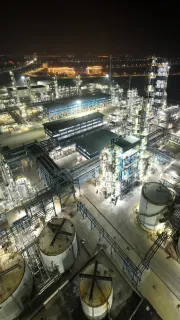
Iraq's SOMO Holds Second Tender This Week to Sell Basrah Crude Outside the Strait of Hormuz
Iraq's State Oil Marketing Organization (SOMO) offered Basrah crude cargoes for September loading on Thursday, 5 Shahrivar 1405 (August 27, 2026), for sale via ship to ship transfers near the Omani coast, outside the Strait of Hormuz. According to Reuters, carried by Zawya, this is SOMO's second tender this week, and it closes Friday, 6 Shahrivar (August 28). SOMO issued its first tender of the week on Monday, 2 Shahrivar (August 24), offering cargoes loading from the Basrah oil terminal that require buyers to send tankers through the Strait of Hormuz; that tender closed Wednesday, 4 Shahrivar (August 26). SOMO does not typically comment on its commercial dealings. Iran's state news agency IRNA had reported earlier, on Saturday, 1 Shahrivar (August 22), that Tehran granted permission for a number of Iraqi oil tankers to transit the Strait of Hormuz following repeated requests from Baghdad.
Zawya (Reuters)
China Vows to Safeguard Its Interests as US Expands Sanctions Targeting Iran
Chinese Foreign Ministry spokesperson Lin Jian rejected Washington's expanding pressure campaign against Iran at a regular briefing in Beijing on Tuesday, 3 Shahrivar 1405 (August 25, 2026), and called for an immediate end to US unilateral measures. According to Al Jazeera, he said cooperation between China and Iran has always been conducted within the framework of international law and that China will take all necessary measures to safeguard its own rights and interests. The remarks followed comments a day earlier, on Monday, 2 Shahrivar (August 24), by US Treasury Secretary Scott Bessent, who said no one is above the reach of US sanctions when asked whether Chinese banks could be targeted by Washington's newest measures against Iran. Al Jazeera noted China is Iran's biggest oil customer and that the latest US sanctions package targeting Iran's economy has also hit entities in China. Trita Parsi, executive vice president of the Quincy Institute in Washington, told Al Jazeera it is unlikely the US would target Chinese entities just weeks before Chinese President Xi Jinping's planned visit to Washington.
Al Jazeera

Trump Sends US-Saudi Civilian Nuclear Deal to Congress as Riyadh Rejects Israel Condition
The Trump administration formally sent the US Saudi civilian nuclear cooperation agreement to Congress on Thursday, August 27, 2026 (5 Shahrivar 1405), Oilprice.com reported. The submission starts a 90 legislative day congressional review period for the 30 year agreement, which would allow US companies to export civilian nuclear technology to Saudi Arabia. Congress can reject the agreement during that period, but Trump can veto such a resolution, which would then need two thirds majorities in both chambers to override. Under the deal, Washington and Riyadh will spend two years assessing whether domestic uranium enrichment inside Saudi Arabia, under US oversight through a black box arrangement, is technically and commercially warranted, a provision that, unlike the 2009 US UAE nuclear agreement, does not rule out enrichment on Saudi soil. Separately on Thursday, Saudi Arabia reiterated it will not normalize relations with Israel without the creation of an independent Palestinian state, a condition Trump has said must be met before the nuclear deal takes effect. Saudi Crown Prince Mohammed bin Salman has previously said the kingdom would pursue a nuclear weapon if Iran obtained one.
Oilprice.com

CNOOC Posts Record First Half Profit of $12.9 Billion, Up 23 Percent, as China Pumps More Oil at Home
China National Offshore Oil Corporation (CNOOC) released its first half financial results on Wednesday, 4 Shahrivar 1405 (August 26, 2026). According to the report, carried by Oilprice.com, net profit attributable to shareholders rose 23.4 percent year over year to 85.8 billion yuan (about 12.9 billion dollars), while oil and gas sales revenue climbed 20 percent to 206.1 billion yuan. The biggest driver, the report said, was a 23.6 percent rise in CNOOC's average realized oil price to 85.49 dollars a barrel in the first six months of the year, a trend that followed the start of the Iran war. Net oil and gas production also rose 3.7 percent to a record 398.7 million barrels of oil equivalent, of which 275.2 million barrels were produced domestically in China. The report said Beijing has for years pushed its state oil companies to raise domestic output and reduce reliance on imported energy, a strategy that has taken on renewed urgency since the Iran war disrupted traffic through the Strait of Hormuz, one of China's most important oil supply routes.
Oilprice.com
TotalEnergies Completes Exit From Russia's Sanctioned Arctic LNG 2 Project
French major TotalEnergies confirmed on Thursday, 5 Shahrivar 1405 (August 27, 2026), that it has fully completed the transfer of its 10 percent stake in Russia's Arctic LNG 2 project to NordLine, a subsidiary of project operator Novatek. According to Oilprice.com, TotalEnergies is therefore no longer a shareholder in the sanctioned project. TotalEnergies CEO Patrick Pouyanne had said last month, on the company's second quarter earnings call, that an exit from the project was imminent. Under the transfer agreement, TotalEnergies retains the right to be reimbursed for its share of shareholder loans extended to the project, estimated at about 1.3 billion dollars, though any repayment will remain subject to applicable sanctions. TotalEnergies fully wrote off its 4.1 billion dollar stake in the project in 2022. Pouyanne said the transfer, authorized by Russian authorities in June, serves the joint interest of both TotalEnergies and Novatek.
Oilprice.com
Reuters: Asia's August Oil Imports Show No Sign of a Hormuz Transit Surge
According to Reuters commodities columnist Clyde Russell, in a report carried by Oilprice.com on Thursday, 5 Shahrivar 1405 (August 27, 2026), data compiled by analytics firm Kpler show Asia's crude oil imports are set to reach about 23.12 million barrels a day in August 2026, slightly down from 23.36 million barrels a day in July. The figures, the report said, do not support claims of a broad rebound in Strait of Hormuz tanker traffic to pre war levels, as US officials have asserted. US Energy Secretary Chris Wright said in mid August (Mordad) that Middle East oil exports had rebounded to 15 million barrels a day and had even topped the pre war average of 20 million barrels a day on some days. But according to ship tracking data cited in the same report, oil flow out of the Strait of Hormuz is, at best, half the figure the US energy secretary cited. Asia's imports from the Middle East rose to 11.11 million barrels a day in August from 10.76 million barrels a day in July, the report said, but remain more than 4 million barrels a day below the 15.82 million barrel average of the three months before the Iran war began.
Oilprice.com, citing Reuters and Kpler
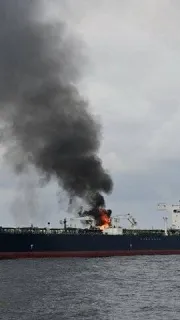
Bloomberg: Qatar and Kuwait Boost Hormuz Oil Exports Through Ship to Ship Transfers
According to Bloomberg, carried by Oilprice.com on Thursday, 5 Shahrivar 1405 (August 27, 2026), anonymous oil traders said Qatar and Kuwait, following the pattern set by the United Arab Emirates, have raised their crude exports through the Strait of Hormuz to a significant share of pre war levels by using ship to ship transfers in the Gulf of Oman. Before the war, the two countries together exported about 2 million barrels a day through the strait, but struggled badly in the conflict's first two months because, unlike Saudi Arabia and the UAE, they lack alternative export routes. The report said Kuwait and Qatar began shuttling crude through the Strait of Hormuz and transferring it to larger tankers outside the chokepoint around June (Khordad 1405). Bloomberg's trading sources told the outlet that total oil flow through the strait, including undeclared activity and vessels without tracking signals, has risen to about 7 to 8 million barrels a day, up from about 4 million barrels a day in mid July (Tir 1405). These figures rest on traders' accounts and have not yet been confirmed by official or independent data.
Oilprice.com, citing Bloomberg
Another Tanker Struck in the Strait of Hormuz as Shipping Traffic Remains Sharply Reduced
Another tanker was struck by a projectile in the waters between Iran and Oman on Tuesday, 3 Shahrivar (August 25, 2026), the UK Maritime Trade Operations reported, as carried by Germany's DPA news agency on Thursday, 5 Shahrivar 1405 (August 27, 2026), a day after a similar attack near the coast of Oman. According to Oilprice.com, citing maritime tracking firm Windward, the vessel was a Liberian flagged Aframax tanker carrying 704,000 barrels of jet fuel, which eventually reached the port of Fujairah. Data from tracking firm Kpler, cited in the same report, showed only five commodity vessels transited the Strait of Hormuz on Tuesday, well below the 15 vessel average of the past ten days. Windward said that as of Wednesday, 11 inbound and 6 outbound crossings had been recorded in the strait, of which 6 were tankers; the data showed about 65 percent of oil exports through the strait are bound for China.
Oilprice.com, citing یوکیامتیاو and ویندوارد

Iran's Daily Gasoline Distribution Hits 150 Million Liters as Fuel Distributor Denies Shortage
Keramat Veiskarami, CEO of the National Iranian Oil Products Distribution Company, called social media rumors about a gasoline shortage baseless on Thursday, 5 Shahrivar 1405 (August 27, 2026). According to Ecoiran, citing Tasnim News Agency and separately carried by Boursenews, he said average daily gasoline distribution in Mordad (July/August) was 138 million liters, rising to 145 million liters over the past three days and reaching 150 million liters nationwide on Wednesday, 4 Shahrivar. Veiskarami stressed that gasoline supply remains stable and is running at maximum production, transfer and distribution capacity, and asked citizens not to return to filling stations without genuine need, citing recent long queues at some locations.
Ecoiran, citing Tasnim
Despite Central Bank Chief's Claim, Oil Minister Says Iranian Crude Sales Continue
Iranian Oil Minister Mohsen Paknejad rejected on Thursday, 5 Shahrivar 1405 (August 27, 2026), a claim by Central Bank Governor Mohammadreza Farzin that Iran's oil sales had effectively stopped. According to Ecoiran, citing the Jamaran news agency, Paknejad, speaking on the sidelines of a ceremony at Imam Khomeini's shrine, said he would not go into detail because disclosing information could be exploited by what he called "the enemy," but stressed that a significant volume of Iranian crude has been delivered to customers at points outside the country's territorial waters. He said the process of selling oil in distant waters, meaning actual delivery to customers, continues, and that sales, though reduced in volume, did not stop even during the period between the two phases of the US naval blockade. Paknejad added the Oil Ministry is pursuing new measures to sustain exports under current conditions.
Ecoiran, citing Jamaran
Activity at Kharg Oil Terminal Continues Uninterrupted Despite Earlier Bombardments
Hamid Bourd, CEO of National Iranian Oil Company, said on Iranian state television program Ekofa on Thursday, 5 Shahrivar 1405 (August 27, 2026), that operations on Kharg Island have not stopped for even a moment despite repeated US and Israeli bombardment during the recent war. According to Fars News Agency, carried by Donya-e-Eqtesad, he said several contractors are currently repairing and upgrading the terminal's storage tanks and docks, with some projects between 20 and 30 percent complete. Bourd said one key wartime measure was managing Iran's strategic oil storage capacity across sites both inside and outside the country. Kharg Island is Iran's main crude export terminal; loading at its western terminal had earlier resumed in mid-August 2026 after a 25 day complete halt.
Donya-e-Eqtesad, citing Fars
China's Imports of Iranian Oil Have Nearly Halved Since the War, Falling to 534,000 Barrels a Day in August
According to ship-tracking data from Kpler cited by The National on August 26, 2026, China's imports of Iranian crude oil through the Strait of Hormuz averaged about 534,000 barrels a day in July and August, a level 48% below pre-war volumes and 72% below the October 2024 peak of nearly 1.9 million barrels a day. The Guardian reported separately on August 25, 2026, citing the same Kpler data, that Chinese imports of Iranian oil fell to 785,000 barrels a day in June and to about 534,000 barrels a day in August. The reports say the US blockade of Iranian ports and ships, renewed in July, combined with disruptions in the Strait of Hormuz and Bab al Mandeb, has pushed China's independent "teapot" refiners toward costlier alternative routes such as the Suez Canal. China is estimated to hold 1 to 1.4 billion barrels of oil reserves, giving it a buffer to absorb the disruption, according to the reports.
The National

Iran Mercantile Exchange Hosts Trade of 180,155 Tons of Products Across Five Halls
The Iran Mercantile Exchange hosted trade of 180,155 tons of products across its halls on Wednesday, 4 Shahrivar 1405 (August 26, 2026), according to Kala Khabar, the exchange's official news outlet. The industrial hall traded 76,593 tons of steel products, 50 tons of zinc and 35 tons of copper. The export hall hosted trade of 32,900 tons of cement, 10,000 tons of clinker, 8,019 tons of bitumen, 2,500 tons of sulfur, 1,000 tons of copper, 637 tons of chemical products and 22 tons of moisture insulation. The cement hall sold 8,045 tons of cement, and the secondary hall hosted trade of 10,392 tons of mineral, chemical and steel products. The petrochemical and oil products hall traded 26,547 tons of chemical products, 1,300 tons of bitumen, 1,827 tons of polymer products, 260 tons of sulfur and 27 tons of oil.
Kala Khabar, Iran Mercantile Exchange
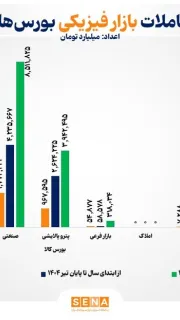
Copper Hits a Fresh Record High of $6.71 a Pound on Comex as London Exchange Stocks Fall 14 Percent
Comex September copper futures in the United States closed up about 1.6 percent on Tuesday, August 25, 2026 (3 Shahrivar 1405), settling at $6.71 a pound, the highest closing level on record. According to Arzdigital, London Metal Exchange copper inventories have fallen about 14 percent since late July 2026 to 214,550 tonnes, with a second straight quarterly cut to Chile's production forecast and a halt at the Grasberg smelter in Indonesia cited as factors behind the tightening supply. Per TradingEconomics, copper eased slightly by 0.21 percent from the prior day to $6.70 on Wednesday, August 26, after touching an all time high of $6.83 earlier in August; the metal is up more than 51 percent from a year earlier. Analysts point to concerns over a weaker US dollar and supply constraints as the main drivers of the rally.
Arzdigital
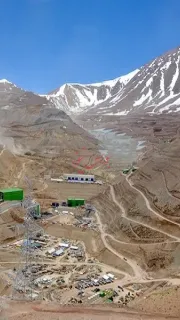
Iran and Oman Announce Joint Statement on a Temporary Shared Corridor and Mine Clearing Project in the Strait of Hormuz
Iran and Oman said in a joint statement on Wednesday, August 26, 2026 (4 Shahrivar 1405), that they had discussed a phased framework for managing ship traffic through the Strait of Hormuz. According to Arzdigital, the framework includes setting up a temporary shared corridor and carrying out a maritime mine clearing project. Technical talks between the two countries on establishing a permanent crossing, traffic management, and navigation and security services are set to continue. Global oil prices fell more than 2 percent the same day: Brent crude dropped to $86.27 a barrel and US West Texas Intermediate to $80.87. An unexpected 4.2 million barrel build in US crude inventories, reported by the American Petroleum Institute, added further downward pressure on prices.
Arzdigital
Oil Prices Dip as Iran-Oman Hormuz Talks Raise Hopes of Reopening; Analysts Urge Caution
Global oil prices fell after reports that Iran and Oman had resumed talks on joint management of the Strait of Hormuz, Oilprice.com reported on Wednesday, Shahrivar 4, 1405 (August 26, 2026), citing Reuters, which described the talks as covering a temporary joint navigational corridor and mine clearance in the strait. At the time of writing, Brent crude traded at 86.69 dollars and WTI at 80.61 dollars a barrel, the report said. The decline coincided with reports of progress in Pakistan peace talks, which ING commodity analysts said also added to downward pressure on oil. ING's Warren Patterson and Ewa Manthey, quoted by Oilprice.com, cautioned that any Iran Oman agreement does not necessarily mean normalized oil flows through the chokepoint, and that full normalization is unlikely until the US lifts its naval blockade of Iranian ports and eases sanctions. Citing tanker tracking data from Windward, the same report said only one vessel, a Barbados flagged LPG carrier, transited the Strait of Hormuz on Tuesday, with no outbound traffic recorded in that 24 hour window, and that the vessel moved in dark mode, without a tracking signal.
Oilprice.com, citing Reuters and ING
Iran Names 45 Tankers on a Hormuz Compliance Blacklist as Indian Refiners Steer Clear
Three Indian oil refining companies and a global energy major will stop using tankers on a blacklist Iran issued last Sunday, Shahrivar 1 (August 23, 2026), in response to US sanctions, Oilprice.com reported on Wednesday, Shahrivar 4 (August 26, 2026), citing Reuters and unnamed sources. The list names 45 vessels that Tehran says violated its rules for transiting the Strait of Hormuz; Iran's newly formed Persian Gulf Strait Authority warned in a social media statement that listed vessels caught in the strait could face fines, detention and cargo confiscation. Citing sources, Reuters reported the curbs also affect so called shuttle tankers that the UAE and Saudi Arabia use to move Persian Gulf crude to larger vessels for export; one source at an Indian refinery said the company's fleet will avoid any ship to ship transfer involving non compliant vessels for Middle East cargoes. The blacklist announcement came a day before the US Treasury unveiled its new sanctions package against Iran on Monday, Shahrivar 2 (August 24). Reuters also reported some shipping companies are weighing whether to suspend ship to ship transfers in the Persian Gulf altogether, a step that could deepen disruption to tanker traffic through the Strait of Hormuz.
Oilprice.com, citing Reuters
Deputy Foreign Minister: Iran-Oman Talks on the Strait of Hormuz to Conclude Within 30 to 60 Days
Kazem Gharibabadi, Iran's deputy foreign minister for legal and international affairs, said in a televised interview aired Wednesday, Shahrivar 4, 1405 (August 26, 2026), that under clause five of the Islamabad memorandum of understanding, talks between Iran and Oman on joint arrangements for the future management of the Strait of Hormuz must be completed within 30 to 60 days. He said the goal of these technical talks is to replace the previous maritime traffic scheme, in place for nearly 58 years, with a new corridor for commercial shipping, and that passage through the strait will be permitted for commercial vessels only, not military ones. Gharibabadi said that under the memorandum, Iran's only commitment regarding the strait was to manage it for 30 days under Iranian arrangements, followed by 60 days of free passage, after which the two countries would negotiate the strait's longer term management and maritime services. He said Iran is fully prepared to face any scenario and has serious countermeasures available should sanctions and the economic blockade continue.
Ecoiran

Equinor Hopes for a Major Oil Discovery Offshore Namibia
Philippe Mathieu, Equinor's Executive Vice President for International Exploration and Production, said on Tuesday, Shahrivar 3, 1405 (August 25, 2026), on the sidelines of an energy conference in Stavanger, Norway, that the Norwegian company hopes to make a "pretty big" oil discovery within its Petroleum Exploration License 90 (PEL 90) offshore Namibia, similar to discoveries TotalEnergies and Galp have made in recent years in the same Orange Basin. According to Oilprice.com, Equinor entered Namibia's exploration rush a week earlier by buying a 17.4 percent participating interest in PEL 90 from Harmattan Energy, a Chevron subsidiary in Namibia. The license provides access to a drill ready prospect scheduled for testing in 2026. The report said Namibia has hosted major discoveries by TotalEnergies, Galp and Shell in recent years, and BP has also increased its stakes in three exploration blocks there this year, though the country still lacks the infrastructure to fast track development of these finds.
Oilprice.com

China's Sinopec Shifts Strategy as Fuel Sales Slump 8.6% Amid EV Boom
China's state-held Sinopec, the world's biggest oil refiner, reported growing net profit in its first-half 2026 results published last weekend (around August 20), but flagged that domestic refined fuel consumption fell 8.6% year on year: gasoline dropped 7.9% and diesel 11.5%, while jet fuel rose 1.3% on stronger international travel. Revenue in the marketing and distribution segment fell 1.5% year on year, and demand for chemical products was weak, with ethylene-equivalent consumption down 9.9%. Sinopec chairman Hou Qijun, appointed a year ago, told analysts at a results presentation on Monday, August 24, as reported by Reuters, that the company will allocate more capital to new energy, chemicals, shale oil and sustainable aviation fuel to adapt to China's declining fuel demand as electric vehicles displace gasoline cars.
Oilprice.com, citing رویترز / citing Reuters

Hormuz Crisis Boosts Appeal of Equinor's $42 Billion Tanzania LNG Project
Philippe Mathieu, Equinor's Executive Vice President for Exploration and Production International, told Reuters on Tuesday, August 25, 2026, on the sidelines of an energy conference in Stavanger, Norway, that the Strait of Hormuz crisis, which has crippled global LNG supply, has made the $42 billion Tanzania LNG project more attractive for the Norwegian company. He said now is a good time to advance the project so new LNG volumes are not delayed too long in reaching the market. Equinor and its partner Shell have faced years of difficult negotiations with Tanzania's government, and the project, which would connect offshore Tanzanian gas discoveries to an export terminal, has advanced little over the past decade. Shell has held stakes in two offshore blocks with 16 trillion cubic feet of discovered gas since 2016, while Equinor has made discoveries totaling more than 20 trillion cubic feet since starting exploration in 2011.
Oilprice.com, citing رویترز / citing Reuters
Seven Tankers Load at Once Off Iraq's Coast as Iran's Oil Exports Sink to 300,000 bpd
Satellite imagery analyzed by Bloomberg showed seven crude carriers moored at once at Iraq's Persian Gulf export terminals on Monday, August 24, 2026, with a combined capacity of roughly 13 million barrels. TankerTrackers.com separately confirmed about 13 million barrels loading at the Al Basrah Oil Terminal the same day. Before Iran's war, six tankers occupying the eight-berth terminal at once was normal; Monday's snapshot does not mean Iraqi exports have fully returned to pre-war levels. Meanwhile, Iran's own crude loadings have fallen to around 300,000 barrels per day in August, compared with a 2025 average of roughly 1.7 million bpd, while Iranian floating storage outside the Gulf has dropped to about 24 million barrels. Iraq says it is exporting close to 2 million bpd despite the Hormuz disruption, and Chinese refiners have been buying more Basrah crude as other Gulf supplies tighten.
Oilprice.com, citing Bloomberg and تانکرترکرز / citing Bloomberg and TankerTrackers.com
US Crude Inventories Post Surprise Build as Brent Slides 4% Below $88.50
The American Petroleum Institute (API) reported on Tuesday, 25 August 2026, that US crude oil inventories rose by 4.2 million barrels in the week ending August 21, well above the 1.9 million-barrel build analysts had forecast. The same week saw another 3.7 million barrels drawn from the Strategic Petroleum Reserve (SPR), bringing total SPR inventory to 289.7 million barrels, a level close to the 250 to 300 million-barrel operational minimum below which efficient pumping and processing becomes difficult. Gasoline inventories fell by 3.2 million barrels over the same period. Brent crude dropped 4.11% on Tuesday to $88.38 a barrel, nearly $3 lower on the week, while WTI fell 3.39% to $82.13. US crude production hit a record 13.83 million barrels per day in the week ending August 14.
Oilprice.com (API data)
Government Spokesperson Denies Gasoline Price Hike; Quota Rates Stay Unchanged
Iran's government spokesperson on Tuesday, August 25, 2026, denied any increase in gasoline prices, saying the fuel quota system's rates of 1,500 and 3,000 tomans per liter remain unchanged. The statement responded to recent speculation about an imminent change to the pricing mechanism. The government has previously denied similar price hike rumors, though the 3,000-toman quota, which started at 100 liters, was cut to 70 liters during the war period and later to 50 liters.
EcoIran