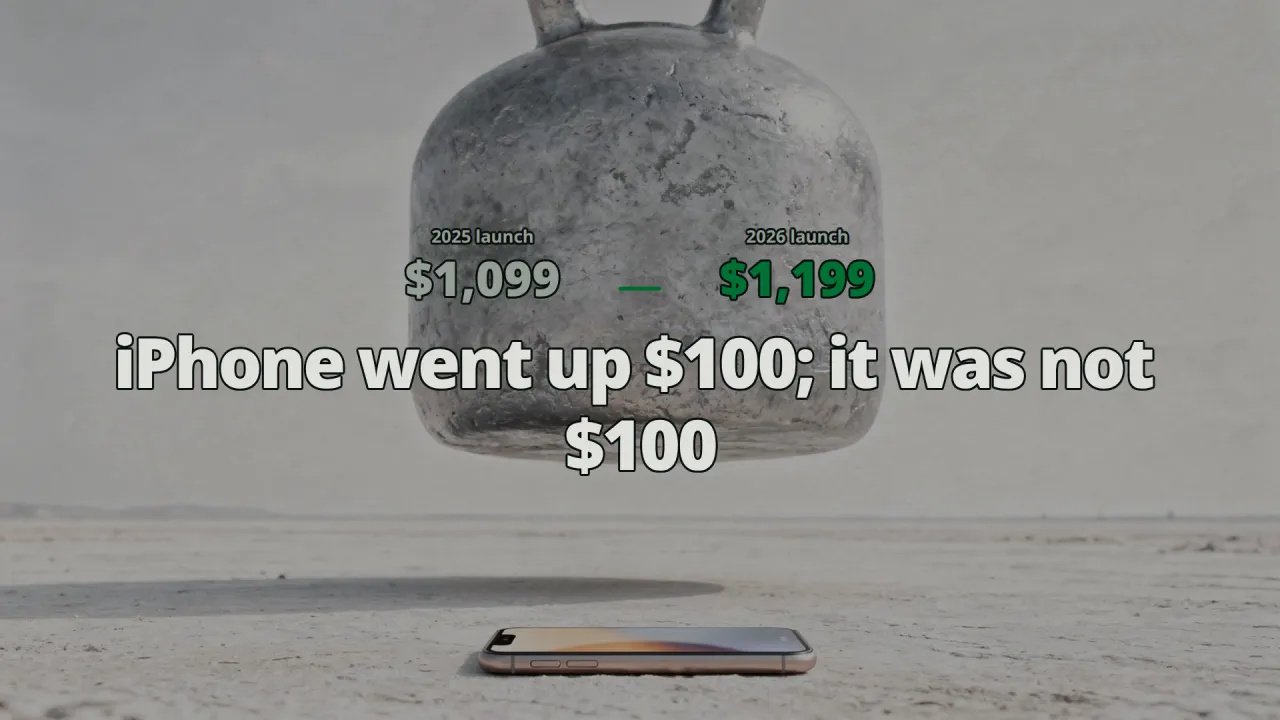
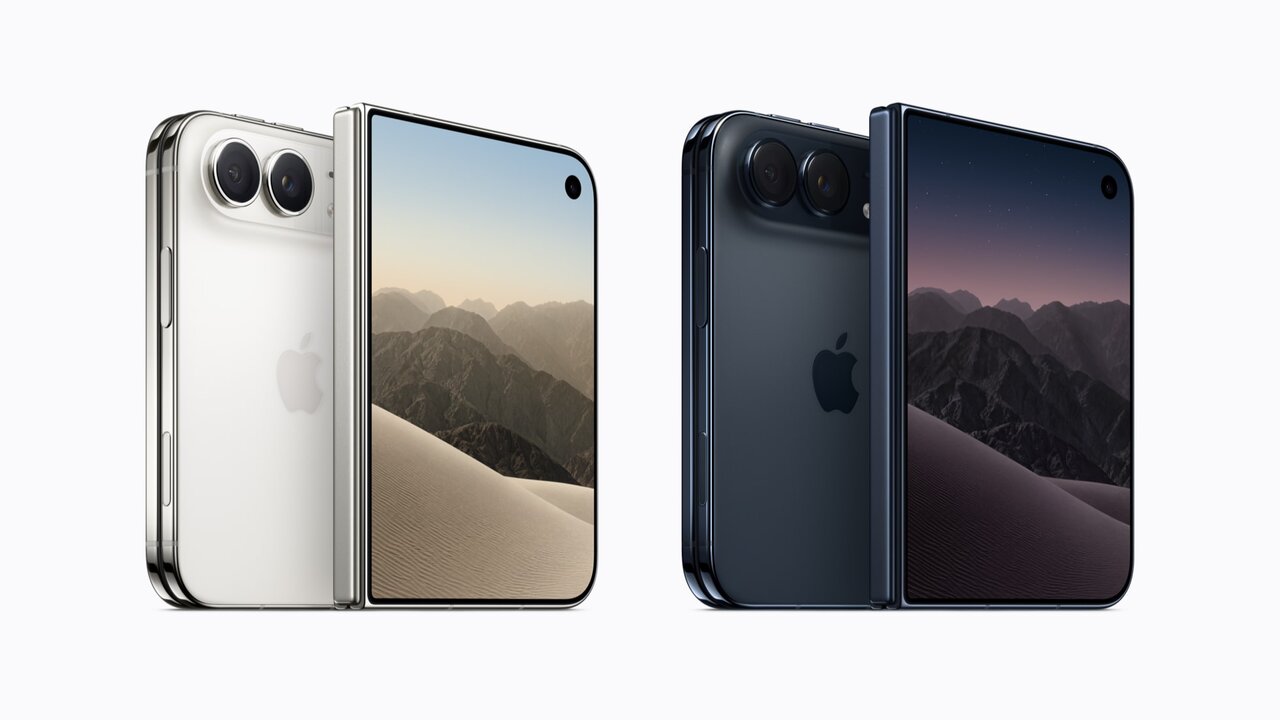
Apple introduced the iPhone 18 Pro, the iPhone 18 Pro Max and the first foldable iPhone in its history, the iPhone Duo, at the "Surprise and Shine" event in Cupertino on Wednesday, 9 September 2026 (18 Shahrivar 1405 in the Iranian calendar). It was the first major launch under John Ternus, who succeeded Tim Cook as chief executive on 1 September. The central figure in this report is a simple subtraction with two dated ends: the 256GB iPhone 18 Pro is priced at $1,199, while the iPhone 17 Pro at the same capacity started at $1,099 when it was unveiled on 9 September 2025. The difference is $100. But that $100 is not $100 at every capacity, and for an Iranian buyer it is not $100 at all.
Background
The span between the two launches is exactly one year, and both ends of it are dated and publicly announced. The first end: the starting price of the iPhone 17 Pro at 256GB, $1,099, at the launch on 9 September 2025. The second end: the starting price of the iPhone 18 Pro at the same capacity, $1,199, at the launch on 9 September 2026. The difference is $100, or about 9.1 percent. Zoomit published these figures broken down by capacity, and 9to5Mac independently reported that the iPhone 18 Pro and Pro Max start "$100 more than their predecessors"; MacRumors reported the same $100 increase.
Over that same year, another end moved that has nothing to do with Apple. According to Sahmino's own recorded time series, the free-market dollar stood at 100,830 tomans on 9 September 2025, the day the iPhone 17 Pro was unveiled, and at 232,700 tomans on 9 September 2026, the day the iPhone 18 Pro was unveiled. The difference is 131,870 tomans, a rise of 130.8 percent. Both readings come from one series and one source, and both are dated to the launch day of their own year.
Apple extended the increase across the whole family this year. According to 9to5Mac, the starting price of the iPhone 17 rose from $799 to $899 and the iPhone Air from $999 to $1,099; Zoomit likewise reported a $100 increase across four models, the iPhone 16, iPhone 17, iPhone Air and iPhone 17e. Apple simultaneously discontinued the iPhone 17 Pro and Pro Max.
The numbers
The dollar price table for the iPhone 18 Pro and its comparison with the previous generation, as reported by Zoomit on 10 September 2026, is as follows:
- iPhone 18 Pro 256GB: $1,199, against $1,099 for the iPhone 17 Pro; a $100 difference.
- iPhone 18 Pro 512GB: $1,399, against $1,199; a $200 difference.
- iPhone 18 Pro 1TB: $1,799, against $1,499; a $300 difference.
- iPhone 18 Pro Max 1TB: $1,899, against $1,599; a $300 difference.
- iPhone 18 Pro Max 2TB: $2,499, against $1,999; a $500 difference.
- iPhone Duo 256GB: $1,999, the most expensive iPhone in history at its base price.
Now convert those same figures into tomans at the free-market dollar of 232,700 tomans, recorded in Sahmino's data on 9 September 2026 at 19:59 Tehran time. This is a plain currency conversion, not an Iranian retail price, which is always above the raw conversion:
- iPhone 18 Pro 256GB: about 278.9 million tomans.
- iPhone 18 Pro 1TB: about 418.6 million tomans.
- iPhone Duo 256GB: about 465.2 million tomans.
- iPhone 18 Pro Max 2TB: about 581.5 million tomans.
And now the same one-year subtraction, this time in tomans. The 256GB iPhone 17 Pro on its launch day, at that day's dollar of 100,830 tomans, came to 110.8 million tomans. The 256GB iPhone 18 Pro on its launch day, at that day's dollar of 232,700 tomans, comes to 278.9 million tomans. The difference is 168.1 million tomans, a rise of 151.7 percent. For an Iranian buyer, "$100 dearer" has in practice meant 168 million tomans dearer.
The camera, the part that genuinely changed
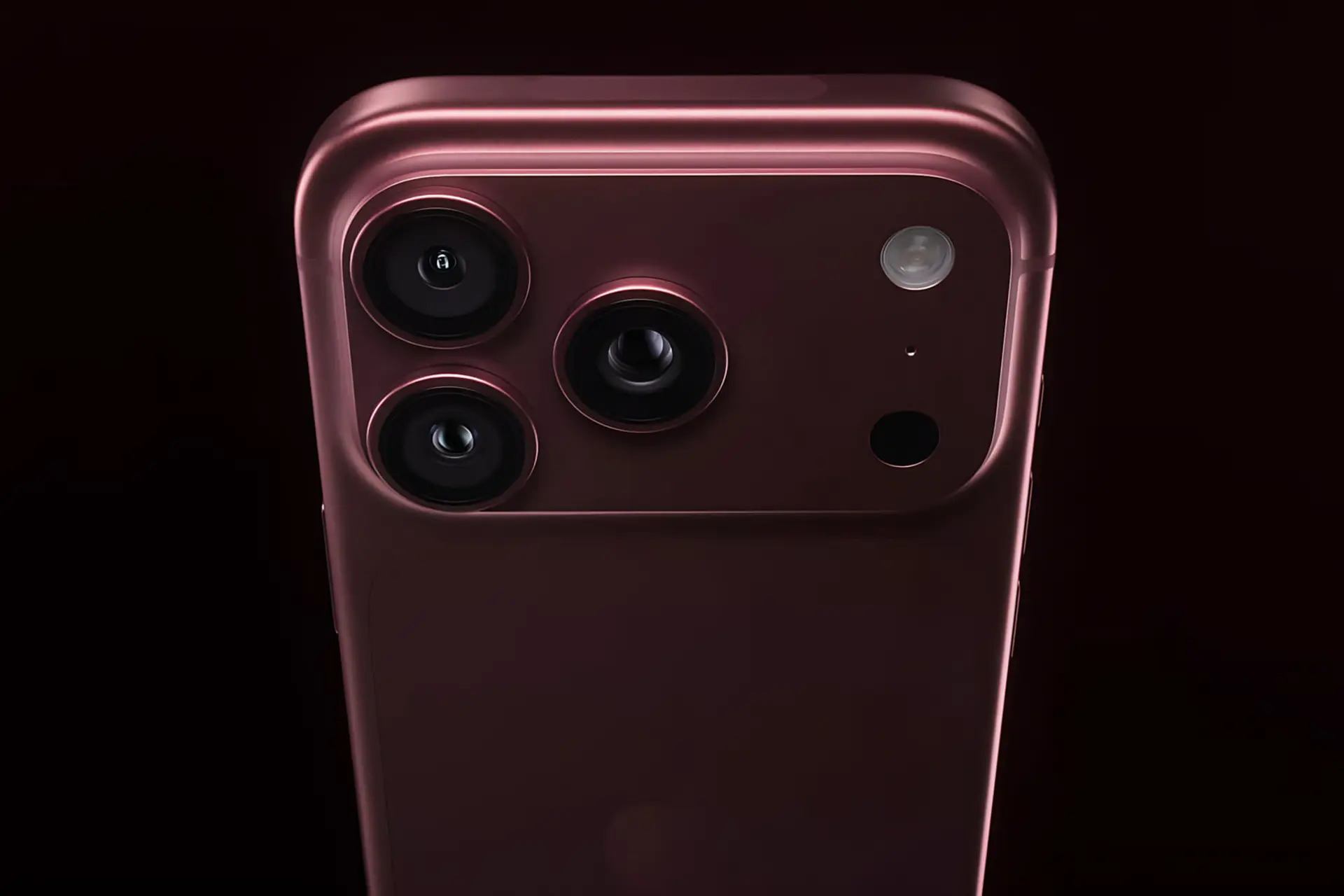
The most significant hardware change in the iPhone 18 Pro is the camera. According to Apple's official product page, the 48MP Fusion Main camera has a variable aperture for the first time, moving between four settings: ƒ/1.48, ƒ/1.8, ƒ/2.8 and ƒ/4.0. Apple says that at its widest the camera delivers around 50 percent better low-light performance, and at its narrowest it captures greater depth of field across the scene. New manual controls hand shutter speed and aperture to the user, and Photographic Styles 3 allows texture and grain to be adjusted.
The full array, again per Apple, comprises the 48MP Main camera with variable aperture, a 48MP Ultra Wide, a 48MP Telephoto and an 18MP Center Stage front camera. Apple also introduced a feature called Apple Reference Image, which makes the path of a photograph's edits traceable from capture to display. According to Zoomit, the iPhone 18 Pro Max camera was presented at the event by Maryam Azimi, an Iranian engineer at Apple.
The iPhone Duo takes a different route. According to Khabar Online, it carries a 48MP Fusion main camera with 2x optical telephoto zoom, a 48MP Ultra Wide shared with the iPhone 18 Pro, and a Center Stage front camera that shoots stills and video in any orientation. It supports 4K video at 120 frames per second with Dolby Vision, and a Duo Preview feature lets the subject see a live preview on the outer display. The inner display's FaceTime camera sits under the screen, and Touch ID on the side button replaces Face ID.
The drivers
The mechanism behind the dollar price increase is announced and dated. On Apple's fiscal third-quarter 2026 earnings call on Thursday, 30 July 2026, Tim Cook said Apple had "reluctantly" raised prices because the market is in what he called a "100 year flood on memory pricing." Sahmino published those remarks in Tim Cook says Apple reluctantly raised prices. Cook said on the same call that he expected memory costs to rise again in the September quarter. Zoomit likewise points to supply-chain shortages and globally higher memory and storage costs as part of the logic. That explains precisely why the increase is larger at higher capacities: what has become expensive is the memory itself, and the one-terabyte model holds more of it.
For an Iranian buyer, though, the second driver is larger than the first, and its size can be calculated exactly. Had the dollar stayed at last year's 100,830 tomans, the 256GB iPhone 18 Pro at its new price would have come to 120.9 million tomans, only about 10 million tomans above the iPhone 17 Pro a year ago. Of the total 168 million toman increase, roughly 10 million tomans is attributable to Apple's pricing decision and roughly 158 million tomans to the move in the dollar. That is close to 94 percent of the increase happening in Tehran rather than in Cupertino. The free-market dollar rate can be followed on Sahmino's dollar price page.
The Iranian market: registry, supply and a new obstacle
Everything so far has been currency conversion. The Iranian market adds its own layers, and the most important this year is a technical obstacle. According to Zoomit, the iPhone Duo has no physical SIM tray and works only with eSIM; and at least under current conditions, a handset without a physical SIM cannot be entered into Iran's registry system. The practical meaning for an Iranian buyer is plain: the most expensive iPhone ever made is, for now, a device that may not be legally usable on an Iranian mobile network. That could change, but it is the position today.
The second layer is the distance between retail prices and the raw currency conversion. The figures given above are Apple's official prices multiplied by the free-market dollar, and they represent an absolute floor; a real Iranian market price also carries the cost of traveller imports, the seller's margin, registry fees and exchange-rate risk. In a report headlined "Iran's iPhone price record is about to break," Zoomit raised the question of whether the iPhone Duo will enter Iran at more than one billion tomans. That is an estimate rather than a recorded rate, and we cite it as a question, not as a figure.
The third layer is timing. Per Apple, iPhone 18 Pro pre-orders open on 12 September with general availability on 18 September; for the iPhone Duo, pre-orders open on 16 October and availability follows on 23 October. Iran is not among Apple's official launch countries, so these models reach the Iranian market later and through unofficial channels.
The price of an iPhone against a monthly income
The question a macroeconomic analyst asks of an event like this is not how expensive the device is, but where it sits against income. Under the Supreme Labour Council's resolution at its 341st session on 24 Esfand 1404 (15 March 2026), the minimum daily wage for Iranian workers in 1405 was set at 5,541,850 rials and the minimum monthly base salary at 166,255,500 rials, or 16,625,550 tomans. That is base pay; allowances such as the housing allowance and the food-basket allowance are calculated separately.
On that basis, the 256GB iPhone 18 Pro equals roughly 17 months and the iPhone Duo roughly 28 months of minimum base pay. On the other side, according to US Bureau of Labor Statistics data published by Trading Economics, average hourly earnings in the United States stood at $32.53 in August 2026, which makes the iPhone Duo about 61 hours of work. In Germany, per Federal Statistical Office data, average gross monthly earnings in 2025 were 4,851 euros; at a euro-dollar rate of 1.163 in Sahmino's data on 10 September 2026, the iPhone Duo is about 0.35 months, or close to 11 days of work.
This comparison carries a methodological caveat that should be stated plainly: the Iranian figure is a minimum wage and the German figure is an average wage, and the two are not like for like. To make the comparison fairer, assume a monthly income of three times the minimum, about 49.9 million tomans; even then the iPhone Duo is still roughly 9 months of that income, against roughly 11 days in Germany. Even on the most conservative assumption the ratio is of the order of tens of times. What this ratio measures is purchasing power, not the price of the goods; the goods carry the same dollar price in both countries.
Return: when the phone is a working tool
One conventional way to assess this purchase is to look at it as a working tool rather than a consumer good. The break-even arithmetic is simple: the 256GB iPhone 18 Pro at the raw currency conversion is about 279 million tomans, so to pay for itself within a year it would need to generate about 23.25 million tomans of direct income a month, close to 1.4 times the 1405 minimum monthly base salary. That number is a yardstick, not a recommendation.
The channels through which such income is generated are specific and countable: video production and commercial photography, to which the new camera specifications are directly relevant. Shooting 4K at 120 frames per second with a variable aperture is capability that previously required separate equipment. Against that, three risks belong in the same calculation: the registry obstacle described above, the rapid depreciation of consumer electronics, and the fact that this device's toman price tracks the dollar rather than its usefulness. A consumer electronic device, unlike gold or foreign currency, is not a capital asset: its value falls over time even when its toman price rises because the currency moved. That distinction is the core of any answer to the question of "investment value."
Outlook
Three variables will set the toman price of these devices in the coming weeks, and all three are outside Apple's control. First, the free-market dollar, which rose from 2,060,100 rials on 29 August to 2,327,000 rials on 9 September. Second, the regulatory decision on registry treatment for handsets without a physical SIM, which has not been announced. Third, the path of global memory prices, which Apple's former chief executive said were still rising through the September quarter. These are announced variables, not a forecast of price behaviour.
Conclusion
On 9 September 2026 Apple launched the iPhone 18 Pro $100 above the previous generation, a gap that widens to $300 at one terabyte and to $500 on the two-terabyte iPhone 18 Pro Max, and introduced its first foldable iPhone at $1,999. For an Iranian reader the significance is not in the dollar figure but in the conversion factor: as long as the free-market dollar holds above 230,000 tomans, the toman price of the 256GB iPhone 18 Pro stays above 275 million tomans, through to general availability on 18 September; a fall in the free-market dollar below 220,000 tomans invalidates that reading. The one thing to remember is that of the 168 million toman rise in the price of a Pro iPhone over one year, about 94 percent was the work of the dollar and not the work of Apple.
What to watch
- The free-market dollar through to the iPhone 18 Pro's general availability on 18 September, on the dollar price page.
- Any official decision on registry treatment for handsets without a physical SIM tray.
- The first quoted retail prices for the iPhone 18 Pro in the Iranian market and their distance from the raw currency conversion.
- The trajectory of global memory prices and how it feeds into next-generation pricing, alongside Apple's share performance, which Sahmino examined in Apple shares fall despite a 22 percent jump in iPhone sales.
- The iPhone Duo pre-order date of 16 October and its release on 23 October.