Farshad Moghimi, deputy minister of industry, mining and trade and head of the Industrial Development and Renovation Organization of Iran (IDRO), said on Friday, 23 Mordad 1405 (August 14, 2026), that a revised bylaw under Iran's auto industry organization law takes effect next week. Under it, owners of worn-out ("frasudeh") vehicles who choose the "replacement" option when registering in the official scrappage system are referred directly to an automaker, with no lottery and no waiting list, and can receive up to 400 million tomans in bank financing at roughly 8 percent interest, repayable over three years. But measured against today's new-car prices, even the cheapest model on the market remains hundreds of millions of tomans out of reach.
Background
According to Moghimi, drafting the bylaw took more than a year and involved roughly 18 to 19 government bodies before it was approved by the Cabinet of Ministers and recently issued for implementation. The scrappage-and-replacement push is not new: Moghimi said more than 70,000 vehicles were scrapped and replaced under a similar framework last year (Persian year 1404). The price of each scrappage certificate was set around three to four months ago, at about 60 million tomans; some owners of worn-out cars may qualify for up to three certificates, worth a combined 180 million tomans. The new plan, effective next week, layers a fresh low-interest bank facility on top of that older certificate scheme to boost the incentive to replace rather than merely scrap.
The Numbers
- 400 million tomans: the financing ceiling for replacing one worn-out car, at roughly 8 percent interest with a three-year repayment term (Moghimi, Friday, 23 Mordad 1405, via ISNA, IRNA, Eghtesad Online, Donya-e-Eqtesad and Khabaronline).
- 60 million tomans: the value of each scrappage certificate, set roughly three to four months earlier (around the end of spring 1405).
- Up to 180 million tomans: the combined ceiling for owners eligible for three scrappage certificates.
- More than 70,000 vehicles: scrapped and replaced under the same framework in 1404, per Moghimi.
- 1.15 billion tomans: the cash price of the Saipa Pride 151 GX, the cheapest new car on Sahmino's own price list, as of Friday, 23 Mordad 1405.
- Sahmino's own calculation: adding the maximum financing (400 million tomans) to the maximum certificate value (180 million tomans) puts total state assistance at about 580 million tomans, leaving roughly 570 million tomans of the cheapest new car's price still to be covered by the buyer. For an owner who qualifies for only one certificate (60 million tomans), that gap widens to about 690 million tomans.
Drivers
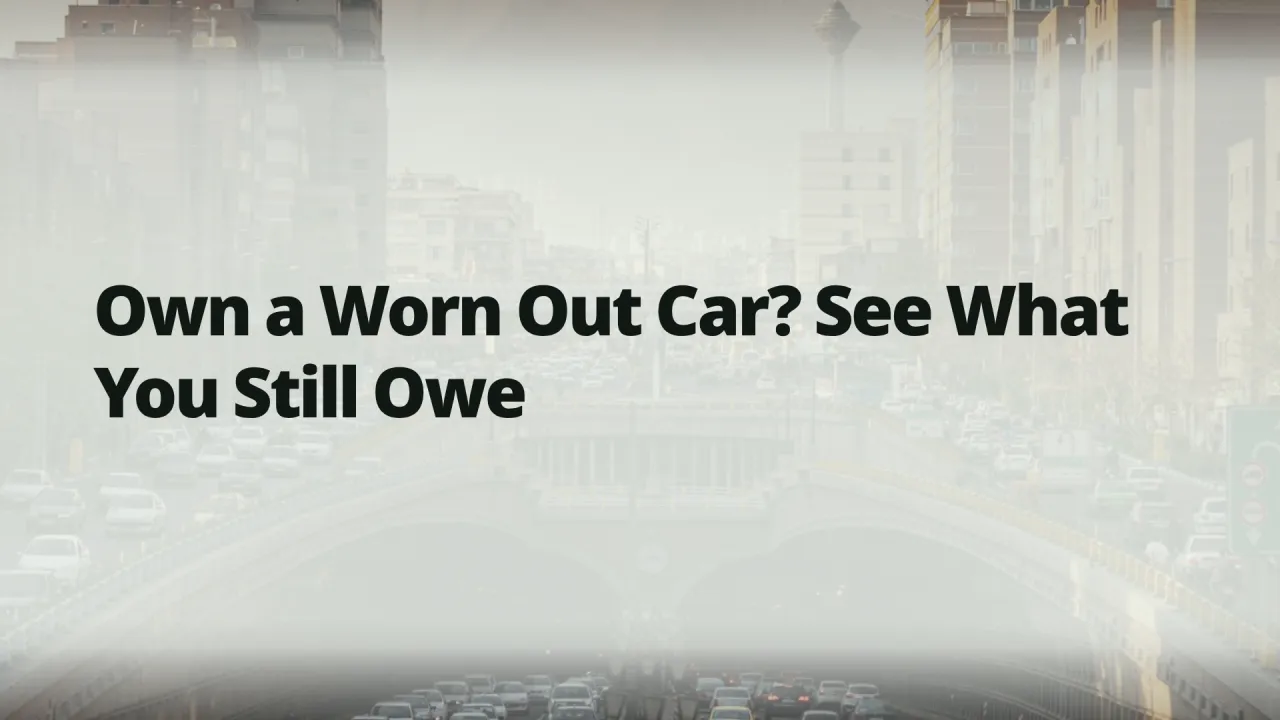
The government's push to retire worn-out cars is driven mainly by high fuel consumption and air pollution, effects Moghimi said "citizens have felt more acutely in recent years." Alongside the financial incentive, the law already restricts worn-out cars from driving in Iran's largest cities: Moghimi said traffic police have announced that transferring ownership or re-plating these vehicles is banned in those cities, with smart penalty codes applied automatically. Fuel quotas for these cars continue only if the owner has registered in the scrappage system. The restrictions are not limited to private cars; they also cover ride-hailing vehicles, public transport fleets, and service and freight vehicles. Moghimi also acknowledged the bylaw was designed for a period when the economy was expected to grow 8 to 10 percent a year, not the current wartime conditions, but said the government remains legally obligated to implement it regardless.
Outlook
Once the plan takes effect next week, its first real test will be how many owners of worn-out cars choose the "replacement" option over simple scrappage without a replacement. The roughly 8 percent interest rate is below prevailing informal-market lending rates, but final details, including exact installment amounts, fees and the precise payment mechanism, have not yet been published in the plan's executive guidelines. Last year's experience, more than 70,000 vehicles, suggests the program's execution capacity is limited; it remains to be seen how much of the coming weeks' likely demand automakers can absorb within a reasonable timeframe. This paragraph is the author's own assessment, not a report of a confirmed event.
Bottom Line
Starting next week, Iran will roll out a 400 million toman facility at roughly 8 percent interest, repayable over three years, for replacing worn-out cars, while simultaneously tightening driving restrictions on those vehicles in major cities. But even combined with the maximum scrappage-certificate value, that assistance covers less than half of the cheapest new car's price; the owner of a worn-out car still needs to come up with at least 570 million to 690 million tomans from personal savings or supplementary financing. The practical takeaway for owners of worn-out cars is that registering in the scrappage system, even before deciding on replacement, is necessary to keep their fuel quota and avoid new driving restrictions.
What to Watch
- Publication of the plan's final executive guidelines and exact installment terms, starting next week
- How high-demand models like the Pride 151 and the Saina react to any pickup in replacement-driven demand
- Iran's Statistical Center's Mordad-month report on car-price trends
Sahmino has previously covered Iran Khodro's oversubscribed lottery and the broader question of why cars became quasi-assets in Iran. The full list of new car prices is available on Sahmino's car price page.