
IPOs on the Tehran Stock Exchange: How Book Building Works
Learn what an IPO really is, how the order-registration (book-building) method discovers a price step by step, what a per-code quota means, and why the first sessions of an offering are never a guaranteed profit.
Transcript
We have all heard of IPOs, but what really happens behind one, and why does it create so much misunderstanding? In this lesson we open up how an IPO works, with no promise of profit. An IPO is the first time a company's shares enter the market. Today the common method on the Tehran exchange is order registration, or book building. Before offering day, a notice states the price band and the per-code quota. You register one price inside the band and a volume up to the quota. Time priority is gone, so registering earlier gives you no extra shares. Then a single discovered price is set, at which all the shares are sold. Suppose one hundred million shares are offered, with a five hundred share quota per code. If one million codes take part, each receives only about one hundred shares; the quota is a ceiling, not a guarantee. In Iran, the daily price limit delays discovery for days and builds buy queues. For scale, the largest IPO ever on the exchange was five percent of Taban Group, in July twenty twenty six. Watch out for three false beliefs: guaranteed profit, earlier means more, and a higher bid means more shares. The key point: the per-code quota is a ceiling, and the first sessions reflect the price limit, not certain profit. Now you know: an IPO is a mechanism, not a promise of profit. Full lesson on Sahmino.com; got a question? Comment.
Related videos
 01:08Short
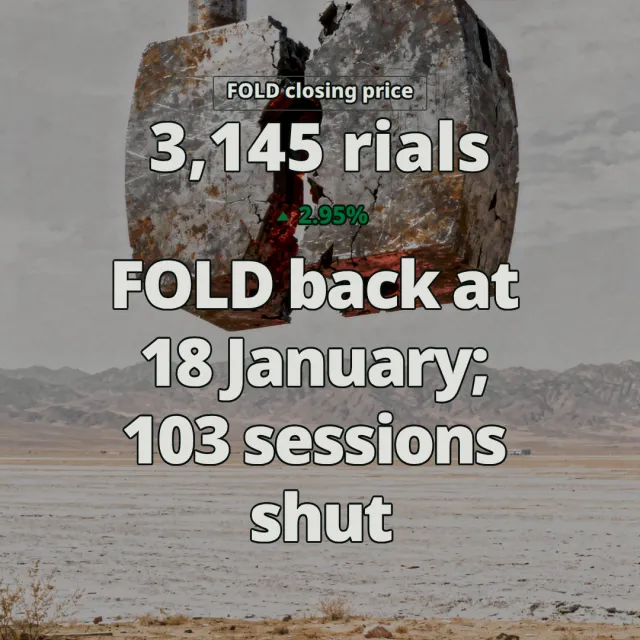
Mobarakeh Steel closed at its highest since 18 January 2026 after 103 sessions without a trade, on the day Tehran's index closed red (Monday, 14 September 2026)
 01:16Short
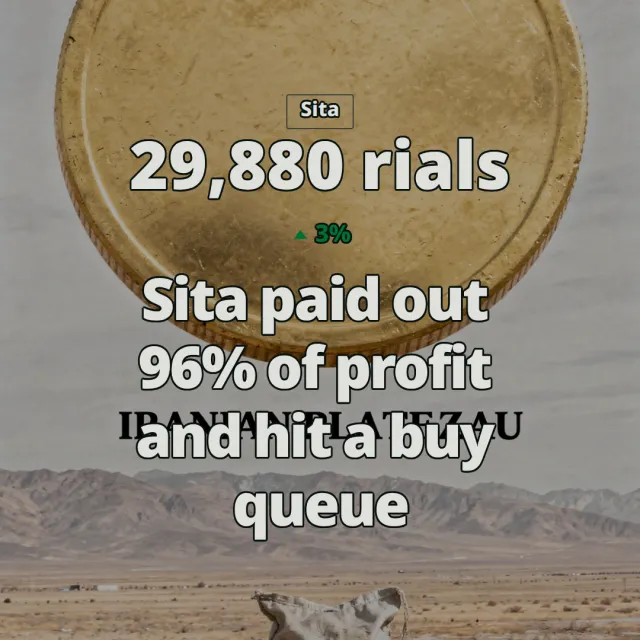
Sita's AGM voted out 96.58 percent of the profit for the year to 21 May 2026; the share has closed at its 3 percent daily cap in all four sessions since it reopened and ended 13 September in a 28 million share buy queue
 01:21Short
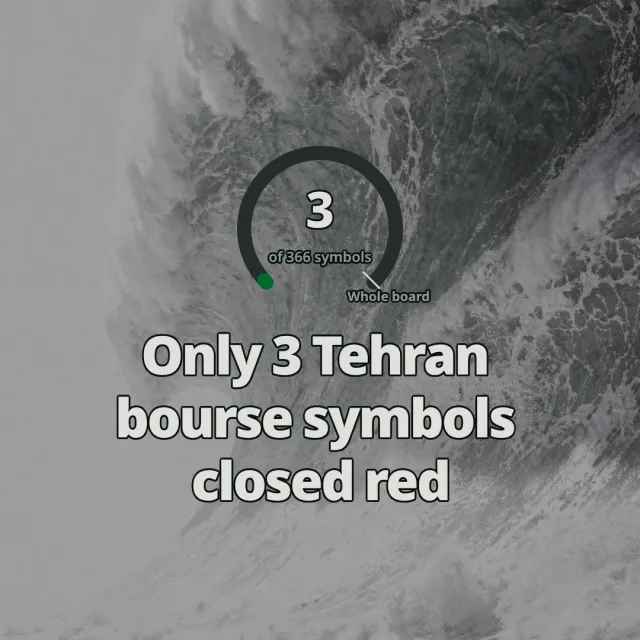
Tehran's TEDPIX Rose 184,041 Points to 6,907,617 on Monday, September 7, 2026; Only 3 of 366 Bourse Symbols Closed Red
 01:25Short