
Newsroom
Short, verified market news summaries; every item names its source and publication date.
India's Trade Minister Says Gulf and Israel Trade Deals Will Be Finalized Once Region Stabilizes
According to Donya-e-Eqtesad, India's Minister of Commerce and Industry Piyush Goyal said on Wednesday, September 2, 2026 (11 Shahrivar 1405), at the annual meeting of India's auto parts manufacturers association, that New Delhi will finalize free trade agreements with Israel and Gulf Cooperation Council members, including Saudi Arabia, the United Arab Emirates, Qatar, Kuwait, Oman and Bahrain, as soon as stability returns to the region, as part of its effort to diversify export markets. Citing Bloomberg, Donya-e-Eqtesad reported that India and Israel had agreed during Prime Minister Narendra Modi's February 2026 visit to Jerusalem to soon complete bilateral trade talks, an agreement reached shortly before the US and Israeli war on Iran began. India, which imports nearly 90 percent of the crude oil it consumes, is highly exposed to the economic fallout of the conflict. Goyal also cited India's trade deal with the United Kingdom, in effect since July, and ongoing talks with the European Union and the United States.
Donya-e-Eqtesad, citing Bloomberg
Pakistan's Five Refineries Set to Sign $6 Billion Upgrade Agreements
According to Pakistani daily Business Recorder, carried by Oilprice.com on Friday, 6 Shahrivar 1405 (August 28, 2026), Pakistan's five oil refineries, PARCO, Pakistan Refinery Limited, National Refinery Limited, Cnergyico and Attock Refinery Limited, are expected to sign agreements in early September under the country's Refinery Upgradation Policy, unlocking as much as $6 billion in investment. Pakistan's Federal Minister for Petroleum, Ali Pervaiz Malik, said the upgrades will let refineries begin producing Euro 5 compliant, ultra low sulfur fuel and reduce Pakistan's reliance on fuel imports. Oilprice.com noted that since the Iran war disrupted oil and fuel supply from West Asia, Pakistan has paid record premiums for fuel imports and its highest LNG cargo prices since 2022.
Oilprice.com, citing بیزینسریکوردر
Pakistan's Finance Minister Says Islamabad Sought a $10 Billion Swap Line From the US
Pakistan's Finance Minister Muhammad Aurangzeb said in a Financial Times interview published Monday, 2 Shahrivar 1405 (August 24, 2026), and carried by Donya-e-Eqtesad on Tuesday, 3 Shahrivar, that Islamabad requested a 10 billion dollar currency swap line from Washington last month to signal confidence to private investors. He described the move as part of a shift in Pakistan's economic policy away from reliance on Chinese loans toward US backed financing. Aurangzeb said the US Export-Import Bank and the US International Development Finance Corporation have shown willingness to take on risk in Pakistan, including financing Boeing aircraft purchases by the newly privatized Pakistan International Airlines and helping modernize the country's oil refineries. According to World Bank data, China holds 23 percent of Pakistan's 129.7 billion dollar external debt, its largest creditor, while Pakistan's trade deficit for the year ending in June reached 39.5 billion dollars, the highest in four years.
Donya-e-Eqtesad, citing Financial Times

India's Oil Import Costs Jump as Hormuz Crisis Sends Freight Rates Up 411 Percent
India's crude oil import bill has risen sharply since the Iran war began in late February and Iran closed the Strait of Hormuz, Oilprice.com reported. Freight rates for VLCC tankers on the Ras Tanura to India route have jumped 411 percent to 4.34 dollars a barrel in August 2026, from 0.85 dollars a barrel before the war. War risk insurance for a single Hormuz passage has climbed from about 250,000 dollars before the war to as much as 10 million dollars per crossing. Brent crude prices have risen about 25 percent since the war began and have spiked above 100 dollars on several occasions, according to the report. India paid 60 percent more for crude imports in the April to June quarter than a year earlier, and its July import bill was 41 percent higher year on year.
Oilprice.com

India's Russian oil imports hit a record 2.6 million barrels a day amid the Gulf crisis
According to Donya-e-Eqtesad, reporting Monday, Shahrivar 2, 1405 (August 24, 2026) on Financial Times coverage citing Kepler senior analyst Sumit Ritolia, India imported more than 2.6 million barrels a day of Russian oil on average in June and July 2026, up from just 1 million barrels a day in February, when U.S. and Israeli operations against Iran began. Russian oil now accounts for more than half of India's roughly 5 million barrel a day crude imports, the highest level since the war started. The report said the sharp drop in oil transiting the Strait of Hormuz has again pushed India, which relies on imports for more than 90 percent of its oil and gas needs, toward Russian crude, despite U.S. exemptions issued for the purchases.
Donya-e-Eqtesad, citing Financial Times and مؤسسه کپلر
Iran and Afghanistan Agree to Boost Border Trade and Finish the Farah Crossing Road
Officials from Afghanistan's Farah province and Iran's South Khorasan province met on Thursday, August 20, 2026 (29 Mordad 1405) to discuss strengthening border cooperation and facilitating trade. According to Tasnim News Agency, as carried by Ecoiran, Farah governor Mohammad Hafez Mojahed and South Khorasan governor Seyyed Mohammad Reza Hashemi agreed to complete the remaining 64 kilometers of the road leading to the Abu Nasr Farahi border crossing before the start of winter. According to Hashemi, Iran exported goods worth 1.85 billion dollars to Afghanistan via this route last year, and Afghanistan's imports from Iran have risen 80 percent since the recent war began. The two sides also discussed creating a joint market, easing visa procedures, and cooperating on agriculture and tourism.
Ecoiran, citing Tasnim

Coking Coal's 25 Percent Surge Squeezes India's Steelmakers
The price of coking coal, or metallurgical coal, one of the essential raw materials in steelmaking, rose 25 percent in the first seven months of this year compared with last year, squeezing the margins of India's steelmakers. According to Oilprice, citing Reuters, India imports as much as 95 percent of its coking coal demand, a dependence that has left its steel industry exposed to supply disruptions. Analysts at consultancy CRU said the price rise stemmed from a slower ramp up of new mines, higher prices due to the Iran war, supply disruptions in Australia, and a deadly coal mine explosion in China's Shanxi province that killed more than 80 people. India expanded its steelmaking capacity 10 percent in fiscal 2026 to about 220 million tons a year, but executives said competition from Chinese steel prevents Indian producers from raising their selling prices.
Oilprice
India to Roll Out Piped Gas Incentive Scheme From September 1 to Ease Iran War Driven LPG Cost Surge
India's government has approved an Incentive Scheme for Promotion of Domestic PNG Connections, effective from September 1, 2026 (10 Shahrivar 1405), aimed at fast tracking the expansion of piped natural gas (PNG) connections in Indian households, as the cost of importing liquefied petroleum gas (LPG) has soared since the Iran war cut off part of Middle East supply. According to Oilprice.com, published Tuesday, 26 Mordad 1405 (August 18, 2026), about 60% of Indian households rely on LPG for cooking, and before the war 90% of India's LPG imports passed through the Strait of Hormuz, so the route's disruption has directly pressured Indian consumers. Under the new scheme, city gas distributors will be allocated an additional 200 standard cubic meters of cheaper, domestically produced gas for every incremental PNG connection, to substitute costlier imported LNG. The scheme will run in two tranches over six months.
Oilprice.com

Pakistan Sets Record Spot LNG Buying to Keep Power Flowing, Generation Costs Jump 38%
According to an analysis by research firm Arif Habib Limited published by Oilprice.com on Tuesday, August 18, 2026 (27 Mordad 1405), Pakistan's power generation costs rose 38 percent in July from a year earlier. With regular cargoes from term supplier Qatar disrupted by the renewed closure of the Strait of Hormuz, Pakistan was forced to buy LNG on the spot market at the highest prices in four years. State-run importer Pakistan LNG Limited accepted a mid-July offer from TotalEnergies for a cargo priced as high as $21.88 per million British thermal units, the most Pakistan has paid for a single cargo since the Iran war began in February 2026. Power generation also rose 7 percent in July, the second highest output for that month in the country's history.
Oilprice.com, citing Arif Habib
Russia's Share of India's Oil Imports Hit a Record Above 50% in July
According to Oilprice.com, citing Reuters, in a report published Friday, August 14, 2026 (23 Mordad 1405), Russian crude accounted for more than 50 percent of India's total oil imports in July, the highest share Russia has ever recorded in India's import mix. Trade sources cited by Reuters said Russia exported crude to India at a rate of about 2.47 million barrels a day in July, up 62.4 percent from a year earlier and representing 50.83 percent of total oil imports into India, the world's third largest oil buyer. July's volume was nonetheless a slight decline from June's average of 2.6 million barrels a day. The shift comes as Western sanctions on Russian oil exports and reduced Persian Gulf oil flows tied to the Strait of Hormuz crisis have reshaped the buying patterns of India and other major Asian importers in recent months.
Oilprice.com, citing Reuters
Two New Sites Weighed to Expand India's Strategic Petroleum Reserves
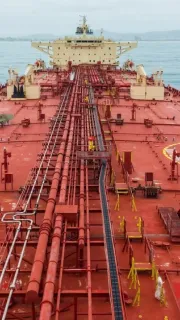
According to Oilprice.com, in a report published Thursday, 22 Mordad 1405 (August 13, 2026), India's state-owned Strategic Petroleum Reserves Ltd (ISPRL) is finalizing feasibility studies for two new strategic reserve sites, one at Bikaner in Rajasthan and another at Bina in Madhya Pradesh. Indian media said the plans would add to a separate project by state-run Oil and Natural Gas Corporation (ONGC) to build a roughly 13 million barrel storage site at Mangaluru. Following the disruption of crude flows through the Strait of Hormuz, India, whose current reserve capacity covers only about eight days of national demand, is seeking to bolster its energy security. India's Minister of State for Petroleum and Natural Gas, Suresh Gopi, earlier told parliament that half of the new Mangaluru capacity would be reserved for strategic storage and half for ONGC's commercial operations, a project the Economic Times had previously reported carries an estimated investment of $1.6 billion.
Oilprice.com

Indian State Refiners Seek 6 Million Barrels of Spot Crude to Bypass Hormuz Disruption
According to a Reuters report carried by Oilprice.com on Wednesday, August 12, 2026 (21 Mordad 1405), two Indian state refiners, Mangalore Refinery and Petrochemicals Limited (MRPL) and Hindustan Petroleum Corporation Limited (HPCL), are together seeking to buy 6 million barrels of crude oil via spot tenders, as their term deliveries have been constrained by the ongoing Strait of Hormuz crisis. HPCL is seeking up to 4 million barrels for September and October delivery, while MRPL wants spot crude for the October 10 to 20 window and has asked suppliers to avoid cargoes that need to transit the Strait of Hormuz or the Red Sea. MRPL became the first Indian refiner to set that condition for suppliers at the end of July. In recent weeks, India's state refiners have also increased purchases from West Africa; last week MRPL bought about 1 million barrels of Omani crude from Mitsui at a premium of about $3 a barrel to Dated Brent, and state run Indian Oil Corporation (IOC) bought 4 million barrels of West African crude, including Nemba, Saxi Batuque and Djeno grades, from Chevron.
Oilprice.com, citing Reuters

India's ONGC set to take over operatorship of two Venezuelan oil projects from PDVSA
India's Oil and Natural Gas Corporation (ONGC), through its overseas arm ONGC Videsh, is preparing to sign new agreements to take over operatorship of two oil projects in Venezuela from state owned PDVSA. According to an exclusive Reuters report published Wednesday, 14 Mordad 1405 (5 August 2026), ONGC Finance Director Anupam Agarwal said on the company's June quarter earnings call that it now has "full freedom" to pursue Venezuela opportunities after sanctions related constraints eased. ONGC Videsh currently holds a 40% stake in the San Cristobal oil field and, with other Indian firms, an 18% interest in the Carabobo-1 heavy oil project. According to Kpler data cited by Bloomberg, Venezuela's crude exports fell 25% in July from the prior month to about 856,000 barrels per day, after shipments to India were roughly halved from June as improving Middle East oil supply reduced Asian demand for discounted Venezuelan barrels.
Reuters (منتشرشده در اویلپرایس)
Hormuz bottleneck pushes Indian refiners to Omani and West African crude, with 5 million barrels bought in the latest tenders
Oilprice.com reported on Wednesday 5 August 2026, citing trade sources who spoke to Reuters, that several Indian refiners have recently bought crude from Oman and West Africa through tenders, as term supplies from West Asia remain choked by shipping constraints at the Strait of Hormuz and Bab el-Mandeb. State controlled Mangalore Refinery and Petrochemicals acquired about 1 million barrels of Omani crude at a premium of some $3 a barrel to Dated Brent from Mitsui. Indian Oil Corporation, the country's largest refiner by capacity, bought a total of 4 million barrels of West African crude from Chevron, including the Nemba, Saxi Batuque and Clov grades from Angola and Congo's Djeno. Earlier in the week, state owned Hindustan Petroleum bought 2 million barrels of Nigerian crude, the Okwuibome and Utapate grades, from Glencore. According to the report, Indian refiners have been scrambling to replace lost West Asian supply since the start of the Iran war, and Indian imports of Russian crude hit an all time high in July, accounting for more than half of the country's total crude imports. Even so, that has not been enough, and Indian refiners are seeking supply that does not have to transit any West Asian chokepoint, looking as far afield as Angola and Venezuela.
Oilprice.com
India weighs levies on gas and LPG to fund a $42 billion strategic fuel reserve plan
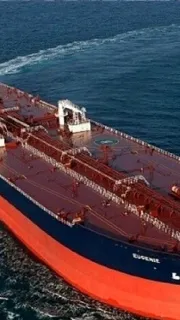
Oilprice.com reported on Wednesday 5 August 2026, citing the Business Standard newspaper, that India's government is considering levies on natural gas and liquefied petroleum gas (LPG) consumption to fund part of a $42 billion strategic fuel reserve programme. The levies would raise about $1.5 billion a year. The proposal includes a levy of 1.29 rupees ($0.0136) per kilogram of LPG, expected to generate roughly $460 million a year, and 1.43 rupees per standard cubic metre of natural gas, raising about $1 billion annually at current consumption. Unlike India's existing strategic petroleum reserve system, the plan would create dedicated emergency stockpiles for LNG and LPG alongside additional crude storage, with the decade long programme targeting capacity covering roughly two months of crude oil and LNG demand and about six weeks of LPG consumption. India estimates it needs an additional 28 million tonnes of crude storage capacity, 9 million tonnes for LNG and 4 million tonnes for LPG over the next decade. It currently has 5.33 million tonnes of government owned strategic crude storage with a further 6.5 million tonnes under construction, but no dedicated strategic reserves for LNG or LPG, and its existing emergency reserves cover less than 10 days of demand, against around 100 days in Japan and South Korea according to Reuters. The proposal has not yet received cabinet approval and, if adopted, would raise household gas bills by about 2%.
Oilprice.com
Iran Chamber urges Chabahar and Karachi ports as the axis for a leap in trade with Pakistan
Following a visit to Islamabad by a trade delegation led by the vice president of the Iran Chamber of Commerce, an Iran-Pakistan business conference was held. Hossein Pirmoazen, vice president of the Iran Chamber, told the conference that expanding cooperation between ports, railways and road transport, and above all using the capacity of Chabahar and Karachi, could bring about a major shift in trade between the two countries. He listed the current obstacles: containers held up at Pakistani customs, customs offices that do not operate around the clock, problems with banking transfers, Iranian guarantees not being accepted in Pakistan, and letters of credit not being opened. As long as a trader cannot receive or make payments with confidence, he said, expanding trade will be difficult, and practical mechanisms must be defined for settling transactions in national currencies, through barter and by other methods agreed between the two countries. The proposals raised included shortening customs clearance times, reducing delays in border areas, building a database of private sector operators on both sides, strengthening arbitration and dispute resolution between the two chambers of commerce, and removing tariff and non tariff barriers. Pirmoazen also urged a move beyond simple goods trade towards joint investment and joint production in areas such as food industries, agriculture, energy, petrochemicals, textiles, pharmaceuticals, mining and technology.
EcoIran, citing Iran Chamber of Commerce

India's Russian crude imports hit a record 2.8 million barrels per day in July, 55.5% of its total intake
According to Kpler vessel tracking data cited by the Times of India on Monday 3 August 2026, India's crude oil imports from Russia rose to 2.8 million barrels per day in July 2026, up from the previous high of 2.7 million bpd in June and the highest average monthly volume ever recorded. Total Indian crude imports edged up from June to stand at just over 5 million bpd in July, putting Russia's share of India's overall crude imports at 55.5%. Indian refiners have continued to rely on Russian volumes amid threats to shipping in the Strait of Hormuz and, more recently, at the Bab el-Mandeb Strait in the Red Sea. Alongside the record Russian volumes, Indian refiners also boosted imports from Saudi Arabia and Iraq, as millions of barrels made it out of the Persian Gulf during the mid June to mid July window in which the Strait of Hormuz was tentatively open to tanker traffic. India also imported crude from Kuwait for the first time since March. The United Arab Emirates remained India's second largest crude supplier behind Russia, as it raises production and shipments of crude loaded on tankers outside the Strait of Hormuz. India maintained high levels of Russian imports in July even after the end of the US waiver the previous month: Washington quietly let the waiver allowing purchases of Russian oil loaded on tankers expire on 17 June, as the United States and Iran signed a memorandum of understanding to continue negotiations on a deal.
Oilprice.com, citing Kpler and تایمز آو ایندیا

India's Manali refinery to raise capacity by a third to 280,000 barrels per day
India's Chennai Petroleum Corporation Limited (CPCL) said in its 2025/2026 report, reported on Monday 3 August 2026, that it plans to raise crude refining capacity at its Manali refinery in Chennai by a third, from 210,000 barrels per day to 280,000 barrels per day. The company did not give a timeline for the expansion. CPCL is a subsidiary of India's top state controlled refiner, Indian Oil Corporation, and the Manali plant produces fuels, lubricants, waxes and petrochemicals. The company's smaller Cauvery Basin Refinery in Nagapattinam was decommissioned in 2019 because its existing configuration could not meet product specifications. CPCL had planned to rebuild it, but earlier this year shifted the plan's focus from a refinery to a petrochemicals complex, a project in which Indian Oil Corporation holds a 75% stake. According to the International Energy Agency's World Energy Investment 2026 report, planned expansions of oil refining capacity are set to lead India's energy investment this year and in the coming years, alongside solar installations. India's energy investment has risen by an average of 11% over the past five years, with oil refining investment up 23%, putting the country on track for a 15% increase in refining capacity by 2030. India is one of Asia's largest oil buyers and a key driver of global crude demand.
Oilprice.com
Pakistan's state oil company signs a deal with a Canadian firm to lift domestic heavy crude output
Pakistan's state owned Oil and Gas Development Company Limited (OGDC) said on Tuesday 4 August 2026 that it had signed an agreement with Canada's Synergetic Oil Tools Inc to deploy advanced Passive Energy Tool technology at heavy crude oil fields. The company said the technology is designed to improve flow assurance in highly viscous crude oil wells by optimising fluid characteristics, reducing the frequency of workovers, minimising well downtime, lowering operating costs and decreasing the use of production chemicals. OGDC holds the largest exploration acreage in Pakistan and has the country's highest oil and gas reserves, producing about 166,497 barrels of oil equivalent per day. That output is nearly 49% of domestic crude oil production, 28% of Pakistan's natural gas and 34% of its liquefied petroleum gas. Key fields under its management include Qadirpur, Nashpa, Mela, KPD-TAY and Bettani. Islamabad has been scrambling for oil supply since the Iran war began, and is seeking to raise domestic crude output to reduce its reliance on imports. It is also encouraging Persian Gulf producers to set up crude reserve buffers at a planned Energy City near one of its ports. Pakistan is one of Iran's trading neighbours, and the shape of its energy supply bears on cross border commerce between the two countries.
Oilprice.com
India's ONGC more than doubles profit to $1.8 billion even as output falls 3.4%
India's Oil and Natural Gas Corporation (ONGC) reported net income of 170.34 billion rupees, about $1.8 billion, for the quarter ended June, in results reported on Tuesday, 4 August 2026 (13 Mordad 1405). The figure beat the 152.67 billion rupee average estimate compiled by Bloomberg. Revenue jumped 45% from a year earlier to 464.60 billion rupees. The driver was higher crude and natural gas prices together with a weaker rupee, which more than made up for another drop in production. The company earned 50.4% more on every barrel of crude it sold compared with a year earlier, while earnings from gas produced at legacy fields rose 5.4% and earnings from newer deepwater acreage jumped 61.5%. Standalone oil and gas output, by contrast, fell 3.4% to 9.4 million metric tons of oil equivalent as aging fields continued to decline and newer projects were slow to make up the difference. ONGC supplies about two thirds of India's oil and more than half of its gas. India still imports nearly 90% of the oil it consumes and about half its gas, a dependence highlighted by the supply disruption from the West Asia war. India's Russian crude imports hit a record 2.8 million barrels per day in July, accounting for 55.5% of total imports. The company also plans to build a 13 million barrel storage facility at Mangaluru, with half reserved for strategic stocks; India's existing strategic reserves cover only about eight days of demand.
Oilprice.com

Indian state refiner buys 2 million barrels of Nigerian crude to bypass the Hormuz bottleneck
India's state-owned refiner Hindustan Petroleum Corporation Limited (HPCL) has bought 2 million barrels of crude oil from Nigeria. Trading sources told Reuters on Tuesday, 4 August 2026 (13 Mordad 1405), that the company acquired Okwuibome and Utapate grades from commodity trader Glencore through a tender. The cargo will feed HPCL's refinery in the state of Rajasthan, which can process 180,000 barrels per day and in which Hindustan Petroleum holds a 74% stake, with the rest held by the Rajasthan state government. Since the start of the Iran war, Indian refiners have scrambled to replace lost West Asian supply with deliveries from producers farther away. India's imports of Russian crude have risen sharply in recent months, hitting an all-time high in July and accounting for more than half of the country's total crude imports, but the report says even that is not enough and refiners are seeking supply that does not have to transit West Asian chokepoints, from Angola in Africa to Venezuela in South America. HPCL managing director Vikas Kaushal had earlier told the Indian outlet Economic Times that the company received almost nothing from its term contracts in the first quarter because many cargoes were stuck on the western side of the Strait of Hormuz. India is the world's third largest crude oil importer, and the redirection of its purchases is one of the direct consequences of the Hormuz disruption for the global oil market.
Oilprice.com, citing Reuters
Iran's industry minister presses Pakistan to clear Iranian containers stuck at Karachi port
Iran's Minister of Industry, Mine and Trade Seyed Mohammad Atabak pressed Pakistan on Tuesday 4 August 2026 to urgently resolve problems affecting Iranian containers moved to the port of Karachi, in a bilateral meeting with Pakistani Commerce Minister Jam Kamal Khan in Islamabad. His requests covered transfer and shipping permits, waiving storage charges, and removing administrative obstacles to clearing consignments. Atabak said resolving these issues would smooth the transit route through Pakistani ports and strengthen the position of Karachi, Qasim and Gwadar in regional trade. He also pointed to a sharp fall in traffic at the Mirjaveh and Taftan border terminal in recent days and asked for it to be reviewed immediately. Both sides reaffirmed a target of $10 billion in bilateral trade within one year. Anadolu Agency reported that the two ministers repeated the goal at the same meeting. Atabak said reaching it would require a free trade agreement, direct banking links and less bureaucracy.
Eghtesad Online, citing IRNA

India to build a new 13 million barrel oil storage site after the Hormuz supply shock
India's state owned Oil and Natural Gas Corporation (ONGC) will build a new storage site at Mangaluru in the state of Karnataka on the Arabian Sea, with capacity of 1.75 million tonnes, or about 13 million barrels of oil. The plan was reported by Oilprice on Tuesday 4 August 2026. Suresh Gopi, India's Minister of State for Petroleum and Natural Gas, told parliament that half of the new capacity will be reserved for strategic storage and half will support ONGC's commercial operations, and that the project will be funded by ONGC itself. Indian media had earlier put the estimated investment at $1.6 billion. India is the world's third largest crude oil importer and has been looking for alternatives to West Asian supply since the war and the disruption of flows through the Strait of Hormuz. Its existing underground strategic petroleum reserve holds 5.33 million tonnes, or 39 million barrels, equal to only eight days of national consumption.
Oilprice.com
India to raise up to $3.3 billion selling a stake in its largest life insurer
The Indian government said it will sell up to a 6.5% stake in state owned Life Insurance Corporation of India (LIC), the country's largest insurer, at a 10% discount to its closing price on Monday, 3 August 2026. The sale is intended to comply with regulatory requirements on minimum public shareholding. According to a stock exchange filing made by LIC on Monday, the offer consists of a base size of a 2.5% stake plus an option to sell an additional 4%, priced at 382 rupees per share. The sale will raise up to 314 billion rupees, equivalent to about $3.3 billion, for the government. The offer for sale opens on Tuesday, 4 August, and closes on Wednesday, 5 August 2026.
CNBC
The tenth Iran and Pakistan joint trade committee meets in Islamabad on 4 and 5 August
Abdolsadeh Neysi, assistant to the head of Iran's Trade Promotion Organisation and director general of its East Asia, Oceania and Indian subcontinent office, said on Monday 3 August 2026 (12 Mordad 1405) that technical committee meetings between the two countries began that day in Islamabad and that trade consultations would continue over the following two days. The tenth round of the Iran and Pakistan joint trade committee will be held in Islamabad on 4 and 5 August 2026 (13 and 14 Mordad 1405). He said managers from agriculture, transport, customs and industry, along with a senior delegation from the Iran Chamber of Commerce, will attend the related sessions. Seyed Mohammad Atabak, the minister of industry, mine and trade, will travel to Islamabad at the head of a delegation and will co chair the meeting with Jam Kamal Khan, Pakistan's commerce minister. The ninth round of the committee was held in Tehran in Aban 1400 (late 2021). On the sidelines of this round there will also be meetings with a number of Pakistani government officials and a joint session between private sector operators from the two countries.
Mehr News Agency, citing سازمان توسعه تجارت ایران

India's foreign exchange reserves rose to $682.35 billion in the week to 24 July
The Reserve Bank of India (RBI) reported in data published on Friday 31 July 2026 that the country's foreign exchange reserves reached $682.35 billion in the week ending 24 July 2026. The figure stood at $676.24 billion in the week ending 17 July, meaning reserves rose by about $6.11 billion in a single week. The increase spans two weeks: reserves in the week to 17 July were also up from $675.16 billion the week before. Even so, current reserves remain below the series' all-time high of $728.49 billion recorded in February 2026. The long-run average for the series since 1998 is about $319.73 billion. Foreign exchange reserves refer to the foreign assets held or controlled by a country's central bank, and can comprise gold, currency, special drawing rights and marketable securities denominated in foreign currency. The RBI's policy rate stood at 5.25% in June 2026. India is one of the world's largest crude oil importers and one of its biggest gold markets, so its foreign currency capacity bears on demand for both commodities.
Trading Economics (داده بانک مرکزی هند)
World Gold Council: India's Q2 Gold Demand Fell to 131 Tonnes but Spending Hit a Record 1,979 Billion Rupees
The World Gold Council said in its India-focused report for the second quarter of 2026, published on Thursday, 30 July 2026, that Indian gold demand fell to 130.9 tonnes, down 5.9% year on year and 13.1% from the first quarter. That volume sits below the long-term second-quarter average of 188 tonnes. Even so, with prices elevated, spending on gold in India reached a quarterly record of 1,979 billion rupees (about US$20.9 billion), up 50% on a year earlier. Jewellery demand came in at 75.1 tonnes, up 13.6% from the first quarter but down 15.4% year on year. India was the world's largest gold jewellery market in the quarter, accounting for 27% of global demand. Investment demand eased to 54 tonnes, below the roughly 100 tonne average of the preceding three quarters but still above the long-term average of 49 tonnes since 2000. The report attributed the softness to a 9% import duty increase in mid-May, rupee depreciation, and the traditionally inauspicious buying period from mid-May to mid-June. Domestic gold prices on India's commodity exchange were 58.9% higher than a year earlier, while the international LBMA (PM) price was up 37.4%. Gold supply in India fell to a six-year low.
World Gold Council
Indian Oil is seeking 50 percent stakes in very large gas carriers to cut the freight cost of US LPG
India's Indian Oil Corp. is seeking 50 percent ownership stakes in very large gas carriers, a first among Indian refiners. The news was published on Wednesday, 29 July 2026 (7 Mordad 1405), and follows India's plan to source up to a quarter of its LPG imports from the United States in 2027 and to reduce its exposure to charter-market freight rates. According to the report, Indian Oil is accepting bids for ships with carrying capacity between 80,000 and 93,500 cubic metres, and eligible vessels must be no more than 12 years old. A pre-bid meeting is set for 5 August and the deadline for commercial and technical bids is 7 September 2026. Acquired vessels will be registered under the Indian flag. In 2025 India sourced about 90 percent of its 21.85 million tonnes of LPG imports from West Asia, with imports covering 66 percent of domestic consumption. The war and the closure of the Strait of Hormuz produced India's worst LPG shortage this year and exposed freight as the main constraint: cargoes from the US Gulf Coast travel a far longer route to India. India expects LPG imports to reach about 20 million tonnes next year.
OilPrice.com
Saudi Arabia rolls over its $5 billion deposit with Pakistan until the end of 2028
State Bank of Pakistan Governor Jameel Ahmad said on Wednesday 29 July 2026 that pressure on Pakistan's external sector has subsided after Saudi Arabia rolled over a $5 billion debt for three years, together with $9 billion of foreign currency purchases from the local market in the last fiscal year. With the cash deposits rolled over until December 2028, Pakistan's gross external financing requirements for this fiscal year have come down to $21.5 billion. Pakistan has taken a total of $8 billion in cash deposits from Saudi Arabia, including $3 billion obtained in April this year. The $5 billion portion had previously been rolled over annually. Of the $21.5 billion needed this year, the governor said cash deposits account for $7.3 billion and foreign commercial loans maturing this year for $3.5 billion, while net debt repayments are $7.5 billion, of which $2.2 billion was already repaid in July. Pakistan repaid a $1.3 billion Chinese commercial loan in July, which pulled foreign exchange reserves down to $17.3 billion as of 17 July. The central bank is targeting reserves of $20.20 billion by the end of December 2026.
The Express Tribune
Delhi targets vehicle electrification as EVs reach 12.7% of new sales
The Associated Press reported on Tuesday 28 July 2026 that Delhi adopted a new policy on 1 July aiming to make the vast majority of newly registered vehicles electric by 2027. Existing petrol vehicles will not be banned, but their numbers are expected to dwindle in coming years. The policy targets two- and three-wheelers, which make up nearly 70% of the city's vehicles: from 2027, any newly registered three-wheeler or small truck must be electric, with two-wheelers following the year after. At present only about 5% of the 8.7 million vehicles registered in Delhi are electric, although EV registrations passed 100,000 over the past year, most of them two- and three-wheelers. The plan is expected to cost the local government about 150 billion rupees ($1.5 billion) and offers cash incentives of up to 50,000 rupees ($522) for buying an EV and up to 100,000 rupees ($1,044) for scrapping an old petrol vehicle. Ruchita Shah, an energy analyst at the think tank Ember, said electric vehicles accounted for about 12.7% of Delhi's new vehicle sales in the 2026 financial year, compared with 8.3% nationally. According to the report, vehicles cause about a quarter of air pollution in India's National Capital Region, and two- and three-wheelers are responsible for nearly half of vehicular pollution in the city.
Associated Press
Pakistan's ambassador says a green customs corridor will be created for Iranian traders in Karachi
Pakistan's ambassador to Tehran said his country plans to create a green customs corridor and a joint customs mechanism with Iran, a step he said is intended to resolve the problem of container build up at the port of Karachi. The announcement was published on Monday 27 July 2026 (5 Mordad 1405). Karachi is one of the transit routes for Iranian cargo at a time when maritime routes are constrained, and container build up at the port raises both the cost and the lead time of securing goods for Iranian importers. Easing customs procedures on this route could affect import costs and the supply chain of domestic industries.
Mehr News Agency

India's Sensex jumps 776 points, snapping a five day losing streak
India's stock market rose about one percent on Monday, 27 July 2026, snapping a five day losing streak. The BSE Sensex closed up 776.01 points, or 1.02 percent, at 76,835.78, while the NSE Nifty 50 gained 228.50 points, or 0.96 percent, to end at 23,995.95. Information technology and banking stocks led the advance. Indian financial media cited two drivers behind the improvement in sentiment: the fall in Brent crude prices and the temporary pause in US strikes on Iran. India is Asia's largest crude importer after China, and energy costs weigh directly on its trade deficit and inflation.
Upstox
Pakistan's ambassador announces a green customs corridor for Iranian traders at Karachi port
Samad Hassanzadeh, head of the Iran Chamber of Commerce, and Imran Ahmed Siddiqui, Pakistan's ambassador to Tehran, met at the Iran Chamber of Commerce on Monday, July 27, 2026 and discussed agreements on customs and border matters and on easing and speeding up trade between the two countries. According to the Iran Chamber of Commerce, the Pakistani ambassador announced his country's plan to create a green customs corridor and a joint customs mechanism with Iran to resolve the problem of containers sitting idle at the port of Karachi. Hassanzadeh listed the absence of efficient financial mechanisms, standards and quarantine issues, and the prolonged holding of containers at Karachi port as the main obstacles slowing trade relations between the two countries, and asked Pakistan to address them. He also said cooperation is feasible in energy, petrochemicals, food industries and transit, and stressed the role of ambassadors in removing barriers and providing the infrastructure needed to expand trade and investment ties.
Mehr News Agency
India's Sensex opens 549 points higher as crude falls 5%, Nifty tops 23,900
India's BSE Sensex opened trading on Monday, 27 July 2026, up 549.21 points, or 0.72 percent, at 76,608.98, while the Nifty gained 160.95 points to open at 23,928.40. The main driver was a roughly 5 percent drop in crude oil prices after a two-day pause in strikes between the United States and Iran. For India, one of the world's largest oil importers, cheaper crude directly lowers the import bill and eases inflationary pressure. Among sectors, the Nifty MidSmall Financial Services index led gains at 1.29 percent, followed by Nifty IT at 1.25 percent, Nifty Media at 1.06 percent and Nifty FMCG at 1 percent. Foreign institutional investors sold 3,892.77 crore rupees of equities on 24 July, while domestic institutions bought 5,453.55 crore rupees.
India TV News
IAEA chief Grossi speaks by phone with Pakistan's foreign minister on the regional crisis and the Islamabad memorandum
Pakistan's foreign minister and Rafael Grossi, director general of the International Atomic Energy Agency, spoke by phone on Sunday 26 July 2026 (4 Mordad 1405) about the latest regional developments, stressing the need to continue diplomacy and dialogue on the basis of the Islamabad memorandum. Both sides expressed hope that the regional crisis would reach a peaceful outcome. Islamabad has in recent weeks been one of the mediation channels working to restart talks between Iran and the United States. No further detail of the call was released. The course of the nuclear file and of regional diplomacy is among the variables shaping inflation expectations and the exchange rate in Iran's market.
Eghtesad Online

India's refined product exports head for 1.55 million barrels a day in July, the second highest on record
According to data compiled by the commodity analytics firm Kpler and published in July 2026, India's exports of light and middle distillates are on track to reach about 1.55 million barrels a day this month, the second-highest level in Kpler's records dating back to 2017 and nearly double the 866,000 barrels a day recorded in May. A shortage of refined products across Asia following the Strait of Hormuz disruption has lifted refining margins, and Indian refiners, leaning on Russian crude, have been able to keep their operating rates high. At the same time, the Indian government roughly doubled export duties on diesel and jet fuel for the 16 to 31 July 2026 window, citing the Hormuz crisis. The diesel duty rose to 15.5 rupees per litre and jet fuel to 14.5 rupees, while the duty on gasoline was cut. Through its supply of refined products to regional markets, India has become a key player in filling West Asia's fuel gap.
Hydrocarbon Processing
India's Stocks Fall for a Fifth Straight Session as High Oil and the Iran War Weigh
India's stock market fell for a fifth straight session on Friday, 24 July 2026. The Sensex dropped 331.62 points (0.43%) to 76,059.77 and the Nifty 50 slid 102.15 points (0.43%) to 23,767.45. Elevated oil prices (Brent topped $100 earlier this week) and the continuing US-Iran war pressured auto, metal and energy stocks, while IT and media shares outperformed. India is one of the world's largest oil importers, and its crude import bill has surged as prices climbed amid the Strait of Hormuz crisis.
HDFC Sky
India's Crude Import Bill Jumps About 60% as the Iran War Lifts Prices; Oil-Sensitive Stocks Slide
The value of India's crude oil imports rose about 60% in the first quarter of the 2026 to 2027 fiscal year (ending 31 March 2027) as global oil prices stayed high, a jump that threatens the government's finances and budget balance and revives inflation worries in the world's most populous country. The latest leg up in oil came in mid-July 2026 after tensions between the United States and Iran escalated. Oil-sensitive Indian stocks fell: airline IndiGo dropped more than 3%, while state refiners HPCL lost about 4%, BPCL nearly 5% and IOC around 3.5%. About 40% of India's crude oil imports, 60% of its LNG and 90% of its LPG come from West Asia via the Strait of Hormuz.
OilPrice
India's rupee near record low as the oil spike lifts rate-hike bets
India's rupee traded near its record low against the dollar on Thursday, 23 July 2026, hovering around 96.5 rupees per dollar. Despite a small early bounce helped by dollar selling and expectations of intervention by the Reserve Bank of India, high global oil prices capped a stronger recovery. The jump in oil prices following the Iran-US war has raised inflationary pressure on India, one of the world's largest oil importers, and lifted market bets on an RBI interest rate hike in October. The Nifty 50 equity index also fell for a third straight session. The trend shows how the oil shock from West Asia tensions transmits, through the energy import bill, into the currencies and monetary policy of Asian economies, a mechanism that also matters for Iran through the global oil price.
Business Recorder
India's Sensex falls for a third straight session to 76,755
India's BSE Sensex fell about 715 points on Wednesday (22 July 2026) to 76,755, its third straight session of declines, while the Nifty 50 slipped below 24,000. Most sectoral indices, including realty, IT and pharma, saw broad selling. Brent crude's climb above $95 amid the West Asia tensions has raised worries over inflation, the trade deficit and pressure on the Indian rupee. India is one of the world's largest oil importers, so costlier energy directly lifts its import bill.
Business Standard
India's stocks fall on Tuesday under oil pressure, Sensex below 77,500
India's BSE Sensex closed Tuesday, July 21, down 238 points, or 0.31 percent, at 77,470, while the Nifty 50 fell 51 points (0.21 percent) to 24,188. The main driver was Brent crude holding around $90 a barrel amid West Asia tensions and news of mediation between the US and Iran. India is one of the world's largest oil importers, and a sustained rise in oil prices increases the risk of inflation, a wider trade deficit, and pressure on corporate profits. Among stocks, Cipla was the weakest performer, down about 2 percent, while information-technology and automaker shares also declined.
HDFC Sky
Indian rupee slips to two-month low as oil above $90 weighs
The Indian rupee slid to around 96.5 per dollar as oil prices jumped on West Asia tensions, reaching its weakest level in two months by Monday, 20 July. Brent crude hovered near $90 the same day. India is one of the world's largest oil importers, and higher oil prices increase demand for dollars to pay for imports. The Reserve Bank of India has intervened in the spot and non-deliverable forward markets to support the rupee. India is an important trading partner of Iran and a destination for part of the region's commerce.
Business Recorder
Pakistan's inflation eases to 11% in June; fiscal-year growth reaches 3.7%
Pakistan's annual inflation eased to 11% in June 2026, down from a two year high of 11.7% in May, although food inflation accelerated to 9.4%. The State Bank of Pakistan's policy rate now stands at 11.5%. Official data showed Pakistan's economy grew 3.7% in the fiscal year ending in June, its fastest pace in four years, though short of target. The International Monetary Fund has warned against premature rate cuts and stressed a data dependent approach. The state of Pakistan's economy and rupee, as Iran's neighbor, affects cross border trade between the two countries.
Dawn
Indian stocks fall on higher oil and West Asia tensions; Sensex down 0.57%
The BSE Sensex closed down 443 points, or 0.57%, at 77,708 on Monday, July 20, 2026, while the Nifty 50 slipped 96 points, or 0.39%, to 24,238. Rising crude oil and West Asia tensions weighed on the market. Brent traded around 88 dollars during the session and the Indian rupee changed hands near 96.45 to the dollar. By sector, the state-run (PSU) bank index rose 2.78% while the private bank index dropped 2.27%. India is one of the world's largest oil importers and is highly sensitive to energy prices and the Strait of Hormuz route.
HDFC Sky
World Gold Council: India's consumer gold demand recovers in July as prices steady
In its July 2026 India market update, the World Gold Council said consumer buying recovered in July after a lull from mid-May to mid-June marked by seasonally soft demand. While overall demand remains subdued, the council said the pullback and relative stability in gold prices are stimulating jewellery purchases, with retailer promotions including discounts and exchange offers supporting sales. India and China are the world's two largest buyers of physical gold, and their consumer-demand trends influence the balance of the global gold market, which fell last week under pressure from the oil surge.
World Gold Council
South Asia Gas Crunch; Pakistan Holds Two Emergency LNG Tenders in Two Weeks
The disruption to Qatar's gas exports caused by the Hormuz war has left South Asia short of supply. By July 18 (27 Tir 1405), Pakistan had held its second emergency spot-LNG tender in two weeks as Qatari cargoes were cut off again. Pakistan sources about 99% of its LNG imports from Qatar and the UAE, leaving it highly exposed. In response to the shortage, India has rationed gas to its industrial sector and Pakistan has activated an emergency gas-management plan that prioritizes household use and has suspended about 78 million cubic feet per day of gas to the fertilizer sector. Analysts warn that a prolonged crisis could deepen power cuts and cut industrial output across the region.
Dawn
India's rupee slides near its record low as the oil shock bites
Driven by the surge in oil prices from the Strait of Hormuz crisis and heightened regional tensions, India's rupee slid by mid-July 2026 close to its record low, in the region of about 95.5 rupees per dollar. India imports roughly 85 percent of the oil it consumes, and costlier crude has widened the trade deficit and lifted importers' dollar demand. To slow the currency's decline, the Reserve Bank of India has repeatedly sold dollars in the spot and forward markets; on July 9, for example, dollar sales by state-run banks pulled the rupee back from about 95.55 to 95.49. The pressure on the rupee mirrors the same strain this oil surge places on the rial and other oil-importing nations' currencies.
India Infoline
India's reliance on Russian oil hits a record as the Hormuz route's share falls to about 30%
India's crude oil imports hit a record of around 5 million barrels per day in June, with purchases of Russian oil surging to an all-time high of about 2.6 million barrels per day, equal to 54 percent of total imports. In the first half of July, Russian flows held near 2.5 million barrels per day, keeping Russia's share close to 50 percent. Before the West Asia crisis began in February, nearly 50 percent of India's imported crude came from the region, mostly via the Strait of Hormuz; but as Hormuz risk intensified, that share fell to about 30 percent, with Russian crude taking its place. Analysts warn that continued disruption of Persian Gulf exports would sharpen competition for Russian cargoes and push India's oil import bill higher.
ThePrint

Pakistan's weekly inflation stays above 13% as the Hormuz crisis lifts fuel and staple prices
Pakistan's Sensitive Price Indicator (SPI) stayed at 13.09 percent year on year in the week ending 16 July 2026, as the continued disruption in the Strait of Hormuz and the US-Iran war strained the global oil supply chain. Pakistan's annual inflation rate eased to 11.0 percent in June, slightly below 11.7 percent in May. Elevated global oil prices have fed into domestic petrol, diesel and LPG rates and raised transport costs for perishable goods. The petrol price in Pakistan rose to 310.71 rupees per litre from 11 July, and authorities now review fuel prices weekly. The situation shows how the energy crisis stemming from regional tensions is pressuring the economies of Iran's neighbours.
The Express Tribune
India's fuel exports hit a near 10-month high as refiners lean on Russian crude
India's exports of refined petroleum products reached a near 10-month high by mid-July 2026, as supply shortages caused by the Strait of Hormuz crisis lifted refiners' margins. Indian refiners imported about 2.6 million barrels a day of Russian crude this month, more than half of the country's total oil imports. At the same time, India's crude imports from West Asia fell in the second quarter to their lowest recorded level since 2013, according to Kpler vessel-tracking data. Indian refiners say they have secured enough crude for the next two months and are in no rush to resume West Asian purchases, even if transits through the Strait of Hormuz normalize. The shift matters for Iran, because India is one of Asia's key oil markets and the competition among sanctioned exporters such as Russia and Iran for Asian buyers is intensifying.
Business Today
India Bars Its Seafarers From Voyages Through the Strait of Hormuz
India's Directorate General of Shipping on Wednesday, July 15, ordered shipowners, ship managers and recruitment firms not to deploy any Indian seafarers on vessels whose routes pass through the Strait of Hormuz until further notice. The order states: "No deployment of Indian seafarers on vessels undertaking voyages involving passage through the Strait of Hormuz until further orders." The decision followed the deaths of two Indian seafarers in separate attacks on commercial vessels near the waterway over the past three days. India is the world's third-largest supplier of seafarers, with more than 300,000 sailors working across global fleets; over 15,000 of them are currently stranded west of the Strait of Hormuz. The Strait of Hormuz carries roughly 20 percent of the world's oil and gas, and a shortage of crews could add further pressure on tanker traffic and energy shipping costs, including Iran's oil exports.
Al-Monitor
India's Sensex and Nifty close marginally higher after surrendering morning gains as oil and US-Iran tensions weigh
India's BSE Sensex closed up 130.49 points, or 0.17 percent, at 77,185.43 on Wednesday, July 15, 2026, while the NSE Nifty 50 added 26.45 points, or 0.11 percent, to 24,078.50. The market, which had opened with a jump, gave back much of its morning gains. Buying in banking, financial services, capital goods and oil and gas stocks offset weakness in metals, IT and consumer shares. The continued rise in oil prices and the US-Iran conflict over the Strait of Hormuz pushed investors to book profits; higher oil, of which India imports the bulk of its needs, is a key risk to the country's inflation and to the rupee.
Business Standard
India summons Iran's envoy after an Indian sailor is killed in the Strait of Hormuz tanker attack
India's Ministry of External Affairs summoned Iranian diplomats, including Mohammad Javad Hosseini, the deputy head of Iran's mission in New Delhi, on Tuesday, July 14, 2026 (23 Tir 1405). The move followed this week's missile strike on two UAE tankers, the Mombasa and Al Bahiyah, in Omani waters of the Strait of Hormuz, an attack that killed one Indian sailor and wounded several others, including six Indian nationals. According to reports, the two ships had a combined crew of 46, of whom 30 were Indian seafarers. The ministry conveyed India's concerns, sought an explanation from Tehran and stressed the need to ensure the safety of Indian citizens and commercial shipping in the strategically vital waterway. The development matters for markets because India is one of Iran's important partners, including at the port of Chabahar, and one of the world's largest oil importers. Fresh friction between New Delhi and Tehran over shipping safety adds another dimension to the Strait of Hormuz crisis, which has already lifted global oil prices and the region's risk premium.
Bloomberg
India's retail inflation accelerates to 4.38 percent in June, above forecasts
India's National Statistics Office said on Monday, July 13, that retail (consumer price) inflation reached 4.38 percent in June 2026, accelerating from 3.93 percent in May and coming in above analysts' forecasts. Food inflation was reported at 5.32 percent for June. The pickup, attributed in part to higher global oil prices following the US-Iran tensions, has strengthened market expectations that the Reserve Bank of India could raise interest rates. India is one of the world's largest oil importers, and the direction of its monetary policy and energy demand carries weight for regional markets.
CNBC
India's Sensex climbs 712 points and the rupee firms; benchmark ends near 77,454
At Friday's close on 10 July, India's Sensex rose about 712 points (0.93 percent) to 77,454, while the Nifty 50 added 206 points (0.86 percent) to 24,169. The rupee firmed 12 paise to open at 95.26 per US dollar. Indian technology shares led the gains amid a global rally in chip stocks. India has historically been a major buyer of Iranian oil.
Kotak Neo
India's central bank faces a 100 billion dollar forward book challenge in its rupee defense
According to Bloomberg on July 10, 2026 (19 Tir 1405), India's central bank, the RBI, has built one of the world's largest bearish dollar bets over the past two years to support a persistently weak rupee, and now faces the challenge of unwinding that position without destabilizing the currency market. The RBI's forward book had swelled to a record 106.7 billion dollars in May. The dollar to rupee rate rose to 95.5240 on July 10, up 0.09 percent from the previous session; the rupee has weakened 0.39 percent over the past month and 11.29 percent over the past twelve months. Bloomberg reported that dollar sales by India's state run banks, together with a modest pullback in crude oil prices, have helped the rupee recover to around 95.2 per dollar. Lower oil prices matter strategically for India, one of the world's largest crude importers, which has been hit hard by the oil shock from the Strait of Hormuz crisis.
Bloomberg
Pakistan's KSE-100 Jumps Over 1,700 Points on Record Remittances
Pakistan's KSE-100 index closed up nearly 1,700 to 1,900 points, about 1.1 percent, on Friday, July 10, 2026, Business Recorder reported. The rally, spread across autos, cement, banking, fertilizer and energy stocks, was driven mainly by record overseas Pakistani remittances of $41.6 billion for fiscal year 2026, up 8.6 percent year on year and exceeding Pakistan's total exports. A roughly 8 percent weekly drop in Arab Light crude and lower yields at the latest Pakistan Investment Bond auction also supported the gains. The jump marks a shift from Thursday's (July 9) reported relative stabilization to an active rally.
Business Recorder
Overseas Pakistani Remittances Hit Record $41.6 Billion in FY26
Overseas Pakistanis sent a record $41.6 billion home in the fiscal year ended June 30, 2026, according to a report published Thursday, July 9, 2026 (18 Tir 1405), up 9 percent from $38.3 billion the prior fiscal year and surpassing Pakistan's total exports. Saudi Arabia remained the top source at $9.78 billion (up 4.7 percent), with the UAE second at $8.8 billion (up 12.5 percent), figures that show the Persian Gulf labor corridor has held up despite the Iran war.
Dawn.com
India's Sensex Jumps 1.08 Percent to Above 77,000 on Strong TCS Earnings
India's BSE Sensex rose 827.57 points, or 1.08 percent, to 77,569.39 on Friday, July 10, 2026 (19 Tir 1405), while the Nifty 50 climbed 244.10 points, or 1.02 percent, to 24,206.90. According to Business Standard, the gains were driven mainly by strong earnings from IT major TCS and positive global cues, even as US-Iran war tensions continued. The Nifty Midcap 100 and Smallcap 100 indices outperformed the benchmarks, rising 1.40 percent and 1.55 percent respectively.
Business Standard
India's Foreign Ministry Voices Concern Over US Strike on Chabahar Port as Nine Indian Ships Are Stranded in Hormuz
India's Ministry of External Affairs voiced concern over escalating tensions in West Asia and disruption to international shipping following the US strike on infrastructure at Iran's Chabahar port in the country's southeast on Thursday, July 9, 2026 (18 Tir 1405). A ministry spokesperson said New Delhi is deeply concerned over the recent attacks and escalation of tensions in the region, which followed the targeting of commercial vessels transiting international waterways. According to Indian media reports, roughly nine India linked ships carrying about 198 seafarers have been stranded amid the disruption to traffic through the Strait of Hormuz. Chabahar, Iran's only deep water port with direct access to the Indian Ocean, includes a terminal built and operated with Indian investment.
Outlook India
Pakistan's KSE-100 Steadies After Iran War Selloff, Edges Down Thursday
Pakistan's KSE-100 index plunged about 4,626 points, or 2.48 percent, to 181,629 on Wednesday, July 8, 2026 (17 Tir 1405), after President Trump declared the US Iran ceasefire over, Business Recorder reported. The index fell a further roughly 369 points on Thursday, July 9 (18 Tir), closing at 181,260, though it recouped part of its earlier losses during the session. The Pakistani rupee saw limited movement, trading around 278.07 per dollar in the interbank market. The declines were broad based, hitting bank, petrochemical, auto and energy stocks hardest.
Business Recorder
Indian Rupee Comes Under Renewed Pressure as Iran-US Tensions Reignite Oil Rally
The US dollar rose to 95.51 Indian rupees on Thursday, July 9, 2026, the rupee's weakest level since June 11. According to a Bloomberg newsletter (July 9, 2026), the decline followed a period of relative rupee strength and coincided with oil prices jumping again as tensions between Iran and the United States reignited. Bloomberg noted that Reserve Bank of India intervention has been described as less effective than during 2013, and that India is seeking direct talks with Iran to secure safe passage for roughly nine tankers stranded in the Persian Gulf.
Bloomberg