Articles
Neutral, dated analysis and explainers across Iran’s markets.
Shavan Shares Rose 77.6% Over 22 Straight Sessions While Quarterly Profit Fell 90% (Saturday, September 5, 2026)
Shavan (Lavan Oil Refining) on Iran Fara Bourse has risen 77.6 percent over 22 straight higher closes, from August 1 to today, Saturday, September 5, 2026, reaching a one-year high. Yet the company quarterly statement for the period ended June 21, 2026 shows net profit per share down 90 percent from a year earlier. The rally has been driven mainly by retail buying.
Tehran Cement Bag Premium Nearly Halves in Three Weeks; Gap to Commodity Exchange Price Falls From 47% to 25% (Tuesday, September 1, 2026)
The price of a 50kg bag of Tehran cement fell from 291,000 tomans on August 13 to 240,000 tomans on September 1, 2026; Abyk cement dropped 21.5% and Saveh cement 12.3% over the same span. The gap between Tehran's retail bag price and the Iran Mercantile Exchange's discovered price (about 192,500 tomans) narrowed from 47% to nearly 25% in the same period, meaning the retail "bag premium" has roughly halved.
Iran's Administrative Court Annuls Competition Council's Car Down-Payment Rule; Saipa and Iran Khodro Give Conflicting Codal Disclosures
Iran's Administrative Court of Justice annulled Competition Council Resolution 473, known in the auto industry as the "inflation-share rule," on Wednesday, August 19, 2026. The resolution had locked a car buyer's pre-sale down payment in as a fixed share of the price at registration. Saipa's August 22 Codal disclosure said the annulment is retroactive and its financial impact is still being calculated; Iran Khodro said the same day the ruling has no revenue effect on the company.

Tehran's TEDPIX Jumps 2.03% to a Fresh Record of 6.516 Million Points; This Week's Liquidity Flows From Parallel Markets Into the Bourse (Saturday, August 29, 2026)
Tehran's TEDPIX (main stock index) rose 2.03% (up 129,581 points) on Saturday, August 29, 2026, to a record 6,516,000 points, its sixth straight gaining session, up nearly 7.5% since August 22. Trading value hit about 41.8 trillion tomans and 224 stocks gained more than 2%, as the dollar and gold pulled back this week.
Rail Pardaz Novafarin's Stake in Dlip Jumps From 49.5% to 80.9% After a 450% Rights-Stripped Capital Increase (Saturday, August 29, 2026)
Rail Pardaz Novafarin's stake in Tehran Stock Exchange base-market ticker Dlip (Delijan Talaei Shokouh Pars) rose from 49.53% to 80.93% in the exchange's official ownership record dated August 26, 2026, three days after Dlip's 450.5% capital increase, funded entirely from cash with existing shareholders' pre-emptive rights stripped, was formally registered.
Third Straight Pharma Buy Queue in Under a Week: IRDR Hits a One Year High on a 19 Session Run With No Price Moving Codal Disclosure Behind It (Monday, August 24, 2026)
IRDR (Iran Daru) closed up 2.94% and locked in a buy queue on Monday, August 24, 2026, taking its closing price to 14,000 rials: a 19th straight higher close and a fresh one year high, 444.2% above its 2,572.58 rial low of September 24, 2025. Unlike DJBR and Razak, which showed the same pattern recently, Sahmino found no price moving material disclosure filed by the company on Codal in the past 90 days.
Vabmellat, Mobarakeh Steel, Shepna and Ikco: Sahmino's 4-Stock Weekly Watchlist, From Vabmellat's P/E of 2.99 to Ikco's Losses (Saturday, August 22, 2026)
In the first edition of its Weekly Watchlist series, Sahmino examined four Tehran Stock Exchange names for the week ahead: Vabmellat, Mobarakeh Steel, Shepna and Ikco. All four closed higher on Saturday, August 22, 2026, and three closed locked in buy queues, but their P/E ratios and profit trends differ sharply, from Vabmellat's P/E of 2.99 (roughly half the banking sector average) to Iran Khodro's net loss for the twelve months to March 20, 2026.
Sahmino's Screen Finds 4 High-Momentum Tehran Stock Exchange Sectors for the Week Ahead; Data Through Friday, August 21, 2026
Screening Sahmino's own trading, money-flow and fundamentals data through Friday, August 21, 2026 (30 Mordad 1405), four Tehran Stock Exchange sectors, oil refining, basic metals, banks and automotive, show the most momentum for the coming trading week. Brent stood at $93.70 at 18:17 today; Tehran's free-market dollar closed Thursday evening at 1,894,050 rials. No individual stock is named; only the sectors themselves are examined.
The Money Behind Iran's Brokerages: Mofid Tops the Registered-Capital Ranking of the 10 Largest Tehran Brokerages With 1,000 Billion Tomans (Wednesday, August 19, 2026)
The registered capital of Iran's 10 largest Tehran Stock Exchange brokerages totals 5,735.1 billion tomans. Mofid leads with 1,000 billion tomans, followed by Pasargad Bank Brokerage (950) and Bank Mellat Brokerage (721.1). The gap from first to tenth place is 630 billion tomans, a 2.7x ratio, but registered capital alone does not measure a brokerage's real strength (August 19, 2026, 28 Mordad 1405).
Howard Marks' Lesson for Wartime Markets: Brent Above $91 and the UAE's Break With Iran, Explained for Tehran's Bourse (Wednesday, August 19, 2026)
On Wednesday, August 19, 2026, with Brent above $91 and world gold at a fresh record of $4,355, the UAE suspended all trade and financial ties with Iran. Howard Marks' advice for days like this is clear: you cannot predict a war, but you can prepare for what it does to Tehran's bourse. This Sahmino report maps the channels and three scenarios ahead.

Ako Battery to List on Tehran Stock Exchange Wednesday, August 19, in a 29,206 to 32,934 Rial Price Range; Underwriter Values the Company at About 37,000 Billion Tomans
Ako Battery Iranian, the 11th new company to join the Tehran Stock Exchange in the Iranian year 1405, goes public Wednesday, August 19, 2026 (28 Mordad 1405), offering 4 percent of its shares (400.8 million shares) in a price range of 29,206 to 32,934 rials. Each trading code's allotment is 1,500 shares, and the offering's underwriter, Tamdon Capital, has valued the whole company at about 37,000 billion tomans.
Iran's Rent Inflation Hit a Cooling Point in Tir 1405, But Real Tehran Leases Jumped Up to 100% the Same Season (Friday, August 14, 2026)
Iran's Statistical Center says rent posted the slowest point-to-point inflation, 31.7%, of any major household spending category in Tir 1405 (roughly June 22 to July 22, 2026), against 87.9% headline inflation. But a Majlis Research Center review reported by Khabaronline on August 8 found real Tehran leases signed this moving season jumped 70 to 100%. The calm official number and the real market tell different stories.
BBC Persian Calls Tehran's Bourse Iran's Best-Performing Market; TEDPIX's 52% Gain Against 87.9% Point-to-Point Inflation (Aug 14, 2026)
A recent BBC Persian report cited roughly 52% growth in Tehran's TEDPIX index since the war began and called the bourse Iran's "best-performing market" against inflation, the dollar and gold. But TEDPIX closed Tuesday, August 11, 2026 at 5,736,485 points while Iran's Statistical Center's latest annual inflation reading (Tir 1405) is 66%, with point-to-point inflation at 87.9%, a gap that undercuts the "best-performing market" conclusion on methodological grounds.

Vabmellat's P/E Is 2.84, Versus a 4.95 Banking Sector Average; Here Is How Your Deposit Becomes Bank Mellat's Profit (Friday, August 14, 2026)
Vabmellat's price to earnings (P/E) ratio stood at 2.84 on Friday, August 14, 2026, nearly 43 percent below the 4.95 average for Tehran's banking and credit institution sector; Bank Mellat's net profit alone, in the first half of fiscal 1404, equaled nearly 18 percent of its market capitalization today. This report traces how customer deposits become bank profit, using the same official figures.
The List of Iran-Linked Crypto Exchanges Sanctioned by the US Has Reached Six; Aban Tether and Shelbit Added on Mordad 16
The US Treasury (OFAC) sanctioned two more Iran-linked crypto exchanges, Aban Tether and Shelbit, on Friday, Mordad 16, 1405 (August 7, 2026). The count of Iran-linked crypto exchanges under US sanctions since Khordad 12, 1405 has now reached six, up from four.
Mobarakeh Steel Reopens After Five Months and Sits 10.6% Below Its Pre-War Price; Its P/E Is Half the Sector's (Wednesday, August 12, 2026)
Mobarakeh Steel's ticker (FOLD) reopened on August 8, 2026 after roughly five months of suspension, trading 10.6% below its last pre-war price, in a year the company posted a 33-year production record and net profit near 100,300 billion tomans. Its P/E is 4.4x, half the sector average, and the company still has not disclosed a precise war-damage figure.
Tehran Cement Bag Price Holds at 291,000 Tomans for a Week; Mordad's Surge Has Stopped (Thursday, August 13, 2026)
Tehran's 50kg cement bag price, which jumped from 218,000 to 291,000 tomans between August 2 and 7, 2026, has held at 291,000 through August 13. Iran's Statistics Center says Tehran's construction input price index grew 20.7 percent quarter-on-quarter in spring 1405, nearly half the prior quarter's 36 percent, even as annual growth reached 80 percent.

65 Percent Controlling Stake in Bemovalled Goes on Sale Saturday, August 15; Base Price Is 2.5 Times the Board
Iran Fara Bourse will sell a 65.05 percent controlling stake in Movalled Niroogahi Tejarat Fars (symbol Bemovalled) on Saturday, August 15, 2026. Under Farabourse's official notice from August 2, the base price equals the stock's closing price plus 150 percent, meaning the buyer must pay at least 2.5 times the board. Bemovalled, which is in a buy queue and at a one year high on Wednesday, August 12, has become the talk of Iran's capital market this week.
Kama (Bama Mining) Hits Buy Queue on Tuesday, Mordad 20; Order Book Shows Only Buyers on All Five Levels as Volume Passes Its Monthly Average
Midday Tuesday, Mordad 20, 1405 (August 11, 2026), Tehran-listed Kama (Bama Mining and Industrial Co.) rose 2.83 percent to 4,000 rials and hit its buy queue. The order book shows buyers only on all five price levels, with no sell orders at all; trading volume passed a full month's daily average within the session's first minutes. Retail traders were net buyers today while institutions were net sellers.

Tehran's Dollar Slipped to the 186,000 Toman Channel on Sunday; Iran's Car Market Did Not Follow, and Some Models Got Pricier (18 Mordad 1405)
On Sunday, 18 Mordad 1405 (August 9, 2026), Iran's free-market dollar slipped to around 186,000 tomans in Tehran, its lowest level in weeks and well off its Tir-month (June/July) record. Iran's car market did not track the move: the Tara Automatic V4 and the manual Peugeot 207 both got pricier the same day, even as most assembled and imported models eased. Analysts point to sellers' price floors and weak demand as the reasons for the resistance.

North Villa or Tehran District 1 Apartment? A Real Estate Trader Compares the Two Investments
Comparing prices and investment logic across Iran's two hottest property markets: the Nowshahr-to-Royan coastline versus Tehran's District 1, with Mordad 1405 (July/August 2026) data and a real estate trader's analysis.
Ehya IPO Goes Ahead Monday, 19 Mordad on Iran Fara Bourse; 2,582 Rial Valuation for a Sponge Iron Producer With Over 17 Trillion Toman in Assets
A 4 percent stake in Ehya, a sponge iron producer in Baft, Kerman province, lists via a combined method IPO on Iran Fara Bourse on Monday, 10 August 2026 (19 Mordad 1405). The discovered price of 2,582 rials per share puts the company's total value at about 16.6 trillion toman, below the more than 17 trillion toman in assets it reported for the unaudited first half of fiscal 1405.

Tehran's TEDPIX Hit 5.56 Million on August 9 After Five Sessions of Retail Buying Against Institutional Selling, While Iran's PMI Stayed Below 50
Tehran's TEDPIX hit 5,560,234 points on Sunday, August 9, 2026, up almost 8 percent from August 2. Sahmino's own trading data shows institutions were net sellers every single one of those five sessions while retail investors were net buyers. At the same time, Iran's economy wide PMI came in at 47.3 for the month ending mid July, the 16th straight month below the 50 point growth line (Iran Chamber of Commerce).

Tehran Cement Jumped 33.5% in Two Weeks, Passing Its Early-Summer Level; the Bag-to-Bulk Premium Nearly Doubled at Most Makers (Friday, August 7, 2026)
Tehran's 50 kilogram cement bag rose from about 218,000 tomans on July 24, 2026 to 291,000 tomans on August 7, a jump of about 33.5% in two weeks that puts it roughly 15% above its late-June level. Saveh cement rose just 4% and Abyek about 12% over the same span. At the same time the bag-to-bulk premium roughly doubled at most makers. This analysis is not a buy or sell recommendation.
Bitcoin Stalls Near $64,500; Friday's US Jobs Report Set to Decide the Next Move
Bitcoin traded near $64,469 on the evening of Thursday, August 6, 2026, after two days of failed attempts to clear $65,000. The market is watching Friday's US jobs report, which could shift the odds of a September Fed rate hike and decide Bitcoin's next move. Iran's domestic Tether rate is trading at a similarly elevated level.
Mobarakeh Steel Made Close to 100,300 Billion Tomans, Yet Kept Shareholders' Dividend Capped Over War Damage (AGM, Sunday, 2 August 2026)
Mobarakeh Steel's 2 August 2026 AGM, for a year in which parent-company net profit reached about 100,300 billion tomans, kept the cash dividend to shareholders capped. Management tied the decision directly to damage from enemy attacks, saying a larger payout would normally have been made. The Foolad symbol has also been halted for most sessions since 28 February 2026.
Samga Earned 1,002 Rials Per Share and Paid Out 300; A 10.2 Percent Cash Yield Against a 34 Percent Earnings Yield (Wednesday, 5 August 2026)
Samga's AGM on 22 July 2026 approved a 300-rial cash dividend per share, while earnings per share stand at 1,002 rials. At 2,947 rials on 5 August 2026 that is a 10.2 percent cash yield against a 34 percent earnings yield, a payout ratio near 30 percent. A dividend is not extra money: it leaves the company's own assets, and under staged payment schedules (Bank Mellat 77 days, Bank Eqtesad Novin 63 days) Iran's 87.9 percent inflation erodes it before it arrives.
Iran's Securities Regulator Enacts a Single Directive on Capital Increases From Asset Revaluation; the Article 141 Threshold Remains 50 Percent of Registered Capital (Wednesday, 5 August 2026)
Article 141 of Iran's Commercial Code states that if losses wipe out at least half of a company's capital, the board must immediately convene an extraordinary general meeting to decide on dissolution or continuation. Iran's Securities and Exchange Organization approved a single directive on capital increases from asset revaluation on 22 June 2026, announced on 1 August 2026: the very route companies use to exit Article 141, without a rial of new money entering the business.
Operating Cash Flow to Net Profit: Why Only 23 of Every 100 Units of Shatran's FY1404 Profit Turned Into Cash (Wednesday, 5 August 2026)
A company can report a spectacular profit jump and have converted almost none of it into cash. The test is the ratio of operating cash flow to net profit. In the Tehran Oil Refining (Shatran) case Sahmino published on 14 July 2026, FY1404 gross profit rose 335% to 818 trillion tomans, yet operating cash flow came in at 187 trillion tomans against net profit of 799 trillion: a cash conversion ratio of 23%. This report turns that one case study into a repeatable tool for any ticker.
The Multi-Industry Group's P/E Sits at 7.61, While Three of Its Largest Members Trade Between 5.08 and 12.42 (Wednesday, 5 August 2026)
At 09:42 on Wednesday 5 August 2026 (14 Mordad 1405), the price to earnings ratio of the Tehran exchange's multi-industry group stood at 7.61, yet three of its largest members traded at 5.08, 7.81 and 12.42; the priciest member was 2.45 times the cheapest. The sentence "it is cheaper than its group" rests on three unwritten assumptions: that members share a business model, that the average is built from like figures, and that fiscal years line up. This report opens all three.

Trailing P/E Under 87.9 Percent Inflation: Isfahan Oil Refining's 6.0 Is Closer to 11.3 in Today's Money (Tuesday, 4 August 2026)
The P/E ratio divides today's price by profit earned over the past twelve months in yesterday's rial. With year-on-year inflation at 87.9 percent in Tir 1405 (July 2026), numerator and denominator are two different currencies. Restated into today's purchasing power, Isfahan Oil Refining's P/E moves from 6.0 to about 11.3, National Iranian Copper's from 11.2 to about 21.0 and Bank Mellat's from 2.6 to about 5.0. Board figures: close of Monday, 3 August 2026.
The Hormuz Deal Is at the Door; the Market Paid 4.4 Percent Just for the News That Talks Had Started, and Signing Is a Far Bigger Event (Tuesday, 4 August 2026)
On 4 August 2026 Trump reposted an item saying the agreement is on the verge of being finalized, the US Treasury Secretary said a deal could come today or tomorrow, and Al-Hadath reported a joint Iran and Oman statement within hours. Tehran's bourse rose 4.4 percent in two sessions on news that talks had merely begun, and the Emami coin premium deflated 29 percent in a day. This report sets out the three channels through which a signed deal reaches equities, currency and gold.
Three Block Offerings in One Week: 6.97, 16.34 and 65.05 Percent, and a Parcel Priced 150 Percent Above the Board (Tuesday, 4 August 2026)
Between 2 and 4 August 2026, three block offering notices were published: 6.97 percent of Pars Paper Industries Group (non-managerial), 16.34 percent of Noosh Mazandaran (managerial, non-controlling) and 65.05 percent of Fars Trade Power Generation (controlling). None of them appears on the retail board. Under the notice's own formula, the base price of the controlling parcel is the board's closing value plus 150 percent of it, or roughly 2.5 times board value.

62 Market-Making Fund Assemblies in 22 Days: What an Iranian Market Maker Guarantees, and What It Never Did (Tuesday, 4 August 2026)
Between 13 July and 3 August 2026 (22 Tir to 12 Mordad 1405), 62 assemblies of dedicated market-making funds were logged in Sahmino's calendar from Codal filings, an institution named every week and explained almost never. A market maker commits to posting orders on both sides of the board, but that commitment has a ceiling. In the session of Monday, 3 August 2026, Bank Mellat sat all day at 1,199 rials, the top of its permitted band, with all five rows of the sell side of the order book empty.
One Day, Three Indices, Three Numbers: Tehran's Bourse Rose 2.27, 2.39 and 2.50 Percent at the Same Time on Monday, 3 August 2026
On Monday, 12 Mordad 1405 (3 August 2026), the Tehran Stock Exchange booked three different gains, and all three are correct: the free-float index rose 2.27 percent, TEDPIX 2.39 percent and the equal-weight index 2.50 percent. The gap comes from a variable the daily board rarely shows: the free-float percentage. Among index heavyweights it runs from 11 to 42 percent, and that spread sets a stock's index weight, the money needed to move its price, and how fast a queue forms.
Bank Mellat Traded All Session at a Single Price of 1,199 Rials as 1.14 Billion Shares Sat Unfilled in the Buy Queue (Monday, 3 August 2026)
Bank Mellat locked at the top of its permitted price band on Monday, 3 August 2026: its first trade, session low, session high, last trade and closing price were all 1,199 rials. Behind that number, 1,138,716,770 shares of demand remained in 2,107 orders, with zero supply at all five best levels. The stock's base volume is 1 share, so the lock was not a base-volume artefact. The board price was a quoted price, not one every buyer could transact at.
Buyer Power Gave Two Opposite Answers in One Session: 1.6 for Iran Khodro and 0.78 for Khiman, and Both Stocks Closed Green (Monday, 3 August 2026)
On the Tehran board of Monday, 12 Mordad 1405 (3 August 2026), buyer power read 1.6 for Iran Khodro and 0.78 for Khiman. Yet both closed higher and both saw positive net retail volume. The apparent contradiction shows what the ratio actually is: a measure of concentration, not direction. Per-capita retail buying over per-capita retail selling tells you how few hands the money sat in, not whether money came in or went out.
Khimen closed both green and red on Monday: the 40 rial gap between closing price and last trade, and which one the index counted
On Monday 3 August 2026 (12 Mordad 1405), the Khimen board at Iran Khodro's Iman Khodro Shargh carried two numbers with opposite signs: a last trade of 4,440 rials (up 0.23 percent) and a closing price of 4,400 rials (down 0.68 percent). The gap was 40 rials, and only the second number entered the main index. Same-day data shows base volume for Tehran-listed symbols is set to 1 share, so today's closing price is simply the volume-weighted average of the session.
Iran's Quarter Coin Premium Hits 7,391,000 Tomans; Four Quarter Coins Cost 23 Million Tomans More Than One Emami Coin of the Same Gold Weight (Sunday, 2 August 2026)
On Sunday, 2 August 2026 (11 Mordad 1405), the premium on Iran's quarter gold coin reached 7,391,000 tomans, more than double the 3,522,000 toman premium on the full Emami coin, even though the quarter coin holds one fourth of the gold. As a share of price, the premium is about 14 percent on the quarter coin and under 2 percent on the Emami. Four quarter coins cost 210,400,000 tomans, while a single Emami coin holding the same gold traded at 187,000,000 tomans.
TEDPIX Fell 0.4% While the Equal-Weight Index Set a Record Close; a Fourth Straight Session of Small-Cap Outperformance (Saturday, 1 August 2026)
On Saturday 1 August 2026 (10 Mordad 1405), Tehran's board carried two contradictory headlines: TEDPIX closed down 20,437 points (0.40%) at 5,054,000, while the equal-weight index rose more than 6,694 points to 1,439,000, its highest close on record and a fourth consecutive session of small-cap outperformance. The less-noticed detail: that record was set on a day when more than 1,300 billion tomans of retail money left the market.
Bank Mellat, Saman and Saderat Enter Final Stages of Connection to the Gold Platform Supervisory System; Iran Starts Breaking the Online Gold Vault Monopoly (Saturday, 1 August 2026)
On Saturday, 1 August 2026 (10 Mordad 1405) it was announced that connecting three banks, Mellat, Saman and Saderat, to Iran's gold platform supervisory system has entered its final stages, after which they will begin contracting with online gold and silver platforms. The step starts the removal of the monopoly over gold platform vaulting. The framework is the bullion vaulting rules the central bank issued on 15 June 2026. This piece opens up the chain of platform, vault and supervisory system.

Inflation at 83.9 Percent Has Outrun Money Growth of 53.3 Percent; the 30.6 Point Gap the Printing Press Did Not Create (Friday, 31 July 2026)
Iran's broad money reached about 15,581 thousand billion tomans at the end of 1404 (March 2026), growing about 53.3 percent. Yet year-on-year inflation in Tir 1405 (July 2026) stood near 83.9 percent, roughly 30.6 points ahead of money growth. The printing press did not create that gap: velocity, inflation expectations and the nearly 39,600 toman dollar spread on 30 July 2026 did. New money also travels through markets in sequence, not all at once.
Iran's 1404 transit reached 20.516 million tonnes: the asset that never runs out but can be blocked (Friday, 31 July 2026)
In the Iranian year 1404 (ending March 2026), about 20.516 million tonnes of goods transited Iranian territory. Iran sold none of it and was paid only for the passage. Transit is the one part of foreign trade where Iran sells its geography rather than its resources. Yet the 10 month data for the same year show the figure was 4.63 percent smaller than a year earlier, and by Mordad 1405 (July 2026), with the Strait of Hormuz locked and fewer than 10 ships a day, that asset is under fresh pressure.
Why We Sell at the Bottom and Buy at the Top: Five Cognitive Errors Tehran's 1399 Bull Market Taught by the Book (Friday, 31 July 2026)
Nobody queues at a shop because prices went up, or flees because there is a sale. In equities, that is exactly what happens. Kahneman and Tversky showed the pain of losing an amount is roughly twice the pleasure of gaining the same amount, and that asymmetry explains why portfolios fill up with losers and empty of winners. TEDPIX closed at 5,075,098 points on Wednesday, 29 July 2026; a level many who entered in 1399 (2020) never saw, because they sold at the bottom.
150 million tons crossed Iran's borders, but the value of each exported ton fell to $343 (Thursday, 30 July 2026)
Iran's customs administration reports that in the year 1404 (March 2025 to March 2026) the country exported 150,508,000 tons of non-oil goods worth $51,657 million, with total non-oil trade passing $109,673 million: the heaviest tonnage on record. Yet in 1403 a similar weight (about 152 million tons) earned about $57.8 billion. The value of each exported ton has fallen from roughly $380 to roughly $343.

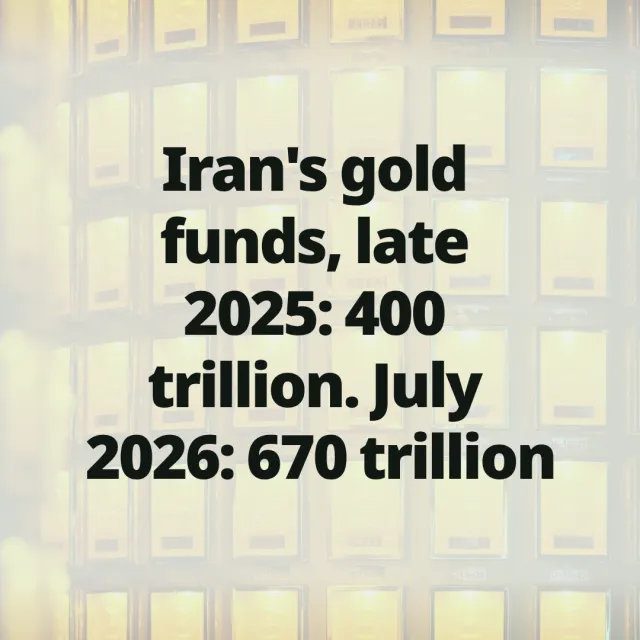
Iran's Gold Funds Went From 400 to 670 Trillion Tomans: The Day the Coin Premium Grew 65% and a Fund Unit Grew 1.4% (Wednesday, 29 July 2026)
The net asset value of Iran's exchange traded gold funds passed 670 trillion tomans in the week ending 26 Tir 1405 (17 July 2026), rising 4.4% week on week to 670,418 billion tomans. In Azar 1404 (late 2025) the figure was about 400 trillion. On Wednesday, 29 July 2026, the difference showed up in practice: the Emami coin premium grew 65.56% to 4,990,000 tomans, while a Lotus gold fund unit rose 1.44%. This report tracks where the money moved and which risks the move does not remove.
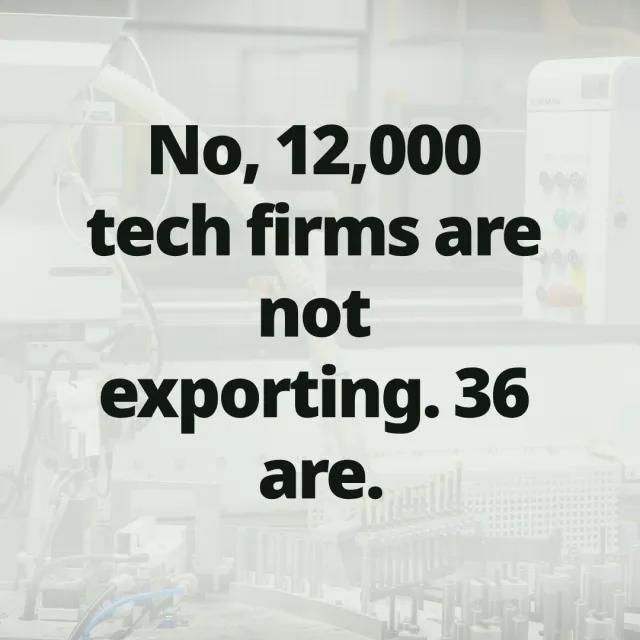
Iran's knowledge-based exports grew ninefold in four years to $2,690 million, but 84 percent of it comes from just 36 companies (Wednesday, 29 July 2026)
Exports by Iran's knowledge-based companies rose from about $296 million to about $2,690 million in four years, a more than ninefold increase. But according to the knowledge-based ecosystem report covering data through the end of 1403 (March 2025), roughly 84 percent of that figure comes from just 36 companies, while more than 12,000 others account for the remaining 16 percent combined. The story of real growth, and of a fragility that is even more real.
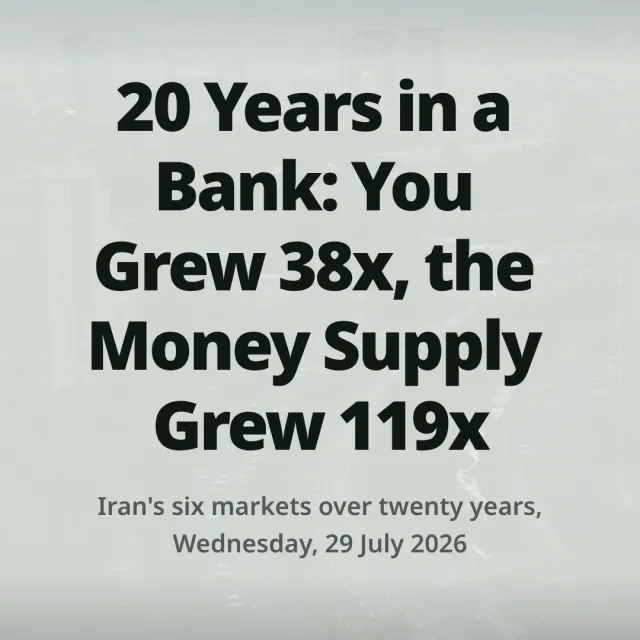
20 Years, 6 Markets: Tehran's Main Index Rose About 382 Times While Money Supply Rose 119; Deposits and the Dollar Fell Behind (Wednesday, 29 July 2026)
If six Iranians each held 100,000 toman in 1380 (2001) and each put it into a different market, by the end of 1400 (2022) the gap between them was striking: the Tehran Stock Exchange main index about 382 times, gold coins about 190 times, Tehran housing about 96 times, bank deposits about 38 times, the free market dollar about 35 times and a Pride car about 28 times. But the real yardstick is another number: money supply grew about 119 times over the same span, and only two markets beat it.
Iran's 57 Point Rent Inflation Gap: Three Reasons the Official Index Misses What Tenants Actually Pay (Tuesday, July 28, 2026)
The Statistical Center of Iran put year on year rent inflation at 31.2 percent for Khordad 1405 (June 2026), against 88.6 percent general inflation, a gap of nearly 57 percentage points. Yet registered new leases in Tehran rose close to 40 percent, and the deposit (rahn) share of total rent reached about 65 percent. This report explains why the official figure and the tenant's experience are not contradictory, and which three mechanisms keep much of the real pressure outside the index.
Iran grows 85 to 90 percent of the world's saffron but sells it for $862 a kilo: anatomy of the red gold paradox (Sunday, 26 July 2026)
The FAO stated officially on 26 November 2025 that Iran produces 85 to 90 percent of the world's saffron. Yet Iranian customs data for 1403 (2024/25) puts the average export price at roughly $862 per kilo, less than half the world average of about $2,000. Sahmino examines Iran's three different shares of this market, the re-export role of the UAE and Spain, and the counterintuitive finding that "red gold" has lagged both gold and the dollar over the long run.
The Ceasefire Nobody Signed: Gold Fell 3.3% and the Dollar 1.8% on a Day the Global Ounce Did Not Move at All (Saturday, 25 July 2026)
On Saturday, 25 July 2026 (3 Mordad 1405), 18 karat gold fell 3.29%, the Emami coin 2.18% and the free market dollar 1.80% in Iran. Yet the global gold ounce did not move at all, because world markets were closed for the weekend. That makes the entire decline a domestic bet on a story no side has officially confirmed: a reported 10 day ceasefire proposal. Sahmino measures the gap between what the market priced and what is actually verified. This analysis is not buy or sell advice.
The Lowest Risk Starting Point for a Beginner Investor in Iran: Why a 40 Percent "Risk Free" Return Is Still a Loss Against 88.6 Percent Inflation (Saturday, 25 July 2026)
With little money and no financial background, where does a newcomer start? The honest answer in July 2026 is not a single stock, not crypto and not coins: a fixed-income fund as the low-risk core, a bullion-based gold fund as the inflation hedge, and IPOs as a supplement. But the central figure is this: the best advertised return of about 40 percent, against 88.6 percent inflation in Khordad 1405, is roughly a 26 percent real loss. (Saturday, 25 July 2026)
Tasico Under the Lens: Subsidiary Profit Jumped From About 1.2 to Nearly 4 Trillion Tomans, and the Pars Tamin Gold Line Opened (Saturday, 25 July 2026)
Sadr Tamin Investment (ticker: Tasico) has posted a marked operational leap in its subsidiaries this year: estimates say the units' combined net profit rose from about 1.2 to nearly 4 trillion tomans, from Iran Salts Mining and China Clay to Parvadeh Tabas Coal. At the same time, gold sales at Pars Tamin Mines Development have begun, targeting roughly 100 kilograms this year. But how much of this growth is real value creation, and how much is a reflection of inflation? (Saturday, 25 July 2026)
Vomahan Cut Its Price for 5% of Taban Farda by 35%: Where the Real Value of Iran's Biggest Pending IPO Sits (Thursday, July 23, 2026)
For weeks the 5% offering of Taban Farda Petrochemical Group has been called "the biggest IPO in Iran's market history." Yet on July 11, 2026, the value of Vomahan's 5% purchase was revised down from 425 to 275 trillion rials, meaning the two counterparties themselves cut the price by about 35%. This report separates three valuation anchors, tests the "record" claim in dollars, and corrects the wrong prices circulating online. This is not buy or sell advice.

Tehran Cement Fell About 14% in Three Weeks While Saveh and Abyek Held; the Bagged Premium Now Spans 9% to 41% (Friday, July 24, 2026)
A 50 kg bag of Tehran cement has slipped from about 253,000 tomans on June 30 to 218,000 tomans on July 24, 2026, roughly 14% lower, while Saveh and Abyek barely moved. A stranger anomaly sits in the same data: the bagged-over-bulk premium ranges from 9% to 41% across producers. This report reads both against the industrial-power file, which was just settled for the next two Iranian months. This analysis is not buy or sell advice.
Iran Makes the World's Cheapest Rebar: It Exports an Energy Subsidy, While Its Steel Ticker Has Been Frozen for 146 Days (Friday, 24 July 2026)
Ex-works rebar in Iran runs about $365 a ton: cheaper than China, under half of Germany, a third of the US, not from productivity but from cheap gas and power melted into steel and partly shipped abroad. Iran supplies about a quarter of the world's direct-reduced iron and near 11% of the semi-finished steel trade, big enough that a Hormuz disruption lifted German rebar prices. Meanwhile the Foolad and Fakhouz tickers have been frozen since 28 February 2026. Not buy or sell advice.
Justice Shares and the Summer That Was Promised: Where the File Really Stands, and What Liberalization Would Mean for the Tehran Bourse (Thursday, 23 July 2026)
Iran's economy minister promised people would taste the "sweetness of Justice Shares liberalization" in summer 2026. We are now mid-summer and the file is still open: the framework is approved, but the provincial investment companies' general meetings are unfinished, the prosecutor has been drawn in, and parliament's economic commission has objected to the new directive. This report separates the real status from the rumors and fact-checks three recurring claims. This is not buy or sell advice.
Did Gasoline Just Become Three-Tier? What Actually Changed on 1 Mordad 1405 (23 July 2026) and What Is Just a Rumor
Before dawn today the monthly 60-liter gasoline quota was loaded onto fuel cards, and a Kerman province pilot began moving the 5,000-toman emergency ration onto personal cards. But no new price was announced and the government denied the "10,000-toman gasoline" rumor. This report separates what actually changed, how big the gasoline imbalance is, and how it reaches inflation and markets. Not buy or sell advice.
Kourosh Food Industry Under the Microscope: The Stock 6.4x'd in a Year, Yet Its P/E Stayed in Line With the Sector (July 2026)
In its last recorded trade, on 21 July 2026, Kourosh Food Industry (ticker "Ghakouresh") closed at its daily ceiling at a final price of 19,130 rials, roughly 6.4 times its level a year earlier. Yet its price-to-earnings ratio is estimated near 6.4, almost in line with the food sector's P/E of 6.44. Why this surge is mostly not a bubble, and where the real risk sits. (An informational report, not buy or sell advice.)
The Tether vs. Cash-Dollar Spread: A Signal That Matters More Than the Price Itself (Gap Near 39,000 Tomans, July 2026)
When the dollar hits records, a wave of retail buyers rushes into Tether. But professionals do not watch Tether's toman price. They read two spreads: Tether versus the free-market cash dollar, and the free dollar (around 190,000 tomans) versus the Exchange Center's "agreed" rate (near 150,900 tomans), a gap that reached about 39,000 tomans by Tuesday, 21 July 2026. This piece explains why the spread's direction and size matter more than the price.
Tether's Real Return After 83% Inflation: The Brutal 12-Month Math to July 2026
Over the twelve months to mid-July 2026, Tether roughly doubled Iranian holders' money (a nominal return near 117 to 121 percent). But after the central bank's 83 percent year-on-year inflation, its real gain shrank to about 18 percent. In the same window melted gold and the Emami coin returned more in real terms, while cash and bank deposits were heavy losers to inflation. A dated, brutal accounting.
Zarif's Foreign Affairs Vision and Iran's Markets: Two Scenarios for the Dollar, Gold, and Stocks
In a Foreign Affairs essay, former foreign minister Mohammad Javad Zarif argues that West Asia's own states should build the region's security and economic order. Sahmino lays out his case, the serious criticism of it, and the likely consequences for the dollar, gold, and the bourse under two scenarios, de-escalation and continued war, with a look at the July 21, 2026 market where the free-market dollar trades near 190,000 tomans.
Iran 2026 in the Mirror of The Economist: Civilizational Weight Against Economic Reality
The Economist's annual "The World Ahead 2026" special does not put Iran on the cover, yet Tehran recurs through its pages: a player with real geographic and civilizational weight, but an economy that constrains its ability to "enter the game." With the free-market dollar near 187,700 tomans, point-to-point inflation close to 88 percent, and the IMF projecting a 6.1 percent contraction for 2026, Sahmino measures the multipolar narrative against the numbers (21 July 2026).
That Year the Price Was at Its Peak, Today It Is the Risk: The Lesson of 1399 for Stocks and Housing in 1405
In 1399 (2020 to 2021) the Tehran bourse peaked at a price-to-earnings ratio above 35 and a dollar market value up to 427 billion, while housing jumped 92 percent. Today, in Tir 1405 (July 2026), it is inverted: the bourse near a P/E of 6.4 and about 85 billion dollars, deeply discounted, and housing near its long-run dollar average but frozen, transactions down about 80 percent. The lesson of 1399: that year the price was at its peak; today the risk is.
The Market Was Red for Eight Days; These Five Stocks Rose Against the Tide: Anatomy of "Resilience" on the Tehran Exchange (Week Ending Saturday, 18 July 2026)
In the red week when Tehran's TEDPIX index posted an eighth straight decline, sliding from roughly 5,182,622 points (11 July) to around 4,777,285 points (Saturday, 18 July 2026 / 27 Tir 1405), five symbols showed a genuine multi-session uptrend: Fanavar (Tosan), Hormoz, Vakharazm, Sarood and Kakhak. This is a descriptive, educational report, not buy or sell advice; its focus is separating real resilience from a one-day dead-cat bounce.
A reader asked us: the bourse has been red for eight days. Buy gold and dollars, or hunt for war-resistant stocks?
On Saturday 27 Tir 1405 (18 July 2026) the Tehran Stock Exchange main index fell 2.44% for its eighth straight red session, the same day the free-market dollar hit a record near 194,500 tomans. A reader asked: should I pull my money out of stocks and buy gold and dollars, or stay in the bourse and look for war-resistant shares? Sahmino's neutral framework for the dilemma, with dated figures and the intra-bourse divergence signal. This is not buy or sell advice.

Melted Gold or the Emami Coin? A Technical Guide to Preserving Value in Iran's Inflationary Economy
Melted gold and the Emami coin are both gold, yet one carries a near-zero premium and the other a volatile one. Per Sahmino's price feed on Saturday night, 27 Tir 1405 (18 July 2026), the Emami coin's premium was about 6 million tomans (near 3.3 percent) while melted gold's was only about 238 thousand tomans (near 0.3 percent). A technical guide to comparing the two for preserving value against inflation, with no buy or sell advice.
Behsaz Kashaneh Tehran (Sabhesaz) Under the Lens: A 74% Gross Margin and 1,877 Billion Toman Profit; How Much Is Value Creation, and How Much Is Cashing In Inflation? (Sunday, 19 July 2026)
Behsaz Kashaneh Tehran (Sabhesaz) closed its fiscal year ending 30 Azar 1404 (21 Dec 2025) with a 73.7% gross margin and audited net profit of about 1,877 billion tomans. But behind that dreamlike margin sits one fact: revenue grew only 15% in a year when average inflation hit 57.7%, meaning real sales shrank. Neutrally and with no buy or sell advice, we trace where this profit comes from. (Figures as of 15 and 19 July 2026.)
Vomodir Under the Lens: A 17,346 Billion Rial Net Profit and a Price to Earnings of 3.2; Why the Market Prices the Pension Fund Holding at a Discount (Saturday, 18 July 2026)
Vomodir (Value Capital Management Group of the Government Employees Pension Fund) closed its audited fiscal 1404 (ended 21 December 2025) with net profit of 17,346 billion rial (about 1,735 billion toman), EPS of 667 rial and a 220 rial dividend. Yet two thirds of that profit came from selling investments, and the market prices the holding at 3.2 times earnings versus 5.8 for the sector. This analysis is not a buy or sell recommendation.

Ghachar Under the Lens: Chaharmahal Sugar's Sales Rose 50% and Profit 43% in FY1404; But Through the Inflation Lens, Real Growth Is Near Zero (Saturday, 18 July 2026)
Chaharmahal Food & Sugar (ticker: Ghachar), on Iran's Farabourse, reported fiscal 1404 (to 20 March 2026) results with revenue up about 50% and net profit up 43%. But on any reasonable read of 1404 inflation, this nominal growth is at best in line with inflation and real growth is near zero. The figures are still unaudited and the ticker carries a supervisory flag; against that, its P/E of about 5.5 sits below the 8.27 sugar-group average. This analysis is not a buy or sell recommendation.

Dabid Under the Microscope: Dr Abidi Pharmaceutical's Six-Month Profit Jumped 3.3x; Dissecting a Surge That Didn't Come From Sales Alone (Saturday, 18 July 2026)
Mid-session today, Dr Abidi Pharmaceutical (Dabid) published its unaudited six-month statements: revenue grew 118% to 13.2 thousand billion tomans, the operating margin jumped to 50.2%, and net profit reached 3.3x at an EPS of 939 rials. A dissection shows four engines behind the jump, but three questions stay open: the cash backing of profit, the price-versus-volume split, and the nature of 958 billion tomans of non-operating income.
Vomelal Under the Lens: A 14.3-Trillion-Toman Net Loss and Negative 59% Capital Adequacy; Why Conventional Valuation Tools Fail for Mellal Credit Institution (Saturday, July 18, 2026)
Mellal Credit Institution (Vomelal) posted a net loss of 14.3 trillion tomans and negative EPS of 7,169 rials for fiscal year 1404; its capital adequacy sank to negative 59% and shareholders' equity turned negative. The ticker has been halted since November 2025 and the institution is run by a Central Bank supervisory board. Why nominal lending-income growth does not solve a balance-sheet crisis, and why P/E and P/B are meaningless here. No buy or sell advice.

Kapshir Under the Lens: Pashm-Shishe Iran's Net Profit Leapt 95%, but Real Sales Have Been Shrinking for Three Years (Friday, 17 July 2026)
Pashm-Shishe Iran (ticker: Kapshir) lifted revenue 54% and net profit 95% in fiscal 1404, pushing its net margin to 40.8%. But the sales charts show real volumes of both glass wool and Isogam falling for a third straight year, meaning the jump is almost entirely inflationary. At a Q ratio of about 0.79, the market is pricing the company slightly below its replacement cost.
Southern Iran Under Fire: Sahmino's Analysis of the Economic Fallout and the Paths Ahead
The sixth wave of US strikes on southern Iran is, above all, a human tragedy. On the economic side, by the evening of Friday, 17 July 2026 (26 Tir 1405) the domestic Tether rate had climbed to around 193,000 tomans and the coin premium held near a multi-week record, while the fate of Saturday's Oman meeting remains unclear. Sahmino reviews the impact across currency, gold, the bourse, energy and ports, plus three scenarios ahead. This analysis is not buy or sell advice.
Vomahan Under the Lens: Why Mehr Ayandegan Financial Group Should Be Judged by Price to Net Asset Value, Not Profit Margin (Tuesday, 14 July 2026)
A reader asked, "What do you make of Vomahan?" The right answer starts with one fact: Vomahan, the ticker of Mehr Ayandegan Financial Group, is an investment holding on Iran's OTC market (Farabourse), not a factory. For this kind of stock the correct yardstick is not profit margin or a simple P/E, but price to net asset value (P/NAV). The last price is 7,380 rials (Sahmino, 14 July 2026), and the stock has historically traded at a discount to NAV. Not investment advice.
Separdis Under the Lens: Why Maskan Pardis Investment Trades at a Discount to the Current Value of Its Assets, A Detailed Fundamental Analysis
A detailed analysis of Separdis (Maskan Pardis Investment) interim statements: revenue fell 44% yet the margin jumped to 59%, operating cash flow turned negative, and receivables and stalled projects rose. The key point, though, is the hidden asset: with 100% housing inflation, the current value of the property inventory and the 115-hectare Pardis land is far above book, and the share likely trades at a 30% to 50% discount to NAV. Neutral, with no buy or sell recommendation.

Shatran Under the Lens: Is Tehran Oil Refining's 335% Gross-Profit Jump Real or Paper? A Fundamental and Forensic Analysis
Tehran Oil Refining (Shatran) in fiscal 1404 (2025/26) lifted revenue 32%, gross profit 335% and net profit 287%. But a forensic look shows operating cash flow is only 23% of net profit and accounts receivable have jumped 273%. This neutral analysis, with no buy or sell recommendation, probes earnings quality, the balance sheet, and the durability of this growth.
BAMA Under the Lens: Bama Mining's Net Profit Roughly Quadrupled in a Year, But Why the Quality of That Jump Matters More Than the Number (Tuesday, July 14, 2026)
A reader asked what we think of BAMA. Net profit at Bama Mining & Industrial rose from roughly 422 to about 1,597 billion tomans, nearly a fourfold jump in a year. But much of it came from FX-translation gains and higher global zinc prices, not more output, output volume actually fell around 6 percent. A neutral look at a profitable but cyclical, dollar-linked miner (as of Tuesday, July 14, 2026). Educational, not buy or sell advice.
Kafpars Under the Lens: A 1,519% Revaluation-Based Capital Increase and the Fundamental Root of a Decade of Shareholder Frustration at Pars Refractories (July 13, 2026)
A Sahmino reader wrote: "I have held Kafpars for ten years, nothing but losses." Neutrally and with no buy or sell advice, drawing on official exchange data and financial statements, we examine why Pars Refractories Products has failed to satisfy its long-term holders: from thin, fragile profitability to a 1,519% capital increase funded entirely by asset revaluation, and how that distorts the unadjusted price chart. Figures as of July 13, 2026.
The Factories Are Back, the Symbols Are Not: 42 War-Damaged Tickers Worth About 35% of the Tehran Bourse Stayed Frozen Through 22 Tir (Monday, July 13, 2026)
Roughly 42 war-damaged tickers on the Tehran Stock Exchange, together about 35% of total market value, from Foolad and Fakhouz to Bafajr, Mobin and Shavan, stayed suspended through 31 Tir 1405 (July 22, 2026), even as many of the same firms restarted production. Mobarakeh Steel revived its No. 8 furnace in about 45 days, and officials say nearly 89% of war-hit petrochemical units are back online. The main index (TEDPIX) closed Monday down 1.79% below 5 million points, at 4,966,761.

Karbon Trades at a 5.1 P/E Against Its Sector's 21.8; Why the Chart's 56% Drop Is Partly a Price-Adjustment Illusion (Monday, July 13, 2026)
Karbon (Kani Karbon Tabas), a coal-mining stock on the second market of Iran's Farabourse (OTC market), trades at a 5,960-rial close, a price-to-earnings ratio near 5.1, and an earnings yield close to 20%, while its coal-mining sector averages 21.8. This data-driven report shows that much of the 56% fall from the one-year high is not a real crash but the price-adjustment effect of two corporate actions (a capital increase and a dividend). Figures as of July 13, 2026.

TAPICO Closes Persian Gulf Star Refinery's 15-Year FX-Debt File; Its 49% Stake One Step From an IPO (Sunday, July 12, 2026)
TAPICO's CEO says the roughly $3 billion FX-debt file of Persian Gulf Star Refinery has been closed after about 15 years, leaving the plant "one step" from an IPO. TAPICO owns 49% of the asset; the PTAP symbol traded at 2,962 tomans on Sunday, July 12, 2026, about 79% of its published NAV. Why the debt fix matters and what the market is pricing.

Tehran Stock Exchange Opens Down About 2.5% on Sunday, July 12, 2026: The Psychology of the Sell-Off and Systematic vs Fundamental Risk
On the morning of Sunday, July 12, 2026 (21 Tir 1405), the Tehran Stock Exchange overall index (TEDPIX) fell about 2.49% to around 5,056,740 in early trade, extending several pressured sessions; the equal-weighted index dropped 2.08%, a sign the selling is broad. This piece explains what a heavy sell queue means, why even fundamentally sound shares get sold on days like this, and why systematic risk does not necessarily mean companies' intrinsic value has changed.
Kermanshah Petrochemical (Karmasha) Is About to Reopen After Its AGM: a 97% Capital Increase, a 1,227-Rial Dividend, and the Global Urea Shock in the Background (Saturday, July 11, 2026)
Kermanshah Petrochemical (Karmasha), one of the few urea and ammonia producers on the Tehran Stock Exchange, is halted for its annual meeting and about to reopen. It registered a 97% capital increase and approved a 1,227-rial dividend (40% payout) at its July 7 AGM. The stock trades at a trailing P/E of about 8.18, roughly in line with the chemicals group average of 8.24, so its story is the global urea cycle amid the renewed Hormuz crisis, not a valuation discount.
Emami Gold Coin's Premium Falls to 5,101,000 Tomans on Friday, July 10, 2026; Three Legal, Tax-Exempt Ways to Trade It
On Friday, July 10, 2026 (19 Tir 1405), Iran's Emami coin traded around 182 million tomans and its premium over intrinsic gold/dollar value fell to 5,101,000 tomans (about 2.8%), down from 7,091,000 a week earlier. This piece explains the mechanics and three legal, tax-exempt trading channels: the CBI auction, the exchange coin deposit certificate, and gold funds.
Isfahan Refinery's Replacement Value Is Up to 5x Shapna's Market Cap; How Much of That Gap Does the Market Price In? (Thursday, July 9, 2026)
Shapna's (Isfahan Oil Refining) Tehran Stock Exchange market cap is estimated at $2.6 to $2.8 billion based on available reporting. Rebuilding a refinery of the same capacity from scratch, using global refinery cost benchmarks, could cost $7.5 to $13.1 billion, meaning the market prices this asset at only 20 to 38 percent of its estimated replacement value.

TCI's EPS Fell to 4 Rials; The 1,555% Capital Increase Behind Iran Telecom's Numbers (Thursday, July 9, 2026)
TCI's (Telecommunication Company of Iran, ticker اخابر) earnings per share for fiscal year 1403 (ended March 2025) came in at just 4 rials, even as value added, operating revenue, and net profit each grew about 22%. The reason is a 1,555% capital increase approved in Bahman 1402. The June 2025 shareholder meeting approved a 40-rial dividend per share.
Bank Tejarat Raises Capital 340 Percent: What the H1 1404 Earnings Report Shows (Wednesday, July 8, 2026)
Bank Tejarat raised its registered capital 340.6 percent, from 33.6 to 148 trillion tomans, at a March 2025 assembly. Its first six-month report since then shows net profit up 14 percent and earnings per share up 21 percent (Wednesday, July 8, 2026).
Bank Mellat's EPS: 656 Rials or 335? The Reason Behind the Conflicting Six-Month Reports (Wednesday, July 8, 2026)
Two different reports put Bank Mellat's first-half fiscal 1404 earnings per share at 656 rials and 335 rials, both citing the same 79.36-trillion-toman net profit. The gap traces to a capital increase that nearly doubled the bank's share count (Wednesday, July 8, 2026).

Coin Premium Rose 6.85% This Week; Why, Even as Global Gold Fell? (Wednesday, July 8, 2026)
The Emami gold coin's premium reached about 7,091,000 tomans in its latest weekly reading (Sunday, July 5, 2026), up 6.85% week on week. That happened even as global gold fell about $49 (1.2%) from $4,165 to $4,116 on Tuesday night after the Strait of Hormuz attack pushed the Fed toward a more hawkish tone.
Bank Mellat's Capital Grew From 35 to 338 Trillion Tomans; Why Vabmellat's EPS Shouldn't Be Compared to Old Figures (Wednesday, July 8, 2026)
Bank Mellat's (Vabmellat, وبملت) registered capital rose in four stages from December 2023 to May 2026, from 35.3 to 338.2 trillion tomans, a nearly tenfold increase that took its share count above 3.38 billion. This report traces Bank Mellat's capital-increase history and explains why its reported EPS varies across sources.
Iran's Housing Inflation Hit 4.7% in Khordad; Why Did It Lag Food and Clothing? (Wednesday, July 8, 2026)
Iran's Central Bank released its Khordad (the Iranian month ending June 21, 2026) inflation report on Tuesday, June 30, 2026: annual inflation at 57.7% and point-to-point inflation at 83.1%. The "housing, water, electricity and fuel" group rose just 4.7% that month, slower than food (8.7%), clothing (9.5%) and furniture (10%), echoing Sahmino's report last week on rent's lagging growth.
Iran's Largest Ever IPO Is Coming: Taban Farda Petrochemical Valuation Finalized (Tuesday, July 7, 2026)
Iran's Securities and Exchange Organization says the valuation of Taban Farda Petrochemical Group is complete (June 28, 2026); a 5% stake in the holding, whose listed portfolio is valued at roughly 3,180 trillion rials (about 318 trillion tomans), is expected to be offered within two weeks, in what its CEO calls the largest transaction in Tehran Stock Exchange history.
What Is Shapna's Forward P/E? Estimating It From Isfahan Oil Refining's 1,152 Rial EPS (Tuesday, July 7, 2026)
Shapna (Isfahan Oil Refining) last traded at a confirmed 8,160 rials per share (May 15, 2026); against EPS of 1,152 rials that puts trailing P/E at 7.08x. This report estimates forward P/E under three scenarios, built from the company's earnings trend, Brent, and the free market dollar.
What Is Bank Mellat's Forward P/E? An Estimate Based on Its 6-Month EPS of 335 Rials (Tuesday, July 7, 2026)
Bank Mellat's Tehran Stock Exchange ticker, Vabmellat (وبملت), traded around 1,284 rials on Tuesday, July 7, 2026. Using its 335-rial six-month EPS for H1 of Iranian fiscal year 1404 (up 36% year on year), this report calculates a forward P/E under conservative, base, and optimistic scenarios.
Iran Kicks Off $2bn Industrial FX Allocation; Central Bank Adds $4.5bn to Reserves, Vows No Return to Subsidized Rate (Monday, July 6, 2026)
Iran's central bank governor says the country's foreign currency reserves grew by $4.5 billion during the recent war months, and that a first $2 billion phase of industrial FX allocation began Saturday, July 4. Governor Hemmati stressed the bank will not revive the old subsidized "preferential rate" system. The move coincides with revenue from a temporary US license letting Iran sell oil for dollars.
How Tehran Stock Exchange Analysts Screen for Undervalued, Overlooked Stocks: Five Current Examples With Official Evidence (Monday, July 6, 2026)
Beyond the headline index, some Tehran Stock Exchange analysts screen for overlooked stocks using criteria like a low forward P/E, a discount to NAV, and leverage from the gap between Iran's free-market and NIMA exchange rates. Sahmino examines the method itself, alongside five current symbols with official financials as evidence, each with its own catalyst and risk (Monday, Tir 15, 1405 / July 6, 2026).

Fmelli Under the Microscope: National Iranian Copper Industries' Net Profit Hit 149.6 Trillion Tomans in FY1404 (Fundamental Analysis, Sunday, July 5, 2026)
National Iranian Copper Industries Co. (TSE: Fmelli), Iran's largest copper producer, reported a net profit of 149.6 trillion tomans for fiscal year 1404 (ended March 20, 2026), up 98% year on year. With a P/E ratio of about 22.4 as of the last trading session before the Tehran bourse's three-day closure (July 1, 2026), this report reviews the company's value chain, financials, mineral reserves, and risks, with no buy or sell recommendation.